Accelerated Life Testing of Lens Silicone Sealing Rings for Outdoor Surveillance Lens Housings
- Share
- publisher
- Suey
- Issue Time
- Apr 22,2026
Summary
An accelerated life test on lens silicone sealing rings is only as good as its failure criterion. This brief sets out the five numbers a buyer should demand - failure definition, stress levels, sample size, acceleration model and confidence interval - and explains what a Weibull slope reveals about a seal population before it reaches a camera housing.
Test-method brief
Most durability claims for lens silicone sealing rings rest on an extrapolation, not an observation. The extrapolation is legitimate only when the test defines what failure means, stresses the same mechanism that kills the seal outdoors, and reports a confidence interval around the result. Ask for those four things and a fifteen-year claim becomes a number you can defend to your own customer.
- A test without a numeric failure criterion measures nothing: define leak rate, compression set or haze before the first sample is loaded.
- Temperature is the easiest stress to accelerate and the least representative of a lens housing, where UV, humidity and thermal cycling act together.
- The Weibull slope matters as much as the B10 life: a shallow slope means early failures hide in the tail of the population.
What an accelerated life test on lens silicone sealing rings must define first
The failure criterion comes before the test plan. For an O-ring style lens seal the useful criteria are measurable: helium leak rate above a stated threshold, compression set beyond a percentage of the original section, or haze and transmission drift on the optical window. A report that defines failure as “no visible cracking” is a visual inspection, not a life test, and it will pass parts that have already lost sealing force.
The second definition is the use profile. A dome camera on a pole in southern China and one under a Nordic eave see different UV dose, different condensation cycles and different peak temperatures. Write the profile down — hours at temperature, number of thermal cycles, condensing versus non-condensing humidity — and require the test to reproduce it in accelerated form.
Stress factors that accelerate the real failure mechanism
Arrhenius acceleration assumes a single thermally activated degradation reaction. That model works well for compression set in silicone, and poorly for a seal that also photo-oxidises under UV. Running only 85 °C and 85% relative humidity produces a screening result: it tells you the part survives a harsh environment for a thousand hours, not how long it survives twenty years of a specific one.
A defensible programme combines a primary thermal stress with UV exposure and condensing humidity, and it holds the seal at working compression in a fixture that mimics the housing. Testing a free-standing ring in a tray measures the material. Testing the assembled joint measures the product.
- Thermal cycling — exposes differential expansion between the aluminium housing and the silicone, the mechanism behind most field leaks.
- UV and ozone — attacks the surface and raises compression set on the exposed face; relevant to any seal with a sightline to the sky.
- Condensing humidity — drives moisture through the interface and reveals whether the groove drains or traps water.
Five numbers to demand in the ALT report
A life-test summary that omits any of these cannot be audited, and an auditor or a Tier-1 customer will ask for them.
Failure definition
The numeric threshold and the instrument used, written before the test. Without it, censored and failed units cannot be separated.
Stress levels and dwell
At least three temperature levels with stated dwell times, plus the UV dose in kWh/m² and the humidity profile.
Sample size per level
Twelve to twenty units per stress level is the usual floor for a Weibull fit; three samples produce an anecdote with a graph.
Acceleration model and activation energy
State whether Arrhenius, Peck or a Coffin-Manson relation was used, and whether the activation energy was measured or borrowed.
B10 life with confidence bounds
The life at which 10% of units fail, with a stated confidence level. A point estimate alone hides the uncertainty the buyer carries.
Which stress exposes which failure mode in lens silicone sealing rings
Matching the stress to the mechanism is what separates a life test from a qualification stamp.
| Stress applied | Failure mode it reveals | Typical mistake |
|---|---|---|
| Constant high temperature | Compression set, loss of sealing force | Reporting hours survived instead of residual force |
| Thermal cycling | Interface leak from differential expansion | Cycling an unloaded ring outside its groove |
| UV plus ozone | Surface crazing, hardening, colour drift | Testing behind glass that filters the UV band |
| Condensing humidity | Moisture ingress, fogging inside the window | Using non-condensing humidity because it is cheaper |
| Salt spray | Housing corrosion that lifts the seal seat | Blaming the silicone for a plating failure |
What the Weibull slope says about a production lot
Two suppliers can both report a B10 life of fifteen years and still be very different propositions. If the shape parameter sits near 1.2, failures are spread across the population and the tail extends into the warranty period of your earliest shipments. A slope above 3 indicates a wear-out mechanism with a tight distribution — the part fails late and predictably, which is what a maintenance schedule needs.
Ask for the plot, not the headline. A slope computed from a handful of failures at one stress level is unstable, and a supplier who cannot show the raw failure times is quoting a model output rather than a test result. This is the single most useful question a buyer can ask about a fifteen-year claim: show me the units that failed and when.
Building the test plan around your housing, not our catalogue
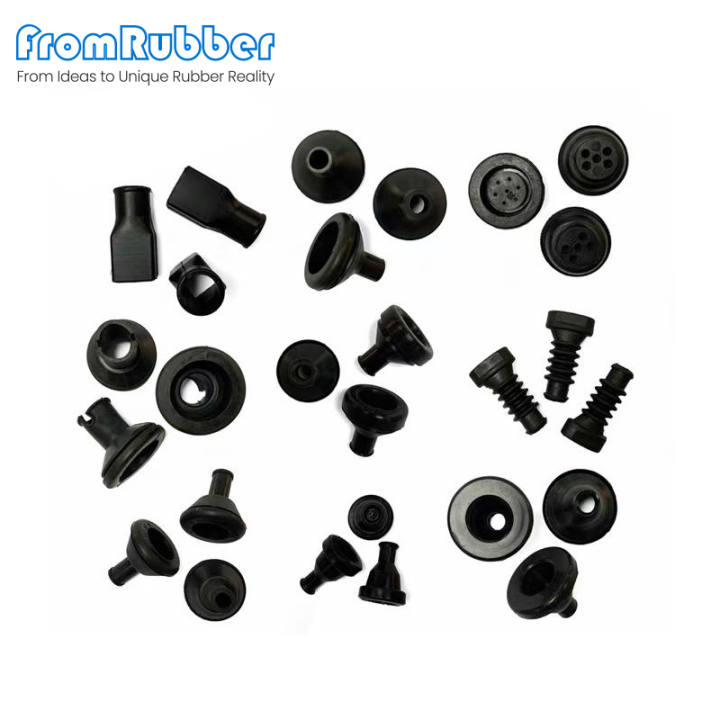
A seal programme starts when the housing drawing arrives, because the groove decides the section, the section decides the squeeze, and the squeeze decides what the accelerated test has to reproduce. When a customer sends only a ring sample, the first task is to measure the groove it came from; a ring that fits a nominal size but sits at the wrong compression will fail a life test that the material would otherwise pass.
The second input is the climate. A camera on a pole in a coastal city sees salt, UV and daily condensation; the same camera under a warehouse eave sees neither salt nor direct sun. Two identical seals with two different life expectations need two different test profiles, and writing both down at the quotation stage prevents a validation argument later.
What the validation package contains
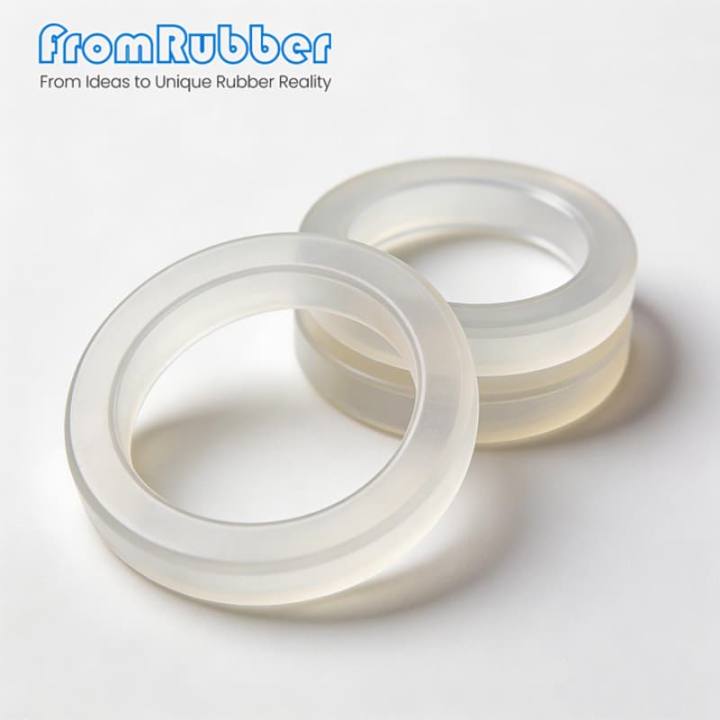
A complete package has four documents: a first article inspection report with measured values, a compression set result after the specified dwell, a leak or ingress test on the assembled housing, and a lot traceability sheet linking compound batch to the parts shipped. For optical products we add a volatile condensable material result on the finished ring, because that is the number that predicts fogging.
The package is worth assembling even when a customer has not asked for it. It is the difference between a supplier who ships parts and one who can answer a field complaint with evidence in an afternoon. It also makes the next order cheaper, because the baseline is documented rather than remembered.
What to send for a seal validation quote
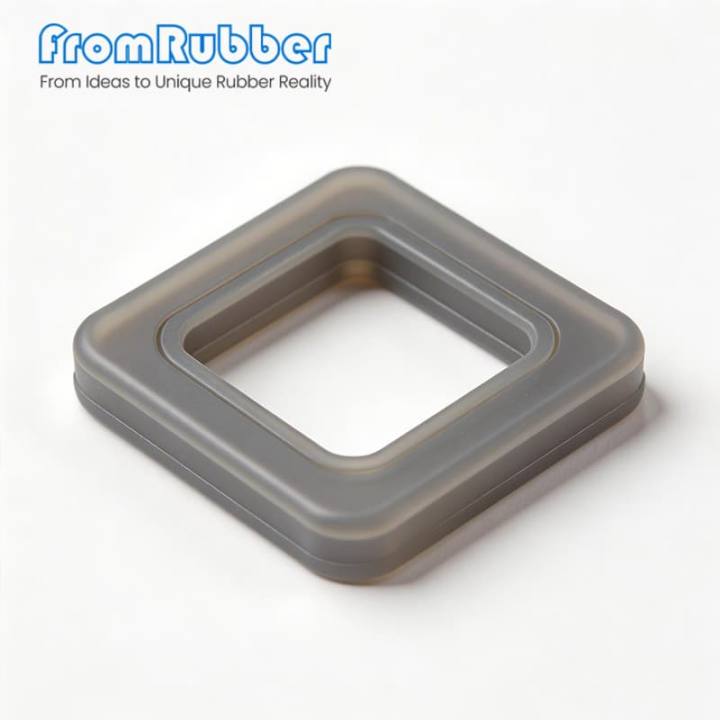
Four items, and the quotation can be specific rather than conditional.
Housing and groove drawing
With tolerances and surface finish; the groove is the specification.
Use environment
Temperature range, UV exposure, condensing humidity, salt if relevant.
Target life and warranty
So the sample size and stress levels can be set to support the claim.
Assembly method
Manual, press-fit or adhesive, because it changes the squeeze actually achieved.
Questions buyers ask about seal life testing
Can a fifteen-year life be proven in a laboratory?
Not directly. It is extrapolated from accelerated data, so the honest question is how much confidence the extrapolation carries. Demand the model, the activation energy, the sample count and the confidence bounds, then judge whether the assumptions fit your climate.
Is IP67 testing the same as a life test?
No. An IP67 immersion test qualifies a new part against water ingress at a point in time. A life test asks how that rating degrades after UV, thermal cycling and compression set have acted on the seal for years.
Should the seal be tested in the housing or on its own?
In the housing, under the same squeeze and groove geometry as production. Free-ring testing removes the interface, which is where lens seals actually leak.
How many samples are enough?
Twelve units per stress level is a practical minimum for a Weibull fit with meaningful bounds. Fewer samples still produce a chart, but the confidence interval widens to the point where it cannot support a warranty claim.
Put your seal programme on a test plan you can defend
FromRubber moulds lens and housing seals in Dongguan and builds the validation plan alongside the tool. Send the housing drawing, the climate the product will see and the life your warranty promises; we will return a stress matrix, a failure criterion and a sampling plan before tooling is cut.
Request a seal validation reviewRelated reading: why high-purity sealing rings prevent lens fogging and how sealing rings raise IP68 ratings.