Are Silicone makeup Brushes Safe for Sensitive and Acne-Prone Skin?
- Share
- publisher
- Suey
- Issue Time
- Mar 13,2026
Summary
Whether silicone makeup brushes suit sensitive or acne-prone skin is a question about friction, residue and cleaning, not about silicone being inert. This note covers what the material does and does not release, how a non-porous surface changes bacterial load, and when a fibre brush is still the right tool.
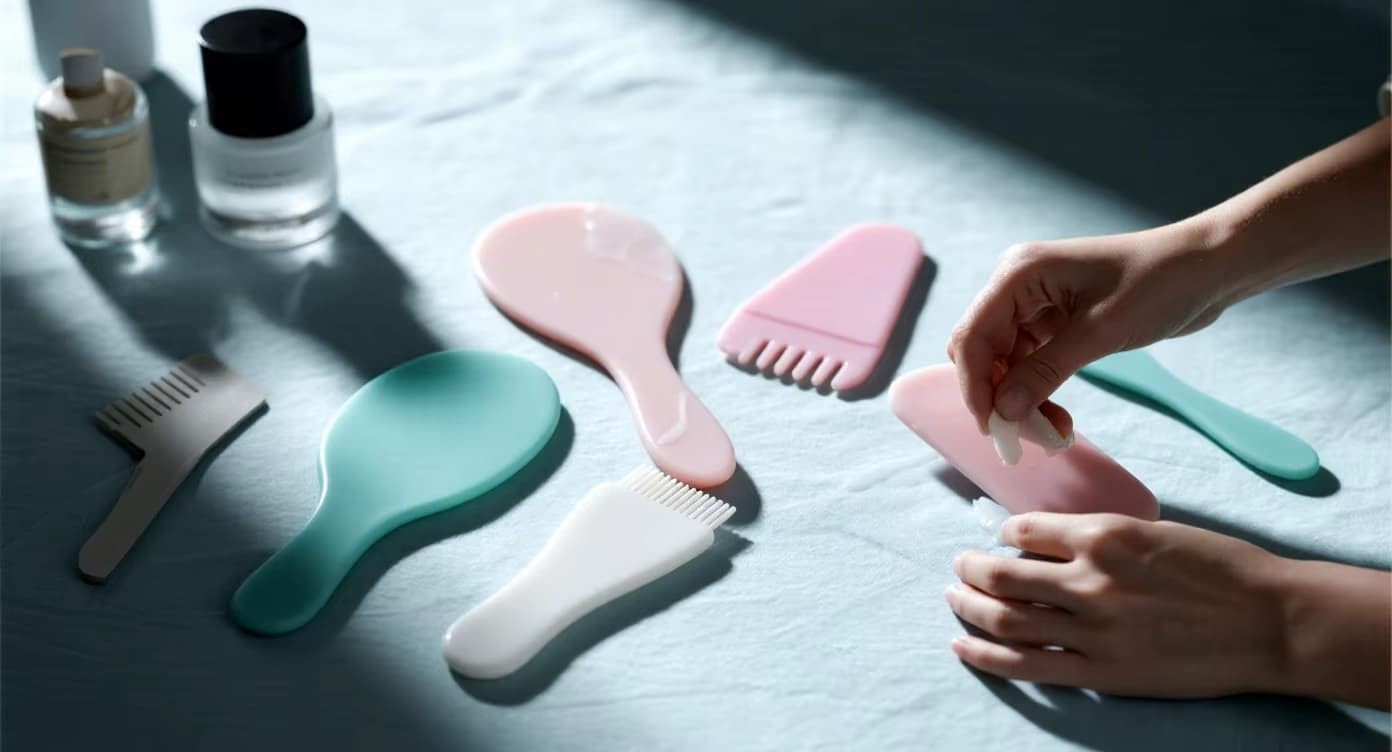
Skin-contact note
Silicone is well tolerated by most skin, but tolerance is not the same as suitability. What decides the outcome for sensitive or acne-prone skin is how much the tool drags, what it leaves behind after cleaning, and whether the user can clean it between uses. Silicone makeup brushes win on the last two and can lose on the first.
- A non-porous surface holds far less product and bacteria than a fibre tuft, provided it is wiped after use.
- Friction is the real risk for compromised skin: a hard, dry pad drags and can shear the stratum corneum.
- Silicone is a poor blender for loose powder, which is where a fibre brush remains the better tool.
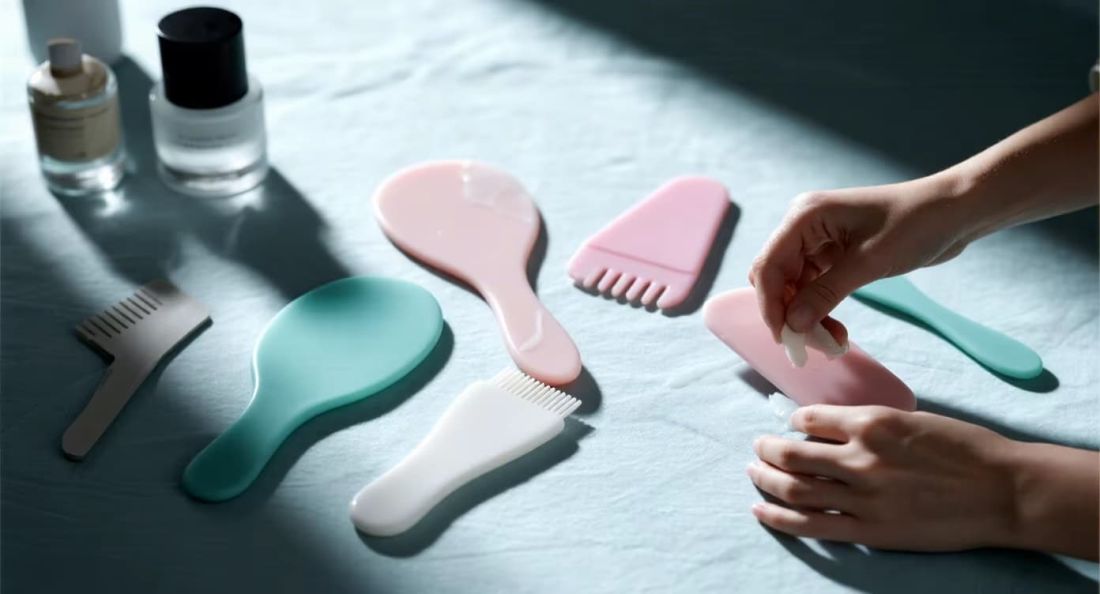
What silicone makeup brushes do to compromised skin
Two mechanisms matter: residue and friction. Residue comes from the compound and from the manufacturing process. A properly cured platinum-catalysed silicone releases very little, but under-cured material can leave volatile siloxanes on skin, which is why cure verification belongs in the specification rather than the marketing copy.
Friction comes from the design. A hard pad used dry drags across the cheek and can aggravate an active breakout; the same pad used with a light cream glides. Softer compounds and a rounded edge reduce the shear, and a slightly textured surface holds product instead of skipping. For a user with active inflammation, the honest advice is a clean finger or a soft synthetic brush until the skin settles.
Bacterial load and the cleaning claim you can defend
A fibre brush traps product, skin cells and moisture in its tuft, and the interior dries slowly. A silicone applicator has no interior, so what remains is a surface film that a wipe removes. That is a real hygiene advantage, but it is not automatic: a silicone brush left unwashed for a week carries a film that supports microbial growth just as a fibre brush does.
The defensible claim is therefore a cleaning routine, not an antimicrobial property. Specify a wipe after each use, a weekly wash with mild soap, and a stated drying time. If an antimicrobial additive is used, the claim needs a test method and a result, and the additive has to be declared for skin-contact review.
- Wipe after use — removes the film before it can support growth.
- Weekly wash — mild soap, warm water, air dry away from direct heat.
- No antimicrobial claim — unless a test method and result support it.
Silicone applicator versus fibre brush on reactive skin
| Factor | Silicone applicator | Fibre brush |
|---|---|---|
| Residue risk | Low when fully cured | Product and dead cells accumulate |
| Friction | Depends on hardness and dryness | Soft tuft, but tips can scratch |
| Cleaning time | Seconds to wipe, minutes to wash | Deep wash needed, slow drying |
| Blending powder | Poor: deposits rather than diffuses | Good |
| Blending cream | Good: smooth film | Good, with more absorption |
| Lifespan | Long, until surface damage | Shortens with washing |
Where silicone still loses to a fibre brush
Loose powder and precise blending are fibre territory. A fibre tuft diffuses powder across the skin; a silicone pad deposits it where it touches and leaves a visible edge. For contouring, a silicone applicator works only if the user blends afterwards with a sponge or a clean brush.
The practical recommendation for a sensitive-skin routine is a split kit: a silicone applicator for cream and liquid products, where its non-porous surface reduces waste and bacteria, and one good synthetic brush for powder, washed weekly. Selling silicone as a complete replacement creates the returns that damage a brand's reviews.
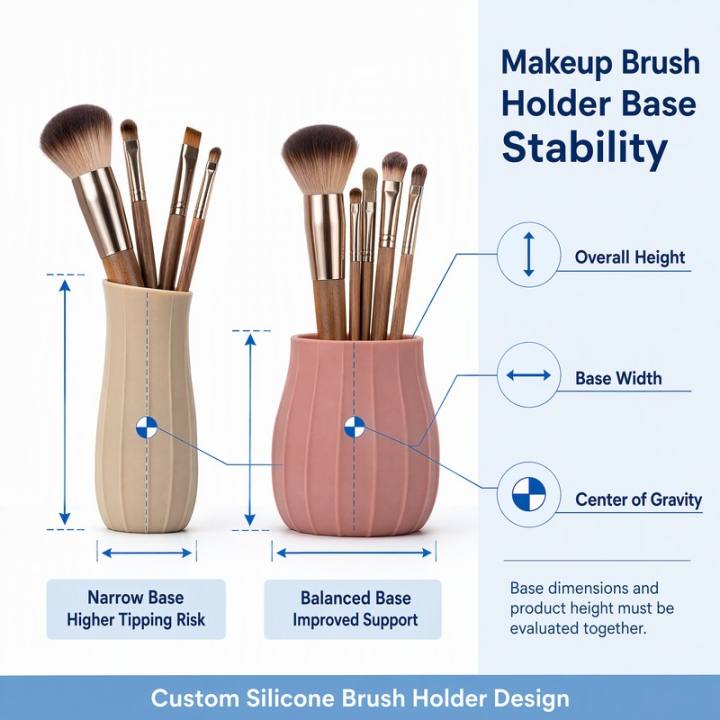
How a skin-contact beauty tool is quoted and run
Skin-contact products carry documentation requirements that general silicone parts do not.
Inputs
Product type, skin condition target, cleaning routine and any regulatory claim the brand intends to make.
Material
Platinum-cured silicone with a cure verification method and a declared additive list.
Validation
Hardness, surface finish, cure check and a cleaning-cycle test on production parts.
Volume and packing
Cavity count, colour, logo method and packaging that protects the applicator surface.
Storage, shelf life and yellowing
Platinum-cured silicone is stable in storage, but it is not immune to its environment. Prolonged exposure to UV, some cosmetic oils and certain packaging materials can discolour a light-coloured applicator, and a yellowed pad is returned even when it performs. Storing in an opaque pouch and avoiding direct sun covers most of the risk.
Shelf life statements should be based on a real ageing test rather than a default. A three-year claim with no data is a liability; a two-year claim with an accelerated ageing result behind it is a specification. For skin-contact products, the ageing test should also confirm that hardness and surface finish have not drifted beyond the values the brand published.
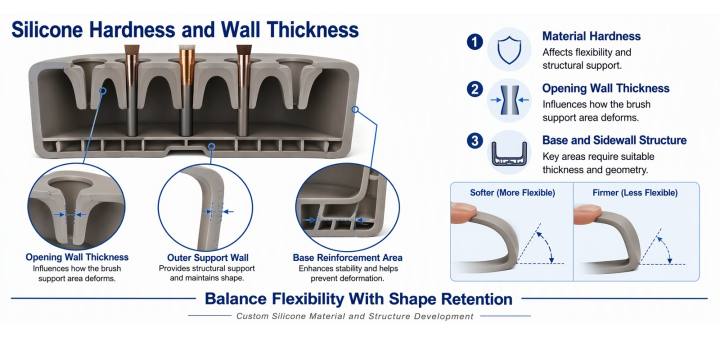
Questions from brands and formulators
Is silicone safe for acne-prone skin?
For most people the material is well tolerated. The practical risks are friction from a hard, dry pad and inadequate cleaning, not the silicone itself.
Will it make me break out?
A clean applicator rarely does; a dirty one can, like any tool. If the skin is actively inflamed, a clean finger or a soft synthetic brush is the safer choice until it settles.
Can I use it with liquid foundation?
Yes, and it is where silicone performs best: a smooth film, minimal absorption and a quick wipe-clean afterwards.
How often should it be replaced?
When the surface gloss dulls or an edge is damaged. There is no fixed interval, which is why the cleaning routine matters more than a replacement schedule.
Tell us the claim you intend to make
FromRubber moulds silicone beauty applicators and skin-contact tools in Dongguan, with cure verification and cleaning-cycle data supplied alongside the parts. Send the product concept, the claims you plan to publish and the cleaning routine; we will propose a material and a test package that supports them.
Request a beauty tool reviewRelated reading: silicone versus fibre powder puffs and custom silicone beauty tools.