Backlit Silicone Keypad Not Bright Enough? High‑Transparency Material Selection Tips
- Share
- publisher
- Suey
- Issue Time
- Aug 5,2026
Summary
Standard silicone scatters light (~70%). Use high‑transparency material (≥90%) with black coating to prevent bleed. FromRubber guides backlit silicone keypad design.

Standard silicone is only ~70% translucent and scatters light. For crisp backlighting, you need a different approach.
Backlit Silicone Keypad Technical Analysis
Ordinary silicone is only semi‑translucent, with a light transmission of around 70%. More importantly, it scatters light — causing a hazy, diffused glow that lacks clarity and color purity.
According to FromRubber’s Silicone Keypad Custom Molding Best Practices, the transmission rate of the material must meet the display requirements. For backlit applications, this is a critical parameter that affects user experience.
Light Transmission Comparison
| Material Type | Light Transmission | Light Scattering | Typical Applications |
|---|---|---|---|
| Standard Silicone | ~70% | High — diffuses light, loses sharpness | Non‑backlit, general‑purpose parts |
| High‑Transparency Silicone | ≥90% | Very low — crystal‑clear, like glass | Backlit keypads, optical components, premium displays |
| Transparent Colored Silicone (e.g., transparent red, blue) |
~75–85% | Low to moderate | Colored backlighting, decorative illumination |
Why High‑Transparency Matters for RGB
- Color purity: Standard silicone shifts LED color temperatures — reds look orange, blues look washed out. High‑transparency material preserves the LED's true wavelength.
- Sharpness: With lower scattering, legends stay crisp and distinct — no "halo" effect around characters.
- Brightness: Higher transmission means less light loss, so you can achieve the same brightness with lower LED power, saving energy and extending LED life.
Preventing Light Bleed
Even with high‑transparency material, uncontrolled light will travel through the silicone and illuminate adjacent areas. To prevent this, the non‑transmissive areas (side walls, base, and around the legend) must be light‑blocked.
Real‑World Backlit Silicone Keypad Case Studies
Gaming keyboard with RGB – Used standard translucent silicone. The RGB colors looked washed out — red was pale, blue was hazy, and legends were fuzzy.
After switching to high‑transparency silicone and adding black back‑coating, the colors became pure, legends sharp, and the product instantly elevated to premium tier.
Automotive dashboard backlit buttons – Required crisp, uniform white illumination with no bleed between adjacent buttons.
The final parts delivered sharp, clean illumination with zero cross‑lighting. The carmaker approved the design with no further modifications.
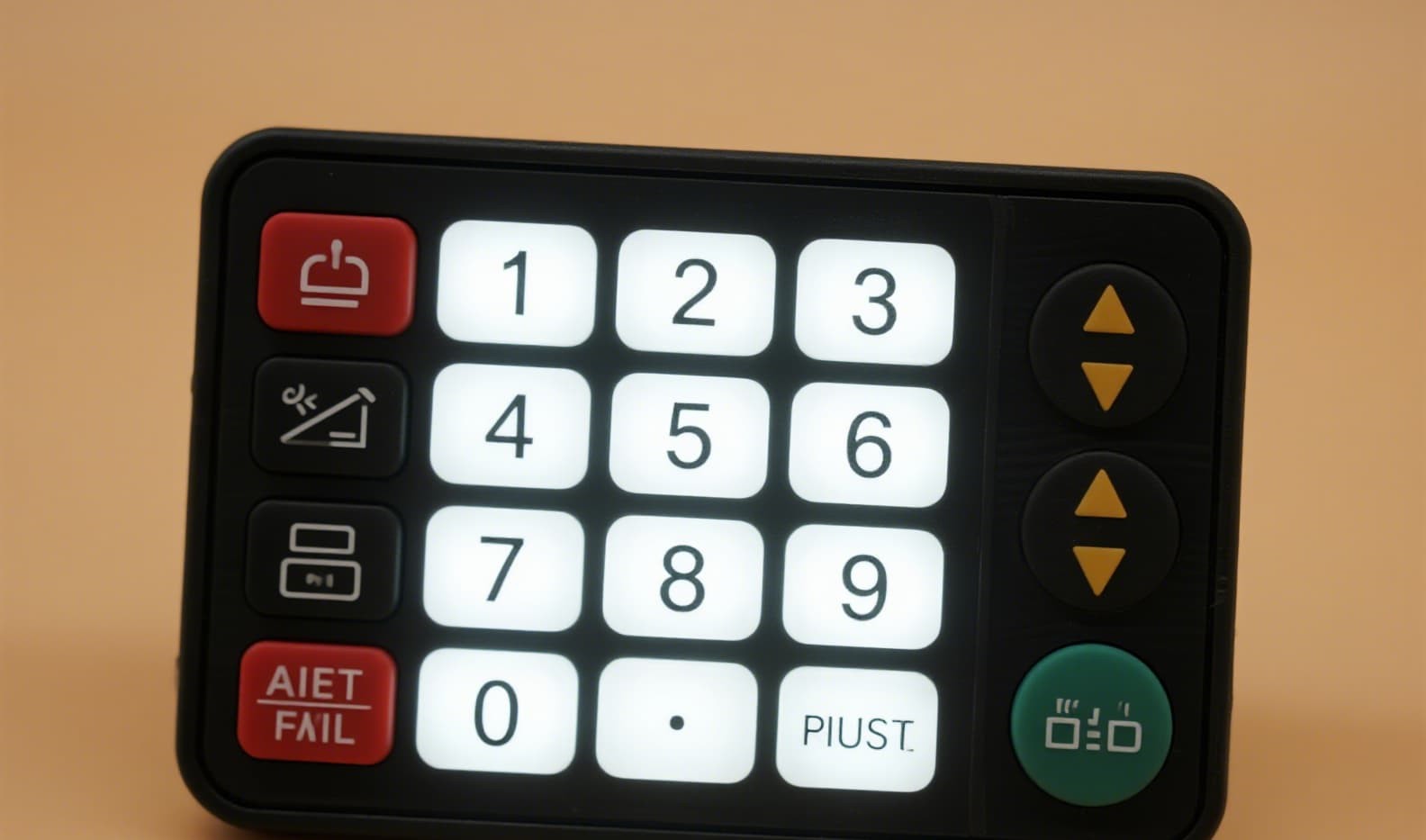
Actionable Solutions – The FromRubber Backlight Silicone Keypad Protocol
-
1
Specify high‑transparency silicone – On your drawing, explicitly require "high‑transparency silicone with light transmission ≥ 90% (measured at 550nm, 2mm thickness)." Don't just say "transparent" — define the performance metric.
-
2
Design light‑blocking features – Plan for either:
• Black coating: Specify that the underside of the keypad (except legend areas) must be coated with black ink.
• Light walls: Include ribs or walls in your 3D CAD that physically separate each key to prevent cross‑lighting. -
3
Match color and brightness – If using transparent colored silicone (e.g., red or blue), note that transmission drops to 75–85%. Adjust LED intensity or choose a higher‑brightness LED to compensate. FromRubber can provide transmission data for each color compound to help with optical design.
-
4
Validate with a light test – After molding, test the keypad under actual backlight conditions. Check for:
• Uniformity across all keys
• Color accuracy (use a colorimeter if possible)
• Absence of light bleed to adjacent keys
• Sharpness of legend edges -
5
Consider the full optical stack – The final illumination depends on more than silicone: LED placement, diffuser layers, and PCB reflectivity all matter. FromRubber can work with your optical/mechanical team to optimize the entire assembly.
-
6
DFM review of backlight strategy – Send your 3D CAD, backlight requirements, and LED specifications to FromRubber’s engineering team. We recommend the optimal material, coating method, and wall design — all within 24 hours.
The Bottom Line
Backlit silicone keypads demand more than just "translucent" material. Standard silicone (~70% transmission) scatters light, making colors dull and legends fuzzy. High‑transparency silicone (≥90% transmission) delivers pure, crisp, and bright illumination — essential for RGB gaming peripherals, automotive dashboards, and premium consumer electronics.
Equally important is light bleed prevention — without black coating or light walls, adjacent keys will glow, ruining the effect. A well‑designed backlit keypad combines material choice, optical design, and light‑blocking features into a single, cohesive solution.
FromRubber brings deep expertise in high‑transparency silicone compounds, light‑blocking coatings, and backlight‑optimized mold design. On your next backlit keypad project, let our engineering team help you choose the right material and design for a brilliant, premium lighting effect.