Benefits of Custom Silicone Keypad Manufacturing
- Share
- publisher
- karl
- Issue Time
- Jun 16,2025
Summary
Where custom silicone keypad manufacturing actually saves money: tooling amortisation, assembly steps removed, scrap and change orders, plus the design features that only exist once a tool is dedicated to your layout.
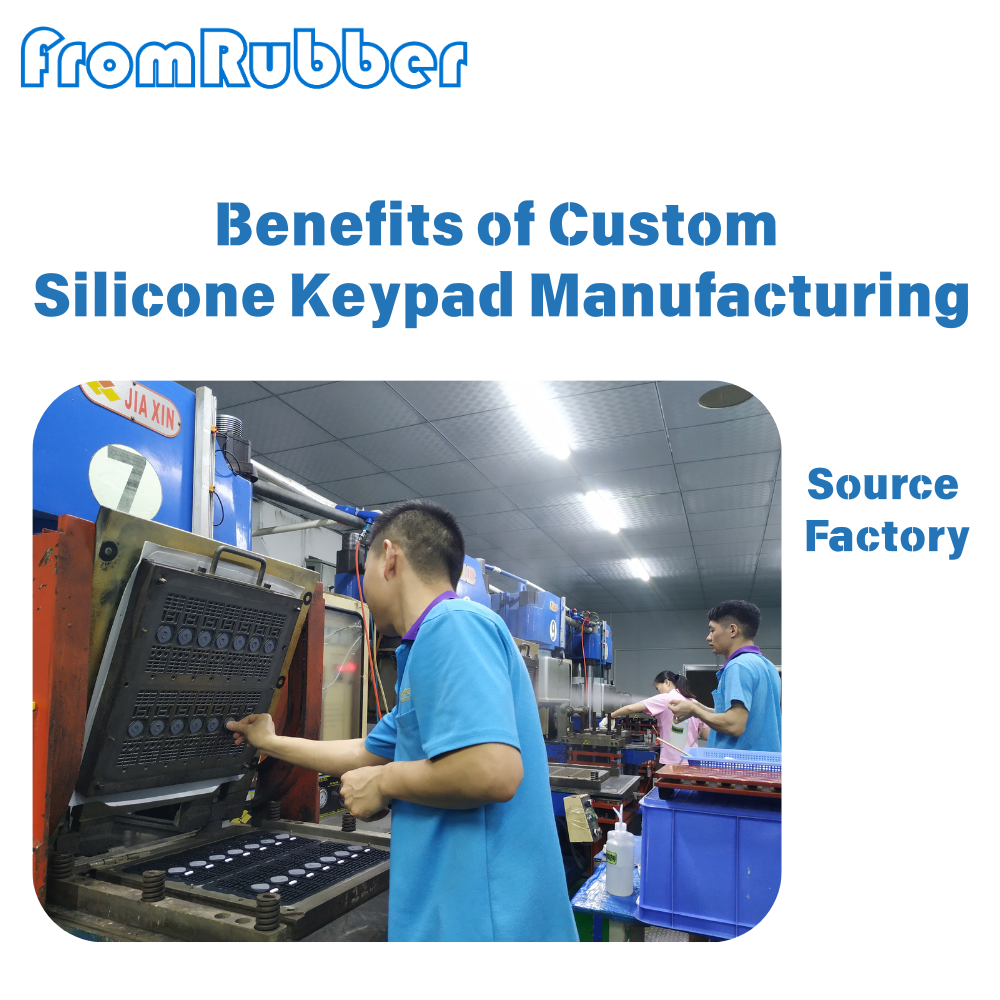
The case for custom silicone keypad manufacturing is usually argued as a quality argument. It is easier to defend as a cost argument, because most of the savings are countable: fewer assembly operations, less incoming inspection, fewer change orders and less scrap at the panel builder.
This article separates the four places the money actually goes from the features you cannot get from a catalogue keypad, and explains what to scope before asking for a quotation.
What Custom Silicone Keypad Manufacturing Changes
A catalogue keypad forces the product to fit the keypad. Custom tooling does the opposite: the layout, key height, legend, actuation force and sealing lip are all made to the housing. The immediate effect is that the panel assembler stops handling individual keys, domes, spacers and legend foils.
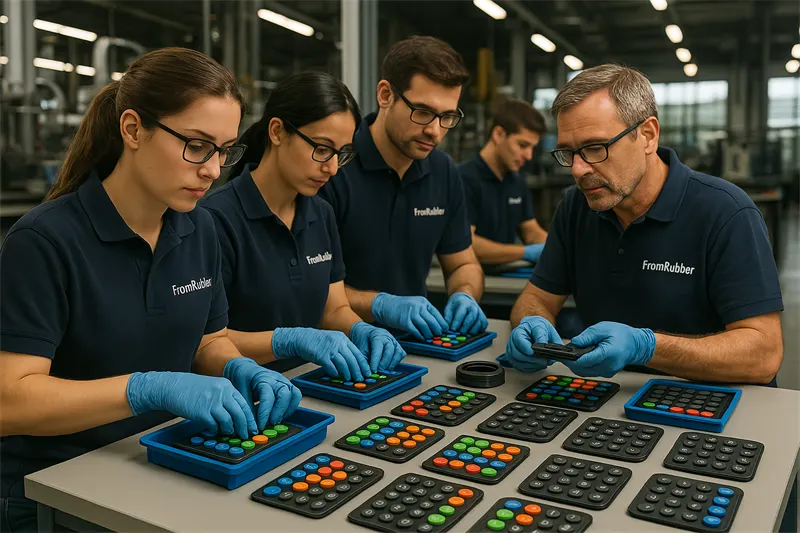
The second effect is less visible but usually larger. When one moulded part replaces four or five purchased parts, the tolerance stack gets shorter. Shorter stacks mean fewer rejected assemblies and fewer arguments between suppliers about which component caused the failure.
Where Custom Silicone Keypad Manufacturing Saves Money
| Cost line | Catalogue keypad | Custom silicone keypad manufacturing |
|---|---|---|
| Part count | Keypad, spacer, legend foil, gasket, adhesive | One moulded mat |
| Assembly labour | Several placement steps per unit | Locate and clamp |
| Incoming inspection | Each component inspected and reconciled | One part, one drawing |
| Sealing | Separate gasket with its own tolerance | Moulded lip on the same part |
| Legend durability | Printed foil that can lift | Moulded, printed or laser-etched legend |
| Engineering changes | Limited to what the catalogue offers | Tool insert change or new tool |
How tooling cost behaves in custom silicone keypad manufacturing
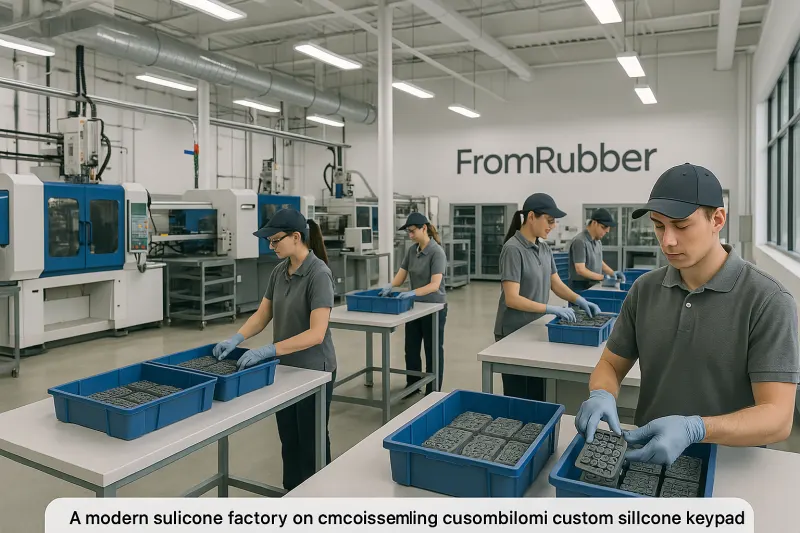
Tooling is a one-off, and it is the number that makes buyers hesitate. The honest way to evaluate it is per unit over the real programme volume, not over the first order. A keypad tool amortised across a two-year build is usually small compared with the assembly labour it removes. Where tooling genuinely dominates is in low-volume or uncertain programmes, and in that case a machined or prototype tool for validation, followed by production steel only after the design is frozen, is the cheaper route.
Commercial note: Ask for tooling life and maintenance terms, not only the tooling price. A tool quoted without a maintenance clause is a tool whose replacement cost lands on the buyer in year two.
Design Benefits That Only Come From Custom Tooling
Three features are effectively unavailable on a catalogue part. The first is a sealing lip moulded into the mat perimeter, sized to the housing groove. The second is backlighting designed with the key layout, so the light path and the legend are decided together rather than retro-fitted. The third is an actuation force that matches the operator: a gloved industrial user and a bare-fingered laboratory user need different curves from the same layout.
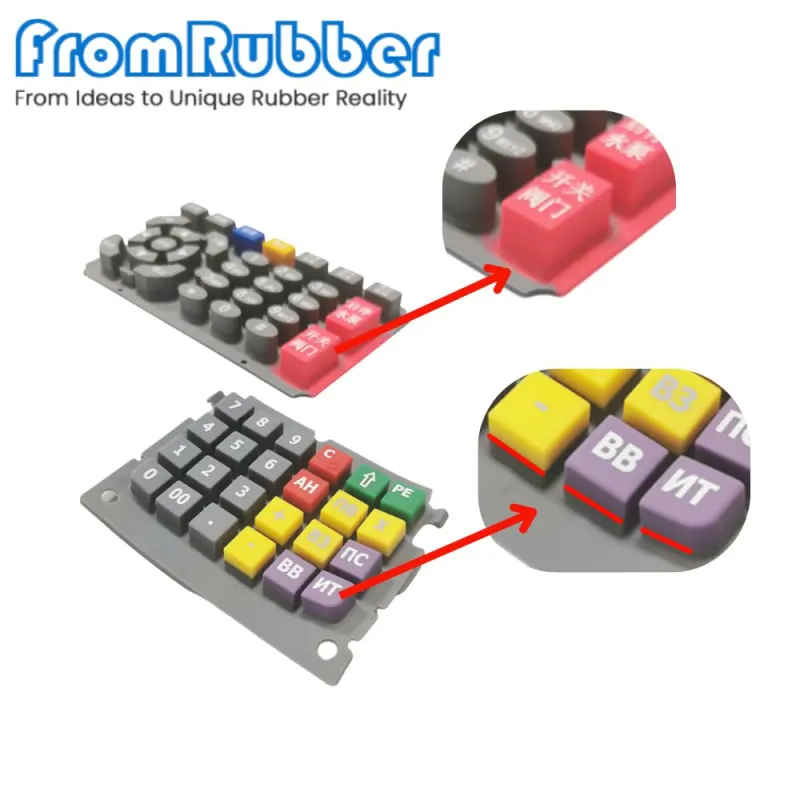
Custom tooling also makes the legend part of the part. Moulded relief survives solvents, laser etching through a coating survives abrasion, and both stay registered to the key centre because they are produced from the same tool. On a multi-language product, that registration is what allows a single tool to carry several artwork variants without moving the keys.
How to Scope a Custom Silicone Keypad Manufacturing Project
Scope four things before requesting a quote: the key layout with dimensions, the environment and cleaning regime, the number of presses expected over life, and the panel interface. Everything else, including material, hardness and legend process, follows from those.
It also helps to say what the product must not do. A keypad that must never trigger under a resting palm needs a higher peak force; one that must never be felt through a glove needs a sharper snap. Those constraints are cheaper to design in than to discover at first article.
When the design is still fluid, the fastest route is a short engineering review against a similar completed layout. Our notes on five considerations in silicone keypad customization and on tactile feedback cover the two decisions that most often force a tool change.
What a custom silicone keypad manufacturing quote should contain
- Construction: substrate hardness, mat thickness, web type and pill specification if conductive.
- Tooling: cavity count, tool life, maintenance terms and who owns the tool.
- Legend process and colour references, with the artwork file format expected.
- First-article report covering force, travel, dimensions and legend registration.
- Packing, traceability and the batch size at which unit price steps down.
Is custom silicone keypad manufacturing worth it below 1,000 units?
Usually only if the keypad carries a feature the catalogue cannot supply, such as a sealing lip or a specific force curve. Below that volume, a machined prototype tool plus a standard construction is often the better compromise until the design stops changing.
Can an existing catalogue keypad be copied exactly?
It can be measured and reproduced, but the copy will not match the original force curve unless the web geometry and compound are also characterised. A dimensional copy is straightforward; a functional copy needs a sample to test.
Custom silicone keypad manufacturing pays back through part count, assembly steps and tolerance stack, not through a lower piece price. Scope the layout, the environment, the press count and the panel interface, ask for tooling life and a first-article report, and compare the total cost of the assembled panel rather than the price of the keypad.