Built to Fit, Built to Last: Why Custom Automotive Rubber Parts Make All the Difference
- Share
- publisher
- Suey
- Issue Time
- Jun 20,2025
Summary
Why custom automotive rubber parts outperform universal parts: material choice for heat, fuel and weather, compression set under load, validation before a part reaches a vehicle, and change control.
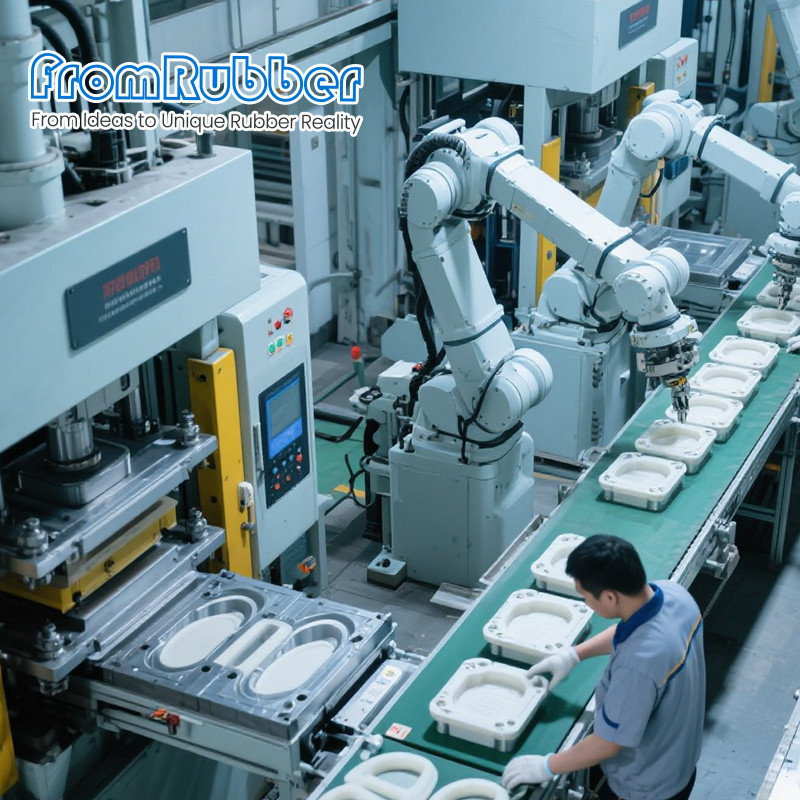
A universal rubber part fails in a specific way: it fits, it seals for a while, and then it takes a set or swells in the fluid it was never formulated for. Custom automotive rubber parts are specified to remove that failure mode rather than to move it further down the service interval.
The difference is not craft. It is that material, geometry and validation are chosen together for one installation, one fluid and one temperature profile.
Why Custom Automotive Rubber Parts Fail Where Universal Parts Do Not
Rubber parts are usually selected from a catalogue by dimension, then expected to survive whatever the vehicle does. The catalogue dimension is easy to match; the compound behind it is not. A seal that is correct in a dry, temperate application can swell, harden or crack in an engine bay that sees fuel vapour, heat cycling and road salt.
Custom parts address that by starting from the environment. The compound is chosen for the fluids and temperatures the part will meet, the geometry is designed for the groove it sits in, and the validation reproduces the service conditions. Only then does the dimension matter.
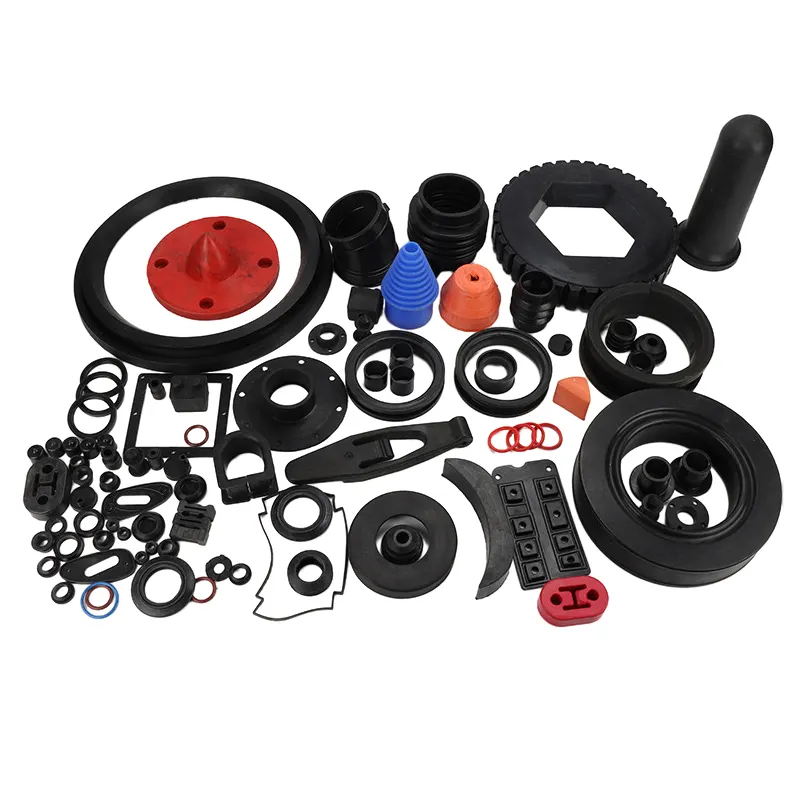
Material Choice in Custom Automotive Rubber Parts
| Material | Strength | Typical automotive use |
|---|---|---|
| EPDM | Weather, ozone, water and steam resistance | Door seals, cooling circuit seals, exterior trim |
| FKM | Fuel, oil and high temperature resistance | Fuel system seals, engine bay components |
| Silicone | Wide temperature range, flexibility when cold | Boots, grommets, high-temperature non-fuel areas |
| NBR | Oil resistance at moderate cost | Oil seals away from high heat |
| HNBR | Oil plus heat and mechanical load | Drive and power transmission seals |
Sealing behaviour that custom automotive rubber parts must hold
A seal works because it stores energy. Compression set is the measure of how much of that energy is lost permanently under load, heat and time, and it is the property that decides whether a joint still seals at the end of a service interval rather than at the start. Two seals can share a drawing and a hardness and differ substantially in compression set, which is why the material callout in a custom part should name the property and the test condition, not only the compound family.
Design note: Groove fill, stretch and compression percentage interact. A seal that is over-filled in its groove cannot deform enough to follow thermal movement, and it will leak at the coldest point of the cycle rather than the hottest.
Validation Before a Part Goes on a Vehicle
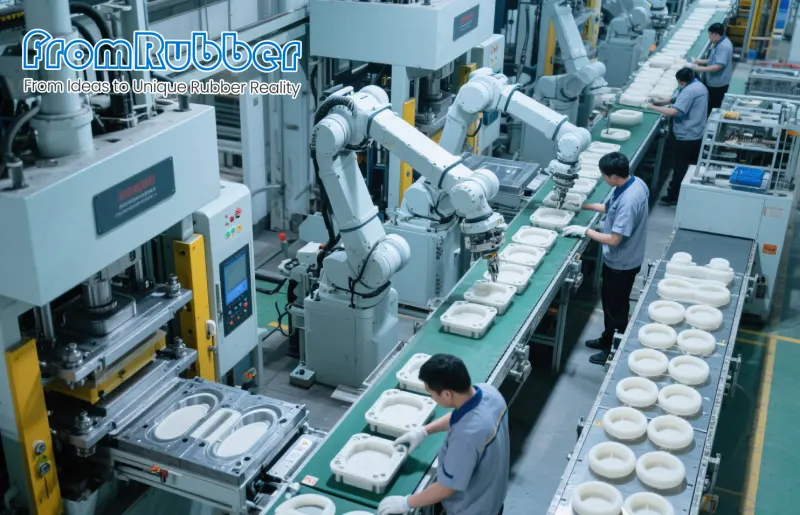
A sensible validation plan covers four things: the installed state, the thermal cycle, the fluid exposure and the mechanical load. Each produces a measurable result - compression set, hardness change, volume swell, tear or leak rate - and each should have an acceptance limit agreed before testing starts.
Accelerated aging is useful but has limits: it predicts a mechanism, not a service life. When a supplier presents an accelerated result, ask which mechanism the test was chosen to reproduce. Heat aging does not predict ozone cracking, and fluid immersion does not predict cold flexibility.
Tooling and Change Control for Custom Automotive Rubber Parts
Two commercial details decide whether a programme runs smoothly. The first is tool ownership and maintenance: who holds the tool, who pays for wear, and what the refurbishment interval is. The second is compound traceability, so that a batch of parts can be traced to a compound lot when a field issue appears.
Change control matters more in automotive than in most industries because a silent substitution is invisible until warranty data arrives. A supplier should commit in writing to notify a change of compound, a change of sub-supplier or a change of process before it ships.
For parts that combine rubber with a metal insert or a plastic housing, the design conversation moves into over-moulding, where bonding and substrate preparation become part of the specification.
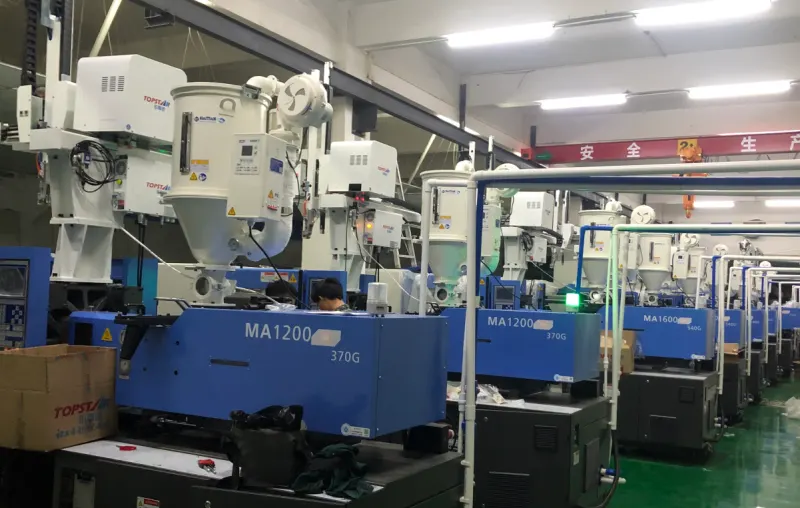
What to put on a custom automotive rubber parts drawing
- Compound family and the property that matters most, with its test condition.
- Hardness band, and the groove or mating surface the part must seal against.
- Fluid and temperature exposure, including cleaning and service chemicals.
- Compression set or leak limit as an acceptance criterion.
- Insert, bonding or assembly requirements if the part is not homogeneous.
Can silicone replace EPDM in exterior automotive seals?
It can survive the weather, but it is usually more expensive and less resistant to some oils and fuels. EPDM remains the default for exterior sealing; silicone is chosen where temperature range or cold flexibility dominates.
How long should automotive rubber parts last?
The honest answer is defined by the validation plan and the service conditions, not by a single number. Agree the acceptance criteria for compression set, hardness change and leak rate first, then the life claim follows from the data.
Custom automotive rubber parts are specified from the environment backwards: fluid and temperature first, then compound, then geometry, then validation with agreed limits. Add tool ownership and a notification commitment to the purchase terms, and the part has a defined life rather than an optimistic one.