Buying Guide: How to Select the Right Silicone Bath Toy
- Share
- publisher
- Suey
- Issue Time
- Aug 26,2025
Summary
A buyer's specification guide for a custom silicone bath toy: one-piece construction and drainage, material and colourant documentation, the test matrix to run after first article, and the tooling and labelling decisions at ordering.
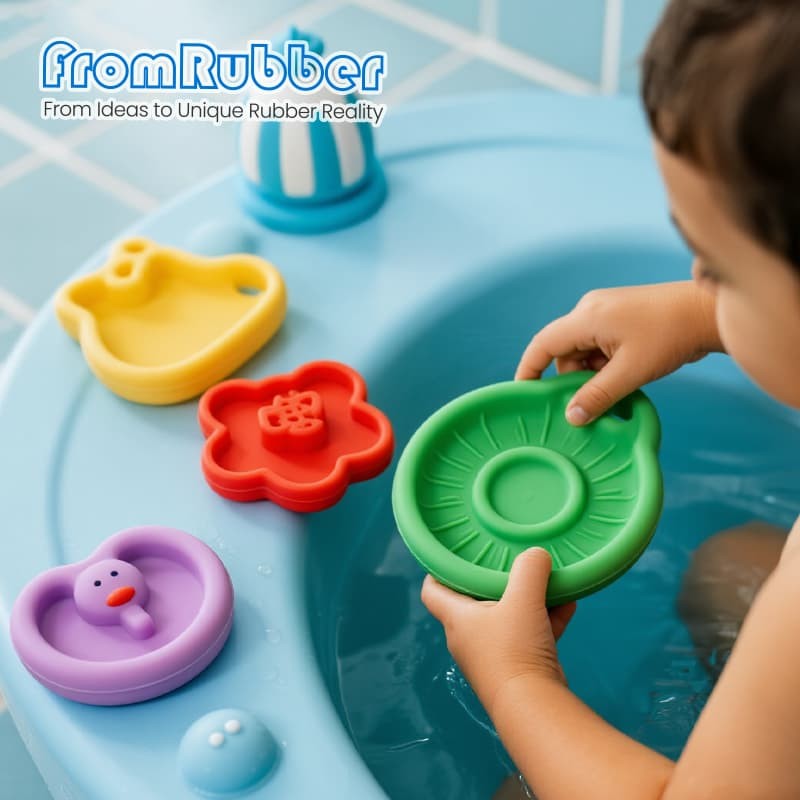
A bath toy spends its life wet, is squeezed hundreds of times, and ends up in a child's mouth. That combination turns a simple shape into a compliance and hygiene problem, and the decisions that solve it are made in the mould, not in the packaging.
This is a buyer's specification guide for a custom silicone bath toy: what to put in the brief, what to test, and which failure modes a retailer will not forgive.
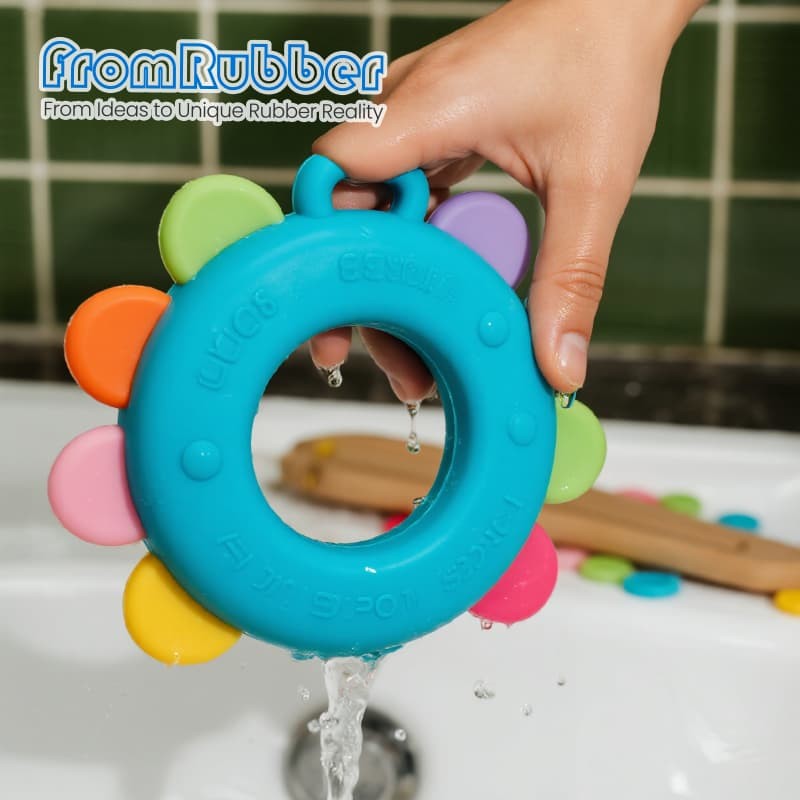
What Should a Brand Specify for a Custom Silicone Bath Toy?
The direct answer: one-piece construction, no trapped cavity that cannot drain, a material and colourant system documented for skin and mouth contact, and a test plan agreed before the tool is cut. Everything else is shape.
Shape sells the product; construction decides whether it survives the first month. A toy assembled from two moulded halves looks identical on a shelf and behaves completely differently in a bath, because the joint is where water enters and where mould grows.
Seams, Holes and the Mould Problem Inside
Three constructions exist, and the hygiene consequences differ sharply.
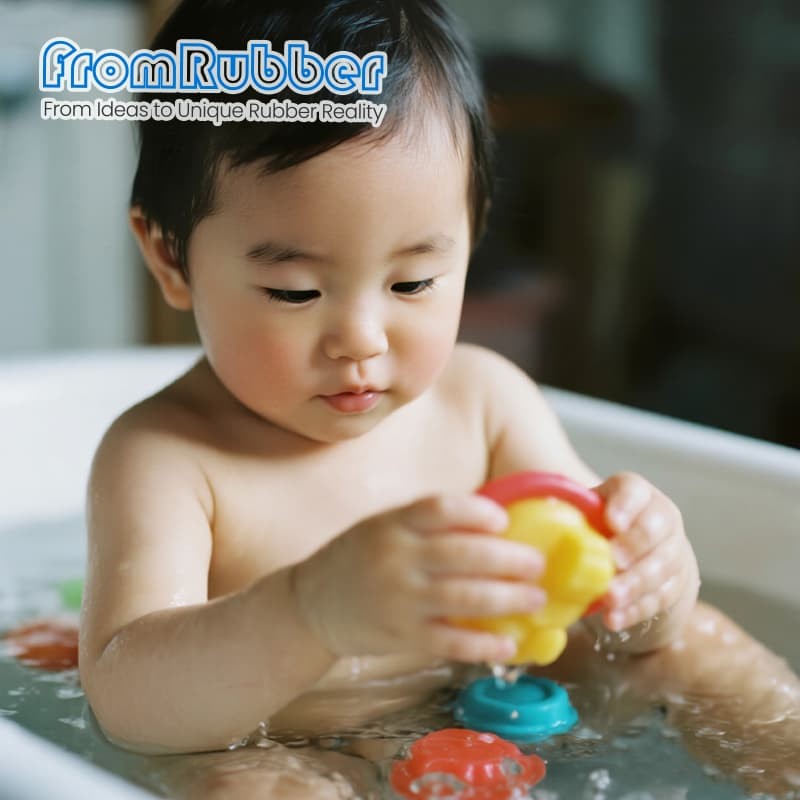
The practical rule is that any hollow toy has to drain by gravity in the position a parent will leave it. A drain hole on the side, rather than the bottom, is a design error that only appears after weeks of use.
The table is ordered by how easily each construction is cleaned, which is the property a parent actually judges. A solid toy has no internal volume, so the question of what grows inside never arises.
Where a hollow shape is needed for weight or for a squeaker, the drain belongs in the tool, positioned so gravity empties it in the position the toy is stored.
| Construction | Hygiene behaviour | Notes |
|---|---|---|
| Solid one-piece | No internal volume, nothing to trap | Heavier, more material, easiest to clean |
| Hollow one-piece with drain | Water passes through if the drain is large enough | Drain must be at the lowest point in use |
| Assembled halves | Water enters the joint and cannot leave | The classic mould complaint; avoid for bath use |
Material and Colour: What Belongs in the Specification
Naming "silicone" is not a specification. The useful entry names the grade family, the hardness, the colourant system and the surface finish, and states that the finished article is what will be tested.
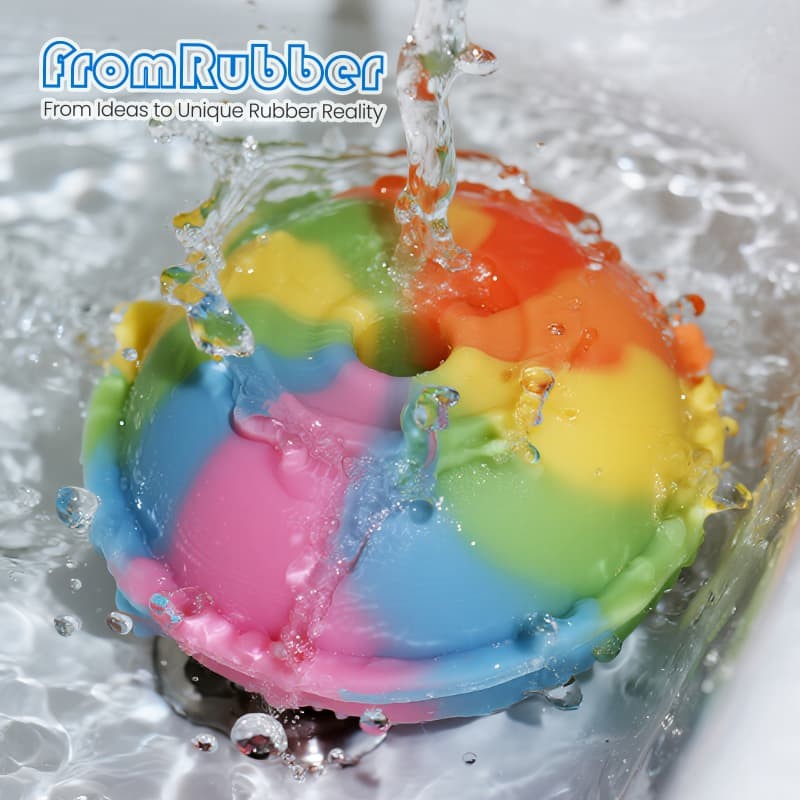
Colour deserves particular attention in this category. Bright pigments are often the reason a toy sells, and they are also the part of the formulation most likely to be changed by a supplier between batches. Lock the colour to a physical standard and require notification of any change, because a pigment substitution can invalidate the test report the brand is relying on.
Two Properties That Predict Real-World Failure
- Tear strength at thin sections. Toys fail at the thinnest point, usually where a tail, handle or ear joins the body.
- Compression set. A toy that is squeezed constantly and does not return loses its shape and starts to look tired within a season.
The Test Matrix Before You Commit to Volume
Four groups of tests cover the risks in this category. Physical tests for small parts and pull strength, because a detachable piece is the most serious hazard. Chemical tests for the materials actually used, on the finished article. Ageing tests that simulate repeated wet use, including a wash cycle at the temperature the care instructions will claim. And a labelling check, because the warnings and age marking have to match the market you ship to.
The sequencing matters. Chemical and physical testing on a prototype moulded from the production tool is meaningful; testing a hand-made sample is not, because the sample and the production part are different objects. Budget the test programme after first article, not before.
Ask the supplier which laboratory performs each test and whether the report names the article and the material lot. A report that names only the material tells a retailer very little about the toy in the box.
Ordering: Tooling, Sampling and Labelling
Three cost lines beyond the part: tooling, colour minimum and packaging. Tooling follows the number of parts and whether the toy is one piece or a family. Colour minimum follows the compound batch, which is why a five-colour range can cost more in material commitment than in tools.
Sample in the final colour, with the final packaging, and test that sample rather than an earlier one. Where the toy is part of a set, sample the whole set, because a small accessory is usually the item that fails the small-parts check. Constructions and finishing options are shown on our custom silicone product page, and the same one-piece moulding logic applies to other skin-contact items such as a custom lipstick silicone case.
Frequently Asked Questions
Is silicone better than PVC for a bath toy?
Silicone avoids the plasticiser question that makes flexible PVC difficult in child-contact applications, and it tolerates heat and repeated wet use well. The trade-off is cost and a narrower range of very soft hardnesses.
How do I stop mould growing inside a bath toy?
Design it so there is no inside: a solid moulding, or a hollow one with a drain at the lowest point in normal use. Once a hollow toy without drainage is in service, no cleaning routine reliably fixes it.
Can a bath toy carry a brand logo?
Yes, as moulded relief, in-mould colour or a printed mark. Moulded relief is the most durable in water, while surface printing is the first thing to lift in a bath.