Case Study: Custom Silicone Keypad Development for an Air Quality Monitoring Device
- Share
- Issue Time
- Jul 3,2026
Summary
Explore our full case study on developing custom silicone keypads for an industrial air quality monitoring device, covering DFM optimization, conductive material formulation, precision mold fabrication, and mass production quality control.

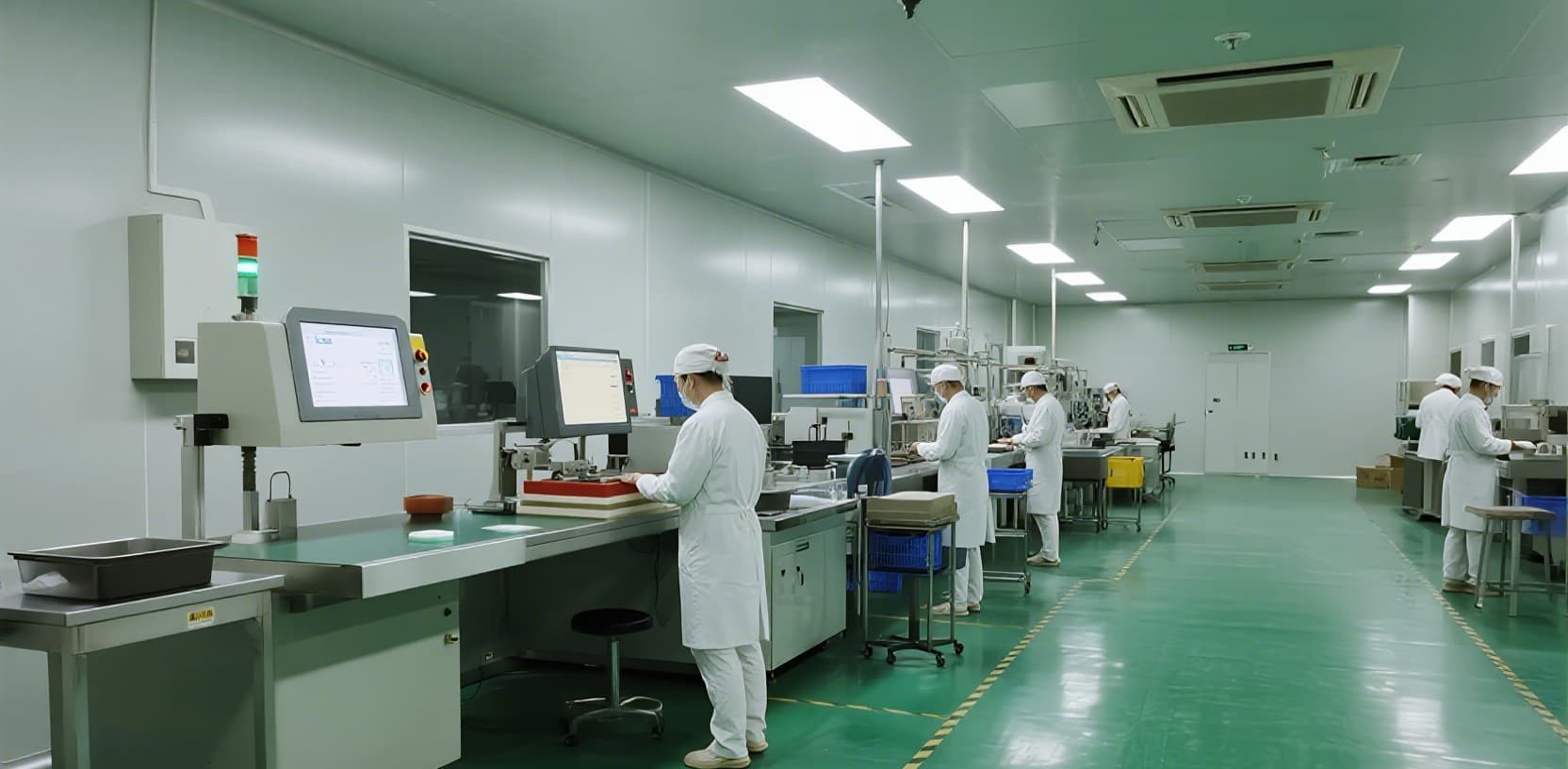
When a European environmental technology company approached us with a requirement for custom silicone keypads for their next-generation industrial air quality monitoring device, they brought more than just a 2D drawing. They brought a set of stringent performance requirements: the keypad needed to withstand continuous operation in industrial environments, provide reliable tactile feedback through more than 500,000 actuation cycles, resist exposure to chemical vapors and temperature fluctuations, and integrate seamlessly with a sensitive PCB assembly that housed air-quality sensors. This case study walks through the complete development lifecycle of that project — from initial drawing review and DFM optimization, through conductive silicone compound formulation and precision mold fabrication, to sample validation, mass production, and final delivery. It offers OEM engineers, procurement professionals, and product developers a transparent look at how a professional silicone keypad manufacturer approaches a technically demanding custom project. The client, a well-established environmental monitoring company based in Germany, had developed a wall-mounted air quality detector for commercial and industrial buildings. The device measured PM2.5, PM10, CO₂, temperature, and humidity, and displayed real-time readings through an OLED screen. The user interface required a 12-key silicone keypad for menu navigation, parameter setting, and alarm configuration. These parameters immediately signaled that this was not a standard off-the-shelf keypad project. Each specification required careful engineering validation throughout the development cycle. The client submitted a preliminary 2D engineering drawing with key dimensions, button profiles, and mounting features. Our engineering team conducted a thorough Design for Manufacturability (DFM) analysis before any tooling work began — a step that consistently prevents costly revisions later in the process. During the DFM review, our engineers identified several areas where design adjustments would significantly improve manufacturability and end-product reliability: All DFM recommendations were documented in a structured DFM report and reviewed with the client's engineering team within three business days. The client approved all changes, and the revised drawing was locked for mold design. Material selection was one of the most critical decisions in this project. The keypad needed to deliver consistent tactile response across a wide temperature range while maintaining stable electrical conductivity through the carbon pill contacts. After evaluating multiple candidate materials, our material engineers selected a 60 Shore A platinum-cured silicone rubber as the base compound. This hardness grade offers an excellent balance of tactile responsiveness and durability for keypad applications with a targeted operating force of 180 g. The conductive pills at the bottom of each key were formulated using a high-purity conductive carbon black dispersed in a silicone carrier matrix. The target volume resistivity was below 5 ohm·cm to ensure a contact resistance of less than 100 ohms after 500,000 cycles. Our R&D team conducted five iterative formulation trials to optimize the carbon loading percentage, balancing conductivity against mechanical integrity. The final formulation achieved a contact resistance of 35–55 ohms — well within specification — and passed all adhesion and wear tests during sample validation. With the design locked and materials selected, the project moved into the mold development phase. The mold for this keypad was a precision compression mold machined from high-grade tool steel (S136H), heat-treated to 48–52 HRC for extended tool life. The mold cavity was rough-machined using 5-axis CNC milling, followed by finish EDM (electrical discharge machining) to achieve the required surface finish of Ra 0.4 µm on the cavity surfaces. Key features — including the button cavities, web channels, and alignment pin recesses — were machined to tolerances of ±0.02 mm. After mold fabrication, we conducted a first-article mold try-out using the approved material compound. The initial samples revealed a minor flow-mark issue at the edges of two large keys. Our tooling team made a targeted surface polish adjustment to the affected cavity regions, and the second try-out produced samples with clean surfaces and consistent edge definition across all 12 keys. Total mold development time: 18 working days. Before approving the mold for mass production, the client required a formal sample validation protocol. We prepared 50 pre-production samples from the approved mold and subjected them to a comprehensive testing program. Using a digital force-displacement testing machine, we measured the actuation force, travel distance, and snap ratio for every key on all 50 samples. The force-displacement curve for each key was recorded and compared against the design specification. Five samples were selected for accelerated life-cycle testing. Each key was actuated 500,000 times at a rate of 2 cycles per second using a pneumatic test fixture. The keypads were inspected at 100,000-cycle intervals for changes in actuation force, contact resistance, and visual appearance. After 500,000 cycles, all five samples showed: The client's quality team received the full test report, including force-displacement curves and cycle-life data, within two weeks of sample delivery. With sample validation complete and the mold approved, we moved into mass production. The initial production order was 5,000 keypad units, scheduled for delivery within 25 working days. Each batch of silicone compound was tested for hardness, tensile strength, and specific gravity before entering production. Only batches meeting all specification limits were released for molding. During compression molding, operators performed hourly visual and dimensional checks using go/no-go gauges and digital calipers. Key parameters monitored included: Every finished keypad underwent a 100% visual inspection under controlled lighting, followed by a functional actuation test using a custom-designed pneumatic jig. A random AQL sampling plan (Level II, AQL 0.65) was applied for dimensional and force verification. The final yield was 98.6%, with all rejected units attributed to minor cosmetic flash that did not affect functionality. A critical step before shipment was dimensional verification of the finished keypads against the client's housing assembly. We performed a 100% dimensional inspection on a representative sample using a digital profile projector, verifying all 24 critical dimensions specified in the client's drawing. The maximum deviation observed was 0.08 mm — well within the ±0.15 mm tolerance band. The keypads were then trial-fitted into three sample housings provided by the client. The fit was smooth across all samples, with no binding, gaps, or misalignment issues. The IP54 sealing lip compressed evenly against the housing bezel, confirming the sealing design was correct. Total project duration from drawing receipt to shipment: 66 working days — on schedule and within the client's target timeline. Upon receipt of the production shipment, the client's procurement and engineering teams conducted their own incoming inspection. The formal feedback included the following highlights: The client has since placed two follow-up orders for the same keypad design and has initiated discussions for a second project involving a backlit silicone keypad for their next-generation product platform. For a project of this complexity — with new mold development and material qualification — the typical lead time is 8 to 12 weeks from drawing approval to first shipment. Simpler projects may be completed in 4 to 6 weeks. We accept STEP, IGES, DXF, and PDF formats. 3D solid models (STEP preferred) allow us to perform the most thorough DFM analysis. We provide a structured DFM report within 3 to 5 business days of receiving your design. Submit your design files for a free DFM review. Our standard MOQ is 1,000 units for new projects involving custom tooling. For smaller quantities, we offer rapid prototyping with 3D-printed molds, which can produce 50 to 500 units for testing and market validation. Yes. We offer multiple backlighting solutions including laser-etched light-transmitting windows, molded-in light guide features, and fiber-optic backlighting. These can be discussed during the DFM phase of your project. This project illustrates the value of a structured, engineer-led approach to custom silicone keypad development. By investing time in early-stage DFM analysis, rigorous material qualification, and transparent validation testing, both the manufacturer and the client benefited from reduced risk, predictable timelines, and a finished product that met every technical requirement on the first production run. For OEM engineers and procurement professionals evaluating silicone keypad suppliers, this case study highlights the specific capabilities to look for: in-house mold fabrication, conductive material formulation expertise, documented quality control processes, and a commitment to engineering communication throughout the project lifecycle. If you are developing a product that requires a custom silicone keypad, we welcome the opportunity to discuss your project. Contact our engineering team to begin the conversation.
1. Executive Summary: From Design Challenge to Production Success
2. Client Background and Technical Requirements
2.1 Key Technical Specifications
3. Design Phase: Drawing Review and DFM Optimization
3.1 DFM Findings and Recommendations

4. Material Selection: Conductive Silicone Compound Formulation
4.1 Base Silicone Material
Property
Test Method
Specification
Result
Hardness
ASTM D2240
60 ± 3 Shore A
61 Shore A
Tensile Strength
ASTM D412
≥ 7.0 MPa
8.2 MPa
Elongation at Break
ASTM D412
≥ 350%
420%
Tear Strength
ASTM D624
≥ 20 kN/m
26 kN/m
Compression Set
ASTM D395 B
≤ 25%
18%
4.2 Conductive Carbon Pill Development
5. Mold Development: Precision Tooling Fabrication
5.1 CNC Machining and EDM Processing
5.2 Mold Try-Out and Iteration
6. Sample Validation: Tactile Testing and Cycle Life Verification
6.1 Tactile Force and Travel Testing
Parameter
Target Range
Measured (Average)
Pass Rate
Actuation Force
160 – 200 g
178 g
100%
Travel Distance
0.40 – 0.60 mm
0.48 mm
100%
Snap Ratio
40% – 60%
52%
100%
Contact Resistance
< 100 ohms
42 ohms
100%
6.2 Cycle Life Testing
7. Mass Production: Quality Control and Delivery Management
7.1 Incoming Material QC
7.2 In-Process Inspection
7.3 Final QC and Packaging

8. Dimensional Verification and Fit Assessment
9. Project Timeline and Milestone Summary
Phase
Duration
Key Deliverable
DFM Review
3 days
DFM report with 4 optimization recommendations
Material Formulation
7 days
Approved conductive silicone compound
Mold Fabrication
18 days
Tried-out and approved production mold
Sample Validation
10 days
Comprehensive test report with all parameters passing
Mass Production
25 days
5,000 units produced with 98.6% yield
Final Inspection & Shipment
3 days
QC report, certificate of conformance, packed shipment
10. Client Feedback and Lessons Learned
11. Frequently Asked Questions
What is the typical lead time for a custom silicone keypad project?
What file formats do you accept for DFM analysis?
What is the minimum order quantity for custom silicone keypads?
Can you integrate backlighting into silicone keypads?
12. Conclusion: What This Case Study Demonstrates