Case study & manufacturing insights of medical infusion pump keypad & payment terminal keypad
- Share
- publisher
- Suey
- Issue Time
- Jan 14,2026
Summary
We explore a medical infusion pump silicone keypads requiring chemical resistance and silent operation, and an outdoor payment terminal keypad built for UV stability and extreme temperatures. Each case breaks down specific material choices, tactile engineering solutions, and validation results, demonstrating how minute details in durometer, sealing, carbon pill placement, and surface finishing directly impact reliability and user experience in demanding environments.
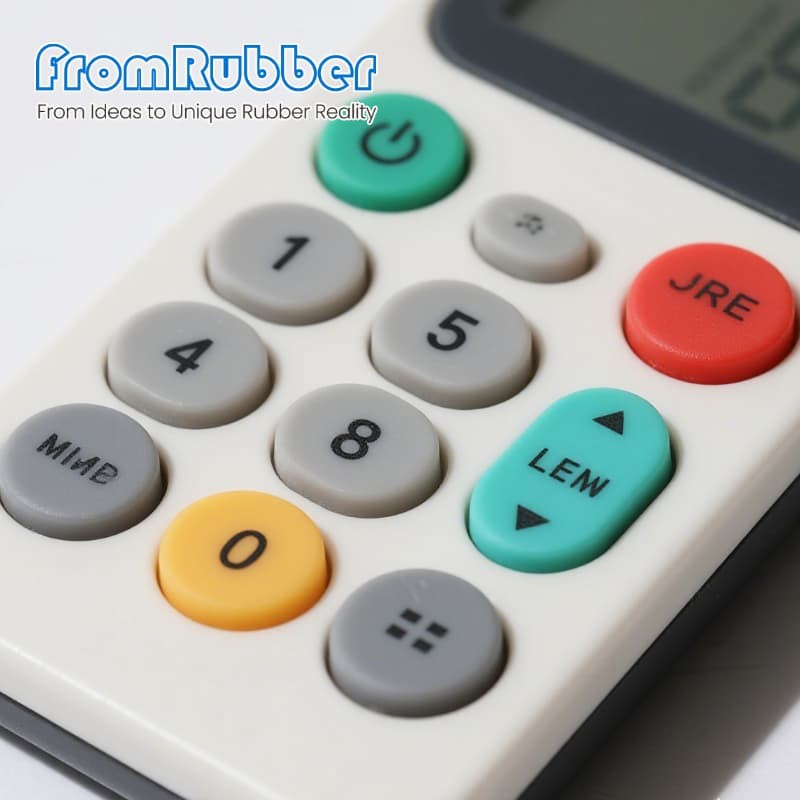
Silicone Keypads: Real-World Case Studies & Manufacturing Insights
Practical Lessons from Custom Engineering and Production
Why Silicone Keypads Remain Critical in Modern Interfaces
In an era dominated by touchscreens, silicone rubber keypads continue to serve vital roles across industries—from medical devices to industrial controls—where tactile feedback, durability, and reliability are non-negotiable. At FromRubber, we've engineered keypads for applications where failure is not an option. Below are two detailed case studies that illustrate how subtle design and material choices translate into real-world performance.
Each project began with a deep dive into the user environment, actuation force requirements, lifecycle expectations, and regulatory constraints. The devil is in the details: dome switch travel, carbon pill placement, embossing angles, and even the durometer of the base layer can make or break a keypad's success.
Expert Insight: The 0.1mm tolerance in mold manufacturing often determines whether a keypad achieves 1 million or 5 million actuation cycles.
Case Study #1: Medical Infusion Pump Keypad
Challenge: Chemical Resistance & Silent Operation
A medical device manufacturer approached FromRubber with a critical need: a keypad for a next-generation infusion pump that would withstand daily disinfection with aggressive cleaners (including alcohol and bleach-based solutions) while maintaining near-silent operation in hospital environments.
Detailed Specifications & Solutions:
- Material Selection: We specified a medical-grade silicone compound with a durometer of 50 Shore A—soft enough for quiet pressing but resistant to swelling or degradation from chemicals. The formulation included platinum-cure additives for enhanced inertness.
- Sealing Strategy: Instead of a standard perimeter seal, we designed a fully encapsulated keypad with a 0.5mm thick flashing between keys to prevent liquid ingress, yet thin enough not to impede tactile response.
- Tactile Engineering: Polyester dome switches with a travel distance of 0.25mm were embedded to provide consistent actuation force of 180±10g, verified across 5 million cycles in testing. The carbon pill diameter was increased to 3.5mm to ensure reliable contact despite potential slight misalignment during assembly.
- Surface Texture: A light matte finish (gloss level below 10 GU at 60°) was applied to reduce fingerprint visibility while maintaining a smooth, cleanable surface. Embossed legends were filled with two-part epoxy ink cured at 120°C for superior adhesion.
Result: The keypad passed 10,000 wipe-down cycles with disinfectants without legend wear or color shift. Sound levels measured below 35 dB during actuation, meeting strict hospital noise protocols. The client reported a 40% reduction in field returns related to keypad failure compared to their previous supplier.
Case Study #2: Outdoor Payment Terminal Keypad
Challenge: UV Stability & Extreme Temperature Operation
A fintech company required a weatherproof keypad for outdoor payment terminals deployed in climates ranging from desert heat to snowy winters. The keypad needed to remain legible and functional after years of direct sunlight exposure and temperature swings from -30°C to 70°C.
Detailed Specifications & Solutions:
- UV Protection: We incorporated a UV-inhibitor package into the silicone compound and used inorganic pigments (specifically titanium dioxide for white and chromium oxide for green) that resist fading. Accelerated weathering tests equivalent to 5 years of Arizona sunlight showed ∆E color difference of less than 2.
- Thermal Management: The backing adhesive was selected for a wide temperature range (3M 467MP, rated -40°C to 120°C). The silicone sheet thickness was increased to 1.2mm to reduce heat transfer to the user's fingers in hot environments.
- Tactile Feel in Cold: Standard silicone can stiffen in extreme cold. We adjusted the polymer chain length and added a low-temperature plasticizer to maintain a consistent actuation force (±15% from 25°C to -30°C) without cracking.
- Legibility Enhancements: Numerals were double-shot molded with a contrasting color silicone (not printed) to prevent wear. A subtle "ridge" design around each key (0.3mm height) helped users with gloves locate keys by touch.
Result: Field units have operated for over 3 years with zero reported keypad failures due to weather. Tactile response remains consistent across all deployed climates, and color fading is virtually undetectable. The client has since standardized this keypad design across their entire outdoor product line.
Key Manufacturing Insights from FromRubber
These cases highlight how seemingly minor details drive success. Below are technical insights we've validated through production:
Mold Design Precision
We maintain draft angles of 1-2° on vertical key walls to ensure clean demolding. Vent channels are machined to within 0.01mm to prevent air traps that can cause filling defects in thin sections.
Carbon Pill Consistency
Screen-printed carbon pills are cured in multi-zone infrared ovens with ±2°C uniformity. Resistance is tested on every 10th keypad, ensuring contact resistance stays below 100Ω initially and under 250Ω after 1 million cycles.
Adhesive Selection
We match adhesive type to the substrate—whether polycarbonate, ABS, or metal. Peel strength, temperature resistance, and chemical compatibility are tested on actual production keypads, not just sample coupons.
Bring Your Silicone Keypad Project to Life
At FromRubber, we combine material science, precision tooling, and real-world validation to deliver keypads that perform where it matters most. Share your specifications—environment, regulatory needs, lifespan, and tactile preferences—and we'll engineer a solution grounded in proven manufacturing practice.
© FromRubber Silicone Keypad Manufacturing. All case studies described are based on actual client engagements with details adapted for confidentiality. Technical specifications reflect industry-standard testing methodologies.