Cost Reduction Strategies for Detector Plastic Enclosure Tooling and Injection Molding
- Share
- publisher
- Suey
- Issue Time
- May 4,2026
Summary
Detector plastic enclosure costs are decided on the drawing, long before a mould is cut. This analysis breaks the part price into material, cycle, yield and tooling amortisation, shows where a 25-50% swing comes from, and lists the DFM levers that cut cost without touching the specification.

Cost architecture analysis
In a detector plastic enclosure, most of the unit cost is fixed by the drawing: wall sections, draft, gate position, fastener strategy and cavitation. Negotiating after tooling release moves 5-10% of the price; redesigning before release moves 25-50%. The useful conversation is therefore a should-cost model, not a discount request.
- Material is 30-50% of part price in glass-filled grades; cycle time is the second-largest lever.
- Cavitation and tool steel set the amortisation curve — match them to real annual volume, not to launch volume.
- Every secondary operation you delete removes labour, fixture cost and a defect mode at the same time.
Where the money actually sits inside a detector plastic enclosure
A should-cost model for a detector housing usually resolves into four lines: material, machine time, yield loss and tooling amortisation. In a glass-filled engineering grade, material alone is commonly 30-50% of the piece price; on a large enclosure with thick sections, machine time can approach the same share because cycle time scales with wall thickness squared.
Yield is the line buyers underestimate. A housing that runs at 92% first-pass yield instead of 98% carries a hidden 6% surcharge on every part, and it appears in the price as “complexity” rather than as a defect rate. Ask for first-pass yield from a comparable programme before you accept a quotation.

Tooling strategy: what you buy and what you only rent
A single-cavity prototype tool is a validation instrument, not a production asset. Buy it when the design is still moving, run the fit and drop tests, then cut the multi-cavity tool once the geometry is frozen. Programme managers who skip that step usually pay for it twice: a rushed production tool plus engineering changes on hardened steel.
For annual volumes under roughly 20,000 parts, a two- or four-cavity tool in a pre-hardened grade is normally the better amortisation curve. Above that, eight or sixteen cavities in hardened steel start to win, but only if the machine tonnage and the hot-runner balance support them. A sixteen-cavity tool on an unbalanced runner system produces more scrap, not more output.

DFM levers that cut part price without touching the specification
None of the changes below relax a functional requirement, and each one removes cost from the process rather than from the part.
The order matters: uniform wall first, because it fixes cycle time and warp together; then rib geometry, which lets you thin the wall without losing stiffness; then fastener consolidation; then gating. Changing the gate before the wall is settled simply moves the defect.
- Uniform wall sections — target 1.5-3.0 mm with no step greater than 25%, cutting cooling time and sink risk together.
- Ribs instead of thickness — 0.5-0.6 of the nominal wall, with draft on both faces, restores stiffness at lower mass.
- Snap-fit and self-locating features — remove screws, brass inserts and an assembly station.
- Boss geometry with cored cores — avoids thick lumps that extend cycle time and cause sink on the cosmetic face.
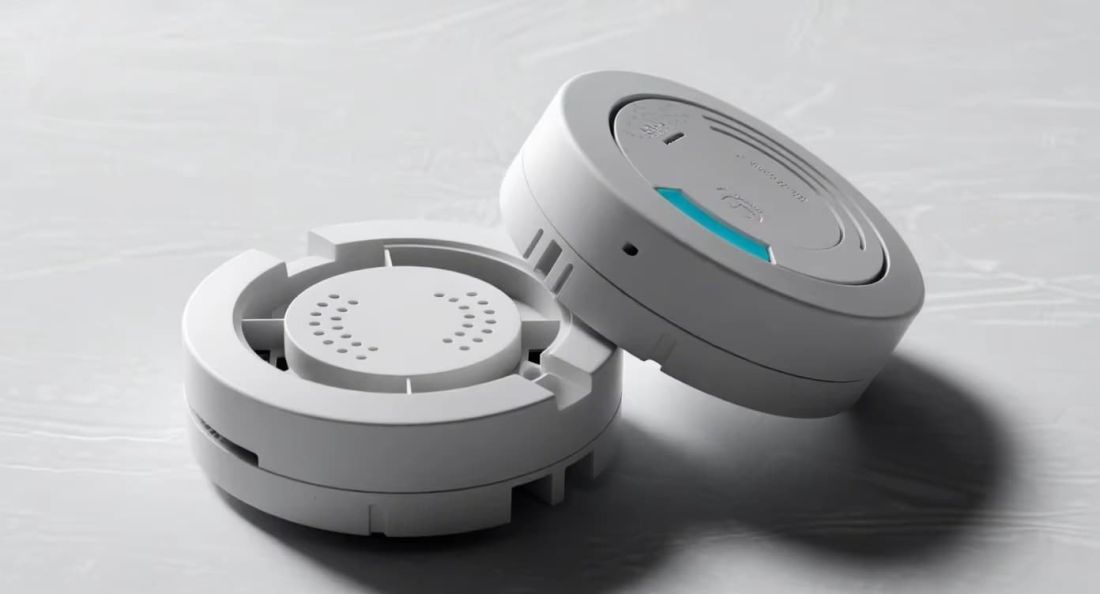
Cost levers ranked by what they actually return
Typical shares below are ranges seen across handheld and benchtop detector programmes; confirm them against your own quotation breakdown rather than treating them as universal.
| Cost lever | Typical share of part price | Action before tooling release | Risk if ignored |
|---|---|---|---|
| Material grade and fill level | 30-50% | Validate the cheapest grade that passes the drop and thermal test | Over-specification locks in cost for the programme life |
| Cycle time (wall, cooling, ejection) | 15-30% | Thin and uniform wall, conformal cooling where justified | Every extra second is paid on every part |
| Cavitation and tool steel | 10-25% amortised | Match cavities to three-year volume, not launch quarter | Under-cavitation caps capacity; over-cavitation idles capital |
| Secondary operations | 5-15% | Integrate gaskets, threads and mounting features into the tool | Labour, fixtures and inspection stack up |
| Scrap and first-pass yield | 3-10% hidden | Request yield data from a comparable programme | Defect cost is buried in the piece price |
Five assumptions that quietly inflate a detector housing quote
“Cosmetic on all faces”
One textured or class-A face costs far less than an all-round cosmetic standard. Specify which faces a customer sees.
“Tight tolerance everywhere”
Apply ±0.05 mm only where the PCB or lens actually needs it; general tolerances can stay at ±0.15 mm.
“Flame retardant by default”
V-0 compounds carry a price and a cycle-time premium. Confirm the standard the product must meet.
“Insert moulding from day one”
Heat-set or ultrasonic inserts often satisfy the pull-out spec at lower tool cost.
“One supplier for tool and part”
Tooling and moulding priced separately exposes the real margin and improves the next negotiation.
How a 25 percent saving is actually assembled
A cost reduction on a moulded enclosure is never one idea; it is six small ones that do not conflict. Take a four-part housing: walls at 2.2 millimetres instead of 3, two bosses removed and replaced by a moulded snap, one insert eliminated by a self-tapping screw into a thicker boss, a gate moved to shorten the flow path, a texture that hides the flow marks left by the faster fill, and a packaging change that allows a smaller carton.
Each item is worth two to eight percent, and none of them requires a new material. The discipline is to model them together: a thinner wall changes the fill, the fill changes the weld line, and the weld line may land on a sealing land. Savings that are evaluated one at a time tend to be reversed at first article, which is why the should-cost model belongs next to the DFM review rather than after it.

Cost questions that decide the programme
How much can redesign really save on an existing detector plastic enclosure?
On a released tool, 5-10% is realistic through gating, cooling and packing changes. Before release, 25-50% is achievable because wall, cavitation and secondary operations are all still open. The difference is timing, not negotiating skill.
Is a family tool worth it for enclosure variants?
When two or more housings share material, colour and annual volume, a family tool spreads tooling cost and runs both parts in one cycle. It stops being attractive once the parts need different process windows or the variant mix becomes unpredictable.
When should we move from prototype to production tooling?
After drop, thermal and ingress tests pass on the prototype tool and the PCB layout is frozen. Cutting production steel earlier converts design risk into tooling rework, which is the most expensive place to find a problem.
Get a should-cost breakdown before you cut steel
Send the enclosure drawing, target annual volume and the standard the product must meet. FromRubber returns a tooling concept, a cavity and steel recommendation, and a cost breakdown you can challenge line by line — tooling and moulding under one roof in Dongguan.
Request a should-cost and DFM reviewRelated reading: injection moulding defects in probe plastic shells and custom plastic enclosures.