Custom Injection Molded Housings for Parking Space Guidance Systems: A Cost-Benefit Analysis
- Share
- publisher
- Suey
- Issue Time
- Apr 27,2026
Summary
Parking space guidance housings are usually bought on piece price and paid for over five years. This cost-benefit analysis sets out the total-cost model that matters, the three components buyers leave out, and the specific design features that make custom tooling pay back before the second year.

Total cost analysis
Parking space guidance housings are specified in thousands and serviced one at a time, so the piece price is the least reliable indicator of cost. The decision rests on four lines: tooling amortisation at real volume, ingress protection that survives a car park, assembly time per unit, and the field-replacement rate. A housing that costs 12% more per part and removes one assembly step and one failure mode is usually the cheaper system.
- Amortise tooling over three-year volume, not launch volume — car park rollouts are staged and lumpy.
- Ingress protection is a design feature of the housing, not a gasket added at assembly.
- Every integrated mounting feature removes a bracket, a fastener set and a line-side operation.
What a five-year cost model for parking space guidance housings must include
A car park installation is a string of nodes on a ceiling, each with a sensor, a display and a cable. The housing cost per node is small; the cost of reaching that node twice is not. A workable model therefore carries the piece price, the tooling amortised across the actual staged rollout, the assembly labour per node, and a provision for field replacement.
The last line is the one that decides programmes. A housing that passes IP65 on a bench but corrodes at the cable entry after two humid summers returns a replacement rate that dwarfs the purchase saving, and it does so in the year when the second phase of the rollout is being financed.
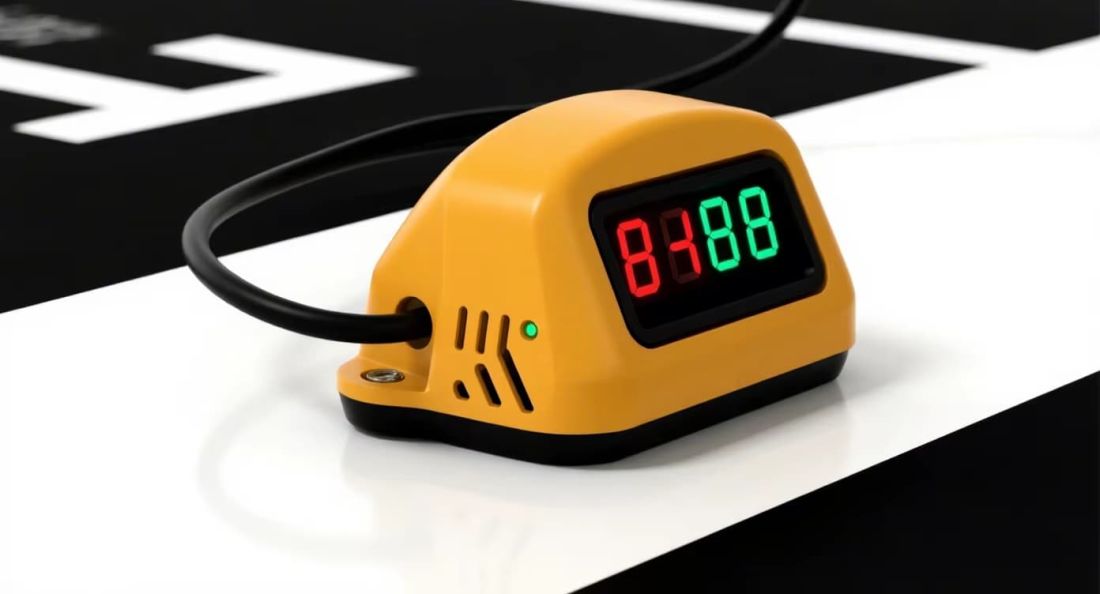
The three cost components buyers leave out of the comparison
Quotations compare cleanly on piece price and badly on everything else. Three items are routinely missing from the comparison sheet, and all three are real cash.
- Validation cost — ingress, vibration and UV ageing tests are paid once per design, but a late design change pays for them twice.
- Assembly labour — a four-part housing with a separate gasket, bracket and gland seat costs minutes per node; a two-part housing with moulded seats costs seconds.
- Installation and access — a housing that needs a specific tool to open for service adds cost on every maintenance visit for a decade.
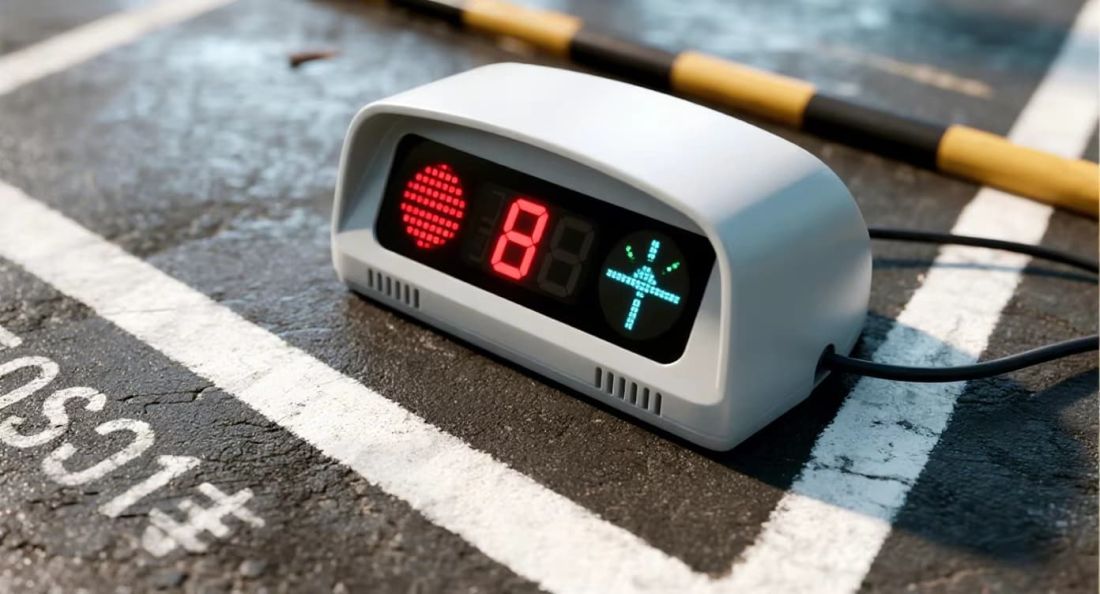
Where custom tooling pays back on a guidance system housing
Custom tooling earns its place when it consolidates parts. Mounting bosses that replace a stamped bracket, a gland seat that replaces a separate insert, a dovetail that lets the node clip to a rail, a window pocket that locates the display without a bezel — each of these removes a component, a fastener and a handling step at the same time.
The payback threshold is visible in the model: if the integrated design removes one assembly operation worth thirty seconds and one bracket per node, the tooling premium is normally recovered inside the first 20,000 units. Below that volume, a modified standard enclosure is the rational choice, provided the gasket and gland still meet the ingress requirement.
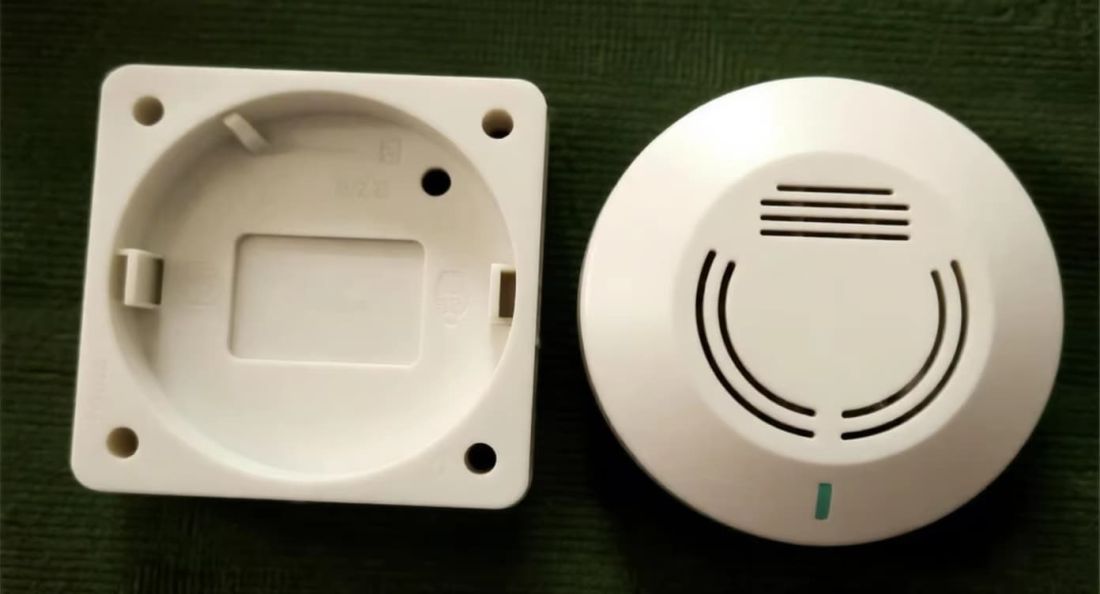
Three sourcing routes compared on the same five-year basis
Figures are relative, not quoted prices: use them to structure the comparison, then substitute your own numbers.
| Route | Tooling exposure | Relative piece price | Ingress capability | Payback condition |
|---|---|---|---|---|
| Modified standard enclosure | Low, often none | Baseline +10-20% | IP54-IP65 with added gasket | Volume under 20,000 units, indoor or sheltered car parks |
| Custom single-cavity tool | Moderate | Baseline +5-10% | IP65-IP67 by design | 20,000-100,000 units over three years |
| Custom family tool, two variants | Higher up front | Baseline or below | IP65-IP67 by design | Two or more variants sharing material and colour, 100,000+ units |
Four cost traps in parking guidance housing programmes
Gasket as an afterthought
A hand-cut gasket adds labour, a tolerance stack and a leak path. Mould the seat and specify a compression-limited silicone seal instead.
Cosmetic standard set by the wrong viewer
The node sits two to three metres above the driver. A textured finish that hides flow marks costs less than a polished face nobody inspects.
Single-sourced tooling with no data
Ask for first-pass yield and cycle time in writing at quotation stage; without them the piece price cannot be benchmarked.
Rollout volume assumed as one order
Staged rollouts mean repeat set-ups and smaller lots. Confirm the moulder prices repeat runs, not just the first release.
A five-year cost model for parking guidance housings
The purchase price of a parking guidance housing is roughly a fifth of what it costs to own. The rest sits in installation labour, bracket hardware, field replacement and the downtime of a bay that a driver cannot see. A housing that clips to the mounting rail without tools saves minutes per bay, and on a two-thousand-bay site that is a measurable number rather than a slogan.
Then model the failure. A sealed housing with a moulded gasket and a defined IP rating fails at the cable entry, not the lid, so the service kit should include a spare gland. If the design uses four screws and a loose gasket, every field replacement risks a mis-seated seal and a repeat visit. The cost model should price the second visit, because that is the one that erodes the margin.
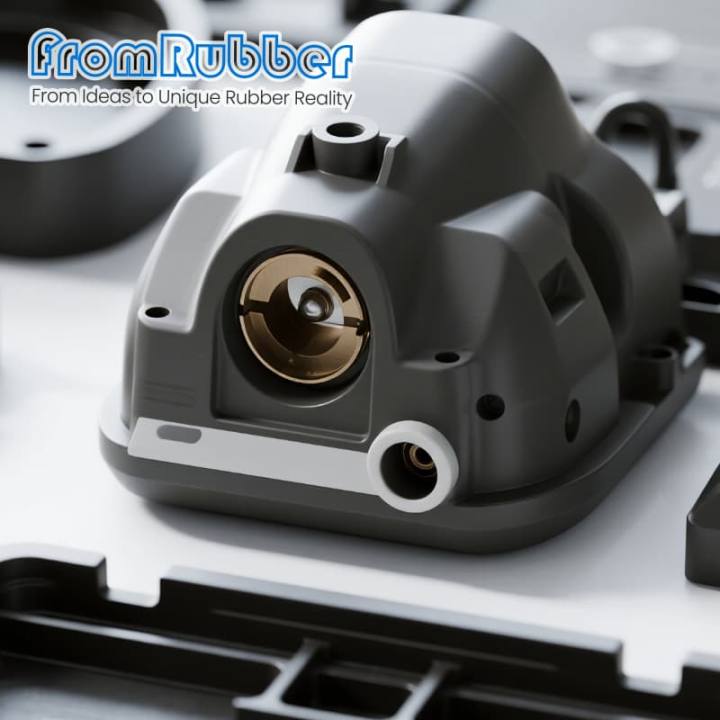
Questions procurement teams ask about guidance housings
Is IP65 enough for a covered car park?
Usually yes for the body, but not automatically for the cable entry. Water runs along a cable and into an upward-facing gland. Specify a downward or side entry, a sealing gland, and a drip loop, then validate at the assembly level rather than on the bare housing.
Should the housing be polycarbonate or ABS?
Polycarbonate buys impact resistance and UV stability at a higher piece price and tighter process window. ABS with a UV-stabilised grade is adequate for sheltered installations. The deciding factor is normally the impact specification of the site, not the material datasheet.
How should tooling amortisation be presented in the quotation?
As a separate line, with the assumed volume and the number of cavities stated. A bundled tooling charge hides the amortisation and makes the piece price impossible to compare across suppliers.
Build the five-year model before choosing a housing route
Send the node drawing, the site conditions and the staged rollout volume. FromRubber returns a tooling concept, a cavity recommendation and an assembly-step comparison, so the piece price and the total cost can be read side by side — tooling and moulding under one roof in Dongguan.
Request a housing cost-benefit reviewRelated reading: design features for radar system enclosures and custom plastic enclosures.