Custom Plastic Injection Molding: Process and Benefits with Fromrubber Expertise
- Share
- publisher
- Nani Gui
- Issue Time
- Jul 8,2025
Summary
The DFM rules that decide a custom plastic injection molding project: uniform walls, draft, ribs instead of bosses, radii and gate position, each paired with the defect it prevents, plus where cost sits and how to brief a moulder.
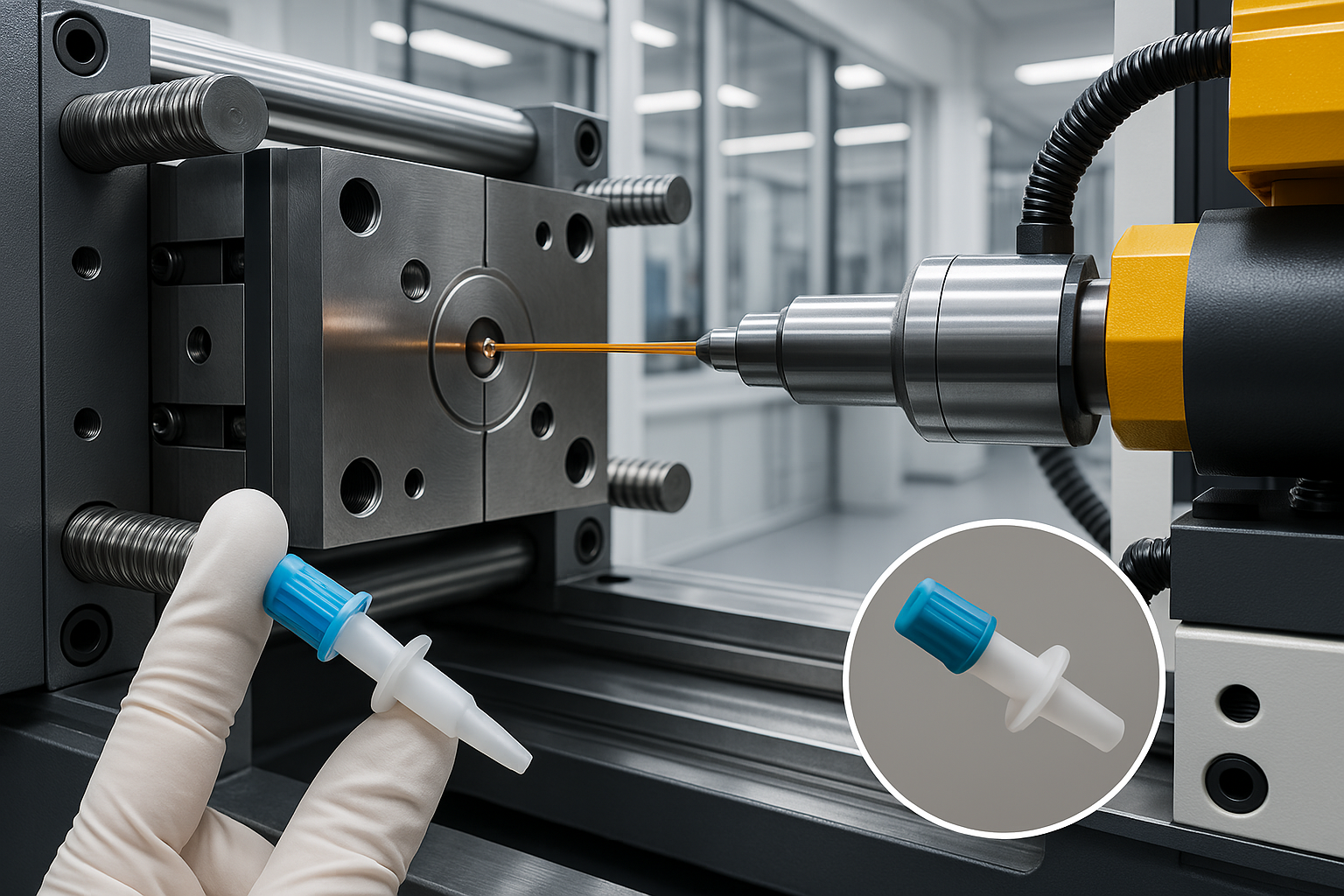
Injection moulding is not a printing process. The tool has to be filled, packed and cooled, and every feature you add changes how that happens. Most moulding defects are design decisions that were never checked against the flow.
This covers the DFM rules that matter in custom plastic injection molding, the defects each rule prevents, and where the money actually goes between tooling and cycle time.
What Are the DFM Rules That Decide a Custom Plastic Injection Molding Project?
The direct answer: uniform wall thickness, adequate draft, ribs instead of thick sections, generous radii, and a gate position that fills the part from the thickest section outward. Break any one of them and the defect is predictable before the tool is cut.
These rules exist because plastic shrinks as it cools, and it shrinks unevenly wherever the section changes. A thick boss on a thin wall cools last, pulls material from the wall and leaves a sink mark on the visible face. No amount of process tuning removes it; the geometry has to change.
The Design Rules and the Defect Each One Prevents
The rib rule is the one most often argued about, because a thick rib is stiffer. It is also the one that most reliably produces a sink mark on the show face of an enclosure.
Each rule is a proxy for a physical problem. Uniform walls keep cooling even, draft stops ejection dragging, ribs carry load without mass, radii spread stress. Once the reason is clear, the exceptions stop looking arbitrary.
The exception worth knowing is a feature that must be locally thick, such as a boss for a threaded insert. Core it from the back so the effective section stays thin while the local strength stays high.

| Rule | Practical value | Defect if ignored |
|---|---|---|
| Uniform wall | Keep variation within roughly a quarter of the nominal thickness | Sink marks, internal voids, warpage |
| Draft | One to two degrees on walls, more on textured surfaces | Scuffing and drag marks on ejection |
| Ribs not bosses | Rib thickness at around half the wall | Sink on the opposite face |
| Radii | Fillet internal corners | Stress concentration and cracking |
| Gate location | Fill from thick to thin, avoid a visible face | Weld lines in a cosmetic area |
How to Brief a Moulder So the First Shot Is Usable
Send the 3D model with the wall thickness called out, the cosmetic surfaces marked, the material grade and the annual volume. Then say which features are functional and which are aesthetic, because the answer changes the gate position.
A useful DFM review returns marked-up geometry, a gate proposal and a list of features that will not fill or will sink. That document is worth more than a price, because it is the only stage where a change costs nothing but a model edit.
Where the part combines plastic with rubber, the two processes have to be reviewed together: a gasket groove that works in moulding may be impossible to overmould. Our guide to rubber overmoulding covers that interface, and the custom plastic enclosure page shows a typical production part.
What is the Custom Plastic Injection Molding Process?
Injection molding is a highly efficient process for producing complex plastic parts with tight tolerances. Here’s a step-by-step breakdown of how Fromrubber delivers customs plastics solutions:
-
Design and Tooling:
- A CAD model of the desired part is created, adhering to design principles like uniform wall thickness and draft angles to ensure moldability.
- A precision mold, typically made from steel or aluminum, is CNC-machined to form the negative of the part.
- At Fromrubber, our engineers use advanced DFM (Design for Manufacturability) analysis to optimize designs, reducing costs and production time.
-
Material Feeding:
- Thermoplastic pellets (e.g., ABS, polycarbonate, or recycled resins) are loaded into a hopper.
- Fromrubber offers a wide range of materials, including sustainable options, to meet project-specific requirements.
-
Melting and Injection:
- Pellets are fed into a heated barrel, where a reciprocating screw melts and mixes the plastic.
- The molten plastic is injected under high pressure (100-150 MPa) into the mold cavity through a runner system and gates.
-
Cooling and Solidification:
- The mold is cooled to solidify the plastic, ensuring the part retains its shape with minimal defects like sink or warp.
- Fromrubber uses scientific molding techniques to maintain consistent cooling and part quality.
-
Ejection:
- Once solidified, the mold opens, and ejector pins remove the finished part.
- The process repeats rapidly, enabling high-volume production with cycle times as low as 15-120 seconds.
Key Benefits of Custom Plastic Injection Molding
Custom plastic injection molding offers unmatched advantages for businesses seeking customs plastics solutions. Here’s why it’s the preferred choice for high-volume manufacturing:
-
High Precision and Repeatability:
- Tolerances as tight as ±0.003 inches ensure parts meet exact specifications, ideal for industries like medical and aerospace.
- Consistent quality across millions of parts, as noted by Plastics Engineering’s 2023 market analysis valuing the industry at $270 billion.
-
Cost-Effectiveness for High Volumes:
- While initial tooling costs range from $3,000 to $100,000, the per-unit cost drops significantly for large runs, often $1-5 per part, making it ideal for mass production.
- Fromrubber offers flexible order quantities, including low-volume prototyping, to suit diverse needs.
-
Material Versatility:
- Choose from thousands of thermoplastics, including ABS, polycarbonate, PEEK, and recycled resins, to match performance requirements like strength or UV resistance.
- Fromrubber provides expert material selection guidance to optimize durability and sustainability.
-
Design Flexibility:
- Create complex geometries, from intricate medical devices to automotive components, with features like ribs, bosses, and snap-fit joints.
- Our team at Fromrubber supports advanced processes like overmolding and insert molding for enhanced functionality.
-
Sustainability and Low Waste:
- Minimal material waste, with excess plastic (e.g., sprues or defective parts) recyclable for future runs.
- Fromrubber prioritizes eco-friendly practices, using up to 98% recycled materials for select projects.
-
Fast Production Cycles:
- Cycle times of 15-120 seconds enable rapid production, reducing time-to-market for your customs plastics products.
Applications of Custom Plastic Injection Molding
Custom plastic injection molding serves a wide range of industries, delivering customs plastics solutions for diverse applications:
- Automotive: Dashboards, bumpers, and lightweight interior components that improve fuel efficiency.
- Medical: Sterile, precise components like syringes, surgical tools, and diagnostic device housings.
- Consumer Goods: Durable, aesthetically pleasing products like packaging, electronics enclosures, and toys.
- Aerospace: Lightweight, high-strength parts like turbine blades and chassis components, often made with PEEK for low flammability.
- Telecommunications: Robust housings for cell phones, routers, and infrastructure components.
Case Study: Fromrubber partnered with a leading medical device manufacturer to produce 100,000 syringe barrels using ABS resin. Our scientific molding approach ensured ±0.001-inch tolerances, reducing defects by 99% and cutting production time by 20%.
Why Choose Fromrubber for Your Customs Plastics Needs?
At Fromrubber, we combine 30 years of expertise with cutting-edge technology to deliver superior customs plastics solutions. Here’s what sets us apart:
- Certified Expertise: ISO 9001 and AS 9100 certified, ensuring compliance with the highest quality standards.
- Advanced Technology: State-of-the-art injection molding machines and AI-driven process optimization for efficiency and precision.
- Sustainability Commitment: Use of recycled materials and eco-friendly practices to minimize environmental impact.
- Customer-Centric Approach: From free DFM consultations to rapid prototyping, we tailor solutions to your needs, with no minimum order requirements.
- Global Compliance: Expertise in navigating customs plastics regulations, including import/export duties and recycling policies, ensuring seamless logistics.
Testimonial: “Fromrubber transformed our product development with their expertise in injection molding. Their team delivered high-quality parts on time, helping us meet tight deadlines.” – John Doe, Product Manager, MediTech Solutions.
Navigating Customs Regulations for Plastics
For businesses involved in global trade, understanding customs plastics regulations is critical. Customs duties on plastics vary by material and country (e.g., India’s recent duty reductions on PVC resin). Fromrubber offers compliance support, ensuring your plastic products meet international standards for import/export and recycling. Our logistics team partners with trusted freight forwarders to streamline shipping and customs clearance.

Where the Cost Sits in Custom Plastic Injection Molding
Three blocks: tooling, material and machine time. Tooling is one-off and driven by part size, cavity count and surface finish. Material is proportional to part weight, and a glass-filled grade costs more than the commodity it replaces. Machine time is proportional to cooling, and cooling is proportional to wall thickness squared.
That last relationship explains a counter-intuitive fact: thickening a wall to make a part stronger often makes it more expensive and weaker, because the thicker section cools unevenly and introduces internal stress. Adding a rib is almost always better than adding wall.
Prototyping Before Tooling
A 3D-printed or machined prototype confirms form and fit, not flow. It cannot show you where a weld line will land or whether a thin section will fill. If the part has a cosmetic surface or a thin feature, the first shot from the production tool is the first real test, and the DFM review is what reduces the number of revisions after it.
How to Get Started with Fromrubber
Ready to bring your customs plastics project to life? Follow these steps:
- Submit Your Design: Upload your CAD file for a free DFM analysis.
- Choose Materials: Work with our experts to select the ideal resin for your application.
- Get a Quote: Receive a detailed quote within 24 hours, with transparent pricing.
- Production and Delivery: Benefit from our fast turnaround and global shipping capabilities.
CTA: Contact Fromrubber today for a free consultation or upload your design for an instant quote. Let us help you create high-quality customs plastics solutions tailored to your needs.
Frequently Asked Questions
What is the minimum order for custom plastic injection molding?
It is set by the tool rather than by the machine. Small runs from a production tool are possible, but the tooling dominates at low volume, which is why prototypes are usually machined and only the production intent is moulded.
How much draft does a textured surface need?
More than a polished one. Texture depth adds resistance during ejection, so a heavily textured wall needs additional draft beyond the standard one to two degrees.
Can a moulding defect be fixed by changing process settings?
Some can, such as short shots from low pressure or flash from low clamp force. Sink, warpage and weld-line position are geometry and gate decisions, and they return as soon as the process drifts back.