Custom Rubber Patches Durable Design Options and Ordering Guide
- Share
- publisher
- karl
- Issue Time
- Sep 10,2025
Summary
How custom rubber patches are ordered and specified: moulded versus heat transfer versus sew-on, the thickness, edge and relief decisions made at tooling, artwork rules for moulding, and the durability tests worth agreeing before a bulk run.
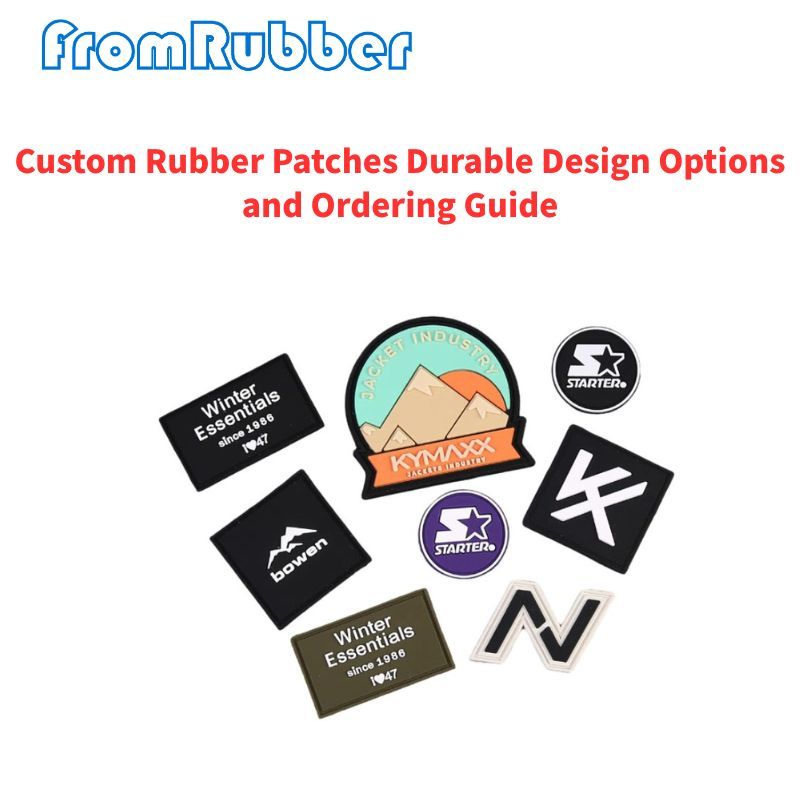
A rubber patch is a piece of branding that has to survive washing, abrasion and the edge of a bag. Most failures we are asked to fix are not material failures. They are thickness, edge geometry or attachment method chosen before the sample was ever tested.
This is an ordering guide for custom rubber patches, written for apparel and accessory teams who need the same patch to look right on a sample and still look right after fifty washes.

Custom Rubber Patches vs Printed Badges: What Actually Differs?
The direct answer: relief. A rubber patch carries height, so light and shadow do the work that colour alone cannot. A printed badge is flat and depends on ink resolution; a moulded patch depends on the depth of the relief and the sharpness of the tool.
That difference changes the artwork rules completely. Fine hairlines and small negative spaces that print cleanly will fill in or tear on a mould, and gradients that look smooth on screen become steps. A patch design is a tooling design, and it should be reviewed as one.
Moulded, Heat Transfer or Sew-On
The practical rule: if the garment is washed hot or tumble dried, sew it. Heat transfer patches on a heat-sensitive face fabric are the most common source of returns, because the bond fails before the patch does.
The table answers a purchasing question, but the decision is mechanical. Ask what the patch must survive, then work backwards from the worst case: a hot wash, a tumble dryer, a bag strap rubbing across a shoulder.
Where the garment is expensive, choose the more conservative of the two viable attachments. A return costs more than the difference in unit price between stitching and pressing.

| Type | Best for | Constraint |
|---|---|---|
| Moulded patch, sewn | Heavy garments, caps, bags, 3D logos | Needs a sewing margin and a needle that clears the edge |
| Moulded patch, heat transfer | Clean attachment with no stitch line | Face fabric must tolerate the press temperature |
| Flat transfer patch | Low cost, high volume, thin profile | Less relief, wears at the edges first |
| Hook-and-loop backed | Removable or interchangeable branding | Adds thickness and a stiff hand feel |
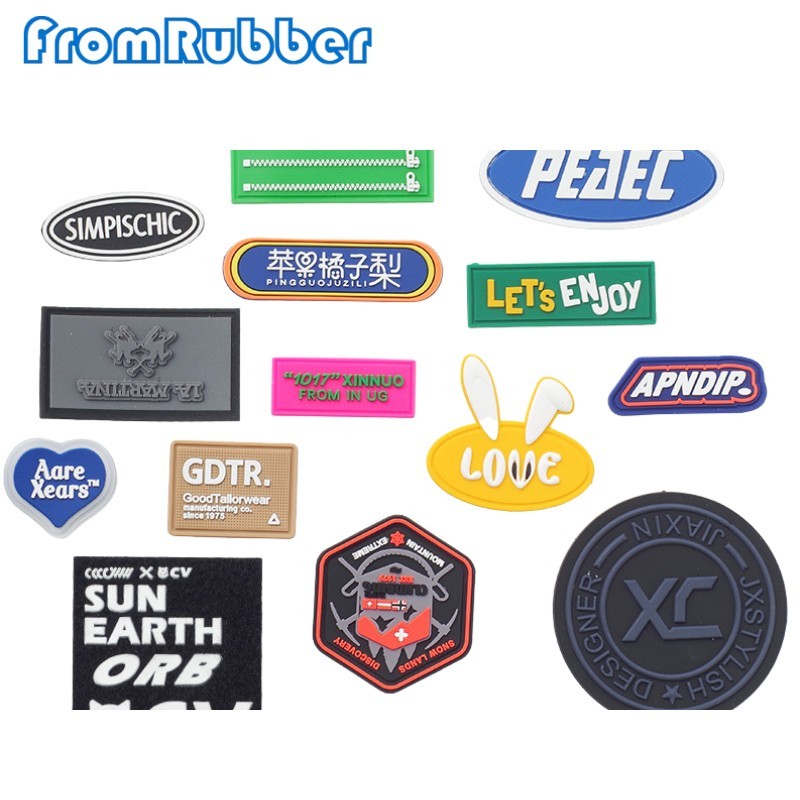
Thickness, Edge and Relief: The Three Geometry Decisions
Three numbers decide both the look and the durability, and all three are set at tooling.
- Base thickness. Thicker holds a deeper relief and survives abrasion, but stiffens the patch and raises cost. A patch that must fold over a curved seam needs to be thin enough to conform.
- Edge form. A square edge reads sharp and chips; a chamfer or a rolled edge resists peeling and stitching. The edge is the first thing to fail on a sewn patch.
- Relief depth. Depth is what makes the logo visible. Very shallow relief disappears in low light; very deep relief creates undercuts that will not release from the mould.
For a logo with thin strokes, the workable answer is usually a moderate relief with a wider stroke weight, not a deeper cut. Adjusting the artwork costs nothing; cutting a second tool does.
How to Order: Artwork, Tooling and Sampling
A clean order has four stages, and each one is a chance to avoid a re-make.
- Artwork review. Vector artwork at final size, with minimum stroke width agreed and any gradients converted to solid or stepped colours.
- Tooling. Cavity count follows the annual quantity; a single-cavity tool keeps the sample cheap and the unit price high.
- Sample. Approve the physical sample on the actual garment, not on a desk. Colour, thickness and edge all read differently against fabric.
- Production and testing. Agree the wash and abrasion test before the first bulk run, so the acceptance criteria are not invented after a complaint.
Two colours in one patch need a two-shot tool or a hand-filled cavity, which is why a two-colour patch costs more than twice a single-colour one. If the design allows a single colour with a contrasting base, take it.
1. What Are Custom Rubber Patches
Custom rubber patches are personalized labels made from flexible, durable materials like silicone, PVC, or TPU. Unlike woven or embroidered patches, rubber patches have a smooth, raised surface and often feature intricate, 3D designs. They don't fray or fade, making them tougher and more versatile.
| Feature | Rubber Patches | Woven Patches | Embroidered Patches |
|---|---|---|---|
| Material | Silicone, PVC, TPU | Thread and fabric | Thread and fabric |
| Texture | Smooth, raised, 3D effects | Flat, detailed | Raised with thread loops |
| Durability | High (waterproof, weatherproof) | Moderate | Moderate |
| Flexibility | Very flexible | Less flexible | Moderate |
| Colors | Bright, vibrant, Pantone matched | Limited by thread colors | Limited by thread colors |
| Maintenance | Easy to clean | Can fray and fade | Requires gentle care |
Rubber patches stand out because they are waterproof, weather-resistant, and flexible. They hold up well outdoors or on tough gear, making them perfect for everything from outdoor apparel to tactical equipment. This makes them a go-to for anyone needing a durable, long-lasting patch that won't lose its sharp look.
2. Why Choose Custom Rubber Patches
Custom rubber patches offer strong branding and marketing benefits. They make logos and designs stand out with vibrant colors and sharp details. This visibility helps your brand get noticed on apparel, bags, hats, and more.
They're also super practical. You'll find them on safety gear, sportswear, backpacks, and promotional items because they hold up well under rough use and outdoor conditions.
Customization options are wide open. You can pick any color, shape, size, and texture—including cool 3D effects—that fit your brand's style perfectly.
Rubber patches last longer than woven or embroidered ones. Thanks to materials like silicone or PVC, they resist water, sun, and wear better, keeping your design looking fresh for years.
| Feature | Custom Rubber Patches | Woven/Embroidered Patches |
|---|---|---|
| Color Vibrancy | High, precise matches (Pantone) | Limited by thread colors |
| Durability | Weatherproof, flexible | Prone to fading, fraying |
| Custom Shapes | Any shape, 3D textures | Mostly standard shapes |
| Attachment Options | Sew-on, adhesive, Velcro | Mainly sew-on |
| Longevity | 5+ years with use | 1-2 years under heavy wear |
3. Design Options for Custom Rubber Patches
When it comes to custom rubber patches, FromRubber offers plenty of design choices to fit your needs. Here's what you can expect:
3.1 Color Matching and Pantone Integration
- Exact color matching using Pantone standards
- Vivid, lasting colors ideal for branding and logos
- Multi-color options with sharp detail
3.2 Shapes and Sizes
FromRubber can craft patches in:
- Simple geometric shapes (circles, squares, rectangles)
- Custom, intricate shapes matching your logo or design
- Sizes ranging from small logos to large patches for jackets or bags
3.3 Surface Textures
| Texture Type | Description | Best For |
|---|---|---|
| Soft-touch | Smooth and flexible | Apparel, comfortable wear |
| Raised 3D | Detailed, embossed elements | Logos and badges |
| Glossy | Shiny, bright finish | Eye-catching designs |
| Matte | Flat, non-reflective surface | Subtle, professional look |
3.4 Attachment Methods
Flexibility extends to how you attach the patch:
- Sew-on: Classic, secure option
- Iron-on: Quick, no-sew application
- Adhesive backing: Peel-and-stick for easy use
- Velcro: Removable and reusable
- Snap buttons: For detachable customization
These options make custom rubber patches from FromRubber versatile across apparel, accessories, and gear, fitting any style or function you might need.
4. The Custom Rubber Patch Manufacturing Process at FromRubber
At FromRubber, we start with an initial consultation where you submit your design ideas. This helps us understand your vision and requirements clearly.
Next, we create prototypes for your review. You get to approve samples before we move forward, ensuring the final product matches your expectations.
We source high-quality materials like silicone, PVC, or TPU, depending on your patch's needs. Using advanced molding techniques, we shape patches that are flexible, durable, and detailed.
Finally, every patch goes through strict quality control and testing. This guarantees your custom rubber patches hold up in real-world use and maintain precise design elements throughout their lifespan.
5. Applications and Use Cases of Custom Rubber Patches
Custom rubber patches are incredibly versatile, fitting into many different industries and uses across the U.S. Here's where they really stand out:
-
5.1 Apparel and Fashion
Great for jackets, hats, shoes, and backpacks, custom rubber patches add style and personality while holding up against everyday wear.
-
5.2 Military and Tactical Gear
Their durability and weather resistance make rubber patches ideal for uniforms, tactical vests, and gear that needs to last in tough conditions.
-
5.3 Outdoor Equipment and Camping Gear
Waterproof and flexible, these patches work well on tents, backpacks, and other outdoor items that face rough environments.
-
5.4 Corporate Branding and Event Giveaways
Custom rubber patches are a popular go-to for businesses wanting unique, durable swag. They catch attention at trade shows, company events, and promotional campaigns.
-
5.5 Repair and Protective Patches for Industrial Uses
Rubber patches can reinforce or cover worn areas on tools, gear, or protective clothing, extending the life of equipment in industrial settings.
6. How to Order Custom Rubber Patches from FromRubber
Ordering custom rubber patches from FromRubber is simple and straightforward. Here's how it works:
-
6.1 Step-by-step Process
Contact us: Reach out through our website or by phone to start your project.
Design submission: Send your artwork or ideas. If you need help, we offer design support.
Quote and approval: Get a clear price and timeline. Approve the sample before production.
Production: Once approved, we start manufacturing with quality control at every step.
Delivery: Receive your custom patches on time, ready to use.
Minimum order quantities and bulk pricing: We offer flexible minimum orders to fit small or large needs. Bulk orders come with cost savings, making it affordable whether you need a handful or thousands of patches. -
6.2 Shipping and Delivery
FromRubber ships across the United States with fast, reliable service and also supports global deliveries. We handle logistics so your patches arrive safely and on schedule.
-
6.3 Customer Support and Customization Assistance
Our team is here to guide you through design choices, material options, and attachment methods. We make sure your custom rubber patches fit your exact needs and brand vision.
Ordering from FromRubber means getting durable, high-quality rubber patches with service that's clear and hassle-free.
7. Tips for Designing Effective Custom Rubber Patches
When creating custom rubber patches, keep these tips in mind to make sure your design works well and lasts.
7.1 Maintain Branding Consistency
- Use your official logos and color schemes to keep your patch recognizable.
- Match colors with Pantone codes if you want exact brand colors.
7.2 Choose the Right Size and Shape
- Pick a size that fits the item the patch will go on—too big or small can look off.
- Simple shapes often work better for visibility and durability, but custom shapes add a unique touch.
Durability Claims Worth Testing Before You Quote
Three tests cover most of the risk. A wash test at the temperature the care label will claim, checked for edge lift and colour change. An abrasion test on the highest point of the relief, because that is where the surface breaks down first. And a flex test on the seam, which catches the patch that is too stiff for the garment it is attached to.
Ask for the test method, not just a pass. A wash claim without a temperature is meaningless, and a patch tested flat will behave differently when sewn to a curved cap.
For the attachment question specifically, our comparison of heat transfer versus sew-on covers how the choice changes both durability and cost. The heat transfer patch page shows the flat variant, and the sew-on silicone patch page shows the moulded construction with a stitch margin.
7.3 Select the Best Backing and Attachment
- Decide between sew-on, iron-on, adhesive backing, Velcro, or snap buttons based on how you'll use the patch.
- For outdoor gear, Velcro or sew-on is usually more secure. For promo items, adhesive backing might be more convenient.
7.4 Think About Durability and Environment
- If the patch will face sun, rain, or rough use, choose materials and finishes that resist fading, cracking, or peeling.
- Opt for rubber patches with weather-resistant qualities like silicone or PVC for long-lasting wear.
Keeping these factors in check helps your custom rubber patch look sharp and last longer, making it a smart addition to your apparel or gear.
8. Frequently Asked Questions About Custom Rubber Patches
8.1 What is the typical production lead time?
Most custom rubber patch orders take about 2 to 3 weeks from design approval to shipping. Rush orders may be available but usually come with extra fees.
8.2 Can I get patches with reflective or glow-in-the-dark materials?
Yes, we offer options like reflective PVC and glow-in-the-dark additives for visibility and unique effects, perfect for safety gear or promotional items.
8.3 How do I care for and clean custom rubber patches?
Cleaning is simple—just use mild soap and water. Avoid harsh chemicals or machine washing with strong detergents to keep patches looking fresh and durable.
8.4 Are eco-friendly or recycled material options available?
We're moving toward greener choices and can provide patches made from recycled PVC and silicone upon request. Just ask about eco-friendly options when placing your order.
Frequently Asked Questions
What is the minimum order for custom rubber patches?
It is set by the tool rather than by the material. Small trial runs are possible from a production tool, but the tooling cost dominates at low volume, so most programmes start with a single-cavity tool and move to multi-cavity once the design is fixed.
Can a rubber patch be recycled with the garment?
Silicone and most face fabrics are separate streams and are not separated in normal textile recycling. Avoid claiming recyclability unless the garment and the patch are both designed for the same end-of-life route.
How fine can the detail be on a moulded patch?
It depends on the relief depth and the compound. As a rule, strokes that are too thin to fill reliably should be widened rather than deepened, and fine reverse detail inside a raised area is the hardest feature to mould cleanly.