Custom Silicone Patches – Everything Apparel Brands Need to Know
- Share
- publisher
- Suey
- Issue Time
- Jun 17,2026
Summary
Custom silicone patches are moulded as one homogeneous piece, so colour is mass-pigmented and matched to delta E under 1.5, with relief up to 3mm and 100+ industrial washes. Compares cost per unit and cost per wear, sets durability targets to a test method, and explains heat-seal, adhesive and sew-on backing choice.
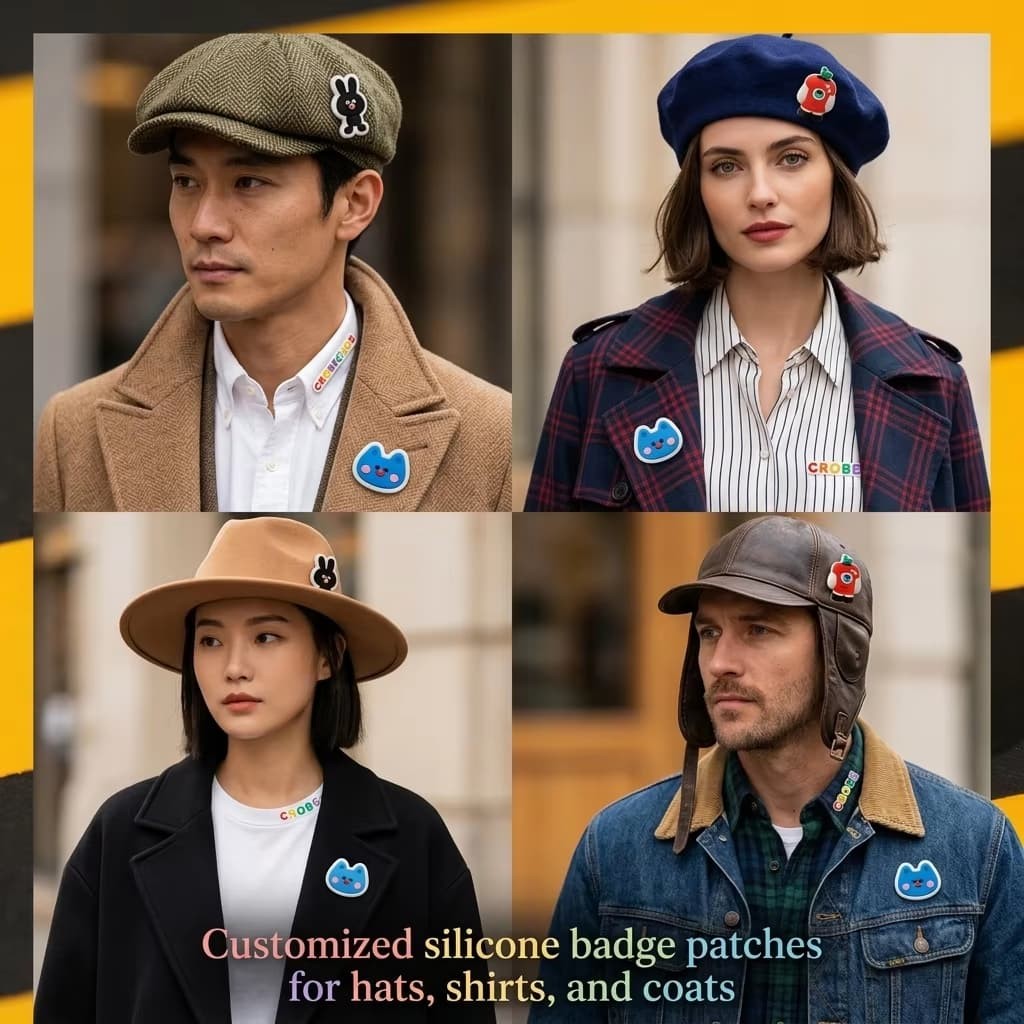
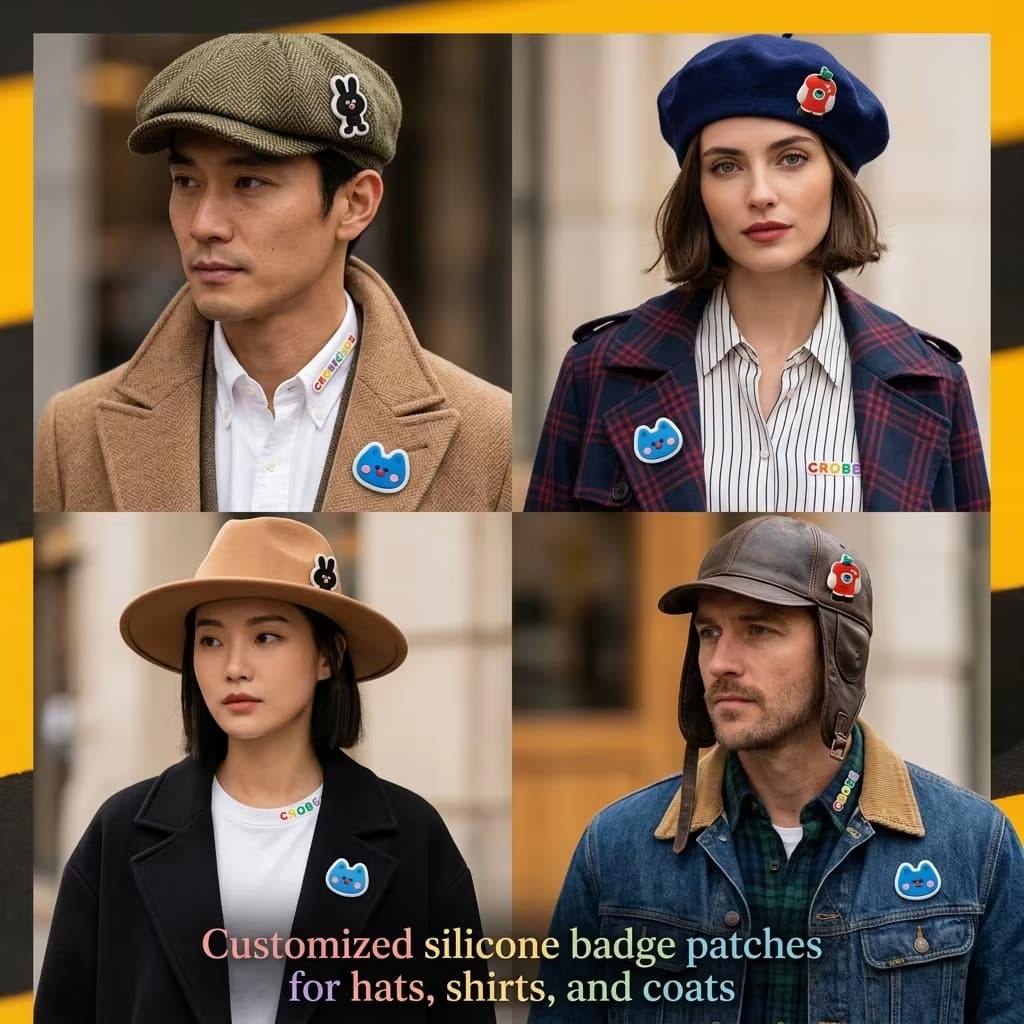
A custom silicone patch is a moulded elastomeric emblem — one homogeneous piece of silicone, not a stack of thread. That single difference removes the three failure modes apparel brands fight with embroidery: fraying, dye fading, and a backing that stiffens after washing.
It also changes what the specification has to say. Colour accuracy, relief height, surface texture, backing type and wash performance are all process parameters, and each has a number attached. Below are the parameters that decide whether a patch still looks right on the five-hundredth wash.
Why a moulded patch behaves differently from thread
Embroidery builds an image layer by layer with coloured thread, so the image depends on stitch density, thread tension and the dye lot of each spool. A silicone patch is formed in one shot by compression or injection moulding, which means the geometry is set by the tool and the colour is set by the compound. There is no thread to pull, no stitch to skip and no backing that has to be bonded on afterwards.
The material itself is food-grade silicone, the same family used in medical devices, which is why patches sit comfortably against skin on caps, collars and cuffs. For brands selling into markets that scrutinise skin contact, that is a specification advantage rather than a marketing one.
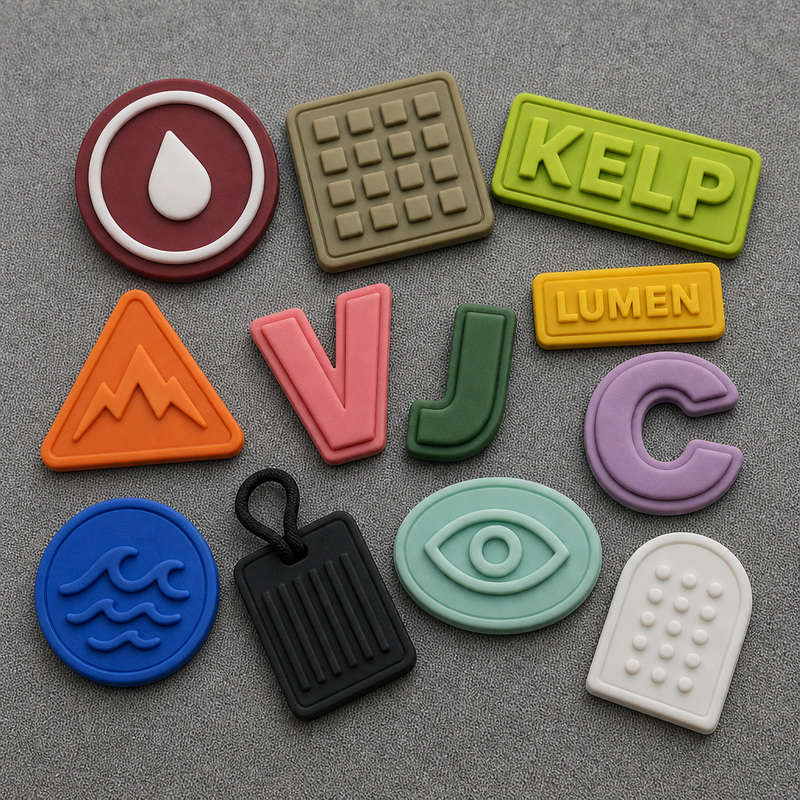
One moulding shot produces the whole emblem: outline, relief and lettering together.
Colour and relief: what the process actually controls
Because pigment is mixed into the compound rather than applied to a surface, colour is mass-correct throughout the part and cannot wear off the high points. Pantone solids, metallics and neons can be matched to ΔE below 1.5, which is the threshold where a brand colour still reads as the same colour beside packaging and print.
Texture, depth and special effects
Relief can be raised up to 3 mm, and fine lines, undercuts and multi-level depth all come out of the same tool. Surface finish is chosen at the tool stage — matte, gloss, sand-grain or brushed — and it changes how the emblem catches light, which is much of what "premium" means in the hand.
Special effects are material options, not coatings: glow-in-the-dark, reflective and pearlescent pigments are compounded in. That matters for workwear and outdoor ranges where a coating would be the first thing to fail.
Texture is decided by the tool, colour by the compound — both fixed before the first sample is moulded.
Durability targets worth writing into the specification
Wash and wear claims are only useful if they are tied to a test. These are the targets to put in the brief so that quotations describe the same product.
| Property | Target | What it predicts |
|---|---|---|
| Industrial washes | 100+ cycles with no fade | Colour survives retail laundry and home washing |
| UV exposure | Equivalent to 2 years outdoors | No yellowing or chalking on outdoor ranges |
| Abrasion | 10,000 rubs, ASTM method | Relief and lettering hold through friction and packing |
| Salt spray and humidity | No delamination or lifting | Performance on marine, outdoor and workwear programmes |
Ask for the test method beside each figure. A wash claim without a temperature, a cycle count and a detergent regime is not a specification; it is a sentence.
Cost per unit versus cost per wear
On paper, silicone sits above embroidery: roughly $1.20 to $3.50 per patch against $0.80 to $2.00. The comparison only turns when the downstream numbers are counted.
Embroidery rejection rates run 5–8%, largely from thread breaks and density faults, against under 1% for moulded patches. Fading drives 3–5% of returns on decorated garments; a mass-pigmented emblem removes that return reason entirely. Brands also report 15–20% higher price points on silicone-branded products, because the relief reads as a deliberate design choice rather than a decoration.
Over a 10,000-unit run, the total cost of ownership usually favours silicone once reworks, returns and markdowns are included — which is the number a sourcing team should be comparing, not the unit price on the quote.
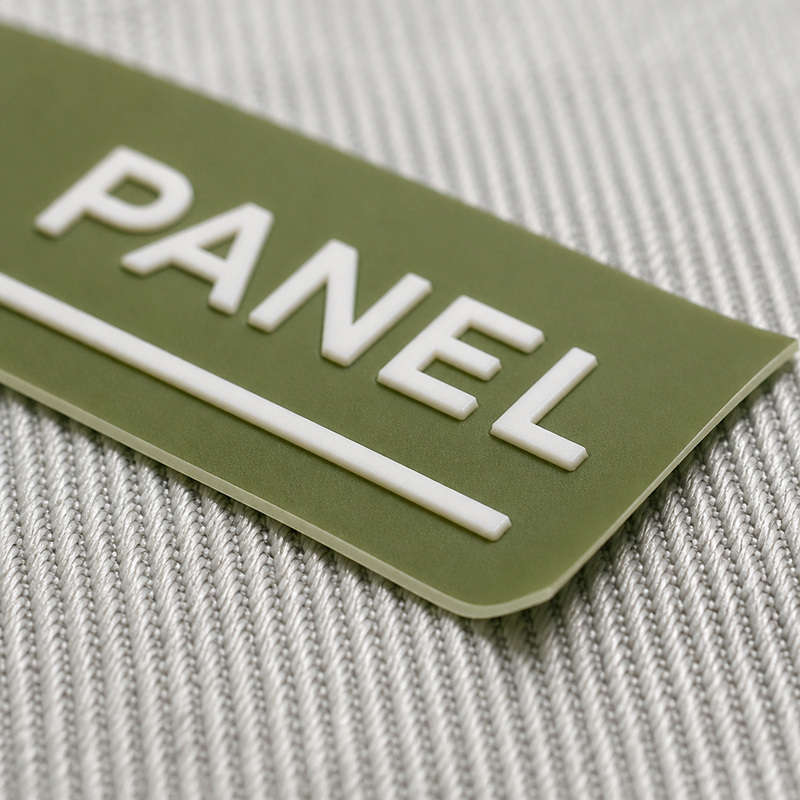
A thin label and a 3 mm emblem come from the same process; only the tool and the cycle differ.
Backing choice decides whether the patch stays on
Three backing routes cover most apparel programmes. Heat-seal works on cotton, polyester and blends where the fabric can take the press cycle. Pressure-sensitive adhesive suits trims that cannot be heat-pressed and small quantities. Sew-on remains the choice for caps, heavy workwear and anything that will be washed at industrial temperature.
Patch size runs from about 10 mm to 150 mm in any shape, and the edge treatment matters as much as the face: a thin border lifts on stretch fabric, a bevelled edge distributes the flex.
Match the backing to the fabric before approving artwork. A patch that lifts at the edges after ten washes is almost never a moulding defect — it is a heat-seal specification written for the wrong fibre.
Questions apparel teams ask about custom silicone patches
How fine can the lettering be?
Finer than embroidery at the same size, because detail comes from the tool rather than stitch count. The practical limit is the mould, not the material: very small counters and hairline strokes need a tool cut for them and a sample approved under raking light.
Can we match a Pantone colour exactly?
Match to ΔE below 1.5 on a solid Pantone, with metallic and neon options compounded rather than coated. Approve the colour on a moulded sample, not on a printed swatch, because texture changes how the same pigment reads.
What is the sampling lead time?
Around five days for a 3D sample from AI, EPS or PDF artwork, then 10–15 days for production after approval. The sample stage is where texture, gloss and backing are settled, so it is worth using rather than skipping.
Will a patch survive industrial laundering?
Moulded silicone itself does: 100+ industrial washes without colour loss. Survival depends on the backing and the fabric, so specify the wash temperature and cycle count with the backing choice.
Send artwork and a fabric sample
We will confirm relief height, edge treatment and backing against the garment, then mould a 3D sample so the colour and texture are approved on silicone rather than on paper.
Review the custom silicone patches range, or see the broader custom rubber patches options for woven and moulded combinations.