Distributor's Checklist: What to Ask Before Signing a Silicone Pet Toy Factory?
- Share
- publisher
- Suey
- Issue Time
- Jun 8,2026
Summary
Ten questions to put to a silicone pet toy factory before signing: report age and formulation matching, virgin versus recycled material, AQL and batch traceability, MOQ against real capacity, BSCI and SMETA audits, mould ownership clauses and defect policy.

Signing a silicone pet toy factory on the strength of one sample and a unit price is the most expensive shortcut in pet product sourcing. A chew toy is a mouth-contact product, so the questions that decide the outcome are material declarations, test reports and what happens when a batch fails — not the price at 10,000 pieces.
What follows is the ten-question set we put to any supplier, with the answer that separates a factory from a trading office. The point is not to collect documents; it is to find out which answers the supplier has actually measured.
What a silicone pet toy factory has to prove before you sign
A supplier is being asked to prove four things at once: that the compound is what they say it is, that the process is controlled, that capacity exists behind the promise, and that the relationship has an exit.
- Third-party test reports under 12 months old, matched to your formulation.
- A documented QC chain from incoming silicone to AQL final sampling.
- Capacity quoted for your product type, not the factory total.
- A signed mould ownership agreement with transfer rights.
Each leaves a document behind. A supplier who cannot produce it is describing an intention, and intentions do not survive a shift change.
A distributor checklist only works if the factory can answer it with paper. Claims without a report number are conversation.
Certification and material claims that need paper
“BPA-free” on a specification sheet costs nothing to type. What a distributor needs is a report from a recognised laboratory — SGS, TÜV or Intertek — covering FDA food-grade compliance, EU REACH and Prop 65, issued within twelve months and naming the formulation the factory will run for your order. A report for a different compound proves nothing about your toy.
Virgin or recycled silicone
Virgin silicone is more predictable for safety and performance. Recycled or post-industrial material can be acceptable when it is certified and the percentage and source are disclosed in writing. Fillers added to reduce cost produce toys that tear early at the seam and carry an odour that no amount of washing removes.
What the QC chain should name
Three checkpoints, minimum: incoming silicone inspection, in-process checks during moulding, and final random sampling at AQL level II. Destructive testing on tear strength and elongation per batch separates a factory that measures from one that looks. A defect should trace back to a lot number, not a shrug.
Ask for two references from distributors in non-competing regions, then call them. Quality consistency, on-time delivery and how a complaint was handled are the only three questions worth the call.
MOQ, lead time and the capacity behind them
Typical minimums run 1,000 to 5,000 pieces per design, with samples in 7 to 14 days and mass production in 3 to 6 weeks. A minimum under 500 pieces is a warning rather than a bargain: usually a workshop without the tooling budget to hold consistency across batches. The scorecard below is the one to take to the meeting.
| Criterion | Red flag | What a strong answer looks like |
|---|---|---|
| Certifications | “We can make any certificate” | Current SGS, ISO and BSCI reports, formulation-specific |
| MOQ | Under 500 pieces with no scale-up path | 2,000 pieces per design, with defined monthly capacity |
| Quality control | “We check randomly” | Documented AQL II sampling and batch traceability |
| Mould ownership | Verbal agreement only | Signed agreement with transfer rights |
| Social compliance | Audits “in progress” for years | BSCI Grade B plus annual SMETA, shared under NDA |
| Scale-up | No figure for your product type | 5,000 to 200,000 units per month on named lines |
Social compliance has moved from a retail nice-to-have to a listing requirement: working hours, child labour and safety audits need to exist before a buyer asks.
Mould ownership and the exit clause
If the distributor pays for the tool, the distributor should own it. Put that in writing, including the right to move the mould to another manufacturer and the condition in which it will be returned. Some factories describe moulds as factory property and clarify the position only when a project ends badly.
Storage belongs in the same clause. Free storage for active clients with return on request is normal; a fee that appears after year two is a soft lock-in.
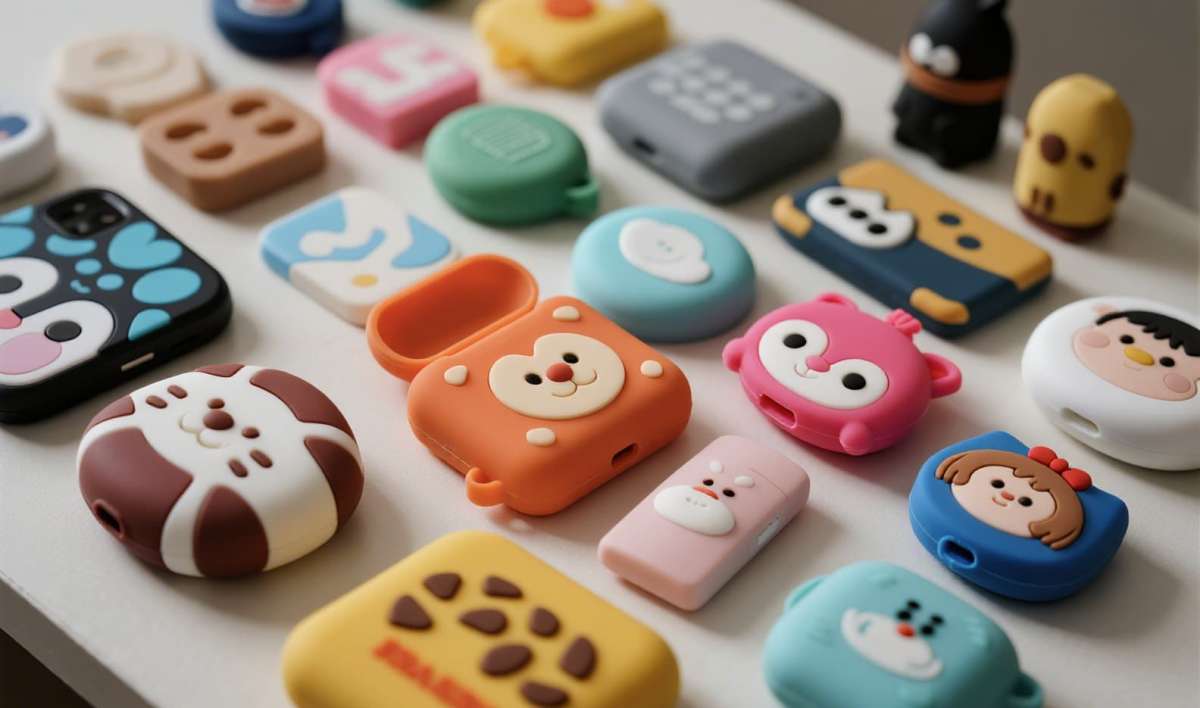
Tool ownership follows who paid. A mould held without paperwork is leverage, not an asset.
Defect handling, warranty and packaging support
Replacing defective units above a 3% defect rate in the following shipment is standard practice here, but standard practice is not a policy. Ask for the claim procedure, the evidence required — photographs, video, batch code — and the response time, in writing.
Packaging decides whether the factory can serve your channel. Custom boxes, printed hang tags, kit assembly and direct shipment to retail partners or a fulfilment centre remove a tier of handling. A factory that can only ship bulk cartons hands that cost back to you.
Packaging and final inspection are the last two places a distributor's brand is either protected or exposed.
Questions distributors ask before signing
How old can a test report be before it stops counting?
Twelve months. Beyond that the formulation, the pigment batch or the supplier of the base compound may have changed, and the report describes a product that no longer exists.
Is a low MOQ always a risk?
Not always, but it shifts the burden of proof: below 500 pieces, ask how colour and hardness are held between batches, and who absorbs scrap when a run drifts.
What should the mould agreement contain?
The party that paid, the party that owns, the storage terms, and the conditions for transfer or return. Anything verbal on this point should be treated as unagreed.
Can one factory handle both toys and feeding products?
Often yes: both are moulded from food-grade silicone on the same presses. Confirm the material grade and the cleaning regime between runs before assuming the capability transfers.
Audit a silicone pet toy factory against your own checklist
Send the checklist you intend to use. We answer it in writing, with report numbers, capacity figures for your product type and a mould agreement template, before any tooling is quoted.
Start with the pet supplies capability page, then review how raw material is documented under raw material certification.