Guide to choosing the right hardness for a silicone washer
- Share
- publisher
- Suey
- Issue Time
- Feb 27,2026
Summary
Selecting the correct Shore A hardness for silicone washer is critical to prevent leaks and ensure longevity. This guide explains durometer scales (20 to 90 Shore A), their effect on compression set and sealing force, and how to match hardness to applications like fluid handling or vibration damping. Includes technical tables and ASTM test tips
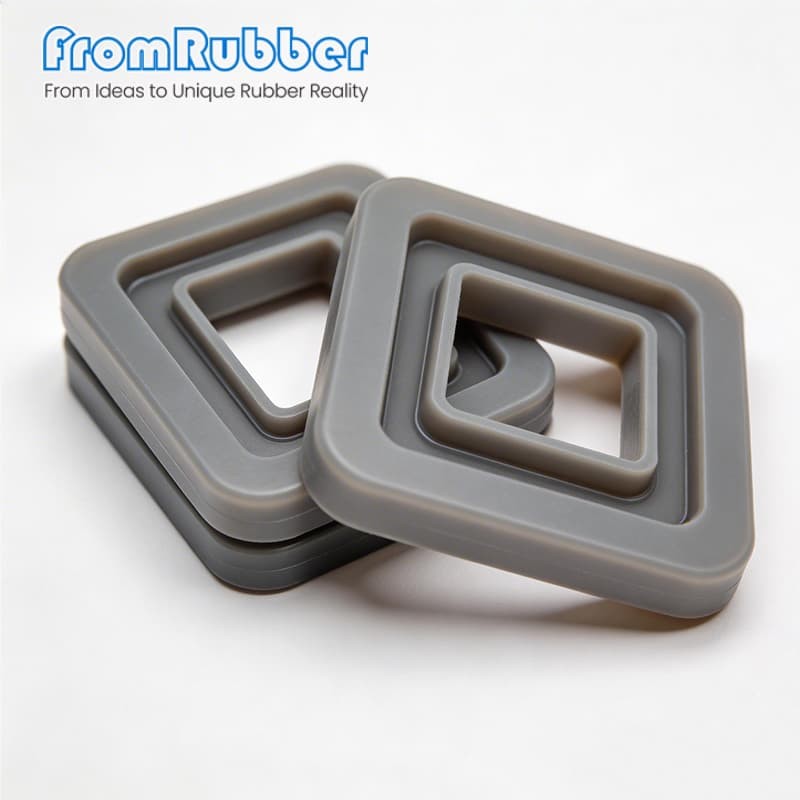
Why hardness dictates performance
Silicone washers live or die by their durometer (Shore A). The wrong hardness leads to leaks, extrusion, or permanent set. Whether you seal vacuum chambers or high-pressure water systems, the shore value controls compression force, conformability, and thermal stability. This guide helps you match durometer to application.
Durometer scales: Shore A, 00, D
Silicone washers typically use Shore A (soft to semi-rigid). Very soft pads may use Shore 00, while reinforced parts might go to Shore D. The table below maps common values with better visual spacing.
| Hardness range (Shore A) | Common feel | Typical washer use |
|---|---|---|
| 20 – 35 (ultra soft) | gel-like, tacky | vibration damping, low‑force seals |
| 40 – 55 (medium soft) | flexible, resilient | food-grade gaskets, water seals, O‑rings |
| 60 – 70 (medium) | firm, little give | hydraulic seals, high compression, spacers |
| 75 – 90 (hard) | rigid, structural | load bearing, metal-replacement, steam |
How hardness affects compression set & sealing force
Softer silicones (30–50 Shore A) conform to irregular surfaces with minimal bolt torque, ideal for low-pressure fluids or vacuum. Harder compounds (70A+) resist extrusion in high gaps but require stronger clamping. Always consider the compression set value: premium materials retain elasticity even at higher hardness.
Selecting hardness by application & environment
Temperature, pressure, and mating surface finish drive the choice. Use the quick‑reference matrix below (generous cell padding for readability).
| Application area | Recommended Shore A | Why / key property |
|---|---|---|
| Water / low-pressure fluid | 40 – 55 | compression without creep, FDA grades |
| High vibration / electronics | 25 – 40 | damping, low modulus, non‑abrasive |
| Hydraulic / pneumatic valves | 65 – 75 | extrusion resistance, pressure stability |
| Static seal, rough surface | 30 – 50 | fills asperities, low clamping force |
Thermal effects: hardness shift with temperature
Silicone maintains flexibility across a wide range, but durometer can change. At -50°C a 50 Shore A washer may feel like 70A; at +200°C it might soften 5–10 points. For cryogenic or high‑heat, choose a slightly harder base compound to retain seal force.
Test & validation: ASTM D2240 & practical tips
Always specify durometer per ASTM D2240. For thin washers (< 6mm) stack multiple layers for accurate reading. A durometer tester foot should be parallel; perform at 23°C/50% RH. Shore M or micro‑ir hardness is used for very thin sections. Partner with labs that provide batch certificates.
🔍 Pro tip: For potable water or food contact, ensure the washer meets NSF/ FDA 21 CFR 177.2600. Hardness between 50–70A often gives the best balance of elasticity and cleanability.
Custom blends & fillers: modifying hardness
Silicone formulators adjust hardness by adding silica, extending structure, or using different polymer chains. High‑tear grades (e.g., 50A with high tear strength) outperform standard 70A in dynamic applications. Always request a data sheet that lists tensile, elongation, and tear.
- Ultra soft (20-35A) — gel seal, light clamp
- Medium (40-55A) — all‑round industrial
- Firm (60-70A) — high pressure, tight gaps
- Hard (75A+) — structural / bearing
- Always verify temp range
Standard manufacturing tolerance: ±5 Shore A. For precision sealing, specify ±3 and request in‑process control.
Real‑world example: silicone washer in faucet cartridge
A leading faucet brand switched from 70A to 50A silicone washer to reduce operating torque while maintaining 10‑year leak‑free warranty. The softer washer compensated for ceramic disc unevenness. Compression set remained below 15% after 1000h at 80°C. This highlights why mid‑range hardness often wins.
Chemical resistance vs hardness – any link?
Hardness alone doesn’t dictate chemical compatibility; that’s polymer backbone and fillers. However, softer silicones have higher permeability, so for aggressive oils or solvents a harder (densely crosslinked) compound may offer lower swell. Always test in the actual fluid.