High-Temperature Resistant Silicone Keypads for Industrial Control Systems
- Share
- publisher
- karl
- Issue Time
- Nov 5,2025
Summary
What high-temperature resistant silicone keypads really need in order to survive continuous heat, peaks and thermal cycling, why legends, adhesives and backlights fail before the silicone does, and how to write a thermal acceptance test with measurable limits.
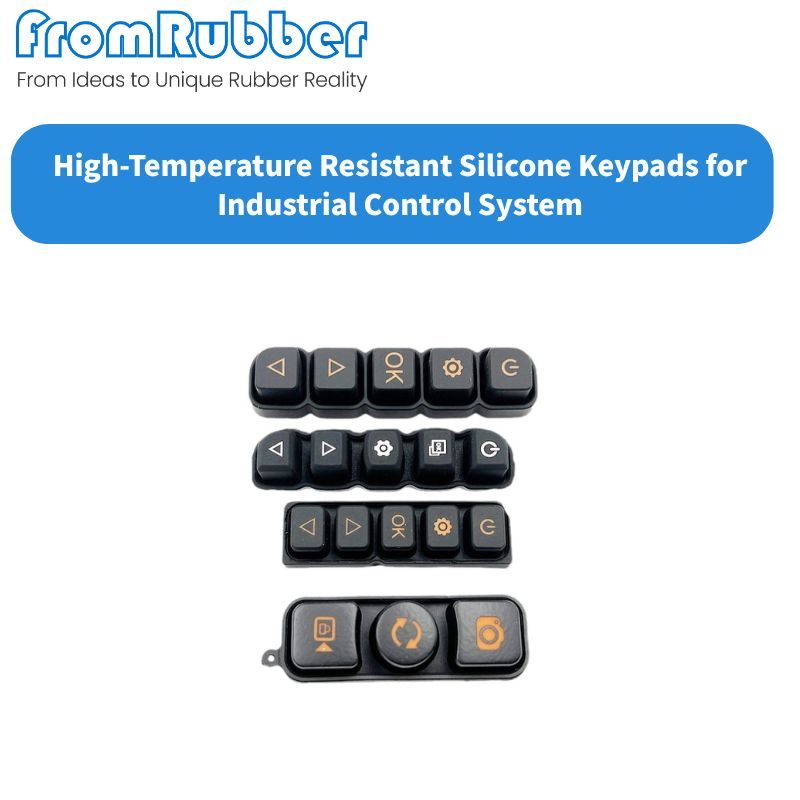
A keypad that survives a heat soak in an oven is not the same as a keypad that survives five years next to a heater. The first is a material demonstration. The second is a system behaviour, and it depends on the legend ink, the adhesive, the backlight and the carbon pill as much as on the silicone.
This is how to specify high-temperature resistant silicone keypads for industrial control systems so that the temperature rating on the data sheet matches what happens on the panel.
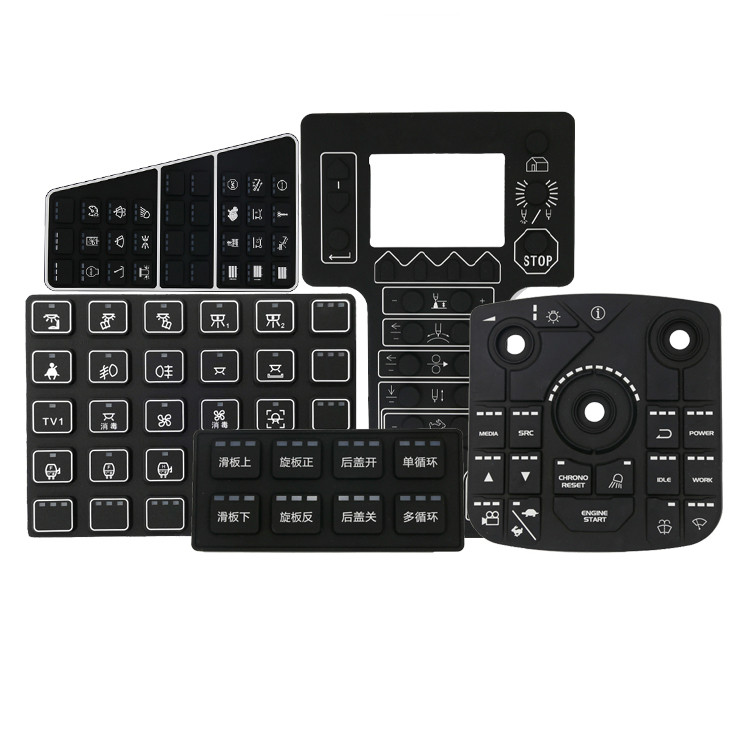
What Does High-Temperature Resistant Mean for Silicone Keypads?
The direct answer: it means the whole assembly still meets its mechanical and electrical specification after the intended exposure, not that the compound alone has a headline number. Silicone is the most heat-tolerant part of most keypads. The failures usually appear in the layers added on top of it.
Three mechanisms drive those failures. Compression set, where the dome stops returning to its original height; plasticiser and low-molecular-weight migration, where the surface changes and the legend loses adhesion; and differential expansion between silicone and the rigid parts it is bonded to, which shows up as lifting edges or trapped stress.
Any supplier can quote a maximum temperature. The useful question is what happens to force, travel and contact resistance after the exposure, because those are what the operator experiences.
Continuous, Peak and Cyclic: Three Different Requirements
Most heat-related keypad failures trace back to a specification that named one number where the application had three. Separate them before you choose a grade.
A panel that sees 120 °C for twenty minutes during a washdown cycle is a different design problem from one that sits at 90 °C continuously. Treating them as the same requirement is how a part passes the data sheet and fails in service.
| Exposure type | What it stresses | What to specify |
|---|---|---|
| Continuous operating temperature | Compression set and long-term hardening | Grade, plus the maximum force drift allowed after the rated hours |
| Peak temperature | Legend ink and adhesive bonds | Peak value, dwell time and number of events per year |
| Thermal cycling | Bond lines and differential expansion | Cycle range, ramp rate and the acceptance test between cycles |
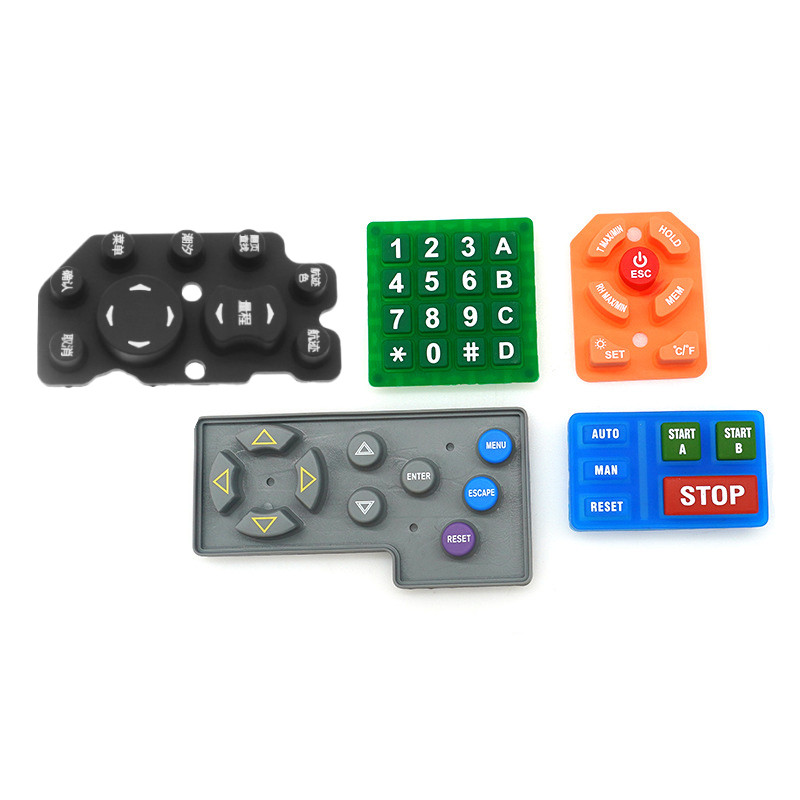
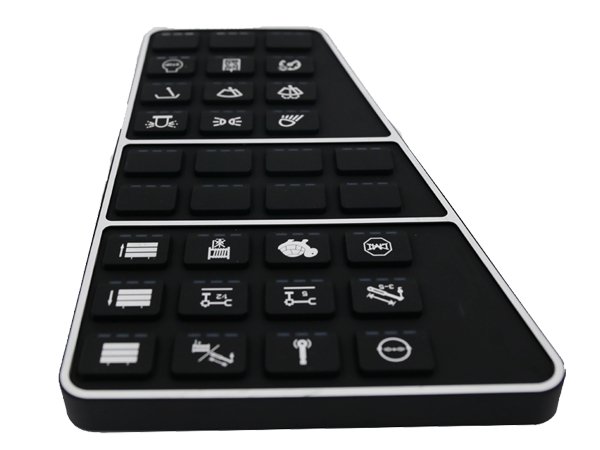
Where High-Temperature Resistant Silicone Keypads Fail First
In our experience the silicone body is rarely the first thing to go. Four other elements fail earlier, and each has a different remedy.
- Screen-printed legends. Ink adhesion drops as the surface energy of the silicone changes with heat. Laser-etched legends remove the ink interface entirely, which is why they dominate on heat-exposed panels.
- Pressure-sensitive adhesives. The backing tape that bonds the keypad to the bezel softens and creeps; the panel lifts at the corners long before the keys fail.
- Backlight layers. Light guides and diffusers yellow or warp, changing both colour and brightness, and the LED itself may be the first component outside its rating.
- Carbon pills. Repeated thermal cycling can loosen the bond between pill and silicone, which shows up as intermittent contact rather than as a resistance drift.
Specifying a heat-stable compound while leaving a standard adhesive in the bill of materials moves the failure, it does not remove it.
Applications Where Heat Is the Design Driver
Four application families account for most requests we see. Industrial control panels near furnaces, ovens and heat treat lines, where radiant heat reaches the bezel. Medical and laboratory equipment that is repeatedly sterilised. Outdoor equipment in high-insolation locations, where surface temperature at the panel exceeds air temperature by a wide margin. And equipment mounted on engines or near power electronics, where the keypad is the coolest thing in a hot enclosure.
In each case the first engineering step is the same: measure the actual key surface temperature over a full duty cycle, including the worst hour of the year. A specification written from a cabinet rating rather than from a measurement is usually either over-engineered or under-engineered, and both are expensive.
Understanding High-Temperature Silicone Keypads: Core Features and Material Advantages
High-temperature silicone keypads are designed to withstand extreme heat while delivering reliable performance in tough industrial environments. Made from custom silicone rubber, these keypads resist heat, chemicals, and abrasion better than many alternatives.
Key Material Benefits
| Feature | Advantage |
|---|---|
| Heat Resistance | Operates efficiently up to 200°C+ |
| Chemical Resistance | Safe against oils, solvents, and acids |
| Durability | Long-lasting, abrasion-proof surface |
| Flexibility | Maintains tactile feedback under stress |
| Vibration Tolerance | Ideal for high-vibration machinery |
Why Silicone?
- ●Silicone elastomers resist deformation and cracking when heated, keeping industrial control panel switches responsive.
- ●The material's flexibility delivers consistent tactile feedback even after extended use.
- ●Silicone’s resistance to chemicals and extreme temperatures makes it perfect for harsh factory settings that demand durable silicone membrane switches.
In short, high-temperature silicone keypads combine strength and reliability. They provide a user-friendly interface that remains consistent — critical for controlling heavy-duty equipment safely and effectively.
Applications in Industrial Machinery Control Systems: Where Durability Meets Precision
High-temperature resistant silicone keypads are a perfect fit for industrial machinery control systems. In these environments, controls face tough conditions—extreme heat, constant vibrations, and exposure to chemicals. Silicone keypads stand out by offering chemical-resistant elastomer buttons and abrasion-proof industrial keypads that keep performing day in and day out.
Key benefits include:
- ●Heat-resistant HMI interfaces that handle the high temps common in factories, ensuring consistent operation.
- ●High-vibration tolerant input devices designed to survive heavy machinery’s shake and rattle without losing sensitivity.
- ●Durable silicone membrane switches that provide reliable, tactile feedback even after years of use.
These keypads help operators stay precise and efficient. Whether you control conveyor belts, CNC machines, or assembly line systems, the keypad’s durability and responsiveness are critical for safety and productivity. This makes custom silicone rubber keypads the go-to choice for industrial control panel switches used across the U.S. manufacturing sector.
Design and Customization Options: Tailoring Keypads for Your Operational Needs
When it comes to high-temperature resistant silicone keypads, one size definitely doesn't fit all. Your industrial machinery demands controls built exactly to fit how you work. Here’s how we help you customize keypads for the job:
| Customization Feature | What It Means for You |
|---|---|
| Shape & Size | Get keypads molded to fit your panel perfectly, no awkward gaps or overlays. |
| Key Layout | Arrange buttons for ease of use—whether a single row or complex multi-key designs. |
| Tactile Feedback Levels | Choose soft or firm key presses depending on your operator’s preference. |
| Color Coding | Use bright, chemical-resistant elastomer buttons to quickly identify key functions. |
| Legends & Labels | Add custom symbols or numbers, printed or engraved, that won’t fade under heat or wear. |
| Backing Options | Select options like adhesive or snap-in for easy installation and maintenance. |
| Temperature Ratings | Tailor materials to withstand extreme heat or cold specific to your environment. |
We specialize in custom silicone rubber keypads that combine flexibility with ruggedness. Our expert design team works closely with you to meet your heat-resistant HMI interface needs, ensuring the keypad fits your industrial control panel switches perfectly.
By tailoring the keypad, you get:
- ●Smooth operation even in rough, high-vibration settings
- ●Durable, abrasion-proof surfaces built to last long in tough environments
- ●Controls that stay reliable despite exposure to chemicals or high temperatures
Custom design means your operators spend less time troubleshooting and more time running machines efficiently. At FromRubber, we make sure your keypads match your operational demands right out of the box.
Manufacturing Excellence: From Concept to Compliance at FromRubber
At FromRubber, we turn your ideas for high-temperature resistant silicone keypads into reliable, ready-for-use industrial solutions. Our manufacturing process focuses on precision, quality, and meeting all necessary industry standards to ensure every custom silicone rubber keypad performs in demanding environments.
Here’s what sets us apart:
- ●Custom Molded Rubber Controls: We build each keypad to your exact specs, ensuring durability and perfect fit.
- ●Strict Quality Checks: From raw materials to final products, every step meets rigorous quality and safety compliance.
- ●Advanced Silicone Formulations: Our heat-resistant and chemical-resistant elastomer buttons are designed to stand up to harsh industrial conditions.
- ●Efficient Production: Fast turnaround times without sacrificing the long-lasting build your machinery needs.
- ●Local Support: Based in the U.S., we offer responsive service geared toward the industrial control panel switches and heat-resistant HMI interfaces common here.
By focusing on the complete journey—from concept through design, molding, testing, and compliance—FromRubber helps you get industrial keypads that endure heat, vibration, and chemicals while providing reliable tactile feedback for accurate control. That’s manufacturing excellence you can trust.
Comparing Silicone Keypads to Alternatives: Why High-Temp Resistance Wins in Industrial Settings
When it comes to Industrial Control Panel Switches, not all keypads are built the same. Silicone keypads, especially those designed with high-temperature resistant materials, outperform alternatives like plastic or rubber in tough environments. Here’s why they stand out:
- ●Heat Resistance: Silicone keypads handle extreme heat without warping or losing function. Other materials may melt or degrade, causing costly downtime.
- ●Durability: Resistant to abrasion, chemicals, and vibration—these keypads keep working where others fail.
- ●Tactile Feedback: They provide reliable, consistent response even after thousands of presses, ensuring accurate input in high-vibration machinery.
- ●Long Lifespan: Less wear and tear means fewer replacements and lower maintenance costs.
- ●Weatherproofing: Silicone membranes resist moisture and dust better than many alternatives, crucial for industrial settings.
For U.S. customers, investing in heat-resistant HMI interfaces isn’t just about function—it’s about keeping machinery running safely and efficiently. Custom molded rubber controls like these offer unmatched performance where precision and durability matter most.
Installation, Maintenance, and Troubleshooting: Ensuring Long-Term Performance
Installing high-temperature resistant silicone keypads for industrial machinery is straightforward but important for lasting results. Make sure the surface is clean and dry before placing the custom silicone rubber keypads. Proper alignment with industrial control panel switches helps avoid early wear and ensures reliable tactile feedback.
For maintenance:
- ●Regular cleaning: Use mild soap and water, avoiding harsh chemicals that can damage chemical-resistant elastomer buttons.
- ●Inspection: Check for wear or damage, especially in high-vibration tolerant input devices, to catch issues early.
- ●Avoid excessive force: Silicone membrane switches are durable but applying too much pressure can shorten their lifespan.
If you run into problems like unresponsive buttons or inconsistent feedback, start with these quick fixes:
- Clean the keypad to remove dirt or oil buildup.
- Verify connections in the control system.
- Replace worn or damaged keypads with custom molded rubber controls from trusted suppliers.
Following these tips ensures your extreme temperature keypad solutions stay reliable and abrasion-proof over time. Keeping your industrial machinery’s input devices in top shape lowers downtime and supports smooth daily operations.
FromRubber: Your Partner in Custom Silicone Rubber and Plastic Solutions
At FromRubber, we specialize in delivering custom silicone rubber keypads and plastic components tailored to fit your exact needs. Whether you’re after durable, heat-resistant HMI interfaces or abrasion-proof industrial keypads, we bring your ideas to life with precision and quality. Our expertise in chemical-resistant elastomer buttons and high-vibration tolerant input devices ensures your machinery controls stay reliable under tough conditions.
We understand the demands of the U.S. industrial market, so we focus on solutions that enhance your equipment’s performance without compromise. From concept to production, our team works closely with you to design and manufacture parts that meet industry standards and outlast expectations.
When you choose FromRubber, you get more than just products—you get a trusted partner who stands behind every custom molded rubber control we create. Let us help you simplify your control panel needs with extreme temperature keypad solutions engineered for long-term success.
How to Specify and Verify Thermal Endurance
Write the requirement as a test, not as an adjective. A usable clause names the temperature, the duration, the number of cycles, and the acceptance limits on force, travel, contact resistance and legend adhesion. Without acceptance limits, an ageing test produces a report but not a decision.
The Verification Sequence That Catches Real Problems
Start with a baseline force curve on five keys. Expose the panel to the stated profile. Re-measure the same five keys. Then run the legend abrasion test and the adhesion check on the same samples, because heat exposure changes both. Finally, fit the panel to the actual bezel; lifting and creep only appear under the real clamping load.
For panels that also face solvent or washdown, the thermal and chemical exposures should be run in the order the plant actually applies them. Running them separately can hide the interaction, which is often where a heat-stable part fails. Constructions for those environments are covered on our chemical resistant equipment keypad page, and extreme-range variants are described on the extreme temperature keypad page.
Future-Proof Your Machinery with Proven Silicone Innovation
Investing in high-temperature resistant silicone keypads means you're setting up your industrial machinery for long-term success. These custom silicone rubber keypads deliver reliable performance even under the toughest conditions—extreme heat, heavy vibration, and chemical exposure. With their abrasion-proof surfaces and consistent tactile feedback, they keep your control systems responsive and accurate, reducing downtime and maintenance costs.
By choosing advanced silicone keypad solutions, you’re not just meeting today’s operational demands—you’re preparing your equipment for future challenges. Whether you upgrade existing industrial control panel switches or design new heat-resistant HMI interfaces, these durable silicone membrane switches stand up to wear and tear better than almost any alternative.
At FromRubber, we focus on tailored, custom molded rubber controls designed specifically for your needs. Our expertise ensures your keypads integrate seamlessly into your systems while passing all regulatory compliance. That’s how you get input devices that last longer and perform better, keeping your machinery running smoothly for years.
Future-proof your operation by trusting the proven silicone innovation that U.S. industries depend on—durable, heat-resistant, and built to perform no matter the environment.
Frequently Asked Questions
What temperature can silicone keypads withstand?
General-purpose silicone compounds are typically rated for continuous service well above the range of most control panels, with higher-temperature grades available. The limiting factor in a finished keypad is usually the legend, the adhesive or the backlight rather than the silicone itself, so always specify the assembly, not just the compound.
Does a higher durometer help at high temperature?
It can reduce compression set under load, but it also raises actuation force, which may make the panel unusable with gloves. The better lever is usually the dome geometry and the web thickness, combined with a grade selected for the actual temperature profile.
Should backlit keypads be avoided in hot equipment?
No, but the light source and the diffuser need to be selected for the same temperature as the keypad. LEDs and diffuser films often have lower limits than the silicone, and they are the parts that change colour or fail first.