How Safe Silicone Cup Lids Are Made — A Look Inside Our BPA-Free Factory
- Share
- publisher
- Suey
- Issue Time
- May 7,2026
Summary
Go inside FromRubber's BPA-free factory. See how platinum-cured silicone, post-cure ovens, and strict QC create cartoon safe silicone cup lids. Certified non-toxic.
How Safe Silicone Cup Lids Are Made — A Look Inside Our BPA-Free Factory
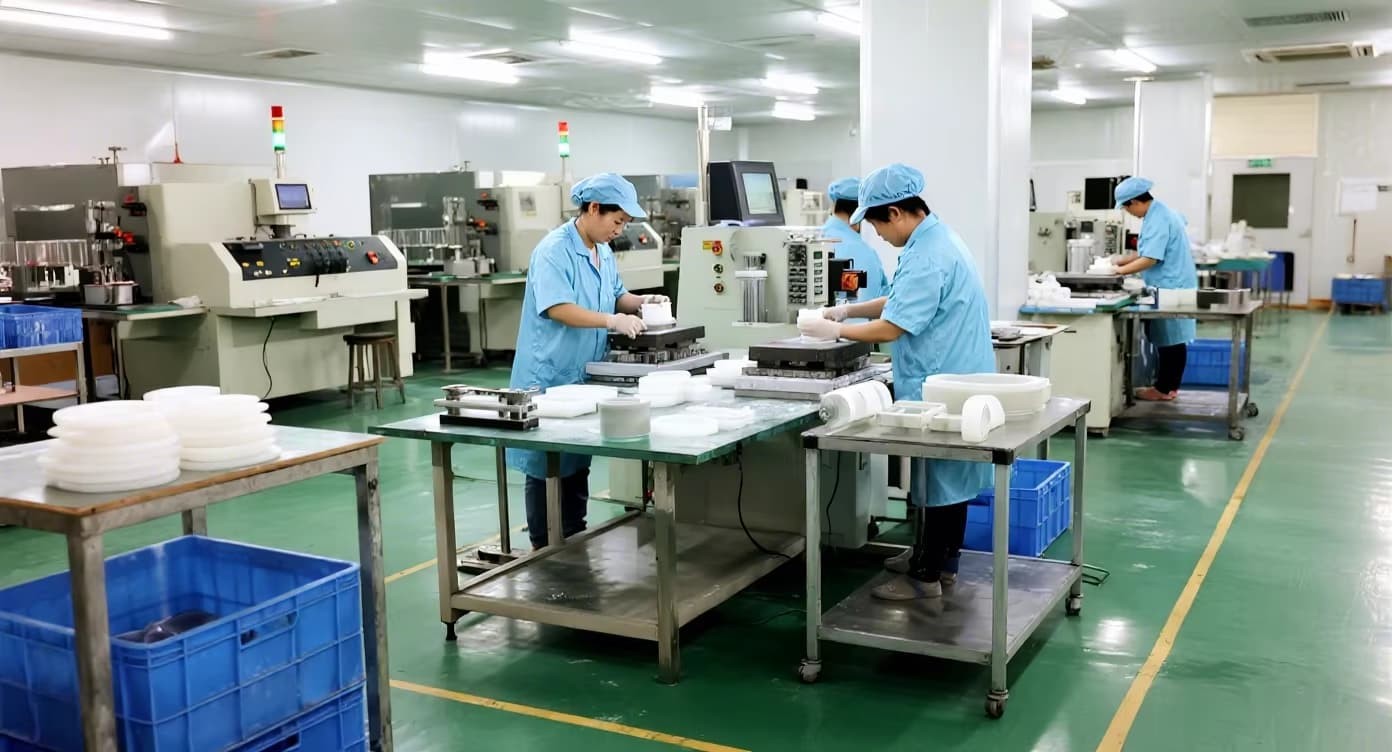
The growing demand for cartoon animal silicone cup lids has brought attention not only to their playful designs but also to the critical question: how are safe, BPA-free silicone lids actually manufactured? In an industry where low-cost shortcuts can compromise food safety, understanding the production process from raw material to finished product is essential for brands, retailers, and conscientious consumers. At FromRubber, we operate a dedicated BPA-free factory that adheres to global food-contact standards. This article takes you step by step through our manufacturing workflow, quality control checkpoints, and the science that ensures every lid remains non-toxic, durable, and delightfully functional.
Stage 1: Raw Material Selection – Premium Platinum-Cured Silicone
Safety begins long before molding starts. FromRubber sources only platinum-catalyzed liquid silicone rubber (LSR) from certified global suppliers. Unlike peroxide-cured silicone, which can leave acidic residues (acetophenone, methanol, etc.), platinum-cured silicone is biologically inert and requires no post-cure stabilizers. Each incoming batch undergoes Fourier-transform infrared spectroscopy (FTIR) testing to verify polymer identity and check for unwanted fillers. Crucially, we test for BPA, BPF, BPS, and phthalates – all must be non-detectable (ND). Our raw material warehouse is temperature-controlled and segregated from any non-food-grade production lines, eliminating cross-contamination risks.
Platinum vs. Peroxide Silicone – What's Safer?
✓ No peroxide byproducts
✓ Lower VOCs
✓ FDA/LFGB compliant
✗ Residual acids/alcohols
✗ Odor after heating
✗ May require long post-cure
Stage 2: Precision Mold Engineering – Designing the Cartoon Animal Features
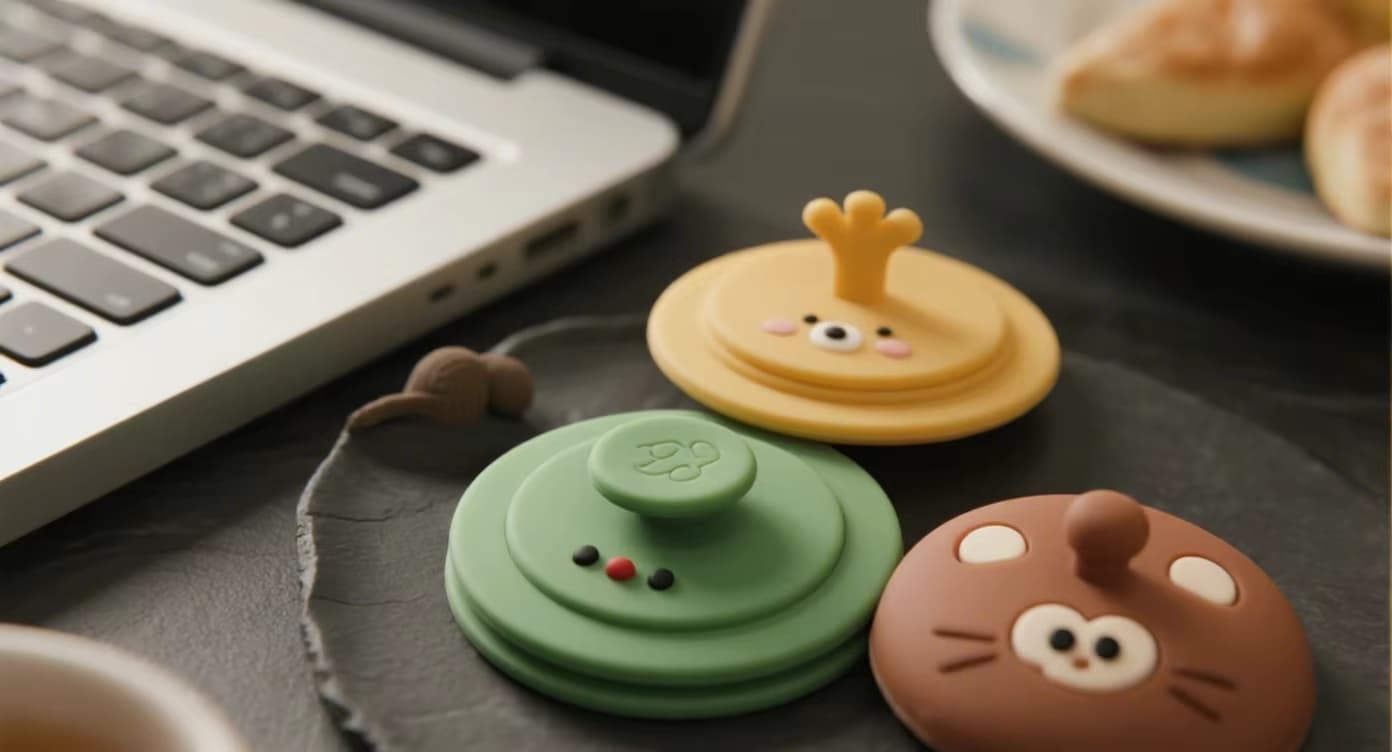
Our in-house tooling team creates high-grade steel molds (P20 or S136H) with micron-level accuracy. For cartoon animal cup lids – whether bear, cat, fox, or custom mascot – we design the ears, snout, and drinking spout as integrated features without detachable small parts that could pose choking hazards. The mold geometry also includes a specially engineered sealing lip that ensures leak-proof performance while maintaining an easy-on, easy-off fit. Computer numerical control (CNC) machining and electrical discharge machining (EDM) produce mold surfaces with an Ra ≤ 0.4μm finish, which yields smooth, non-stick silicone parts that clean easily and resist bacterial adhesion.
Stage 3: Injection Molding Process – Consistency and Control
During production, the liquid silicone rubber is pumped from sealed drums into a fully automated injection molding machine. Parameters such as injection pressure, temperature (typically 160-190°C), and curing time are monitored in real time via PLC systems. Each shot produces perfectly formed lids with no flash or voids. The entire cycle takes between 60 and 120 seconds depending on lid size and complexity. Our cleanroom-style molding area maintains positive air pressure and HEPA filtration to prevent airborne particles from embedding into the soft silicone. Additionally, molds are cleaned after every shift using validated, non-toxic mold release agents that are also food-contact approved.
Stage 4: Post-Cure Oven Treatment – Eliminating Volatile Residues
After demolding, every batch of BPA-free silicone cup lids enters a post-cure oven at 200°C for 4 hours. This critical step ensures any trace cyclic siloxanes (D4, D5, D6) are fully volatilized, leaving the silicone inert and odorless. Post-curing also stabilizes the mechanical properties, enhancing tensile strength and tear resistance. Without this step, some low-grade lids may discolor or emit a slight burnt rubber smell when exposed to hot coffee. FromRubber goes beyond many factories by performing post-cure on 100% of production – not just random samples.
Visual Inspection
Every single lid is inspected under LED lighting for surface defects, discoloration, or incomplete fill.
Leak & Seal Test
Lids are fitted to standard tumblers, filled with water, inverted, and shaken to verify leak-proof performance.
Migration Testing
Samples sent to SGS/TÜV for overall migration (food simulants: 10% ethanol, 3% acetic acid).
Stage 5: BPA-Free Verification & Lab Accreditation
FromRubber maintains an internal quality lab equipped with GC-MS (Gas Chromatography-Mass Spectrometry) to spot-check for BPA, BPF, BPS, and other bisphenols. For every production lot, we retain samples for one year for traceability. Additionally, third-party labs test for compliance with FDA 21 CFR 177.2600, LFGB (German Food Code), and EU 10/2011. Our BPA-free declaration is backed by quantitative test data, not generic claims. Customers receive a Certificate of Analysis (COA) with each shipment, ensuring full transparency.
Packaging – Safe, Clean, and Ready for Retail
After passing all inspections, the lids are cleaned using a high-pressure air and UV sanitation tunnel, then individually packed in food-grade polyethylene bags or custom retail packaging (kraft boxes, recycled cardboard sleeves). Our packing area follows GMP (Good Manufacturing Practices) with strict hygiene protocols. For bulk orders, we use corrugated cartons with inner liners to prevent dust or moisture ingress. Each carton carries a label with lot number, manufacturing date, and certification marks.
Why FromRubber's Manufacturing Process Stands Out
✓ 100% Platinum silicone – no shortcuts.
✓ In-mold and post-cure processes eliminate VOCs.
✓ BPA, phthalate, and heavy metals – all ND (non-detect).
✓ Complete test documentation for every shipment.
✓ Custom cartoon animal designs without sacrificing safety.
Frequently Asked Questions About Safe Silicone Lid Production
Q: Are all silicone lids naturally BPA-free?
A: Yes, pure silicone contains no BPA. However, some manufacturers add fillers or mix with lower-grade plastics. Independent testing is essential to confirm “BPA-free” claims.
Q: How can I verify a factory uses platinum-cured silicone?
A: Request a material certification letter and a GC-MS test report showing absence of peroxide breakdown products (e.g., acetophenone, dimethylbenzyl alcohol).
Q: Can you manufacture custom animal designs while maintaining food-grade safety?
A: Absolutely. FromRubber specializes in custom cartoon molds; all tooling and processing stay within our BPA-free food-grade workflow.
See Our BPA-Free Factory in Action
Request a virtual tour or sample kit. FromRubber – your transparent partner for safe silicone cup lids.
📧 nani@fromrubber.com | www.fromrubber.com
Custom cartoon animal lids, fast molding, certified non-toxic manufacturing.
FromRubber – Inside the BPA-Free factory: safety, quality, and cartoon charm since 2009.