How a Silicone Brush Pad & Palette Extends the Life of Your Expensive Brushes
- Share
- publisher
- Suey
- Issue Time
- Mar 10,2026
Summary
A silicone brush pad protects a brush where it actually wears: the tip, the ferrule joint and the glue line. This note explains the three failure modes that end a good brush, how a textured silicone pad and a mixing palette change them, and what to specify if you are commissioning a private-label set.
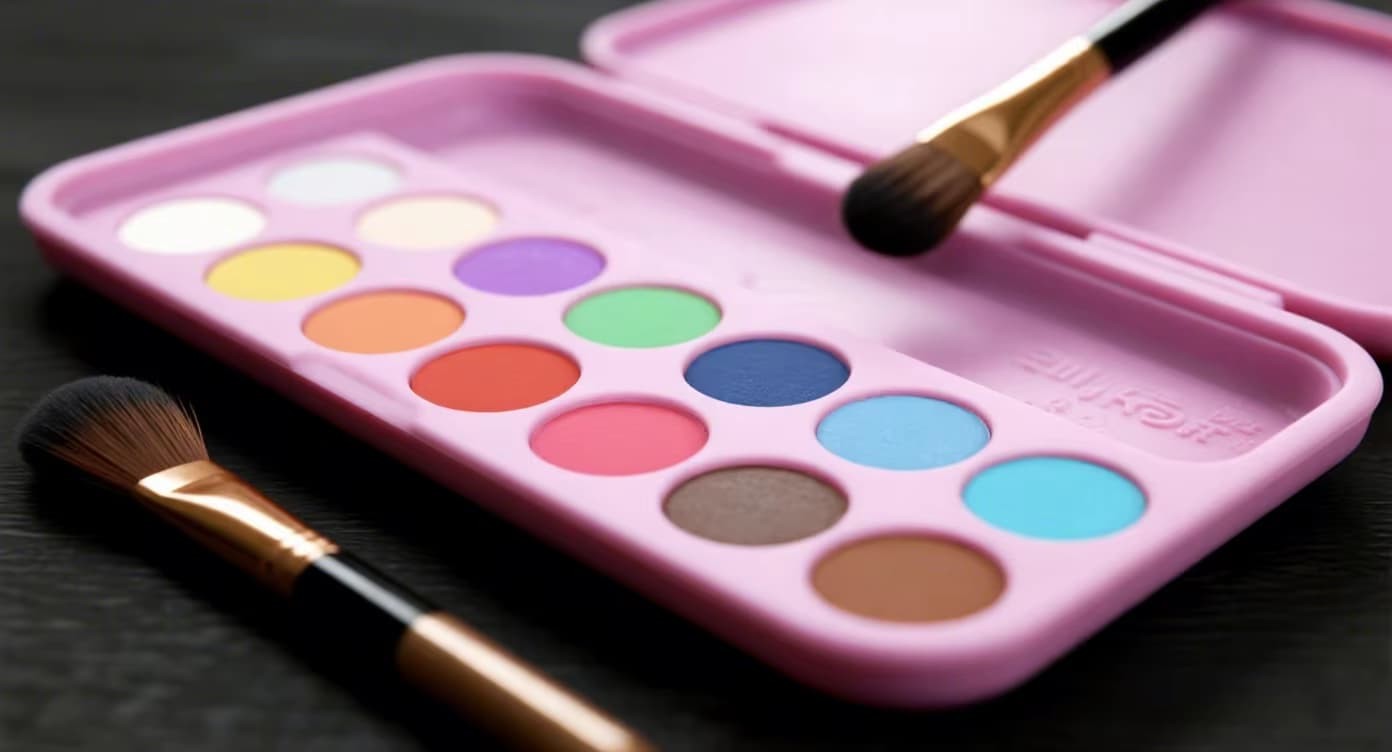
Tool-care note
Brushes rarely die from use; they die from cleaning. Water reaches the ferrule, the glue softens, bristles shed, and the tip frays against a rough surface. A silicone brush pad addresses the surface, and a silicone palette keeps product off the ferrule in the first place. Together they attack the two failure modes that matter.
- Water in the ferrule is the leading cause of shedding; a palette keeps product out of that joint.
- A textured silicone pad cleans by capillary action against a compliant surface, not by abrasion.
- Drying upside down or flat is part of the tool, not a habit: a drying rack changes the outcome.
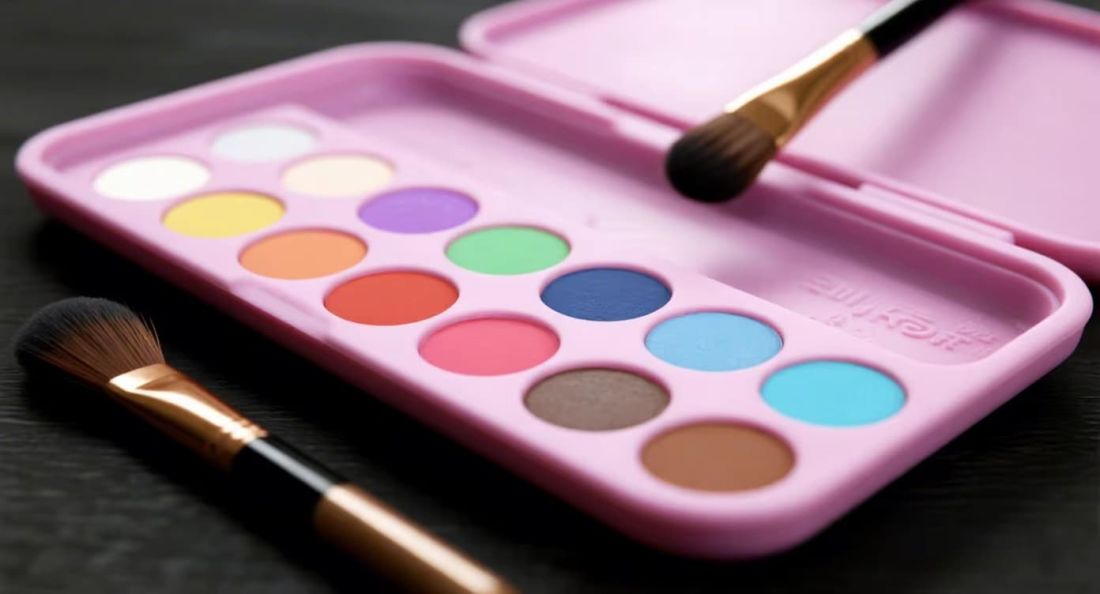
The three failures a silicone brush pad can prevent
Tip fraying comes from cleaning against a hard, abrasive surface and from drying in a cup, where the weight of the brush bends the bristles. A compliant silicone pad with soft ribs flexes under the bristles and removes product without bending them permanently, and a drying rack that holds the brush head-down keeps water away from the ferrule.
Ferrule corrosion and glue failure are the same problem: moisture trapped in the metal collar softens the adhesive that holds the tuft. Once the glue fails, bristles shed onto the face. A palette stops the problem upstream by giving the user a surface to load and mix product without dipping the brush repeatedly into a jar.
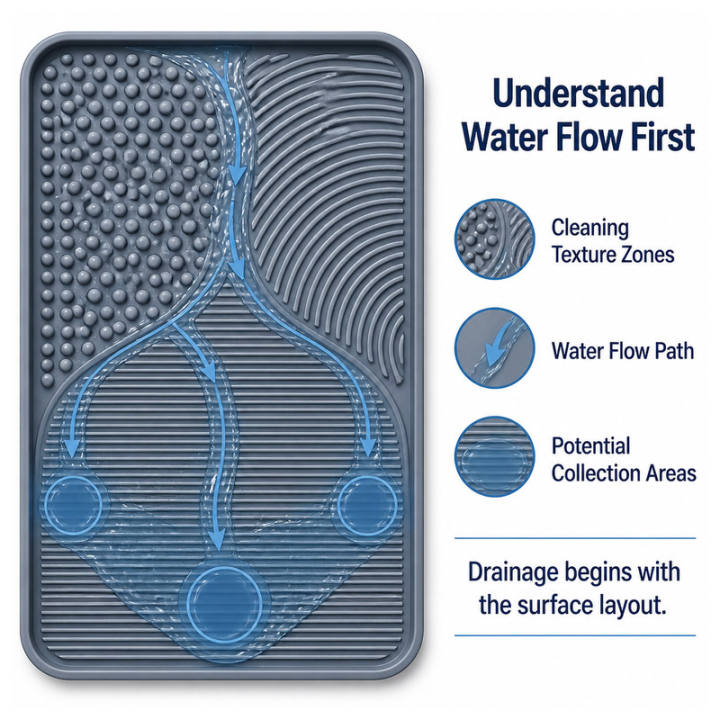
Design values for a pad that cleans without damaging
Rib geometry does the work. Ribs of 1.5 to 3 millimetres with rounded crests create channels that flush product away while the bristles flex; sharper, deeper ribs remove more product faster and stress the tips in the same motion. Hardness sits around 40 to 60 Shore A: softer ribs collapse under a dense brush, harder ones behave like a scrubbing board.
The pad also needs a suction or weighted base. A pad that slides while the user scrubs forces them to press harder, which is exactly the force that bends bristles. A silicone foot with a high-friction surface, or a moulded weight pocket, keeps the pad still and the pressure light.
- Rib pitch — 1.5 to 3 mm with rounded crests.
- Hardness — 40 to 60 Shore A, soft enough to flex, firm enough to clean.
- Base — high-friction foot or weight pocket so the pad does not slide.
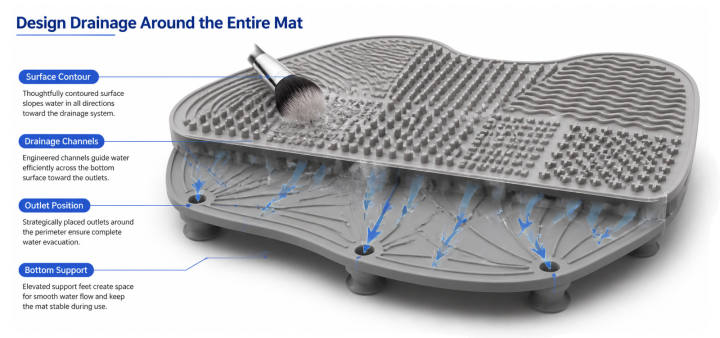
Failure mode, cause and the design response
| Failure | Cause | Design response |
|---|---|---|
| Bristle shedding | Water in the ferrule softens glue | Palette keeps product off the joint; dry head-down |
| Tip fraying | Abrasive cleaning surface, drying in a cup | Compliant ribbed pad and a drying rack |
| Colour contamination | Porous pad holds pigment | Non-porous silicone, washable between shades |
| Pad movement | Smooth base on a wet counter | High-friction foot or weighted pocket |
| Residue in ribs | Deep narrow channels | Open rib profile that rinses clean |
What a private-label set should specify
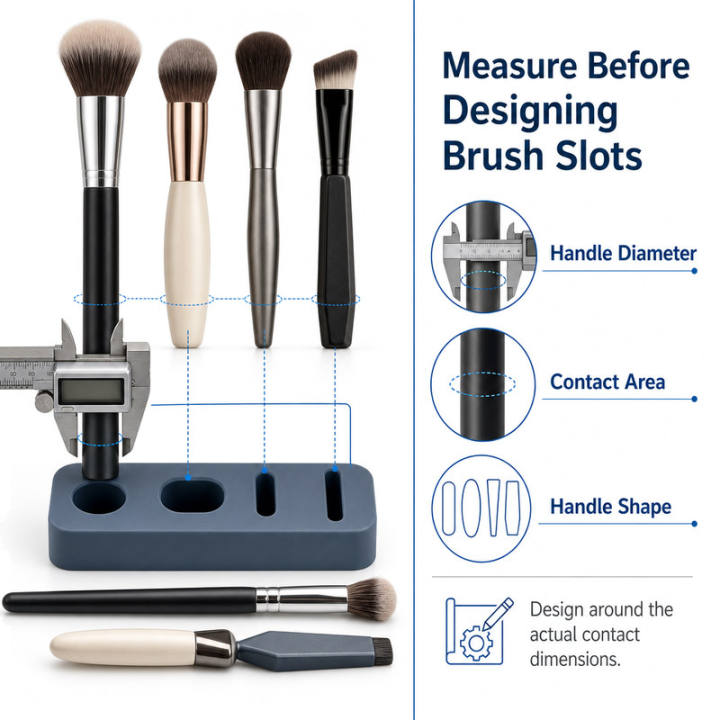
A private-label set usually combines a pad, a palette and sometimes a drying rack. Specify the three as one system: a pad sized to the largest brush in the line, a palette with a mixing area large enough for a foundation pump, and a rack whose clips match the handle diameters in the range. Sets that are specified separately end up with a palette too small for the brush it is meant to protect.
Colour and material then follow the brand. Silicone takes pigment well, but light colours show staining from highly pigmented products, so a mid-tone grey or a deep brand colour ages better than white. Matte finishes hide scratches; gloss shows them within a month of daily use.
How a private-label tool set is quoted and run
Sets are usually tooled as a family, which is where the cost saving sits.
Inputs
Brush range and handle diameters, products used, brand colours and packaging format.
Design
Pad rib geometry, palette size, rack clips and a shared base that stacks for retail.
Sampling
A full set for photography and a cleaning trial, with hardness and colour measured.
Volume and packing
Cavity count per component, colour options and retail carton configuration.
Cleaning chemistry that removes pigment without attacking silicone
Silicone tolerates mild soap, warm water and most alcohol-free brush cleansers. It does not tolerate prolonged contact with strong solvents, and repeated exposure to acetone or a high-alcohol cleaner will dull the surface and eventually make it tacky. A cleaning instruction that names the acceptable chemistry is more useful than one that says “clean regularly”.
Pigment staining is a separate issue. Highly pigmented cream products can leave a tint in a light-coloured pad even after washing, which is cosmetic rather than functional. For a brand selling a white pad, the honest options are a darker colourway for heavy pigment users or a cleaning tablet formulated for silicone rather than a stronger solvent that damages the surface.
Questions from brands and studios
Does a silicone pad clean as well as a textured plastic mat?
It cleans differently. A compliant silicone surface flexes with the bristles and removes product without the abrasion that frays tips; a hard mat cleans faster and wears the brush more.
Can the palette be used with silicone-based foundation?
Yes, but silicone products bead on a very smooth surface. A fine matte finish gives enough grip to work the product without absorbing it.
Will the pad stain?
Light colours will pick up pigment over time. Mid-tone and deep colours age more gracefully, and a matte surface hides scratches.
Do I need a drying rack?
It is the cheapest way to stop water reaching the ferrule. Without one, most users dry brushes upright, which is the single worst habit for shedding.
Send the brush range you are building around
FromRubber moulds silicone brush pads, palettes and drying racks in Dongguan, tooled as a family so the components stack and ship together. Send the brush dimensions, the products used and the packaging format; we will propose rib geometry and a set configuration with sample parts for a studio trial.
Request a tool-set reviewRelated reading: silicone brushes on sensitive skin and custom silicone beauty tools.