Injection Molding Defects to Avoid in Probe Plastic Shells: Sink Marks, Weld Lines, and Warpage
- Share
- publisher
- Suey
- Issue Time
- May 4,2026
Summary
Avoid sink marks, weld lines & warpage in probe plastic shells. Expert guide on causes, solutions & DFM strategies. FromRubber delivers defect-free detector housings with scientific molding. Free defect risk analysis.
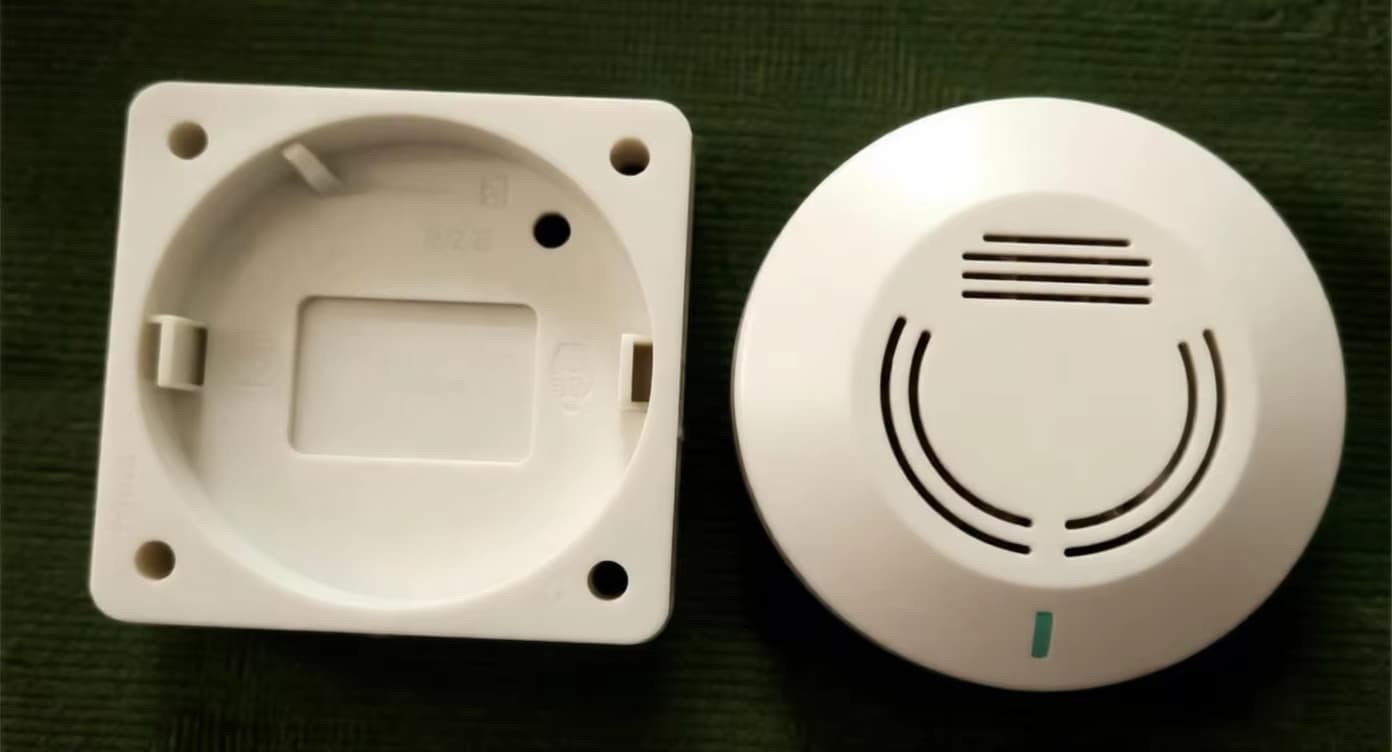
Injection Molding Defects to Avoid in Probe Plastic Shells: Sink Marks, Weld Lines, and Warpage
Practical guide to eliminate cosmetic and structural flaws in detector probe enclosures — insights from FromRubber’s molding floor.
No matter how advanced your probe design, injection molding defects can ruin functionality and brand image. Sink marks, weld lines, and warpage are among the top reasons for rejected detector shells — causing poor sealing, weakened structural integrity, and unattractive surfaces. As a dedicated injection molding manufacturer, FromRubber helps clients eliminate these defects through optimized tooling, process control, and DFM strategies. This guide (2000+ words) explains the root causes and actionable cures for each defect, specific to probe housings.
1. Sink Marks: The Surface Depression Problem
Sink marks appear as shallow depressions on the outer surface of probe shells, typically opposite internal ribs, bosses, or thick wall sections. They compromise sealing gasket surfaces and give a poor tactile impression for handheld devices.
Root causes:
- Excessive wall thickness (>4mm in local areas)
- Insufficient packing pressure or holding time
- Improper gate location causing premature freezing
- Rib thickness greater than 60% of nominal wall
FromRubber Solutions:
- Design rib thickness = 0.4–0.6× wall thickness
- Use core-out for thick sections
- Optimize packing profile (simulated via Moldflow)
- Increase gate size or add multiple gates
📉 Sink mark severity check
FromRubber’s DFM tool identifies sink-risk zones immediately. For detector probes with living hinges or snap arms, we recommend rib tapering and conformal cooling to achieve Class A surface finish.
2. Weld Lines (Knit Lines) — Structural Weakness & Visual Flaw
Weld lines occur when two melt fronts meet but don’t fully intermix, creating a microscopic V-notch. In probe plastic shells, weld lines reduce impact strength by up to 50-70% and often appear around holes, inserts, or multi-gate injection.
Common weak zones:
- Battery door hinge area
- Sensor window cutouts
- Probe tip with through-hole
How FromRubber prevents weld lines:
- Moldflow relocation of gate positions
- Increase melt temperature & injection speed
- Add overflow wells or venting
- Use sequential valve gating for large probe shells
Pro tip: For critical applications (medical probes, gas detectors), FromRubber validates weld line strength via tensile tests on molded specimens — ensuring no functional failure.
3. Warpage: Dimensional Instability in Probe Housings
Warpage causes distorted geometry, preventing proper assembly of PCBs, displays, or sealing rings. For probe enclosures that require IP ratings, even 0.3mm warpage can compromise O-ring seals.
Causes:
Non-uniform cooling, unbalanced filling, anisotropic shrinkage (especially in glass-filled nylons), or insufficient ejection design.
FromRubber corrective actions:
Conformal cooling channels, balanced runner systems, simulation-optimized ejection pin layout, and fixture-based post-molding annealing when needed.
Real-world example: A thermal imaging probe housing made of PC+ABS showed 0.7mm bow. By modifying cooling circuit design and adjusting packing profile, FromRubber reduced warpage to 0.12mm — meeting IP54 flatness spec.
Quick Reference: Defects, Causes & Fixes for Probe Shells
| Defect | Primary Cause in Probe Housings | FromRubber Solution |
|---|---|---|
| Sink Marks | Thick rib/base ratio >0.6 | Rib tapering + increased packing |
| Weld Lines | Multi-gate or core holes | Gate relocation or overflow channels |
| Warpage | Non-uniform cooling/shrinkage | Conformal cooling + process optimization |
4. Avoiding Sink Marks in Probe Enclosures: Advanced Strategies
To completely eliminate sink marks on critical cosmetic surfaces (e.g., front face of a gas detector), FromRubber implements gas-assisted injection molding or expanded structural foam for thick wall sections. For standard applications, we adjust nominal wall to 2.0–2.2mm and use low-shrink materials like filled ABS or PC/ABS alloys. We also recommend textured finishes (MT-11000) which visually mask minor sinks without extra processing.
5. Weld Line Strength Requirements for Medical Probe Shells
Medical and industrial probes often require minimum residual strength at weld lines. FromRubber uses thermal imaging and short-shot studies to pinpoint weld line locations. For reinforced nylon materials, we add 0.2mm overflow wells that increase knit line strength by 30% through back-pressure effect. In ultrasonic welding of enclosure halves, we design ribs to avoid weld line alignment.
6. Warpage Control for Precision Assemblies (Probe Tip Alignment)
High-precision probe tips (optical or laser-based) require coplanarity within 0.1mm. Warpage in the housing leads to beam deflection. FromRubber solves this via:
- Balanced gate layout ensuring equal flow lengths
- High-cooling efficiency with baffles/bubblers near thick sections
- Post-mold fixture cooling for 24 hours
- Adding anti-warp ribs in core cavity design
Our quality lab uses CMM inspection for every first article to ensure no warpage exceeds customer tolerance.
Why FromRubber Eliminates Defects Before Production Starts
As a specialist in probe plastic shell injection molding, FromRubber integrates defect prevention into every project phase:
- ✔️ DFM reports with sink/warpage risk mapping
- ✔️ In-house mold flow & cooling simulation
- ✔️ Scientific molding + DOE process optimization
- ✔️ Trial samples with full defect inspection
- ✔️ Materials pre-dried & verified (ABS, PC, Nylon, PBT, etc.)
- ✔️ Short lead time: 7 days for prototype molds
FromRubber is your partner for zero-defect detector probe enclosures — custom colors, EMI shielding, and overmolding available.
7. Case Study: Weld Line Elimination in Industrial Methane Detector
A probe housing with central through-hole for sensor exhibited 42% strength reduction at weld line. FromRubber changed gate location from edge to a 3-pin valve gate system, achieving complete knit-line reposition to non-critical area. Additionally, optimized mold temperature (from 60°C to 85°C) increased weld strength by 68% — validated via destructive testing. Production yield improved from 78% to 98%.
8. Final Checklist: Defect-Free Probe Housing Design
- ☑ Uniform wall thickness (1.5-2.5mm)
- ☑ Rib thickness ≤ 0.6 × wall thickness
- ☑ Generous corner radii (R min 0.5mm)
- ☑ Gate location away from structural holes
- ☑ Balanced runner system for melt fronts
- ☑ Venting depth ≤ 0.03mm for plastics
- ☑ Ejection design without surface stress
- ☑ Moldflow analysis prior to tool build
Conclusion: Partner with FromRubber for Zero-Defect Probe Shells
Sink marks, weld lines, and warpage are completely preventable with robust design + scientific molding. FromRubber has delivered over 2 million defect-free detector probe housings to global clients. Share your 3D model to receive a free defect-risk analysis and quotation. Let's build durable, beautiful enclosures together.
FromRubber — Injection Molding Excellence for Probe Housings
📧 nani@fromrubber.com | 🌐 www.fromrubber.com | Custom injection molding since 2010
Free DFM · Fast sampling · Global delivery · ISO 9001:2024 certified