Lipstick Silicone Case: The Perfect Gift for Beauty Lovers
- Share
- publisher
- Suey
- Issue Time
- Sep 4,2025
Summary
A production view of the custom lipstick silicone case: skin-contact material considerations, the two fit tolerances that decide whether the case works, colour and decoration options at volume, and the real cost lines in a private-label programme.
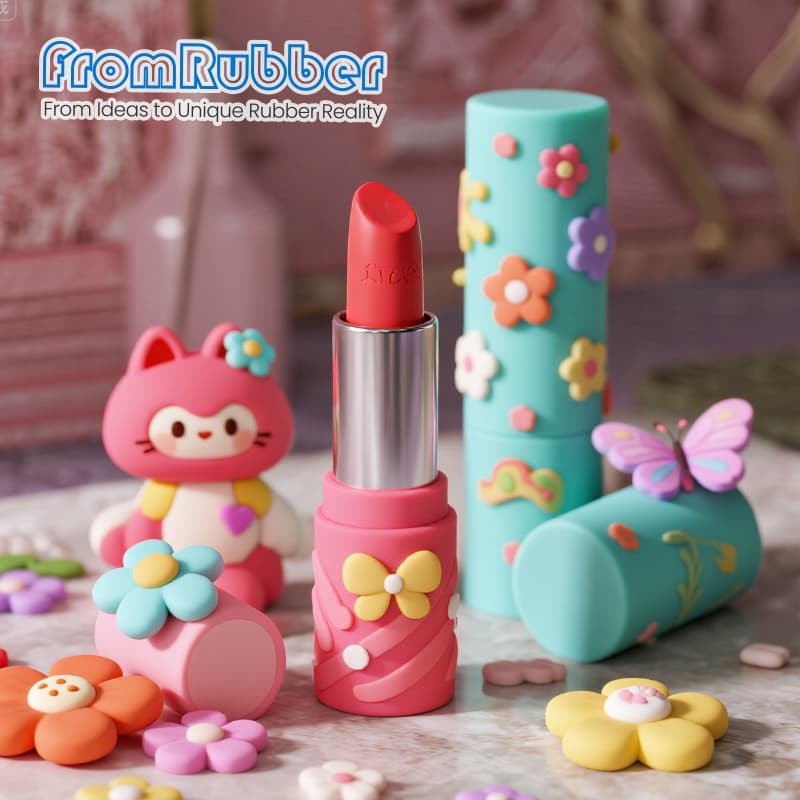
A lipstick case is a cosmetic accessory that has to do a mechanical job: hold a tube of product upright, open with one hand, and survive a handbag. That makes it a tolerance problem wearing a fashion label.
This is a production view of the custom lipstick silicone case for private-label and promotional programmes: material safety, fit tolerances, colour matching and what actually drives cost at volume.
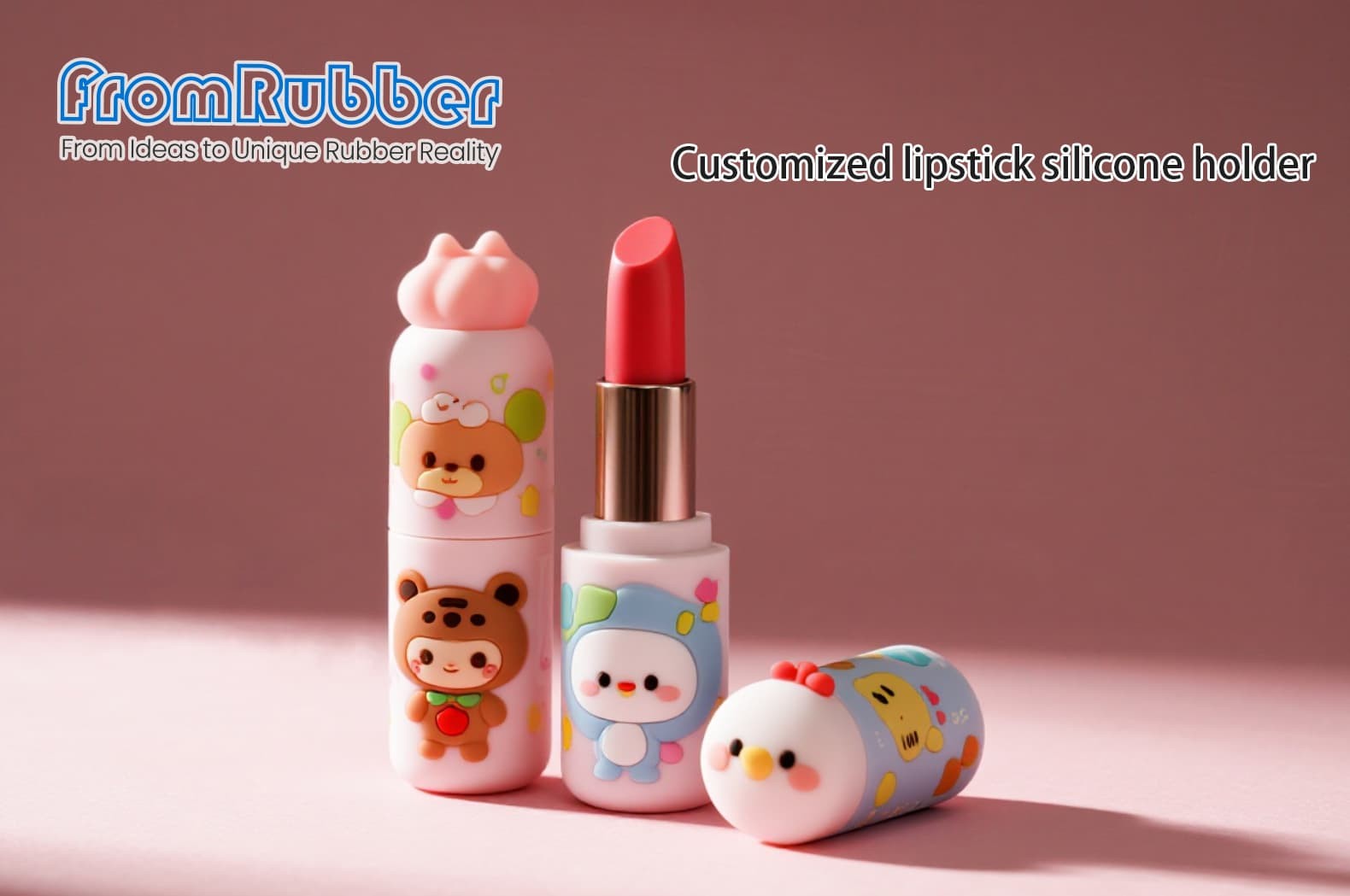
What Makes a Custom Lipstick Silicone Case Different From a Phone Case?
The direct answer: the fit is internal and the failure is silent. A phone case that fits loosely is annoying; a lipstick case that grips too tightly pulls the cap off while the product stays behind, or grips too loosely and drops the tube in a bag.
The second difference is contact. This part touches skin, sits in a bag next to keys, and may be handled after sunscreen. Material choice has to account for all three, not only for how the colour photographs.
Material and Skin-Contact Considerations
Silicone is the usual choice for three reasons: it takes colour and texture without a coating, it stays flexible at low temperature so a case in a cold car still opens, and it does not become tacky when it meets hand cream or sunscreen.
Two specification points matter more than the polymer name. The first is formulation: pigments and additives should be selected for skin contact, and the supplier should be able to state what is in the compound rather than only what is not. The second is odour and taste, which sounds trivial until a case sits against a lipstick for a season and the product picks up a smell.
Where a brand intends to make a food-contact or cosmetic-contact claim, that claim belongs to a tested article, not to the generic material. Ask for the report that matches the finished part.
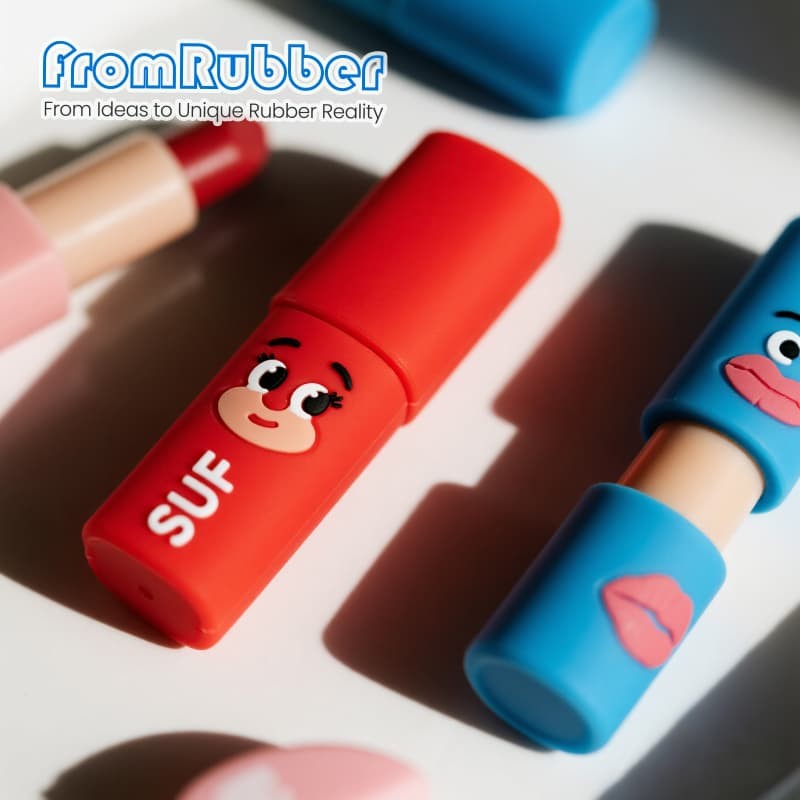
Fit: The Two Tolerances That Matter
The design rule is to size the cavity against the upper end of the tube's tolerance band and the cap against the lower end, then test with tubes from at least three production lots. Lipstick tube dimensions vary more between suppliers than a single drawing suggests, and a case validated on one tube can be unusable on the next delivery.
Both tolerances are cut into the tool, so both are cheap now and expensive later. The cavity follows the tube, the cap interference follows the consumer's hand, and neither can be tuned by the moulder afterwards.
A practical check before tooling: measure ten tubes from the current production lot and design to the extremes rather than to the average.
| Tolerance | What it controls | Failure if too tight or too loose |
|---|---|---|
| Inner cavity diameter | Grip on the lipstick tube | Too tight splits the case; too loose lets the tube fall out |
| Cap-to-body interference | Retention force | Too tight is hard to open; too loose comes off in a bag |
| Overall height | Whether the cap covers the product fully | Product exposed at the seam |
| Wall thickness | Feel and drop protection | Thin walls feel cheap and tear at the rim |
Decoration and Colour Matching at Production Scale
Three decoration routes: pigment in the compound, printing on the surface, and a second moulded colour. In-compound pigment is the most durable and the least flexible, because changing colour means a new batch of compound and a minimum quantity. Printing is cheap to change and wears at the edges. Two-colour moulding gives the sharpest graphic and costs the most in tooling.
Colour approval is where schedules slip. Approve against a physical standard under the lighting the customer will see, and keep a retained sample from the approved batch. Screen colours and factory lamps both lie, and a colour dispute without a retained sample is settled by opinion.
Ordering Private Label: Tooling, MOQ and Sampling
A private-label programme has four cost lines: tooling, compound in the chosen colour, decoration, and packing. Of those, the one buyers most often underestimate is the compound minimum, because a custom colour may require a batch larger than the first order.
- Tooling is driven by the number of parts in the assembly and whether the case is one piece or two.
- Colour minimum follows the compound batch size, not the order quantity.
- Decoration adds a setup per run, so fewer, larger runs are cheaper than frequent small ones.
- Packing matters for retail: a case packed loose and a case packed in a printed box are different products to a warehouse.
Sample in the final colour and with the final decoration, on the actual tube. A sample in a stock colour with no print proves the mould, not the product. Constructions are shown on our custom logo lipstick case page, and the shaped variants on the silicone lipstick holder page.
Frequently Asked Questions
Is silicone safe for a product that touches skin?
Silicone is widely used in skin-contact applications, but safety belongs to the finished article and its formulation. Ask for the test report that covers the pigment and additive system actually used, not a generic material statement.
Can a lipstick case be made in a custom Pantone colour?
Yes, within the compound supplier's colour range. Custom colour usually carries a minimum batch, which is why small promotional runs often start from a standard colour and differentiate with decoration instead.
Will a silicone case fit lipstick tubes from different brands?
Not reliably. Tube diameters vary by brand and by product line, so a case designed for one tube is usually a poor fit for another. If a programme must cover several brands, design to the largest tube and add a compressible inner feature.