Multi-Color Silk Screen Printing on Silicone Products: A Complete Technical Guide
- Share
- publisher
- Suey
- Issue Time
- Jul 20,2026
Summary
A comprehensive technical guide to multi-color silk screen printing on silicone. Learn about single-color vs multi-color differences, the 4-step printing process, registration accuracy benchmarks, common defects and solutions, industry applications, and how FromRubber achieves +/-0.1mm precision on custom silicone products.
Why Multi-Color Silk Screen Printing Matters for Your Silicone Products
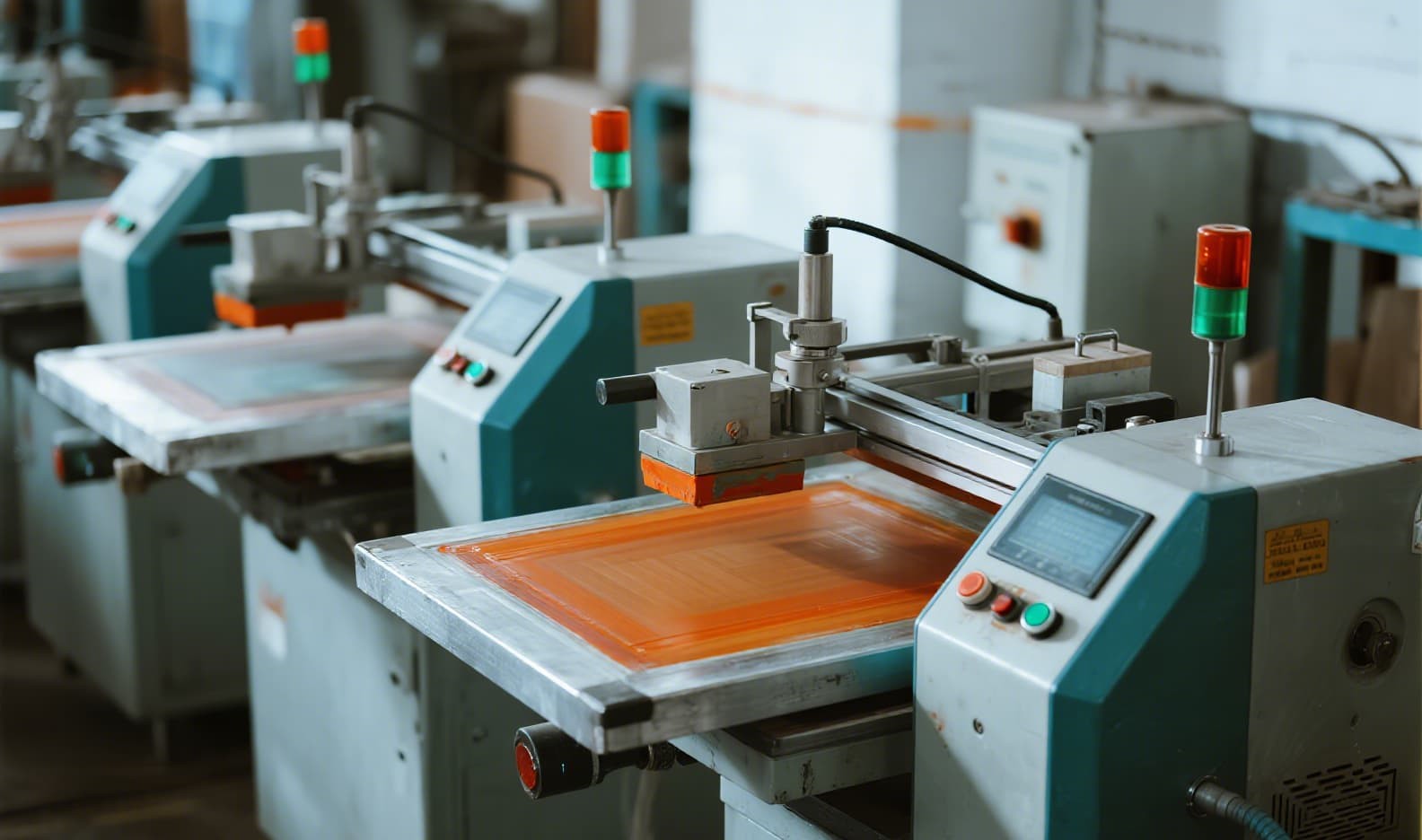
You have spent months developing the perfect silicone product — a medical keypad, an automotive control panel, silicone cover,or a consumer electronic component. The tactile feel is right, the material passes every certification. But when you add your brand logo with multiple colors, something goes wrong: colors misalign by 0.3mm, ink peels after 500 press cycles, or the gradient looks muddy. That significant tooling investment suddenly feels wasted.
Multi-color screen printing on silicone is not simply "printing more colors". It is a precision engineering discipline that demands ±0.1mm registration accuracy, specialized silicone-reactive inks, and rigorously controlled curing profiles. In this guide, our senior process engineers walk you through every technical layer — so your next multi-color silicone project ships right the first time.
Single-Color vs Multi-Color: What is the Real Difference
Understanding the gap between single-color and multi-color screen printing is essential before committing to a production method for your custom silicone products.
| Parameter | Single-Color | Multi-Color (2–8 colors) |
|---|---|---|
| Stencils Required | 1 | 2–8 (one per color layer) |
| Registration Accuracy | Not critical | ±0.1mm (FromRubber standard) |
| Setup Cost | Low | Moderate to high |
| Per-Unit Cost | $ | $$ (adds $0.02–0.15/color per part) |
| Design Complexity | Simple logos, text | Gradients, brand colors, photo-quality detail |
| Production Lead Time | 7–15 days | 12–25 days (includes stencils and setup) |
Key takeaway: If your product needs a simple single-color icon, single-color printing is the most cost-efficient path. But if your brand demands a multi-color logo, gradient effects, or Pantone-matched corporate colors, multi-color screen printing delivers visual impact that single-color simply cannot achieve — as long as you partner with a manufacturer that has mastered the registration challenge.
The Multi-Color Silk Screen Printing Process: Step-by-Step Technical Breakdown
Printing multiple colors on silicone is fundamentally different from printing on paper or plastic. Silicone is a low-surface-energy elastomer (20–22 dynes/cm) — ink wants to bead up rather than bond. Here is how a qualified manufacturer executes multi-color jobs reliably.
Step 1: Color Separation and Screen Preparation
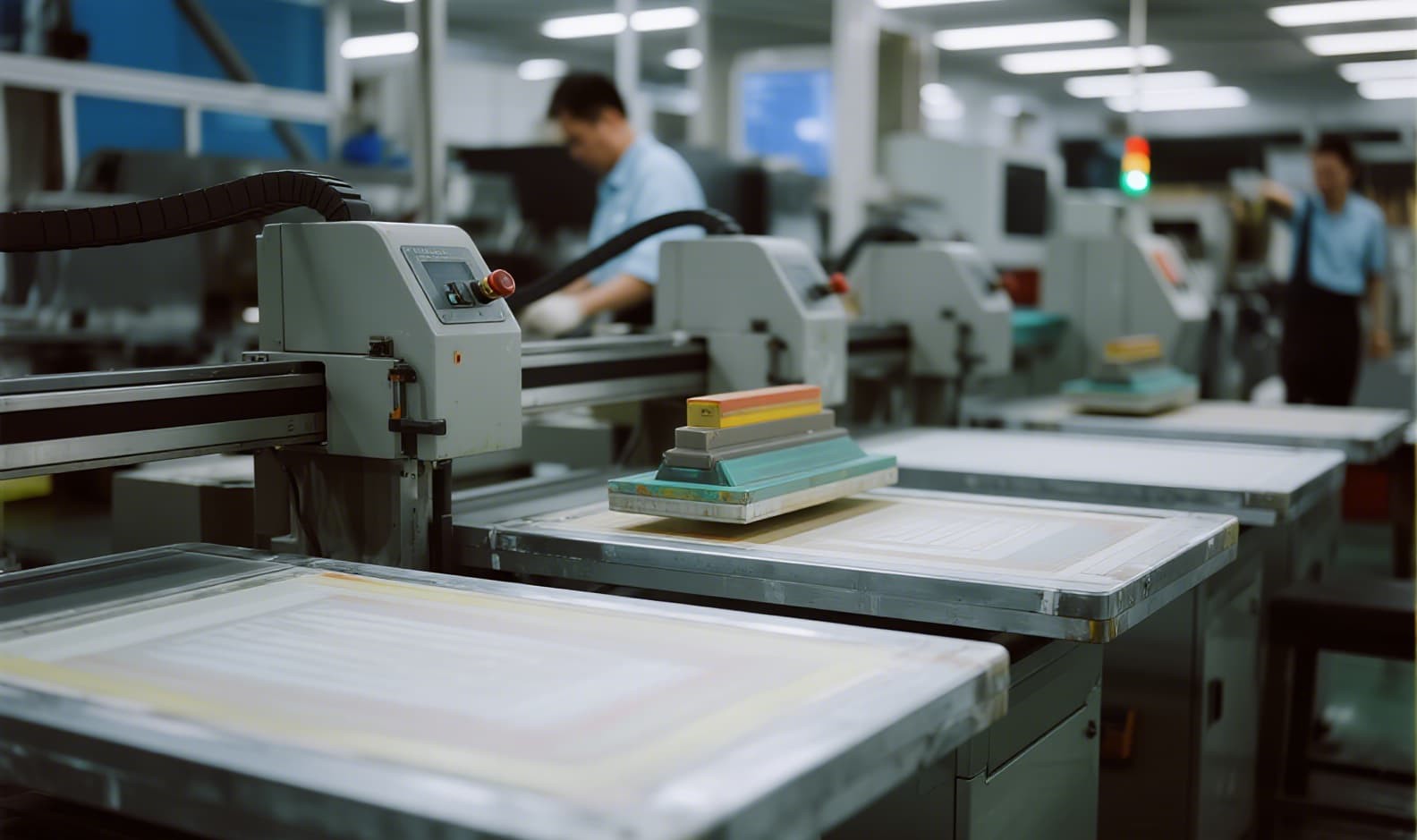
Each color in your design becomes a separate printing layer. The prepress team separates the artwork into individual color channels using advanced RIP software. For each channel, a dedicated screen is created using high-tension mesh (typically 120–200 mesh for silicone ink), coated with solvent-resistant emulsion, and exposed with UV light. Screen tension is maintained at 22–25 N/cm2 to prevent distortion during multi-layer registration.
Step 2: Surface Preparation
Silicone's natural mold release agents and low surface energy make surface preparation non-negotiable. All silicone parts undergo: solvent cleaning to remove mold release residues and dust particles; plasma or corona treatment raising surface energy to 38–42 dynes/cm for reliable ink wetting; and primer application when specified for demanding applications. Timing is critical — treated silicone surfaces begin reverting to low-energy state after roughly 4 hours, so printing must occur promptly.
Step 3: Layered Printing and Intermediate Curing
Multi-color printing follows a strict layer sequence, typically printing lightest colors first and building to darker tones. Each layer requires: Precise registration using cross-hair marks or CCD vision alignment (±0.025mm on advanced equipment); Controlled ink deposition with squeegee pressure, angle, and speed tuned to each color's viscosity; Intermediate flash curing for 10–15 seconds at 120–150°C to semi-dry each layer before the next color is applied, preventing inter-layer bleeding.
Step 4: Final Curing
After all colors are layered, the part undergoes final thermal curing — typically 150–160°C for 1–3 minutes in a tunnel oven or heat press. This crosslinks the silicone polymer chains, permanently bonding the ink to the substrate. Under-curing leads to peeling; over-curing causes brittleness. PID-controlled ovens maintain ±1°C accuracy across the entire cure zone.
Registration Accuracy: The Make-or-Break Metric
Registration accuracy is the single most important quality parameter in multi-color screen printing. It refers to how precisely each color layer aligns with the others. When registration is off, you see color "fringes" — a thin gap or overlap between adjacent colors that ruins the visual integrity of your design.
- Standard screen printing: ±0.3–0.5mm
- Precision screen printing (with CCD systems): ±0.05–0.1mm
- FromRubber certified standard: ±0.1mm — verified on every multi-color production batch
Achieving this level of accuracy requires: stable screens at high tension (22–25 N/cm2), precision pneumatic or servo-driven registration systems, experienced operators averaging 12+ years on silicone substrates, and environmental control (±2°C, ±5% RH) to minimize substrate expansion.
Common Defects and How to Prevent Them
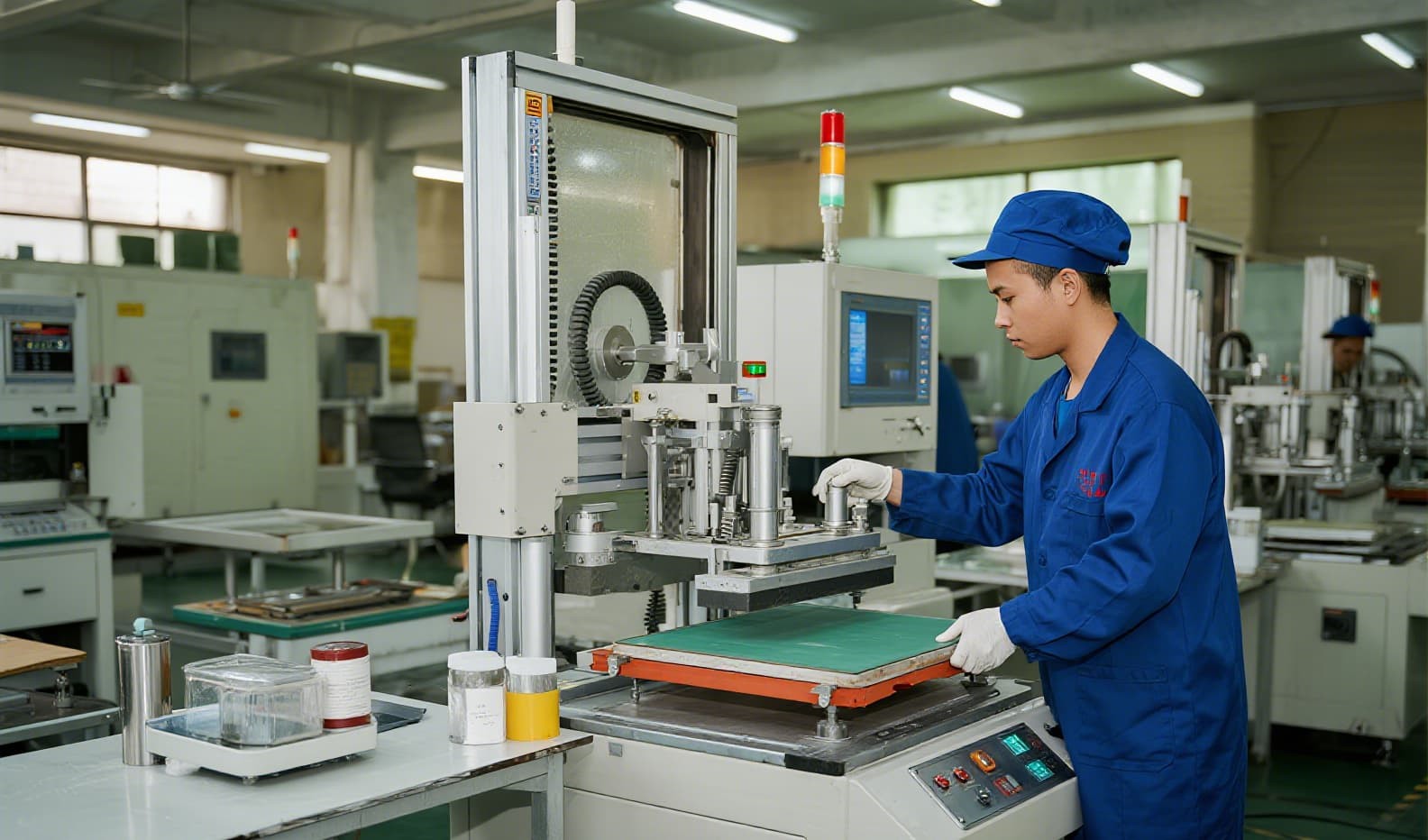
Even with robust processes, multi-color silicone printing can encounter specific defects. Here are the most frequent issues and their solutions:
- Color Misregistration — low screen tension or substrate shift. Solution: CCD vision alignment.
- Ink Peeling / Poor Adhesion — insufficient surface prep or wrong ink type. Solution: Plasma treatment and silicone-specific ink.
- Color Bleeding (inter-layer) — insufficient flash curing. Solution: Increase flash time between layers.
- Pinholes / Bubbles — air entrapment or dusty screens. Solution: Use defoamer; clean screens regularly.
- Color Fading — UV-unstable pigments or incomplete cross-linking. Solution: Specify UV-stable pigments; verify full cure.
- Edge Serration — damaged screen or incorrect squeegee angle. Solution: Replace screen; recalibrate squeegee angle.
At FromRubber, our defect rate for multi-color screen printing is maintained below 0.3% through standardized SOPs, real-time SPC monitoring, and 100% visual inspection with magnification for every printed part.
Industries That Rely on Multi-Color Silicone Printing
Multi-color silicone printing is not a niche decoration technique — it is a critical manufacturing process across multiple sectors. Medical and healthcare devices use diagnostic equipment keypads with multi-color function icons (red for alarm, green for confirm) that survive daily disinfection. Automotive dashboard control buttons with multi-color backlit symbols must meet temperature cycling from -40°C to +85°C. Consumer electronics brands rely on game controllers, remote controls, and wearables where brand colors drive consumer perception. Industrial control panels use color-coded safety zones with chemical-resistant markings for harsh factory environments.
Real Case: German Medical Device Client
The Problem: A German medical device manufacturer received over 10,000 rejected silicone keypads from their previous supplier because of multi-color registration drift. The red "alarm" icon overlapped the white labeling by up to 0.4mm — visually unacceptable and a regulatory concern.
The FromRubber Solution: A 24-hour DFM review identified that the previous supplier's screens lacked tension stability and their flash-curing sequence was inconsistent. We switched from manual to CCD vision-guided registration and introduced intermediate cure monitoring with IR temperature sensors.
The Result: First production batch of 25,000 units passed with 99.4% yield. The client saved an estimated $40,000 in rework costs. Ongoing monthly orders now exceed 50,000 units.
7 Criteria for Selecting a Multi-Color Silicone Printing Partner
Not all silicone manufacturers can execute multi-color printing at production scale. When evaluating partners, verify these seven capabilities:
- In-house screen making — ensures quality control and faster iterations on registration adjustments
- CCD vision registration — manual registration cannot sustain ±0.1mm over production runs of 10,000+ pieces
- Surface treatment capability — plasma or corona treatment station is essential
- PID-controlled curing ovens — ±1°C accuracy with temperature logging
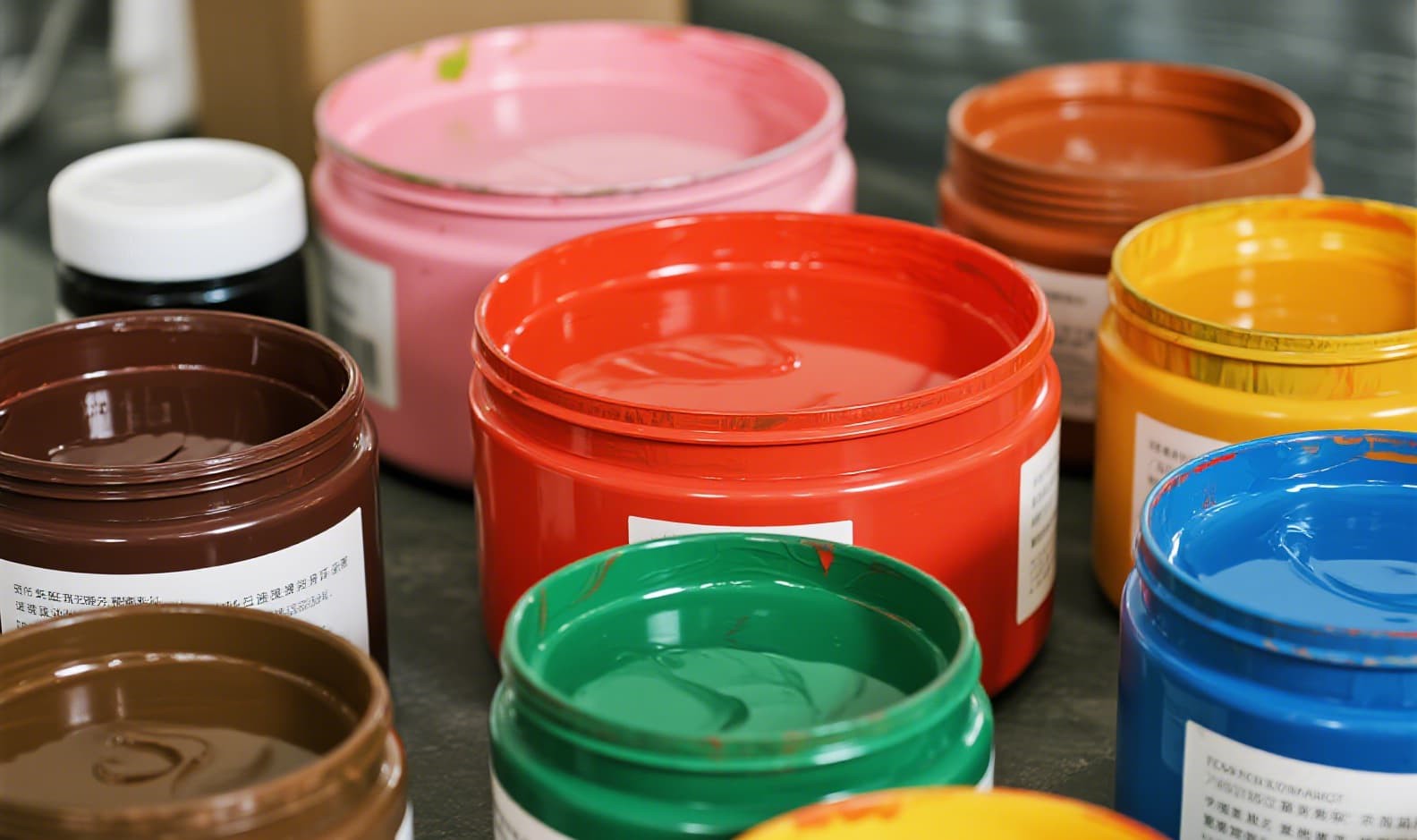
- Pantone color matching — in-house ink mixing lab with spectrophotometer verification
- Full quality lab — adhesion (cross-hatch), abrasion (Taber), color (spectro), and dimensional (CMM) testing
- Certifications — ISO9001, IATF16949, FDA, RoHS/REACH
FromRubber meets all seven criteria in-house. Our 15,000m2 facility houses 220+ machines, dedicated screen-making and ink-mixing labs, and a QA team that performs 100% first-article inspection on every multi-color production order. Contact our engineering team for a free DFM analysis of your multi-color project.
Frequently Asked Questions
Q: What is the maximum number of colors I can print on silicone?
A: FromRubber can accommodate up to 8 color layers in a single production run. Beyond 6 colors, we recommend a DFM review to evaluate whether alternative methods might be more cost-effective.
Q: Can you match custom Pantone colors for my brand?
A: Yes. Our in-house ink lab formulates custom colors using a spectrophotometer to achieve ΔE ≤ 1.5 against your Pantone standard. We retain the formulation for reorder consistency.
Q: What is your MOQ for multi-color screen printing?
A: For standard multi-color designs (2–4 colors), MOQ starts at 1,000 pieces. For complex designs (5+ colors), we recommend starting at 2,000 pieces. Trial runs of 1,000 pieces are always welcome.
Q: How do you ensure color consistency between production batches?
A: Every batch starts with a first-article inspection comparing print color against the approved master sample using spectrophotometric measurement. Ink formulations are documented with batch numbers, and production parameters are locked in an MES system.
Q: Can multi-color printing be combined with other surface treatments?
A: Absolutely. Common combinations include screen printing with laser engraving for hybrid decorative/functional marks, UV coating for extra abrasion resistance, and adhesive backing for silicone label applications. All processes are in-house for seamless integration.
Ready to elevate your silicone product with precision multi-color printing? Get your free DFM analysis and quote — our engineering team responds within 24 hours.
Tags: multi-color silicone screen printing, silicone screen printing process, custom silicone keypads, silicone printing registration accuracy, silicone OEM manufacturing, FromRubber silicone printing