Parents's Guide: 3 Must-Know Standards When Buying a Writing Tablet Silicone Case
- Share
- publisher
- Suey
- Issue Time
- Apr 9,2026
Summary
A writing tablet silicone case for children is judged on three standards: what it releases, what it survives, and what it hides. This guide turns those into testable requirements - material declarations, a drop protocol with a defined pass mark, and a cleanability check - and lists the design details that separate a case a child can use from one a parent returns.

Buyer and parent guide
Three requirements decide whether a writing tablet silicone case is worth buying, and none of them is visible in a product photo: the material declaration, the drop protocol behind the protection claim, and the cleanability of every crevice. A case that passes all three costs a little more and stops being a weekly argument.
- Food-contact grade is the baseline for anything a child may chew — and the declaration must cover the finished coloured part.
- Drop protection is a number: height, surface, orientation and pass criterion. “Shockproof” without those four is a word.
- Cleanability is geometry: no crevice under 1 mm, no open channel behind the bezel, no fabric lining.
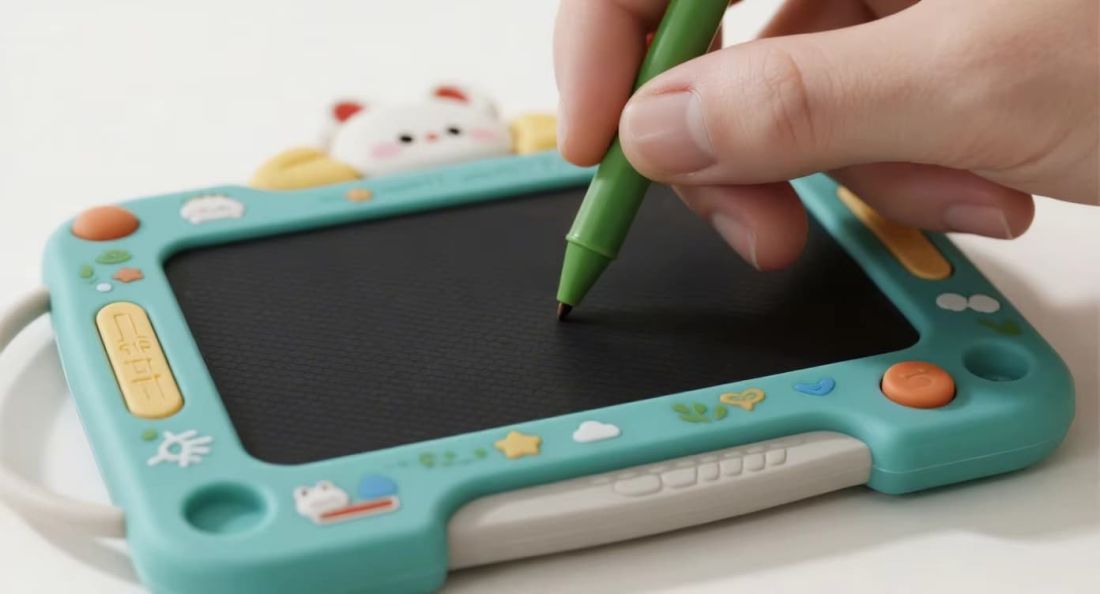
Standard one: what a writing tablet silicone case must not release
Silicone is a good starting material because it does not need plasticisers, and phthalates are the first thing a parent worries about. But the compound is only half the part: pigments, masterbatches and any printed decoration carry their own chemistry. A certificate for natural translucent gum says nothing about a bright red case with a printed cartoon face.
Ask for the declaration on the finished article, in the colour actually shipped, and check that it names the regulation rather than a marketing phrase. If the case is likely to be chewed — and with young children it will be — treat it as a food-contact article and apply the same migration thinking used for a cup lid, including the ink layer.
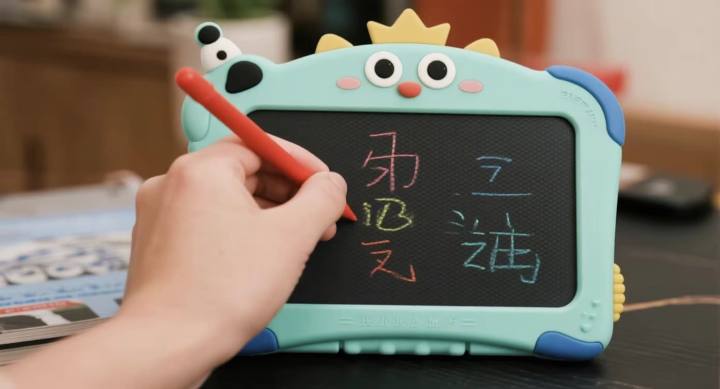
Standard two: a drop claim you can measure
A drop test without a protocol is an anecdote. Define the height, the surface, the orientation and the pass criterion: for example, six drops from one metre onto concrete, one per face plus two corners, with the device installed, passing if the screen is intact and the case still retains the device. That statement can be repeated by a lab and compared between suppliers.
Geometry does most of the work. Corner radii above 5 millimetres spread impact load; a raised lip 1.5 to 2 millimetres above the screen keeps the glass off a flat floor; wall thickness of 2 to 3 millimetres gives the deformation distance that turns a hard impact into a slower one. A thick case with a sharp corner protects less than a thinner case with a generous radius.
- Corner radius — 5 mm or more; sharp corners concentrate stress and crack screens.
- Screen lip — 1.5 to 2 mm proud of the glass, so a face-down drop lands on silicone.
- Wall thickness — 2 to 3 mm at the corners; thinner walls transmit the impact directly.
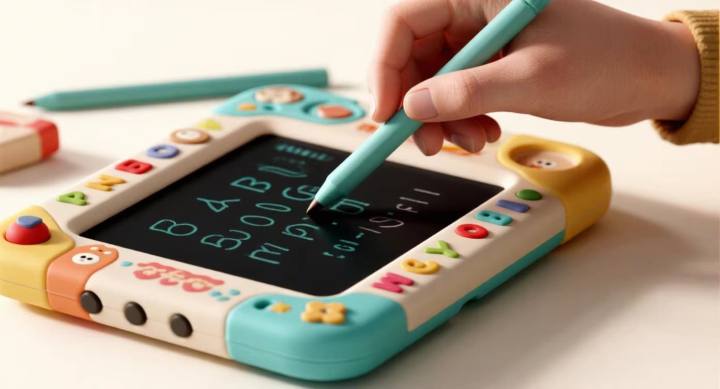
Standard three: cleanability, checked at the drawing stage
| Detail | Good practice | Why it matters |
|---|---|---|
| Crevice width | 1 mm minimum, open at one end | Narrow closed slots trap crumbs and cannot be wiped |
| Button covers | Moulded membrane, no gap to the shell | Gaps let juice in and the button sticks |
| Port covers | Hinged tether, not a loose plug | Loose plugs are a choking hazard and get lost |
| Surface finish | Fine matte, no deep texture | Deep texture holds grime and wears shiny |
| Print placement | Outside the hand-contact zone | Printed areas wear through first and look dirty |
Design details that decide whether a child can actually use it
Children grip a tablet by the edges and drop it when they run. A case with a moulded handle or a strap point survives more drops than one without, because it changes how the device is carried. The strap point has to be a moulded loop in the same shot, not a glued-on accessory, or it becomes the first thing to fail.
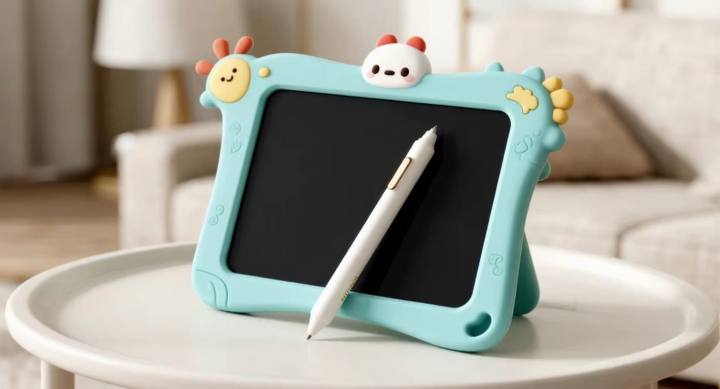
The second detail is the stylus. A writing tablet is used with a pen, and a case that has no holder loses the pen in a week. A moulded slot with a slight interference fit, positioned where the hand naturally rests, keeps the pen with the device and costs nothing extra in tooling if it is designed in from the start.
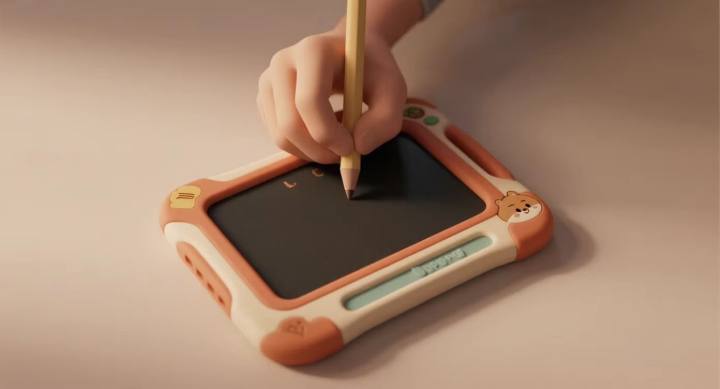
Customising a case for a specific tablet model
A writing tablet changes shape every generation, and a case that was right for last year's model will not fit this year's camera bump or port position. Start from the device outline with its radii and its button positions, then design the case wall around those features rather than trimming a generic shell.
The second customisation is the age group. A case for a five-year-old needs a moulded handle and a stylus that cannot be lost; a case for a nine-year-old can be slimmer and rely on corner protection. Those are different tools, not different colours, and deciding the age group before the cavity is cut prevents an expensive redesign.
Sampling, safety documentation and retail packing
A children's product needs a document pack as well as a sample: the material declaration on the finished coloured part, a drop test result with the protocol written out, and a print adhesion result if the case carries artwork. Parents increasingly ask for these, and a retailer will ask before listing.
Packing is part of the product here. A case that arrives in a plain poly bag reads as a spare part; one on a printed card with the device model and the age range reads as a gift. Decide the pack format with the tool, because a retail card usually implies a hang hole or a specific fold that changes how the case is presented and shipped.

What to send for a kids case quote
Five inputs that decide the tool and the document pack.
Device outline
3D file or a measured drawing including camera and port positions.
Age group
Drives handle, stylus holder and wall thickness.
Artwork
Vector file and whether the character should be printed or moulded.
Compliance target
Which market and which declaration the retailer will request.
Pack format
Poly bag, printed card or box, with barcode placement.
Questions parents and buyers ask
Is silicone better than EVA foam for a child's tablet?
Silicone resists tearing and cleaning better and does not shed foam particles, which matters with young children. Foam is lighter and cheaper; silicone is the more durable choice for daily use.
Does a thicker case protect more?
Only up to the point where the device starts moving inside the case. A loose fit cancels the benefit. Fit and corner radius matter more than raw thickness.
Can the case be washed in a dishwasher?
If the compound and the print are specified for it. Ask for a cycle test rather than a claim; the print usually fails before the silicone does.
What should a purchase order include besides the drawing?
The colour master, the material declaration on the finished part, the drop protocol and the print adhesion test. Those four lines prevent most disputes.
Send the tablet model and the age group
FromRubber moulds children's silicone cases with moulded handles, stylus slots and print options, and can run drop and print-adhesion protocols on production samples. Send the tablet outline, the age group and the decoration idea; we will propose a wall section and a corner radius that earn the protection claim.
Request a case design reviewRelated reading: choosing an OEM silicone case manufacturer and custom 3D cartoon silicone cases.