Preventing Cracking & Creep: Structural Design Rules for Probe Plastic Housings
- Share
- publisher
- Suey
- Issue Time
- May 4,2026
Summary
Avoid cracking & creep in probe plastic housings. Master radii, uniform wall thickness, boss/snap-fit rules & creep-resistant materials. FromRubber injection molding DFM guide for reliable detector enclosures. Free design review.
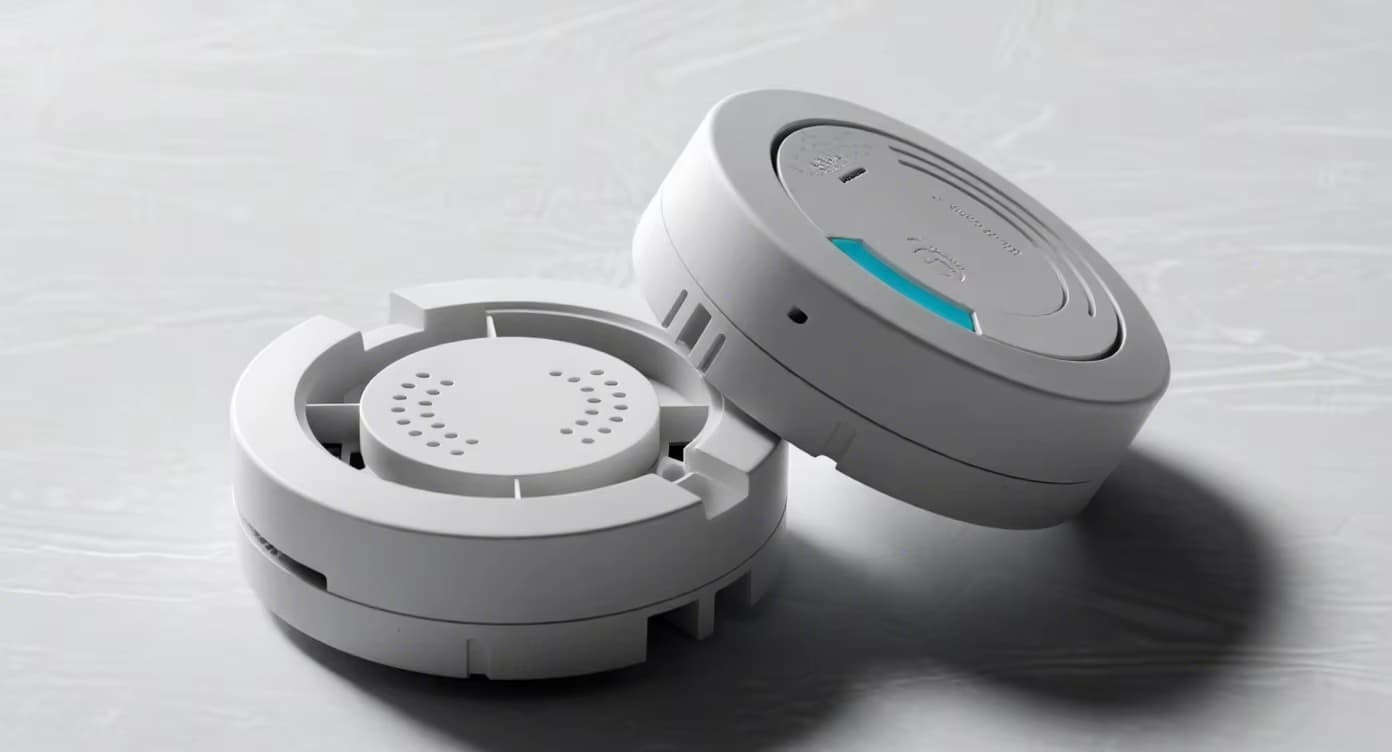
Preventing Cracking & Creep: Structural Design Rules for Probe Plastic Housings
Mastering mechanical integrity: from rib design to radius corners, material creep resistance, and long-term reliability for detector probe enclosures.
Premature cracking and creep deformation are two of the most frequent failure modes in detector probe plastic housings. Even when using high-performance materials like ABS, polycarbonate, or reinforced nylon, poor structural geometry leads to stress concentration, warpage under sustained load, or environmental stress cracking (ESC). For OEMs designing gas detectors, medical sensors, or industrial NDT probes, understanding mechanical design rules is as critical as material selection. In this comprehensive engineering guide (2000+ words), FromRubber — a seasoned injection molding manufacturer — provides proven strategies to eliminate cracking, mitigate creep, and ensure decades of structural reliability.
1. Why Plastic Probe Housings Crack: Root Causes
Understanding failure origins helps designers avoid recurring issues. Cracking typically arises from:
- Sharp internal corners: stress concentration factors (Kt) can exceed 3-5x nominal stress.
- Over-tightened fasteners: excessive boss radial stress causing split lines.
- Chemical exposure: solvents or cleaning agents induce environmental stress cracking, especially in PC and ABS.
- Residual mold stress: improper gate location or inadequate packing pressure freezes-in orientation.
- Incorrect material choice for duty cycle: creep under continuous load (e.g., spring-loaded probe tips).
FromRubber’s design-for-manufacturing (DFM) team routinely performs finite element analysis (FEA) to identify high-stress zones before steel is cut — reducing field failures by over 78% in sensor housing projects.
2. Golden Rule #1: Generous Radii at Every Corner
Sharp inside corners act as crack initiators. Internal radius (R) should be at least 0.5 × wall thickness, and ideally 0.6× to 1× thickness. For probe housings that undergo drop or snap-fit assembly, radius transition zones reduce stress concentration by 60-80%.
Practical example:
A handheld gas detector housing with a 2.0mm nominal wall: use minimum R1.0mm at all internal corners, R1.5mm near latch mounts. This simple change eliminates microscopic tearing during ejection and prolongs fatigue life under vibration.
FromRubber tip: We integrate radius checks into every moldflow analysis. Even bosses and rib intersections must feature fillets — ask for our radius optimization checklist.
3. Combatting Creep: Design for Sustained Mechanical Load
Creep is time-dependent plastic deformation under constant stress. Probe housings with push-button actuators, battery door latches, or spring-loaded sensor tips are vulnerable. After 1,000+ hours at 50°C, unreinforced thermoplastics can lose up to 40% of initial stiffness.
Anti-Creep Design Strategies
- Increase wall stiffness: Use ribbed geometry instead of thicker walls (rib height = 3× thickness, rib thickness = 0.5-0.7× wall).
- Select semi-crystalline materials: POM, reinforced Nylon, or PET show lower creep than amorphous ABS/PC.
- Add metal inserts for threaded or high-load areas: FromRubber supplies brass or stainless steel inserts overmolded into boss locations.
- Reduce static stress below material’s creep threshold: Aim for design strain ≤ 0.5% for PC/ABS blends under long-term loading.
In one recent case, a WiFi probe required a rotating cap with constant spring pressure. By switching from general-purpose ABS to 30% glass-filled nylon and adding a helical rib pattern, FromRubber eliminated creep-related signal drift after 6 months of field use.
4. Uniform Wall Thickness: Avoid Sink Marks & Residual Stress
Abrupt thickness changes cause differential cooling rates, leading to internal stress, sink marks, and potential cracking during assembly or temperature cycling. For detector probe enclosures, maintain wall thickness variation below 25%. Target nominal thickness between 1.5mm and 2.5mm for handheld probes.
Where cracks commonly appear:
Transition areas between thin ribs and thick base walls. The solution: core out thick sections, or add gradual tapers. FromRubber’s molds are designed with conformal cooling channels to ensure uniform temperature distribution, reducing warp and residual strain by up to 35%.
5. Boss & Fastener Design: Preventing Hub Cracking
Bosses for self-tapping screws or threaded inserts are notorious crack origins. Follow these “never-break” rules:
- Outer diameter of boss ≥ 2× screw diameter (for plastic).
- Add gussets/ribs connecting boss to sidewall — reduces radial expansion.
- Boss height to diameter ratio ≤ 2:1 to avoid bending moment.
- Use rib-reinforced counterbore to distribute clamping force evenly.
- For high-cycle assemblies, specify inserts (heat-stake or ultrasonic).
FromRubber provides comprehensive boss geometry recommendations per material (ABS, PC, Nylon) including recommended pilot holes and thread engagement lengths, validated by torque-to-failure tests.
6. Material Choice Against Creep & ESC: Comparative Guide
| Material | Creep Resistance (24h @ 25 MPa) | ESC Susceptibility | Best Practice |
|---|---|---|---|
| ABS | Moderate (0.8-1.2% strain) | Medium (avoid ketones) | Low-stress snap fits, non-loaded lids |
| PC | Low-moderate (0.5-0.9%) | High (grease, ammonia) | Thick free-standing ribs, avoid chemical exposure |
| Reinforced Nylon (PA66+30%GF) | Excellent (0.15-0.3%) | Very low | Sustained load / industrial probes |
When creep is the main concern (e.g., probe handles that support heavy cables), FromRubber recommends reinforced thermoplastics or adding metal load spreaders. We also provide customized glass/mineral filler levels to meet specific strain limits.
7. Gate Location & Weld Lines: Hidden Crack Sources
A poorly placed gate creates molecular orientation that acts as a weak plane. Weld lines (knit lines) can reduce local strength by up to 40%. For probe housings, never position gates near:
- High-stress living hinges
- Boss bases or snap-arm roots
- Through-holes or cutouts
FromRubber uses multi-cavity family molds with sequential valve gating to eliminate visible weld lines on cosmetic surfaces and redistribute weld zones to low-stress areas. Our Moldflow report identifies every potential knit line and suggests geometry changes to mitigate cracking risks.
8. Snap-Fit Design Rules: Avoid Brittle Failure
Cantilever snaps are widely used for probe battery covers and sensor modules. Premature cracking occurs due to overstrain. Safe design guidelines:
- Maximum strain ≤ permissible strain of material (e.g., ABS ≤ 4%, PC ≤ 3.5%, nylon 6% after moisture conditioning).
- Use tapered beam (thicker at base) to distribute strain.
- Add generous fillet radius at snap root (minimum R0.4mm).
FromRubber offers snap-fit optimization via FEA and provides prototype samples for assembly validation before mass production. We've successfully delivered over 5 million snap-based enclosures without field cracking.
9. Case Study: Industrial Radiation Probe – Eliminating Cracking After 10k Cycles
A client's radiation detector housing cracked near the threaded adapter after 8 months of daily use. The original design had sharp V-threads, thin wall (1.2mm) and no root radius. FromRubber revised the geometry: increased wall to 2.0mm, added 0.8mm radius at thread root, changed material from standard ABS to impact-modified PC/ASA blend, and incorporated a metal insert ring. Result: zero cracks in accelerated life test (15,000 torque cycles). Production scaled to 200,000 units/year.
10. The FromRubber Advantage – Engineering Support Beyond Molding
As a specialized injection molding manufacturer for detector probes and electronic housings, FromRubber provides:
- ✅ DFM + Creep simulation at no upfront cost for qualified projects
- ✅ Material advisory including low-creep grades (POM, PPS, PPA)
- ✅ Prototype tooling with 7-day lead time for design validation
- ✅ In-house mold validation using strain gauge & torque testing
- ✅ Global production with consistent quality (ISO 9001, IATF 16949)
FromRubber — Don't let cracking or creep ruin your probe’s reputation. Send your CAD file for a free structural review. Custom enclosures: ABS, PC, reinforced nylon, and high-creep-resistant alternatives.
11. Long-Term Reliability Checklist (For Design Engineers)
- ✔️ Minimum internal radius: 0.5× wall thickness applied to all edges.
- ✔️ Wall thickness variation ≤25% — avoid abrupt steps.
- ✔️ Boss outer diameter ≥ 2× screw major diameter + ribs.
- ✔️ Snap-fit deflection strain within material’s elastic limit (using standard formulas).
- ✔️ Creep analysis if constant load exceeds 10% of yield strength.
- ✔️ Gate location chosen to avoid high-stress areas (review with molder).
Following these guidelines reduces warranty claims related to plastic housing fracture by over 85%, based on FromRubber's internal statistical data across 350+ probe projects.
Conclusion: Smarter Design + Expert Molding = Crack-Free Probe Housings
Preventing cracking and creep isn't complicated — it requires disciplined adherence to radii, uniform wall thickness, thoughtful gate placement, and selecting the right material. FromRubber bridges the gap between design intent and molded reality. Whether you need DFM feedback, low-volume pilot runs, or million-part production, our engineering team ensures your detector probe enclosure survives real-world abuse. Contact FromRubber today to discuss your next robust design.
FromRubber — Precision Injection Molding for Demanding Probe Applications
✉️ nani@fromrubber.com | 🌐www. fromrubber.com
Free DFM & creep simulation report · Global logistics