Preventing Lens Fogging and Outgassing: The Role of High-Purity Lens Silicone Rubber Sealing Rings
- Share
- publisher
- Suey
- Issue Time
- Apr 22,2026
Summary
Fogging inside a sealed lens is an outgassing budget problem, not a cleaning problem. This note explains how high-purity silicone sealing rings are specified - volatile condensable material, post-cure, pigment and adhesive choices - and why the housing, desiccant and assembly cleanroom decide the result as much as the compound does.

Materials and optics brief
Fogging on the inside of a sealed lens is condensed volatiles, and the seal is usually the largest volatile reservoir in the assembly. High-purity silicone sealing rings reduce that reservoir, but they cannot compensate for an adhesive, a potting compound or a lubricant that outgasses beside them. Treat purity as a budget for the whole cavity, not a property of one part.
- Specify volatile condensable material, not just “low outgassing”: CVCM is the fraction that actually deposits on a window.
- Post-cure is the process step that removes the volatiles; a purity claim without a cure record is a compound claim.
- Adhesives and lubricants inside the cavity outgas more per gram than silicone does — audit them first.
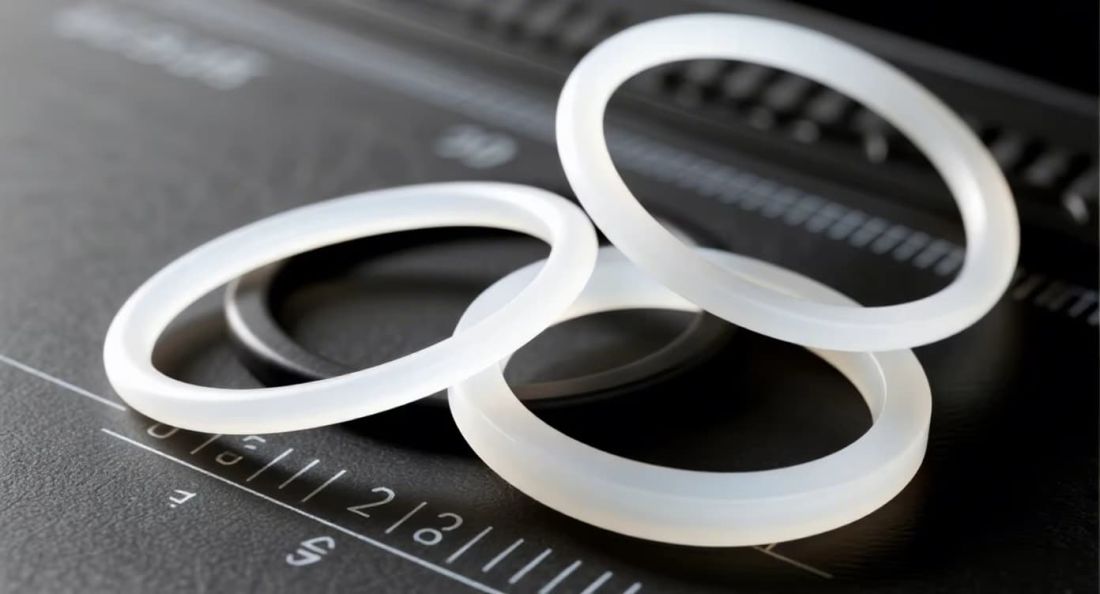
Why high-purity silicone sealing rings are judged on condensed volatiles
Outgassing is often quoted as total mass loss, which flatters a material: most of what leaves a silicone ring is water and light siloxane that never deposits. The number that matters optically is volatile condensable material — the fraction that re-deposits on a cooled surface. A ring can pass a generous total-mass-loss figure and still haze a window in a sealed aluminium housing at 60 °C.
The test conditions matter as much as the value. Collected volatile condensable material measured at 125 °C over 24 hours describes a different population of molecules than the same material held at 85 °C for a decade. Ask for the temperature, the collection plate temperature and the specimen mass, and compare only reports measured under the same conditions.
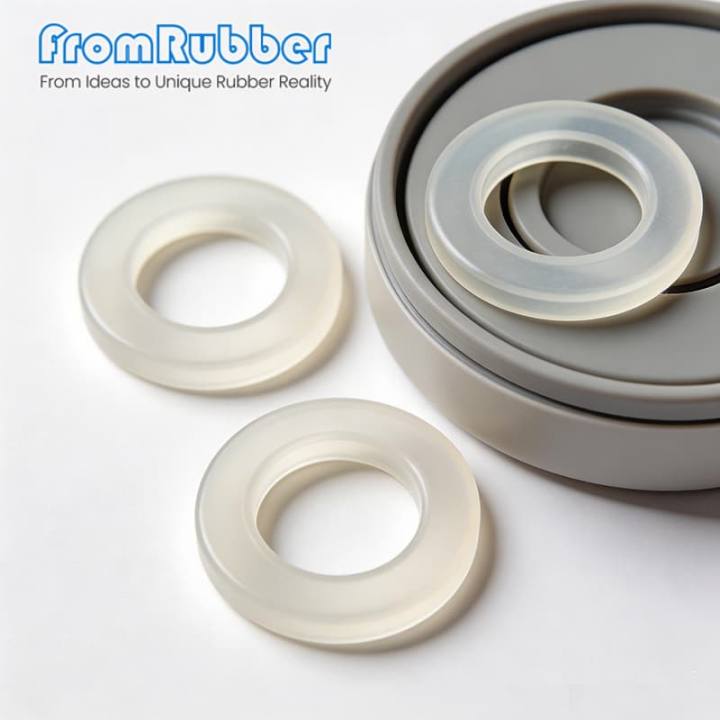
Three process decisions that set the purity of a silicone seal
Compound selection is the first decision and the one buyers usually delegate. A platinum-cured addition system avoids the peroxide by-products that linger in cheaper stock, but even a clean compound can arrive contaminated by a shared mixer, a coloured masterbatch or a release agent.
The second decision is post-cure. Volatiles leave the part slowly at room temperature and quickly in a ventilated oven; a defined post-cure schedule with a recorded ramp and hold is the difference between a material claim and a delivered part. The third is what happens after cure — a seal bagged in a polyethylene film that itself contains slip agents will pick up contamination in transit.
- Platinum-cured, single-source compound — avoid lot mixing across suppliers when the optical requirement is tight.
- Recorded post-cure — ramp, hold and cool-down logged per batch, not asserted per year.
- Clean packaging — low-slip film or foil, no silicone-treated liners, no talc.
Where the volatiles in a sealed lens actually come from
Ranked by typical contribution in a small camera cavity, the seal is rarely the only source — and often not the largest.
| Source | Typical contribution | What to do |
|---|---|---|
| RTV adhesive or potting | High per gram | Specify a low-outgassing grade or replace with a mechanical retainer |
| Silicone seal, uncured volatiles | Medium to high | Post-cure to a recorded schedule; verify by CVCM |
| Lubricant on the thread or bore | Medium | Use a low-volatility grease, or delete it |
| Mould release agent | Low to medium | Internal release only, or none on optical-contact faces |
| Plastic housing, printed legend | Low but persistent | Avoid solvent-based inks inside the cavity |
Housing design that lets a seal stay clean
A sealed cavity is not a closed system in the first hours after assembly; it is a small oven. If the design gives vapour nowhere to go, volatiles condense on the window during the first thermal cycle and stay there. A breathable membrane vent, a desiccant sachet with a defined service life, or a small expansion volume all change the outcome more than a marginal improvement in ring purity.
The assembly sequence is equally part of the specification. Adhesive dispensed before the seal is seated, or a wipe-down with a solvent that leaves residue, will undo a good material choice. Write the sequence into the work instruction and audit it at the line, because this is the step that most often explains a fogging complaint that the material certificates cannot.
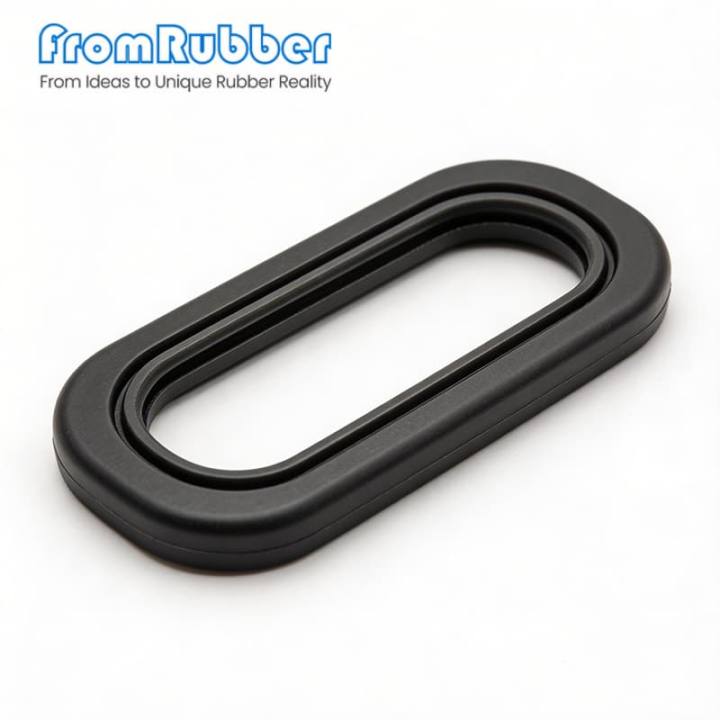
What a custom sealing ring drawing must carry
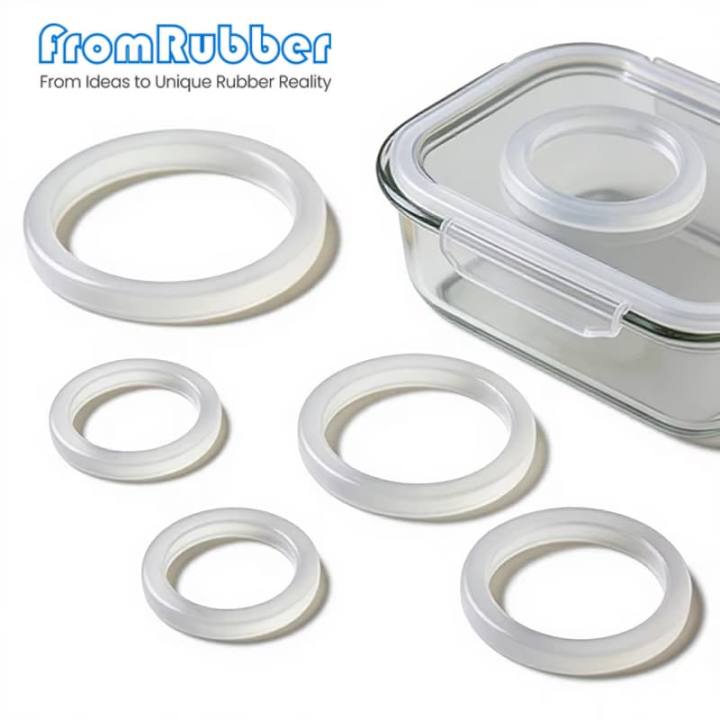
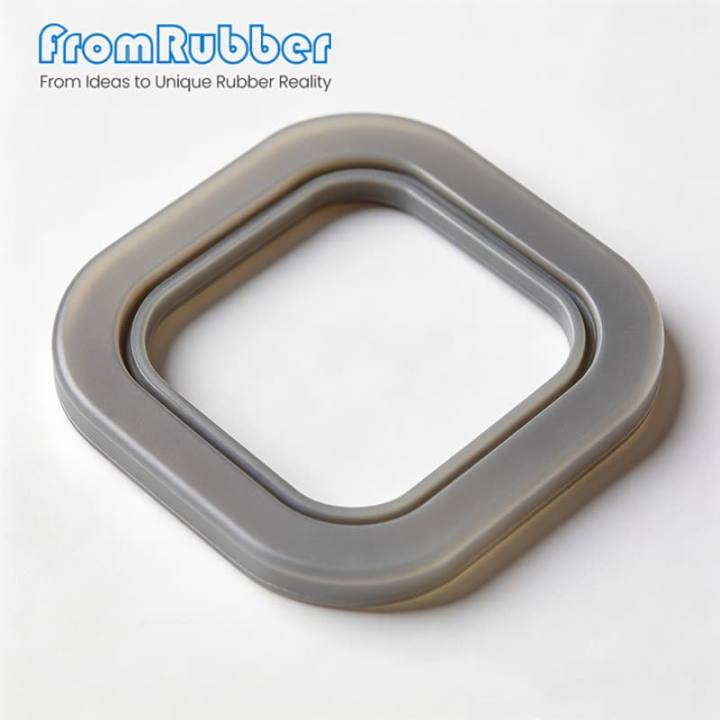
A sealing ring for an optical housing is defined by four things the drawing usually omits: the groove it sits in, the compression it will see, the surface finish it will meet, and the cleanliness class it must arrive in. Send the groove dimensions with tolerances, the mating surface finish in Ra, and the assembly method, and the ring section can be sized rather than guessed.
Compression is the single most useful number. A static face seal in a machined aluminium groove typically runs 20 to 30 percent squeeze; below that, tolerance stack-up opens the joint, and above it the rubber takes a set that shortens life. When a customer cannot supply the groove drawing, we ask for the housing instead — measuring the groove is faster than re-designing around an assumption.
Sampling, cleaning and packing for optical-grade parts
The first article inspection for an optical seal checks more than dimensions. It verifies section thickness at four points, hardness on a cured sample, compression set after the specified dwell, and volatile condensable material on the finished part. Only then is a sample worth sending, because a dimensionally perfect ring that outgasses will fog the window it was bought to protect.
Packing decides whether that work survives the freight. Optical seals should travel in a low-slip bag or a foil pouch, without talc, without a silicone-treated liner, and without contact with a printed label inside the bag. Ask the moulder to state the packing method on the certificate, and audit it once at the line rather than assuming it stays the same.
A custom sealing ring programme, stage by stage
Indicative durations for a compression-moulded ring; the shape of the programme matters more than the exact weeks.
| Stage | What happens | What the buyer receives |
|---|---|---|
| Design review | Groove and squeeze check, compound proposal | Marked-up drawing and material options |
| Prototype tooling | Single-cavity tool, cast or cut depending on geometry | 5 to 20 parts for fit and fogging trials |
| First article | Dimensional, hardness and set measurement | FAIR report with measured values |
| Validation | CVCM or migration testing on finished parts | Test report tied to the production lot |
| Production | Multi-cavity tool, in-process checks | Certificate, packing statement, lot traceability |
Where customisation changes the answer
Four requests appear in almost every optical sealing programme, and each one moves a different lever.
A non-standard section
A new cavity insert rather than a new tool frame in most cases, which keeps the tooling cost proportionate.
A colour for assembly identification
Pigment choice must stay within the low-outgassing envelope; not every masterbatch qualifies.
Two hardness options
Usually two compounds and two cure profiles; worth planning as separate validation lots.
Kitted delivery
Ring plus fastener plus gasket in one bag removes a line-side sorting step at the customer.
Three assumptions that shorten a seal's life
Each of these appears in drawings we review every month, and each one is cheaper to correct before the tool is cut.
“Silicone is silicone”
A general-purpose compound and an optical-grade one can share a hardness and behave completely differently in a sealed housing. Name the grade and the cure system, not just the hardness.
“The groove is standard”
A groove depth that suits a nitrile O-ring often over-compresses a silicone one, and over-compression is a permanent set in the first month. Check the squeeze against the compound.
“Cleaning happens at assembly”
If the seal is wiped with a solvent that leaves residue, the fogging test will fail on a part that was clean when it left the moulder. Specify the wipe and the flash-off time.
Questions about fogging and seal purity
Will a high-purity ring stop fogging on its own?
Only if the seal is the dominant volatile source. In most fogging investigations the adhesive, the lubricant or a solvent residue contributes more per gram. Audit the cavity as a system before changing the seal.
Is clear silicone purer than black?
Not inherently. Pigments and masterbatches add their own volatile load, and black stock hides contamination that a translucent part would reveal. Compare CVCM data for the specific coloured compound, not for the family.
How long should post-cure run?
Long enough that a repeat CVCM test on the finished part shows no further reduction. The schedule depends on section thickness, so it belongs in the process control plan rather than in a generic datasheet.
Does a desiccant replace the need for low-outgassing materials?
No. A desiccant handles moisture; it does not absorb siloxane condensate. It buys time in a well-designed cavity and masks the problem in a badly designed one.
Specify the seal and the cavity together
FromRubber moulds optical and housing seals with recorded post-cure and can quote CVCM data on the finished part rather than the compound alone. Send the housing drawing, the window material and the assembly sequence; we will flag the volatile sources before you commit to a tool.
Request an outgassing reviewRelated reading: how accelerated life testing validates seal life and custom silicone seals.