Protecting Your Core: How Precision ABS Housings Enhance Buzzer and Vibration Alarm Performance
- Share
- publisher
- Suey
- Issue Time
- Dec 3,2025
Summary
Discover how precision-engineered ABS housings are the critical component for superior buzzer and vibration alarm performance. Our guide explores the material science and design features that enhance sound clarity, maximize vibration transmission, and ensure long-term reliability in demanding industrial, automotive, and consumer applications. Learn why the right housing protects your core technology.

In the world of electronic alarms and signaling devices, performance isn't just about the internal components. The housing—the protective shell—plays a critical role in determining sound clarity, vibration transmission, durability, and overall reliability. While engineers meticulously select buzzers, vibration motors, and control circuits, the housing material and design are often overlooked, creating a performance bottleneck that can compromise entire systems.
This comprehensive guide explores how precision-engineered Acrylonitrile Butadiene Styrene (ABS) housings serve as the unsung hero in alarm performance, transforming basic auditory and haptic signals into reliable, long-lasting warnings that perform under pressure.
The Critical Role of Housing in Alarm Performance
An alarm housing is far more than a cosmetic cover. It functions as an acoustic chamber, a structural support, a thermal manager, and an environmental shield. The right housing amplifies desired frequencies, dampens unwanted vibrations, directs sound or motion efficiently, and protects sensitive components from dust, moisture, and physical impact.
For piezoelectric buzzers, the housing acts as a resonance chamber. Its internal dimensions and wall stiffness directly affect the sound pressure level (SPL) and frequency response. For vibration alarms, the housing must efficiently transfer mechanical energy from the motor to the external surface without absorbing it, while also withstanding constant stress cycles.
Suboptimal housing can lead to muffled sound, reduced vibration intensity, shorter component lifespan, and failure in harsh conditions. This makes material selection and precision manufacturing paramount.
Why ABS is the Material of Choice for High-Performance Alarm Housings
Acrylonitrile Butadiene Styrene (ABS) represents an optimal balance of properties for protective enclosures. Its ternary copolymer structure combines the strength and rigidity of acrylonitrile, the toughness and impact resistance of butadiene, and the gloss and processability of styrene.
Key Properties of Precision ABS for Alarm Housings
Precision Design Features That Maximize Performance
Beyond material selection, the design of the ABS housing dictates its effectiveness. Precision engineering focuses on several key features.
Optimized Internal Volume & Geometry
The internal cavity is calculated to match the resonant frequency of the buzzer element. Strategic baffles and chambers can be integrated to amplify target frequencies (e.g., 2.8kHz or 4kHz for maximum human ear sensitivity) while suppressing others.
Ribbing & Structural Integrity
Internal ribs increase stiffness without adding significant mass or wall thickness. This prevents housing "flex" that absorbs vibration energy or dampens sound waves, ensuring efficient energy transfer to the environment.
Precision-Molded Mounting Points
Isolated mounting bosses with precise screw posts ensure the alarm unit is securely fastened to its panel or device without transferring stress to the PCB or causing micro-vibrations that create noise.
Directed Output Channels
Horns, ports, or textured surfaces are molded in to direct sound waves or focus vibration to a specific contact surface, increasing perceived loudness or intensity by up to 30%.
Integrated Sealing Surfaces
Precision grooves for gaskets or O-rings are designed-in, enabling reliable IP ratings for dust and water ingress protection, crucial for outdoor, industrial, or automotive applications.
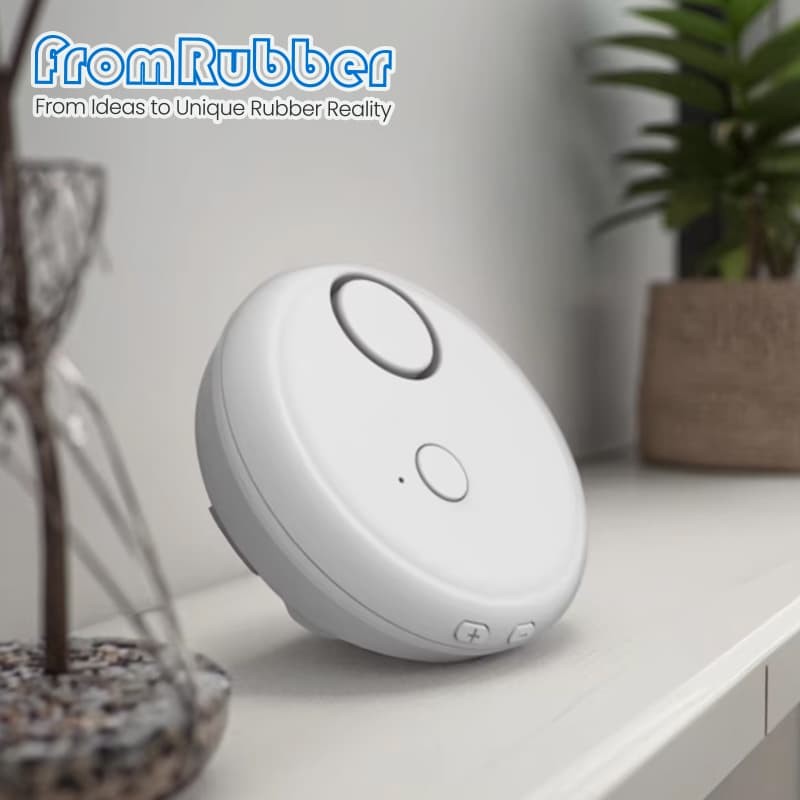
Performance Comparison: Generic Housing vs. Precision ABS Housing
The difference between a generic, off-the-shelf enclosure and a custom, precision-molded ABS housing is dramatic. Generic housings are designed for general purpose use, leading to compromises. They may have inconsistent wall thickness causing "dead spots" for vibration, or an internal volume that detunes the buzzer, reducing output by as much as 50%.
Precision ABS housings are engineered as an integral part of the alarm system. The result is maximized efficiency: every watt of electrical input is converted into the most audible sound or palpable vibration possible, with minimal energy lost to heat or structural damping. This not only improves performance but can also allow for the use of smaller, lower-power, and more energy-efficient internal components, reducing overall system cost and size.
Application-Specific Benefits of Precision ABS Housings
Industrial Automation & Machinery
In noisy factories, alarm clarity is safety-critical. Precision ABS housings are designed to produce sound with a frequency profile that cuts through ambient noise. Their chemical resistance protects against oils and coolants, while high-impact resistance withstands tool strikes or debris.
Automotive & Transportation
From reversing alarms to dashboard warnings, these housings must perform across extreme temperatures (-40°C to 105°C). ABS grades with high heat deflection temperatures (HDT) are used. Vibration alarm housings in steering wheels or seats are designed for efficient energy transfer to the user, ensuring the alert is felt even on rough roads.
Medical & Life Safety Devices
Reliability is non-negotiable. Housings are designed for easy sterilization (chemical/wipe-down) and feature cleanable surfaces without crevices. Sound output is calibrated to be clearly audible in hospital environments without being startlingly harsh to patients.
Consumer Electronics & IoT
Here, aesthetics merge with function. Precision molding allows for sleek, modern designs with integrated grilles or hidden ports. The housing dampens any secondary buzz or rattle that cheap plastics can produce, ensuring a high-quality user experience.
Don't Let Your Housing Be the Weak Link
The difference between an alarm that's merely functional and one that's exceptionally reliable and effective often lies in its core protection. Investing in precision-engineered ABS housings is an investment in the performance, longevity, and reputation of your product.
Partner with a specialist who understands the synergy between material science, acoustic engineering, and precision manufacturing to create the ideal housing solution for your buzzer or vibration alarm application.