Reduce Fatigue and Look Good Streaming: Soft Silicone Headset Covers Every Broadcaster Needs
- Share
- publisher
- Suey
- Issue Time
- May 15,2026
Summary
Why soft silicone headset covers reduce broadcast fatigue: the 3.5 N pressure threshold, up to 62% lower peak pressure, closed-cell sweat resistance, moulded vent channels and the four-week route from 3D render to packaging at 100 to 10,000 units.

Headset fatigue is a pressure problem before it is a padding problem. The discomfort threshold in this product category sits at roughly 3.5 newtons of headband pressure, a level stock foam on a light headset reaches within about 90 minutes. What a cover changes is how that force is spread, and therefore how long a broadcast runs before the presenter starts adjusting.
For an OEM the decisions are narrow: a compound soft enough to spread load without collapsing, a closed-cell surface that will not absorb sweat, and ventilation designed into the shape rather than added afterwards. Each has a manufacturing consequence, and each is settled before the mould is cut.
Where headset fatigue comes from
Force matters less than concentration. A narrow band pressing on a small area of scalp produces a pressure peak long before the total load becomes heavy, which is why a light headset with hard padding can hurt more than a heavier one with soft padding.
- 3.5 N — the pressure level associated with discomfort inside 90 minutes.
- Up to 62% — reduction in peak pressure reported for viscoelastic silicone versus foam.
- +4 hours — additional stream duration before fatigue in the same reporting.
- 40% — lower perceived fatigue reported by users who switched from stock padding.
Silicone is viscoelastic: it deforms under load and recovers, so force is distributed across a larger contact area instead of one ridge. That is the whole mechanism, and it is why compound hardness and wall thickness matter more than thickness alone.
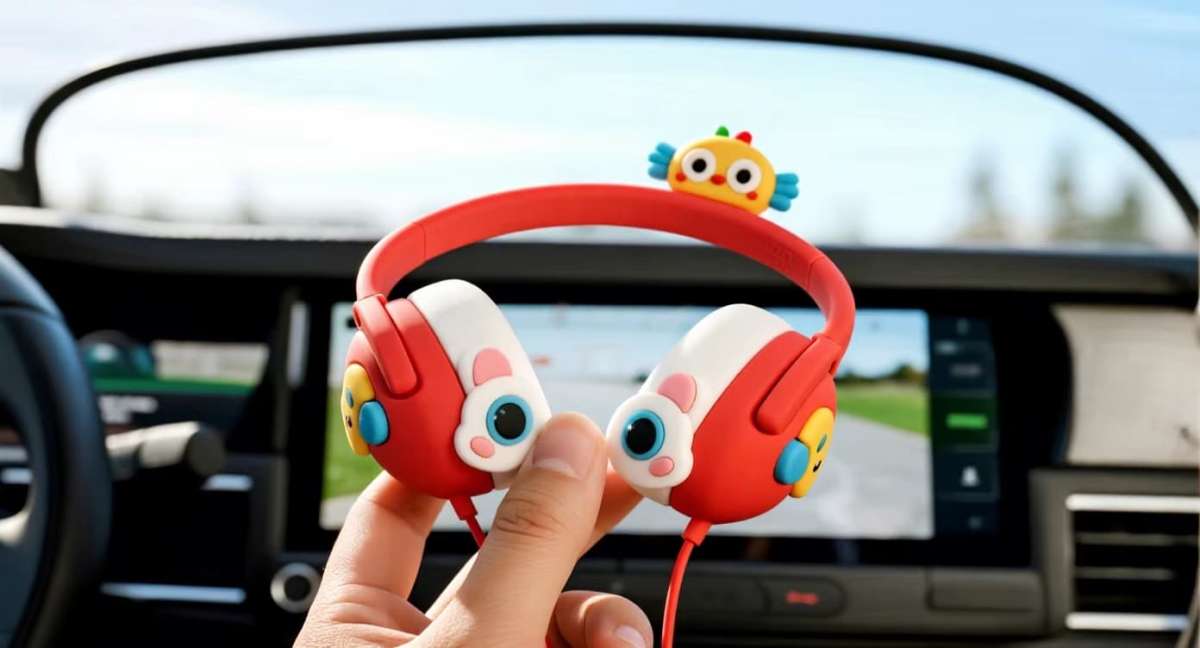
Pressure peaks appear where the band is narrowest. A cover works by widening the contact area, not by adding bulk.
Soft silicone headset covers versus stock foam
The comparison is not cosmetic. Foam is an open-cell material: it absorbs what it touches, compresses permanently and loses shape on a schedule. Silicone is closed-cell and does neither, which changes both the comfort curve and the cleaning routine.
| Property | Stock foam | Soft silicone headset covers |
|---|---|---|
| Pressure distribution | High peaks, dents over time | Even spread, recovers after load |
| Sweat and oils | Traps moisture in open cells | Non-porous, washable surface |
| Colour range | Two to three standard colours | Full palette, including glow and UV effects |
| Service life | Flattens within months, degrades in 3–6 months | Retains shape across thousands of uses |
| On camera | Generic black or grey | Brand colour, moulded 3D attachments, logo |
The colour row is a manufacturing point, not a marketing one. A custom cover is moulded in the channel's colour or matched to a Pantone reference, and a 3D attachment — ears, horns, wings or a mascot — is part of the tool rather than something glued on later.
Ventilation, grip and the closed-cell surface
Closed-cell silicone does not breathe the way foam does, so ventilation has to be designed in. Micro-channel venting moulded into the cover allows airflow while keeping the cushioning intact, and it is a tool feature: the channel depth has to be deep enough to move air and shallow enough not to thin the load-bearing wall.
The same surface explains two other behaviours. The material repels sweat and oils, so a wipe or a dishwasher cycle resets it between sessions, and the natural grip keeps the headset from sliding back on smooth hair. Foam that has absorbed a season of use cannot be cleaned back to that state.
Yellowing is the other long-run risk. Studio lighting and skin oils attack polymers over time, so formulations here are selected to hold colour across years of daily use, not to look correct on delivery day.
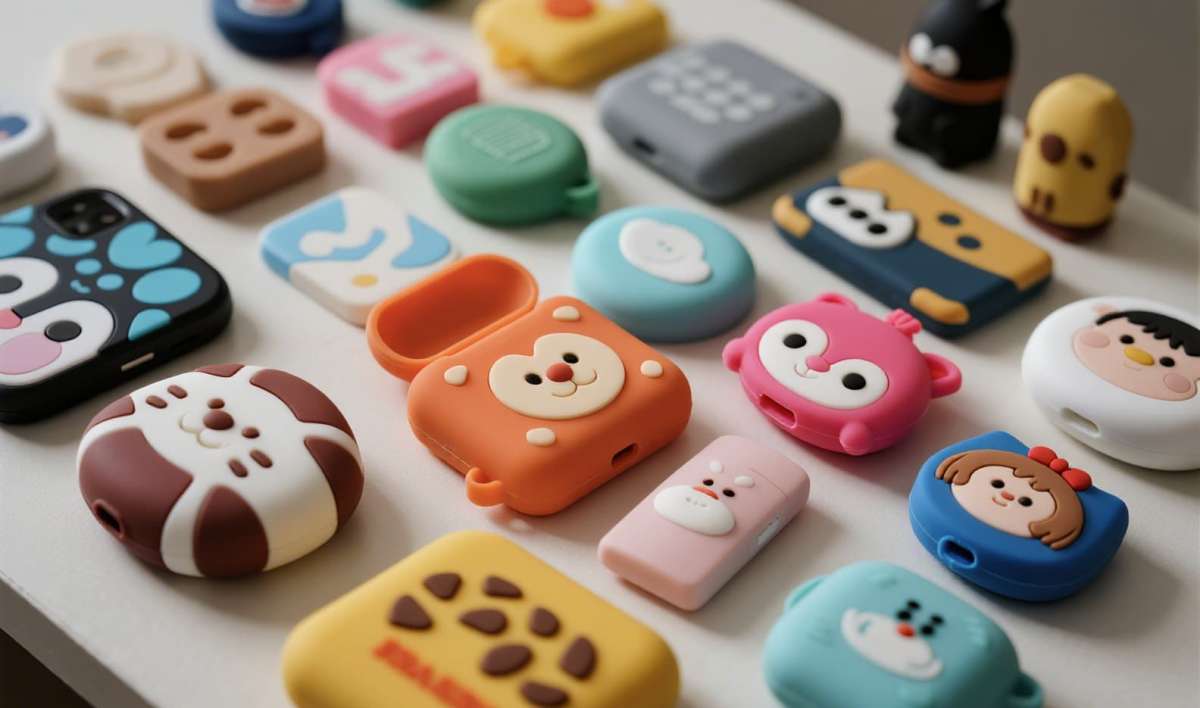
Vent channels, wall thickness and surface finish come out of one cavity. Changing any of them means a new tool.
From sketch to stream: the sample route
A creator-brand programme runs on a short, fixed sequence: concept and reference, 3D rendering within 48 hours, a physical prototype, then production and branded packaging. The whole route is quoted at about four weeks, the number a channel should plan a launch around.
Volume tiers
Simple designs can start at 100 pieces, which is what makes an individual creator programme viable; broadcast networks and multi-channel operations order 10,000 units and above. The tooling does not change between the two, only the run length and the packaging.
What to send
A reference headset model, the channel colour or Pantone reference, the 3D attachment you want, and a photograph of the wearer with the headset on. The photograph matters more than it looks: band width, cup size and where the band crosses the scalp determine how much area the cover has to work with.
Ask for a sample kit before committing to a run. A cover that feels right in the hand can still read wrong on camera under studio lighting, and colour is the specification most often revised after the first article.
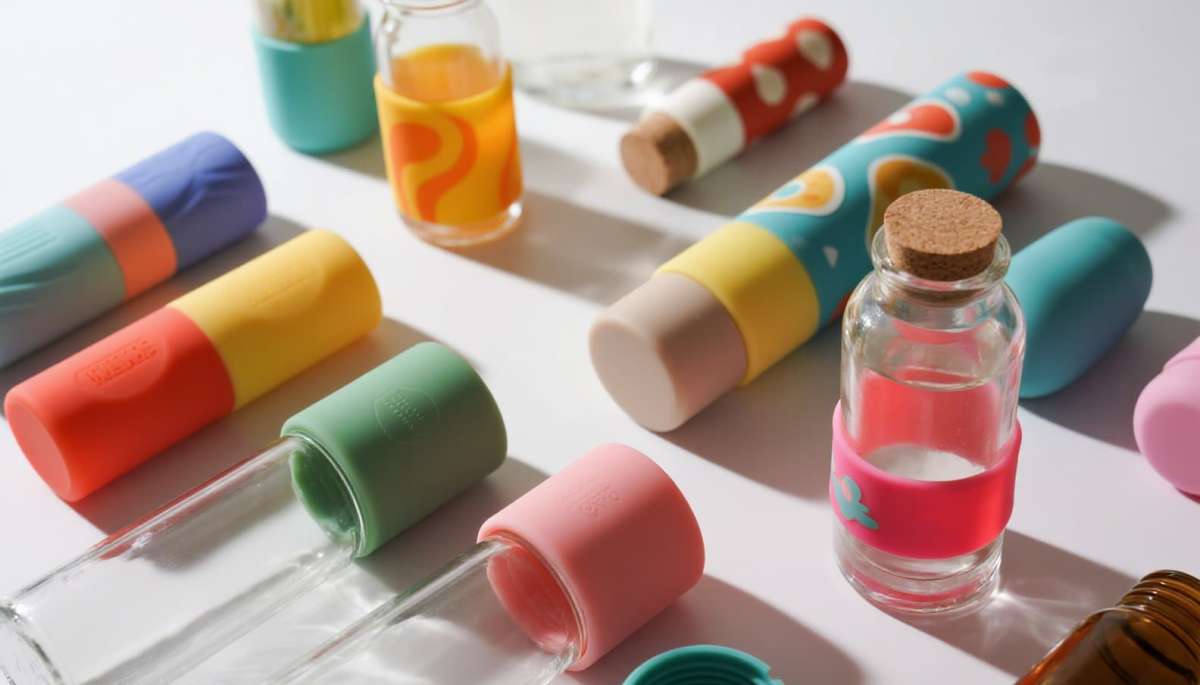
Sampling first, tooling second. Colour and fit are the two specifications that change after a prototype, and both are cheap to adjust at that stage.
Questions buyers ask about silicone headset covers
Do covers fit any headset?
No. Band width, cup diameter and hinge position differ between models, so a cover is tooled for a family of headsets. Send the model list you intend to support before the drawing is approved.
Will the cover make the headset feel heavier?
Marginally, and the pressure peak still falls because the load is spread. Comfort comes from contact area and compound softness, which is why hardness is specified, not assumed.
Can we print a logo on a moulded cover?
Yes, in three ways: moulded into the shape, debossed or embossed, or printed. Moulded relief survives longest because the marking is the surface; print is the option for detail a cavity cannot hold.
How are the covers cleaned?
Wipe with a damp cloth, or run them through a dishwasher cycle. The closed-cell surface does not absorb sweat, which is the difference between a cover that lasts years and foam that degrades in months.
Develop soft silicone headset covers for a channel or a network
Send the headset model, the colour reference and the 3D attachment you want. We return a 3D render within 48 hours, quote tooling for the band and cup geometry, and hold colour approval at the sample stage.
Review the consumer electronics capability, or follow the custom silicone service process from concept to branded packaging.