Silicone Dog Muzzle Size Guide: Measure Your Dog's Snout Correctly
- Share
- publisher
- Suey
- Issue Time
- Apr 10,2026
Summary
Learn how to measure your dog‘s snout correctly for a silicone muzzle. Step-by-step guide with length, circumference, and strap tips. FromRubber custom fit.

Fit guide
Three measurements decide whether a silicone dog muzzle fits: snout length from the eye corner to the nose, closed-mouth circumference at the widest point, and base width where the muzzle meets the cheek. Add three checks — panting room, treat access and escape resistance — and the fit is confirmed rather than guessed.
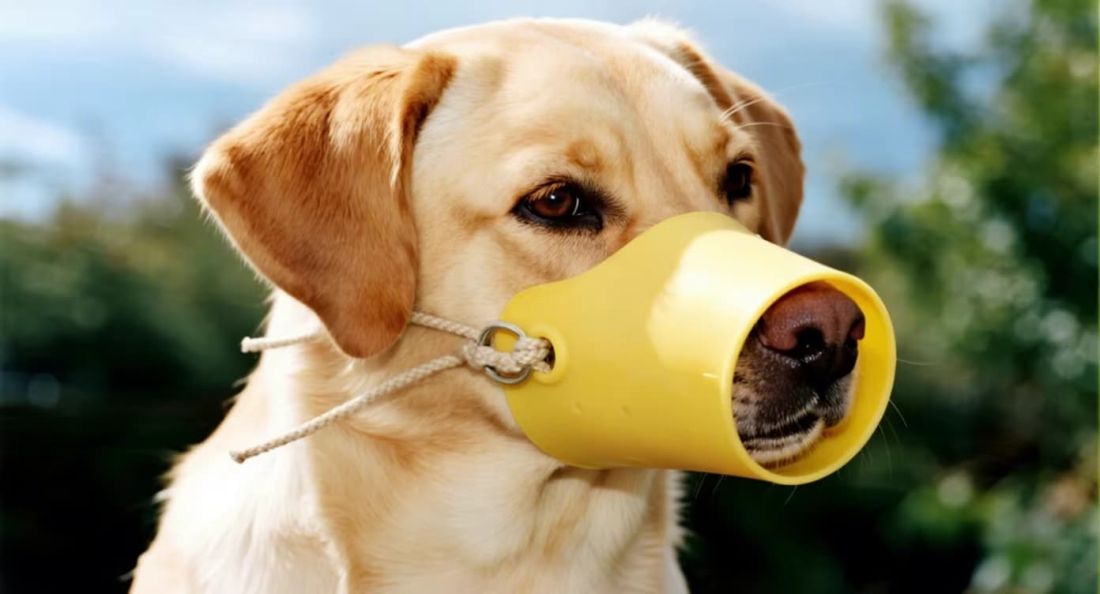
- Measure with the mouth closed: an open-mouth circumference overstates the size by several centimetres.
- Panting room is non-negotiable; a muzzle that prevents panting is a welfare problem, not a tight fit.
- A silicone muzzle is for short, supervised use, not for all-day wear.
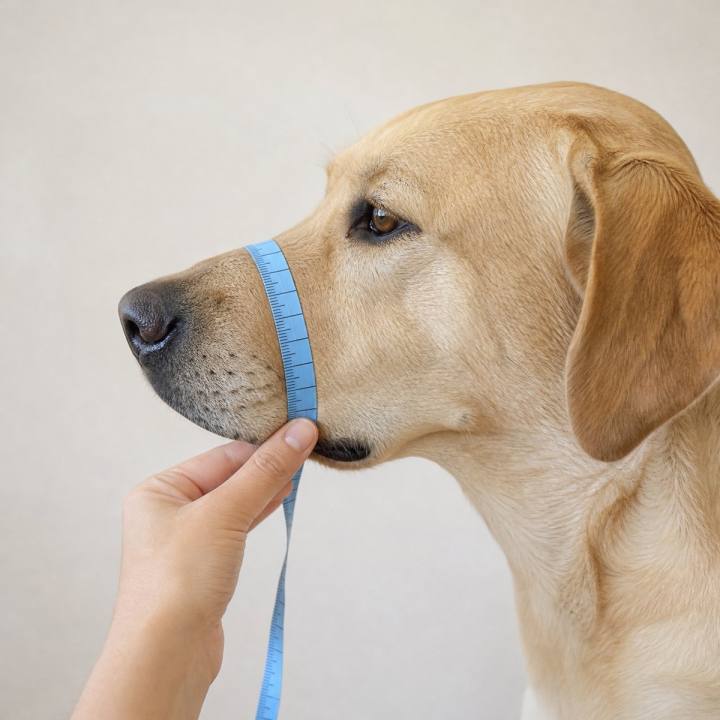
The three measurements for a silicone dog muzzle
Length is measured along the top of the snout from the inner corner of the eye to the tip of the nose, following the bone rather than the fur. Circumference is taken around the snout at its widest point, just behind the nose, with the mouth closed and the tape snug but not tight. Base width is the distance across the muzzle where it joins the cheek, and it decides whether the straps sit behind the jaw or press into the lip.
Two habits cause most errors. Measuring with the mouth open adds length and circumference the dog does not have at rest, and measuring over a long coat adds centimetres that disappear when the fur is wet. Both produce a muzzle that looks correct on the bench and slips in use.
The three checks that confirm the fit
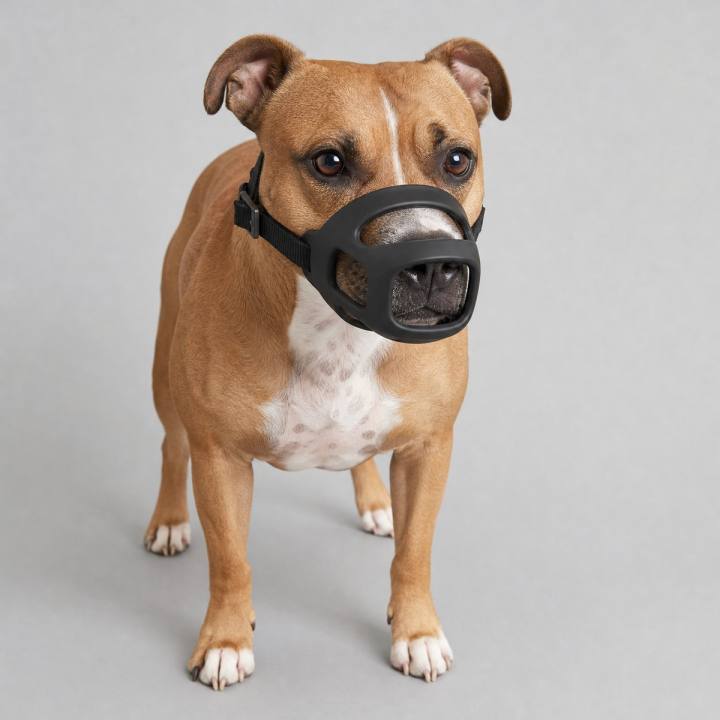
First, panting room: with the muzzle on, the dog must be able to open its mouth enough to pant and to take a small treat. If it cannot, the muzzle is too small regardless of what the tape said. Second, treat access: a front opening large enough to pass a treat keeps training positive and makes the muzzle easier to condition.
Third, escape resistance: pull gently backwards at the strap; the muzzle should not rotate over the eyes or slip forward off the nose. A silicone muzzle that rotates is a design problem as much as a sizing one, because a flexible shell with a wide base can walk forward on a narrow snout. That is where a custom shape beats a generic size chart.
- Panting room — mouth opens enough to pant and to eat a treat.
- Treat access — front opening sized to the treats used in training.
- Escape resistance — no rotation over the eyes when pulled backwards.
Sizing inputs and what they control
| Measurement | Where to take it | What it controls |
|---|---|---|
| Snout length | Eye corner to nose tip | Shell length and eye clearance |
| Circumference | Widest point, mouth closed | Shell width and panting room |
| Base width | Across the muzzle at the cheek | Strap position and rotation resistance |
| Neck circumference | Behind the ears | Strap length and buckle range |
| Bridge height | Top of snout to under the jaw | Front opening and treat access |
Material behaviour and everyday use
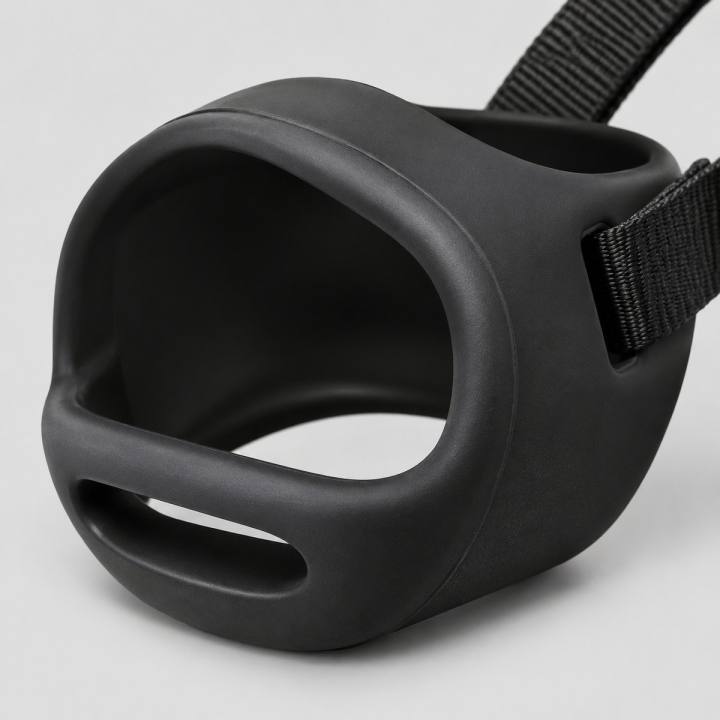
Silicone gives a soft shell that does not crack in cold weather and can be washed after every walk, which matters for a product that sits against the face. The trade-off is stiffness: a soft shell needs thickness at the base to resist rotation, and a thicker shell reduces panting room. That balance is the main design decision in a silicone muzzle.
Welfare rules belong in the instructions, not in small print. A muzzle is for short, supervised periods — vet visits, grooming, transport, introductions — and not for all-day wear. A dog must never be left unattended in a muzzle, and any dog that shows distress, excessive pawing or difficulty breathing should have it removed immediately.
A size chart is a starting point built from averages; a dog is a specific snout. When the measurement falls between two sizes, choose the larger shell and take up the difference at the strap, because a shell that is too small removes panting room and cannot be corrected by adjustment.
Then re-check the three fit tests after a week of use. A muzzle that fitted on day one can sit differently once the strap has bedded in, and a shell that rotates after a week was marginal at the fitting. Recording the three measurements beside the strap position gives the next order a starting point instead of a guess.
How a custom muzzle or pet product is quoted and run
Pet products are sized in ranges, so a programme usually starts with a size ladder rather than a single part.
Inputs
Breed or size range, three key measurements, strap hardware, colour and the packaging format.
Design
Shell thickness at the base, front opening, strap geometry and the size ladder.
Sampling
A fit trial on several dogs per size, with the three checks recorded before approval.
Volume and packing
Cavity count per size, colour options, and retail packaging with sizing guidance.
Questions from owners and brands
Can my dog drink wearing a silicone muzzle?
Some designs allow it, but it should never be assumed. Offer water with the muzzle off, and check the design against the dog's ability to open its mouth.
How tight should the straps be?
Snug enough that the muzzle cannot rotate, loose enough to slip two fingers under the strap. If it leaves marks, it is too tight.
Is a silicone muzzle suitable for a dog that bites?
It is a management tool for short periods and must be introduced with training. For a dog with a bite history, work with a qualified behaviourist rather than relying on the product.
Why does my muzzle slip forward?
Usually a base that is too wide for the snout, or a strap sitting too far back. A custom base width fixes what a size chart cannot.
Send the measurements and the size range
FromRubber moulds silicone pet products in Dongguan, including muzzles, can lids and feeding accessories. Send the three snout measurements for your size range, the strap hardware and the packaging format; we will propose a shell thickness and a size ladder, then mould samples for a fit trial.
Request a pet product reviewRelated reading: custom silicone pet can lids and how custom rubber moulding works.