Silicone Keypad Loses Rebound? Watch Out for Compression Set — The Hidden Killer of Long‑Term Reliability
- Share
- publisher
- Suey
- Issue Time
- Jul 31,2026
Summary
Compression set (≤5% for premium silicone) causes permanent rebound loss after prolonged compression. Prevent by requiring test reports, ensuring post‑cure (200°C×4h), specifying high‑grade materials, and adding initial height compensation. FromRubber validates long‑term resilience before silicone keypad production.

The new device felt perfect. Six months later, the key just stays flat, like a deflated ball. This "time-bomb" quality issue is one of the most common complaints FromRubber's after-sales team handles. The product leaves the factory with a flawless feel and passes every functional test, but months later, especially after high-temperature shipping or long-term storage, the keys start failing. Worse still, the problem often surfaces only after mass shipment, triggering large-scale returns and lasting damage to brand reputation.
Critical reliability factor: compression set is invisible. It does not show up on incoming inspection, it does not change the feel out of the box, and it is the one parameter that decides whether a keypad still rebounds after a year in the field.
Why a keypad that passed every test still fails after six months
Compression set is not a defect that appears at delivery, so it is rarely caught by the tests that are run at delivery. Visual inspection passes, actuation force passes, contact resistance passes. The material then sits compressed in a warehouse, a shipping container or a hot vehicle, and the cross-linked network relaxes into a new shape. By the time the product reaches the end user, the key that felt crisp at the factory has already lost the travel it needs to close reliably.
That delay is what makes it expensive. The failure signature shows up in the field rather than on the production line, so the first warning is usually a customer complaint instead of a rejected batch.
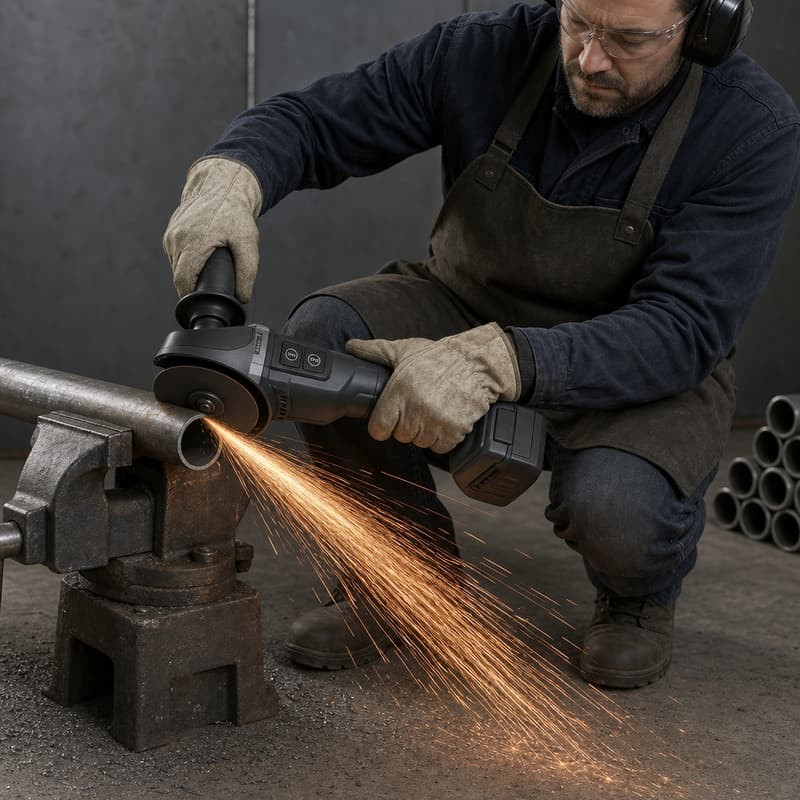
Rebound loss is a material property, not a wear-and-tear accident
Operators read a keypad through its return, not through its press. A key that closes and then comes back with authority feels correct; a key that closes and stays low feels broken even when the electrical contact still works. Because that return comes from the elastic recovery of the silicone itself, the failure is a property of the material and the cure, and no amount of inspection at the end of the line will change it.
Silicone keypad technical analysis
In materials science, this is called compression set. When silicone is subjected to long-term compression, for example shipping pressure, repeated pressing or high-temperature environments, and the molecular chains have poor recovery ability, permanent plastic deformation occurs. The material never returns to its original height.
According to FromRubber's Silicone Keypad Custom Molding Best Practices, the material's recovery capability after high-temperature compression is a critical parameter that must be evaluated. It is one of the core indicators of long-term silicone reliability.
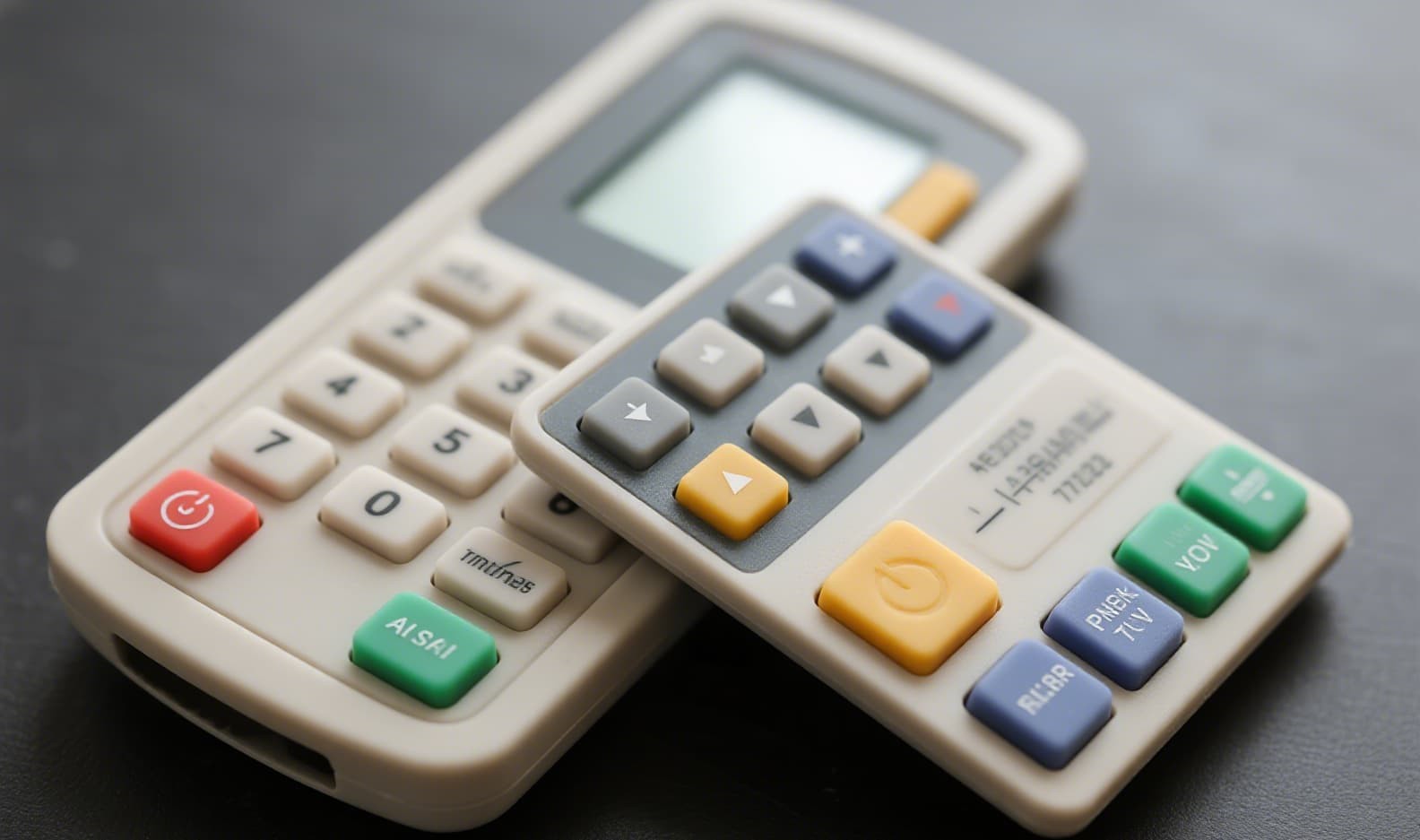
Where compression set is decided
Three process variables carry most of the outcome. The grade of raw compound sets the upper limit of what is achievable. The degree of cure sets how much of that limit is actually reached. The post-cure schedule locks in the cross-link density that survives storage and shipping heat. A keypad drawing that names none of the three leaves the result to whichever batch the press happens to run.
What is compression set at the molecular level?
Silicone's elasticity comes from the cross-linked network between its molecular chains. When compressed, chains bend and slip; when the force is removed, the cross-link network pulls them back.
However, if:
- Cross-link density is insufficient, which points to inadequate cure
- Molecular chains are broken, which happens with recycled material or excessive filler oil
- Cross-link points are unstable, which follows from poor-quality cross-linkers
then after the force is removed the chains cannot fully recover, and part of the deformation becomes locked in as permanent set. That is the microscopic mechanism behind compression set.
FromRubber's lab tests show that when compression set rises from 3% to 15%, the service life before rebound failure can plummet from 1 million presses to just 100,000, a full order of magnitude.
Key data benchmarks
- Premium silicone: compression set 5% or less; after full post-cure it can reach 3% or less. Under 70°C × 22h standard testing, recovery rate is 95% or better.
- Mid-grade silicone: compression set 5% to 10%; suitable for general consumer electronics, and may show slight rebound decay after one to two years.
- Poor-quality silicone: compression set above 10%, sometimes 15% to 20%. These materials lose elasticity almost irreversibly after high temperature or prolonged compression.
Industry standard reference
According to FromRubber's procurement specifications, qualified silicone keypad materials should meet the following compression set criteria:
| Test condition | Premium | Standard | Poor |
|---|---|---|---|
| 70°C × 22h | 5% or less | 10% or less | above 15% |
| 100°C × 22h | 8% or less | 15% or less | above 20% |
| Room temperature × 168h | 3% or less | 6% or less | above 10% |
FromRubber enforces strict quality control on compression set. All production materials must pass 70°C × 22h testing with set at 5% or below. For products exported to tropical regions or used in automotive applications, we require 100°C × 22h testing with set at 8% or below.
Real-world silicone keypad case studies
Fan remote control exported to Southeast Asia
The units were stored in a warehouse for one summer. At unboxing, 80% of the keys were stuck flat or would not rebound.
Root cause: a low-cost domestic silicone with compression set of 15%, against an industry benchmark below 5%. In hot, humid warehouse conditions of 35 to 40°C at 85% relative humidity or higher, the keys permanently lost elasticity.
The client lost the entire shipment, roughly 70,000 USD, plus brand reputation, and it took two years to restore market trust.
FromRubber post-mortem: this could have been avoided by requiring a compression set test report at 5% or below during material selection, and by adding 0.1 mm of initial over-travel in the design to compensate for long-term set.
Industrial instrument keypad
The application required continuous operation at 60°C for five years or more with no rebound degradation.
FromRubber recommended ShinEtsu KE-951-U, a tear-resistant low-set grade measuring 4% or less at 70°C × 22h, with post-cure at 200°C for 4 hours and a +0.15 mm initial height tolerance to offset long-term set.
After two years in the field, a random audit of 100 units showed a 100% rebound pass rate, with mean height decay of only 0.03 mm, far better than the industry average.
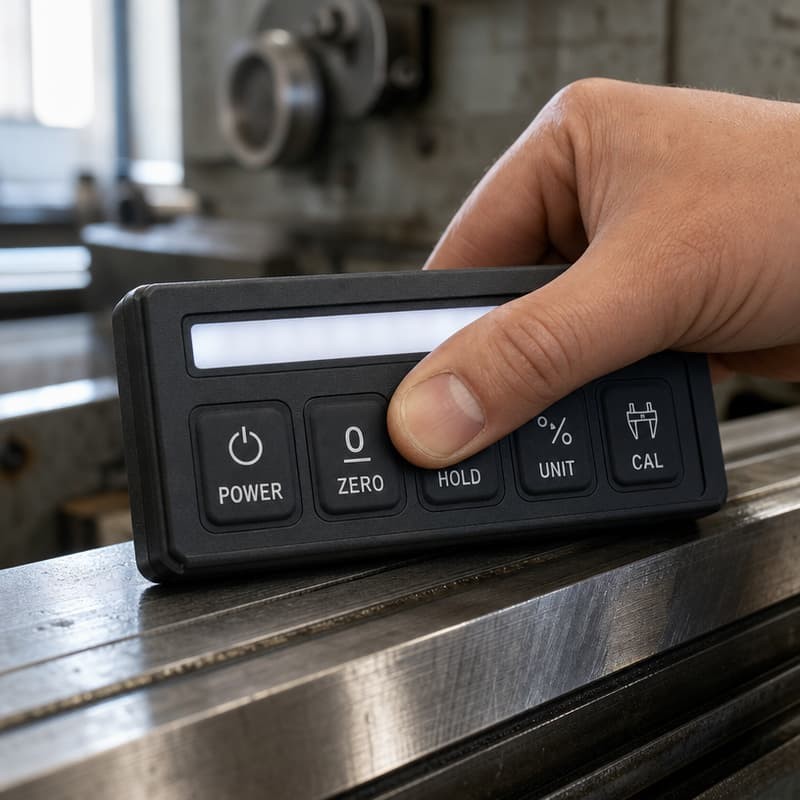
What the two cases have in common
Both panels passed their factory tests. The difference was settled before moulding started, in whether the material was specified with a measured set figure and whether the design carried enough initial over-travel to absorb the set that was going to occur anyway. One decision is a purchase specification; the other is a drawing tolerance. Neither is expensive, and both are almost impossible to retrofit after shipment.
Actionable solutions: the FromRubber compression set control protocol
For high-cycle or harsh-environment products, follow these FromRubber-recommended quality control steps:
- Request and verify compression set test reports. Before tooling, require your supplier to provide a compression set test report to the 70°C × 22h standard. Acceptance criterion: premium keypad materials should measure 5% or less. Never accept verbal promises; insist on data.
- Ensure thorough post-cure, the secondary vulcanisation step. Post-cure heats the moulded parts in an oven, typically 200°C for 4 hours or more, to drive secondary cross-linking. It significantly increases cross-link density and can reduce compression set by 30% to 50%. FromRubber's standard process includes 4 to 6 hours of post-cure on all keypad products, which is a mandatory step for long-term rebound reliability.
- Build in initial positive tolerance compensation. At the design stage, add 0.1 to 0.2 mm of positive height tolerance. Even if some set occurs over time, the keypad retains enough rebound height for reliable electrical contact.
- Specify high-grade raw silicone. When selecting materials, specify premium-brand raw silicone such as the ShinEtsu KE-951 series or the Dow Corning TPS series. Avoid low-cost compounds containing recycled material or excessive filler oil. FromRubber's material database carries measured compression set data for all major brands and grades, which allows a precise recommendation for a specific application.
- Match the material to the operating temperature. If the product will be exported to tropical regions or used in high-temperature equipment, raise the test standard from 70°C × 22h to 100°C × 22h and choose grades designed for high-temperature service, such as ShinEtsu KE-951U or the Dow Corning TSP series.
- Run accelerated life testing. During pilot production, take 20 to 30 samples, place them in a high-temperature oven at 70°C or 100°C under rated compression for 72 hours, allow 24 hours of recovery, then measure rebound height decay. Pass criterion: decay of 5% or less; if decay reaches 10%, re-evaluate the material or the process.
- Ask for a DFM review of material and process. Before tooling, send your material requirements, operating conditions and lifespan targets to FromRubber's engineering team. We recommend the optimal material grade, cure parameters and post-cure schedule, with estimated compression set data, and deliver a detailed report within 24 hours so that long-term rebound reliability is locked in from the beginning.
FromRubber pro tip: compression set is the invisible parameter. It does not show up on visual inspection and it does not affect the initial feel, but it determines how the product performs in the customer's hands after six months. A 24-hour material validation can save an entire product line from premature failure.
The bottom line
Keys that will not bounce back look like natural aging, but they are a time-bomb planted by material selection and process control. Compression set is the core indicator of long-term silicone reliability. It does not show on an appearance inspection and it does not affect out-of-box feel, yet it determines the second impression after six months of real-world use.
Premium silicone can achieve compression set below 5%, and with thorough post-cure below 3%. Poor materials can sit at 15% to 20% and fail in weeks under high-temperature conditions.
The solution is straightforward: request test reports, ensure post-cure, specify high-grade materials, build in initial compensation, and run accelerated aging validation. The key is to treat compression set as a mandatory pre-production verification rather than a post-failure investigation.
FromRubber brings deep expertise in silicone keypad material selection, process control and long-term reliability validation. We understand the real lifespan of every material under different conditions, and we know how to minimise compression set through process optimisation. On your next silicone keypad project, let our engineering team engage at the material and process design stage, so we can stop the hidden killer before mass production.
FromRubber believes that good rebound is not about the springiness at delivery. It is about the resilience that remains after a year of use. Let us help you build resilience that lasts.
FromRubber (Dongguan Bohao Electronic Technology Co., Ltd.) moulds custom silicone keypads and rubber keypads for hand-held tools, instruments and industrial panels, and validates long-term resilience before production. The notes above come from that validation work.