Silicone Keypad Not Responding? How to Read Conductive Carbon Pill Resistance Stability Test Reports
- Share
- publisher
- Suey
- Issue Time
- Aug 3,2026
Summary
Conductive silicone keypad carbon pill resistance (<150Ω premium) determines keypad reliability. Require full test reports: initial, life‑cycle, low‑temp, and fluctuation data. FromRubber validates conductive stability.
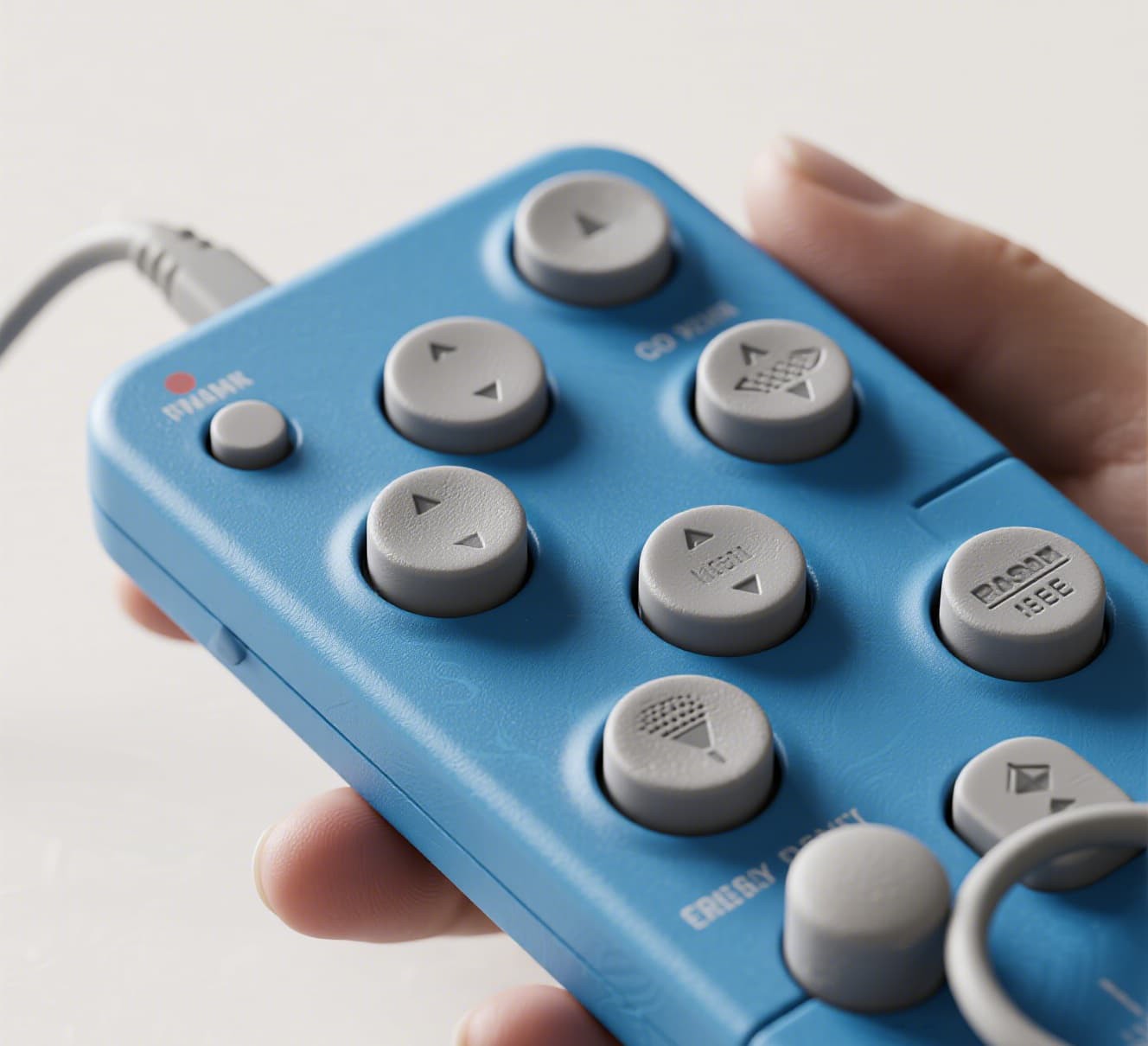
This "press and pray" frustration is one of the most common complaints FromRubber’s after‑sales team handles. Products leave the factory working perfectly, but after some use, the keys start "picking their moments" — failing in cold, humid, or fast‑pressing conditions. Users don't blame the environment — they blame the brand. And the root cause often lies in a tiny carbon pill, smaller than a grain of rice.
Conductivity Critical
Technical Analysis
The conductive carbon pill is the heart of the silicone keypad. Its performance determines the keypad's lifespan and sensitivity.
According to FromRubber’s Silicone Keypad Custom Molding Best Practices, conductive carbon pill resistance stability should typically be < 500Ω, with premium products achieving < 150Ω. This is the dividing line between "able to conduct" and "reliably conducts."
Why Resistance Is the Core Indicator
The carbon pill's resistance directly determines the reliability of signal transmission between the keypad and the PCB:
| Resistance Range | Rating | Reliability Performance |
|---|---|---|
| < 150Ω | ★★★★★ Excellent | Stable signal transmission — ideal for medical, automotive, and high‑reliability applications |
| 150Ω – 300Ω | ★★★★ Good | Meets the needs of most consumer electronics |
| 300Ω – 500Ω | ★★★ Fair | Barely acceptable — poor environmental adaptability |
| > 500Ω | ★★ Risk | Likely to fail in cold, humid, or aged conditions |
Consequences of excessive resistance: Signal transmission is impeded — the high contact resistance prevents the PCB from recognizing the actuation. In low‑voltage systems (e.g., 1.8V), high resistance directly prevents correct logic level detection.
Consequences of unstable resistance: 100Ω on the first press, 1000Ω on the second — this "wandering" resistance prevents the system from establishing a stable conduction threshold, resulting in intermittent key failure.
Three Factors Affecting Resistance Stability
- Carbon pill formulation & materials: Premium pills use high‑purity conductive carbon black + specialty silicone rubber matrix with a uniform, stable conductive network. Low‑quality pills use cheap conductive fillers (e.g., graphite powder) with uneven distribution, resulting in batch‑to‑batch resistance variation of ±50% or more.
- Cure process: Insufficient cure temperature or time leaves the conductive network incompletely formed. Over‑cure makes the pill brittle, creating micro‑cracks that increase resistance with every press.
- Use environment: Low temperature (< 0°C) stiffens the silicone matrix, increasing filler spacing and spiking resistance. High humidity (> 85% RH) causes surface oxidation, raising contact resistance. Repeated pressing wears the surface, thinning the conductive layer until failure.
FromRubber lab data shows that at -10°C, standard carbon pills can spike from 100Ω (room temperature) to over 800Ω. Premium low‑temperature‑optimized pills only rise to 180Ω — still well within reliable conduction range.
How to Read a Resistance Stability Test Report
A qualified conductive carbon pill test report should include the following key data:
| Test Item | Pass Standard | Premium Standard | Description |
|---|---|---|---|
| Initial resistance | < 500Ω | < 150Ω | First measurement of new parts |
| Resistance after life test (1M cycles) | < 1000Ω | < 300Ω | Simulates resistance growth after long‑term use |
| Low‑temperature resistance (-10°C) | < 800Ω | < 200Ω | Resistance shift under cold conditions |
| High‑temperature/humidity resistance (85°C/85%RH) | < 800Ω | < 250Ω | Resistance shift under hot/humid conditions |
| Resistance fluctuation (10 consecutive presses) | < ±20% | < ±10% | Direct measure of press‑to‑press consistency |
FromRubber’s internal standards exceed industry norms: for automotive, medical, and industrial remote‑control applications, we require initial resistance < 150Ω, resistance after 1M cycles < 300Ω, low‑temperature (-20°C) resistance < 250Ω, and fluctuation < ±10%. Every batch of carbon pills comes with a complete test report, with data archived for traceability.
Real‑World Silicone Keypad Case Studies
⚠️ Poor Outcome
Industrial remote control exported to Scandinavia — Passed lab testing, but failed in winter outdoor use (-10°C to -15°C). Operators had to press multiple times to get a response.
FromRubber diagnosed and recommended: Replace with imported low‑temperature‑optimized conductive carbon pills (-20°C rated). Room‑temp resistance: 120Ω; -10°C: 165Ω; -20°C: 210Ω. After the change, the remote responded instantly even in extreme cold — customer complaints dropped to zero.
✅ Best Practice
Medical monitoring device keypad — Required rapid response for patient vital‑sign monitoring. The client made "carbon pill resistance stability" a key material control item and engaged FromRubber for DFM material review.
The client's product has been in large‑scale clinical use for two years with zero carbon‑pill‑related failures. The client noted: “FromRubber’s rigorous carbon pill resistance control gave us absolute confidence in long‑term reliability.”

Actionable Solutions – The FromRubber Silicone Keypad Carbon Pill Reliability Protocol
To ensure long‑term sensitivity and reliability of conductive carbon pills, follow these FromRubber‑recommended steps:
- Specify clear resistance parameters — On drawings or specifications, clearly state "conductive carbon pill resistance < 150Ω (initial)" and "resistance after 1M cycles < 300Ω." Avoid vague descriptions like "good conductivity" — require quantifiable data. FromRubber’s specification template includes a complete carbon pill parameter table for direct reference.
- Request a complete resistance stability test report — Require a test report covering: initial resistance (≥10 samples, mean ± SD), resistance after life test (1M/5M cycles), low‑temperature resistance (per product environment), high‑temperature/humidity resistance (85°C/85%RH), and resistance fluctuation (10 consecutive presses).
- Inspect carbon pill appearance — On incoming inspection, check carbon pill surfaces with a magnifying glass or microscope. Pass criteria: smooth surface, uniform color, no cracks, no bubbles, no foreign particles. FromRubber’s IQC process includes this visual inspection.
- Select for operating temperature range — If the product will be used in cold environments (cold‑chain equipment, northern outdoor, Nordic exports), specify "low‑temperature conductive carbon pills" with low‑temperature‑optimized formulation. FromRubber can recommend the appropriate carbon pill grade based on your operating temperature range.
- Perform life‑test verification — During pilot production, conduct mechanical life testing on complete keypad samples (dedicated keypad life tester). Measure carbon pill resistance before, during (e.g., 500K, 1M cycles), and after testing. Plot a "resistance vs. press‑count" curve to observe the growth trend. Pass criterion: flat curve with no abrupt jumps.
- Maintain batch‑to‑batch consistency — Different batches of carbon pills may have resistance variation. FromRubber’s batch control process includes incoming sampling and comparison with standard batch samples (deviation ≤ ±15% passes).
- DFM review of carbon pill selection — Before tooling, send your conductivity requirements and operating environment to FromRubber’s engineering team. We recommend the optimal carbon pill formulation, cure parameters, and life‑test standards. A detailed report is delivered within 24 hours — locking in conductive reliability from the source.
The Bottom Line
Silicone keypad conductivity issues — the root cause is rarely PCB design or structural assembly. It's the overlooked conductive carbon pill that "drops the ball." Excessive resistance, unstable resistance, low‑temperature failure, life‑cycle degradation — every failure mode traces back to formulation, process, or selection defects.
Premium carbon pills can achieve initial resistance < 150Ω, stay below 300Ω after 1M cycles, and maintain stable resistance across temperature extremes. Poor pills may pass at room temperature but reveal their weaknesses in harsh environments or over time.
The solution is straightforward: define resistance parameters, require full test reports, validate under life and environmental conditions, and maintain batch consistency. But the key is to treat the conductive carbon pill as a core component from the material selection stage — not an "accessory."
FromRubber brings deep expertise in conductive carbon pill material selection, formulation optimization, life‑cycle testing, and batch control. We understand the "real resistance curve" of each carbon pill formulation across temperatures and press counts, and we know how to ensure "first‑press‑always" reliability through the synergy of material and process. On your next silicone keypad project, let our engineering team engage at the carbon pill selection and test‑design stage — so we can stop "conductivity risks" before mass production.