Silicone Keypad Odor? Choose the Right Curing Agent (Odorless Vulcanization Process Revealed)
- Share
- publisher
- Suey
- Issue Time
- Aug 3,2026
Summary
Where silicone keypad odor really comes from: peroxide decomposition residues, D4-D6 cyclosiloxanes and release agents. Compares standard and odorless curing agents, explains the 200C 4-6h post-cure, and sets out a sealed-container test and specification clauses buyers can enforce.
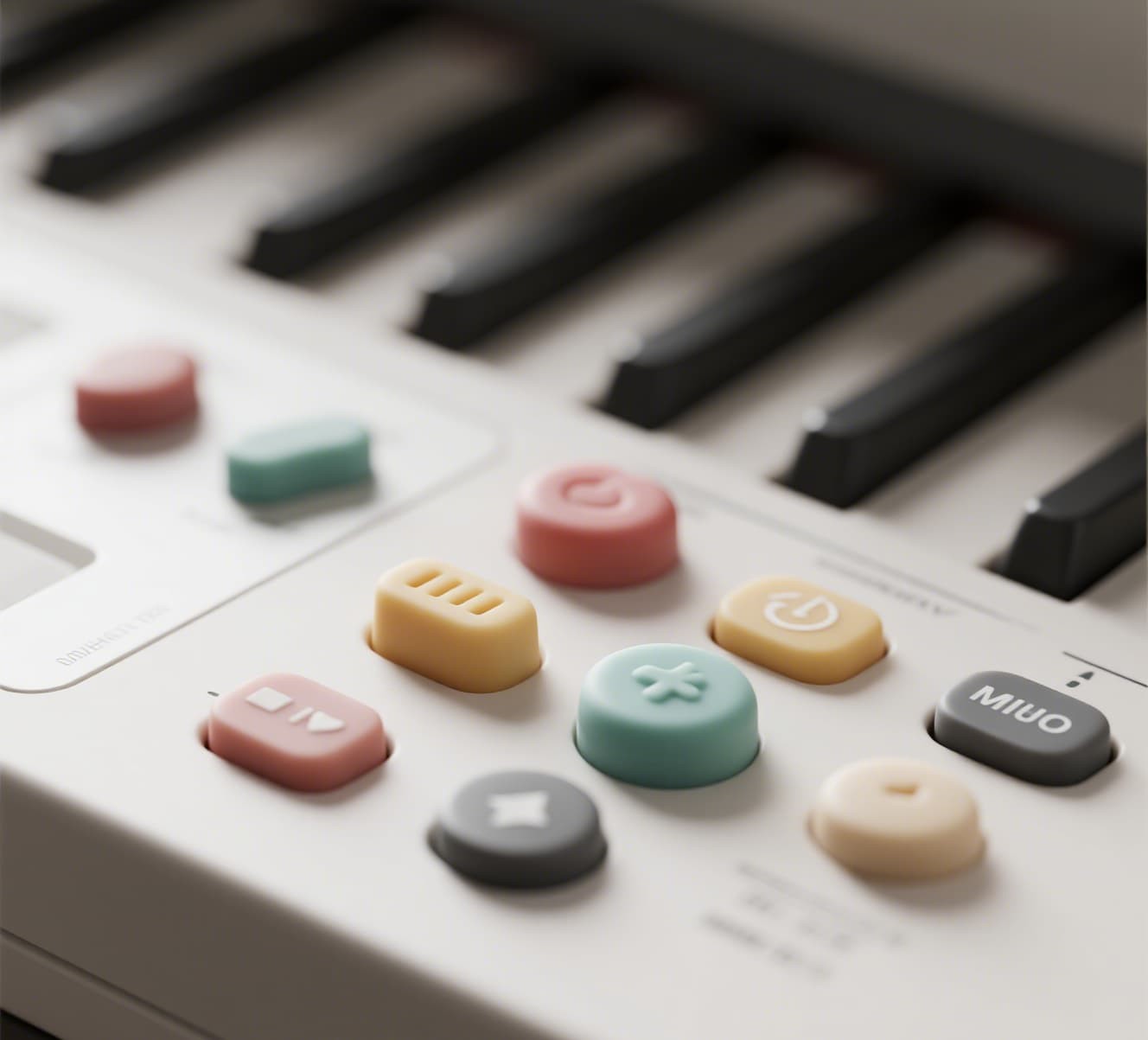
Silicone keypad odor comes from the cure chemistry, not from the polymer. Peroxide-cured silicone leaves decomposition residues behind, and those residues keep releasing volatiles long after the box is opened. The fix has three parts: an odorless curing agent that fully decomposes at processing temperature, a post-cure bake that drives off what remains, and a sealed-container check before the batch ships.
In practice the difference is visible on the drawing. A standard peroxide decomposes around 80–100 °C and leaves chlorinated aromatic by-products; an odorless grade decomposes at 130–160 °C and breaks down into tert-butanol and acetone, which are volatile and effectively odourless. Post-cure at 200 °C for 4–6 hours finishes the job.
Three sources of silicone keypad odor
Attributing a smell to "the material" is where most investigations stop, and it is also why the problem comes back after a supplier change.
Curing agent residue — the main source
If the peroxide is overloaded, under-decomposed, or of a low-decomposition-temperature type, unreacted compounds remain in the part and release pungent volatiles slowly. This is the smell that is strongest when a sealed bag or a closed enclosure is first opened.
Low-molecular-weight cyclosiloxanes
Unreacted cyclic oligomers (D₄, D₅, D₆) are present in the raw compound. They evaporate at elevated temperature and give a mild "silicone oil" note, which is different from the sharp peroxide smell and needs a different answer — a lower-volatile base, not a different catalyst.
Processing aids and release agents
Plasticisers, internal lubricants and external release sprays can emit odour on their own, particularly in a warm, enclosed device. A compound that is clean but a process that sprays release agent will still fail an odour check.
Odour is a formulation and process decision. Two keypads with identical geometry can differ entirely by which peroxide was used.
Ordinary versus odorless curing agent
| Property | Standard peroxide | Odorless grade |
|---|---|---|
| Decomposition temperature | 80–100 °C | 130–160 °C |
| Decomposition by-products | Chlorinated aromatics, pungent | tert-butanol and acetone, volatile and near-odourless |
| Residual risk | High — decomposition is often incomplete at process temperature | Low — the agent is fully decomposed inside the cure window |
| Relative compound cost | Baseline | Roughly an order of magnitude higher |
| Where it is used | Odour-insensitive, cost-driven parts | Automotive interiors, baby products, medical devices, premium appliances |
The cost difference is real, and it is the reason a quotation can look 20% cheaper with no visible change to the drawing. For an enclosed device used near a person, that saving is usually spent twice — once on the compound and again on the returns.
Post-cure: the step that finishes the odour work
Post-cure is a bake after moulding — typically 200 °C for 4 to 6 hours — and it does three things at once: it completes decomposition of residual curing agent, it drives off low-molecular-weight cyclosiloxanes, and it stabilises the mechanical properties of the part.
Skipping it is common when production is under schedule pressure, and it is the single most frequent reason a "low-odour" compound still smells. The smell is not in the compound at that point; it is in what the compound was not allowed to release.
Two process details matter. The bake has to happen with adequate airflow, or the volatiles simply re-deposit; and it has to happen before packing, not after, because a sealed bag traps everything the part would otherwise have given off.
Post-cure is a process step with a time and a temperature, not an optional finish. Cutting the bake shows up as odour in the customer's hands.
How to verify odour before a batch ships
Odour has a subjective reputation, but it can be checked reproducibly enough to be written into an acceptance record.
- Seal production samples in a clean container and hold them warm for a defined period, so volatiles concentrate the way they would inside a device or a retail bag.
- Open and assess immediately, with a small trained panel rather than one person; record intensity on a simple scale.
- Compare against a retained golden sample kept from an approved batch — the reference is what makes the result meaningful.
- Repeat after the post-cure bake to confirm the bake actually changed the result, which also proves it was run.
For medical and baby products, this check sits alongside biocompatibility documentation, because both depend on what is left in the part after cure.
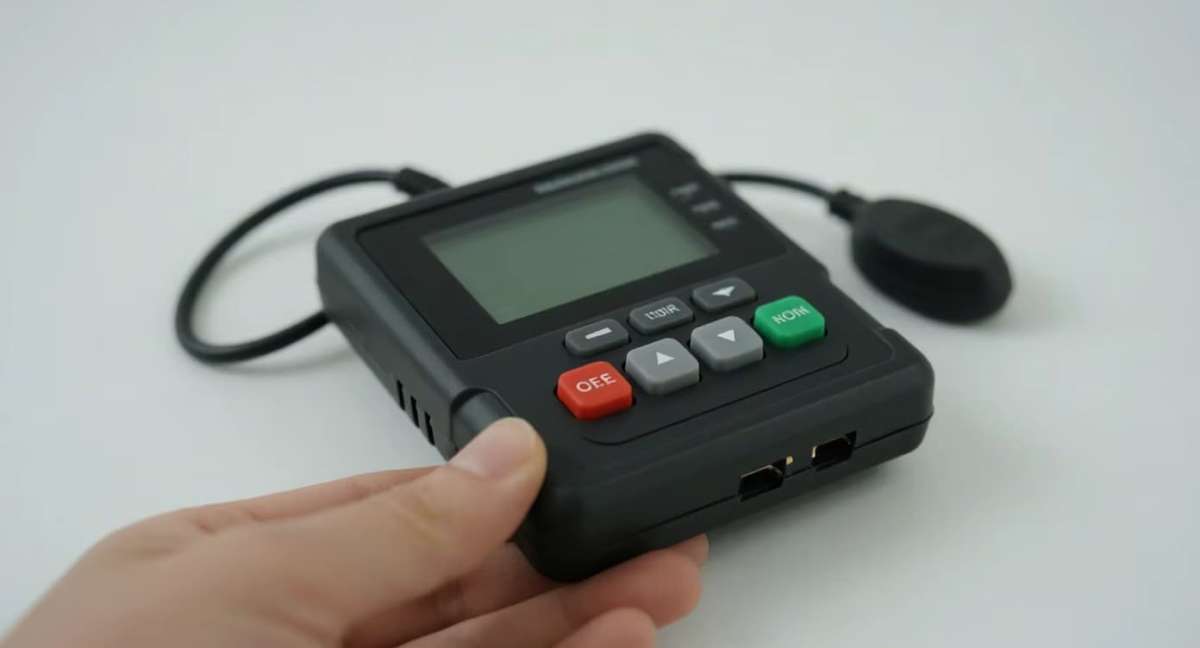
Material inspection and odour assessment belong in the same release record; both describe what remains in the cured part.
What to put on the purchase specification
Odour requirements fail when they are written as adjectives. Four clauses make them enforceable:
- Cure system named — peroxide type, or addition-cure if the application allows it.
- Post-cure time and temperature written as a process requirement, not left to the supplier's discretion.
- Odour acceptance described by method: sealed container, conditioning time, panel size, scale.
- Golden sample retained and signed by both parties, with a replacement interval.
Where the part sits in a sealed enclosure or near a user's face, add a volatile-condensation check as well — residue on a glass slide above the part is an early indicator of what will fog a lens or a display.
Questions about keypad odour
Does the smell disappear after a few days?
It drops but rarely disappears. Residual peroxide by-products continue to migrate from the bulk, so the smell returns whenever the device is warm or the enclosure is closed for a while. Airing a batch is not a fix.
Is platinum-cured silicone always odourless?
Addition-cure systems avoid peroxide residues, but they can still carry cyclosiloxanes and processing-aid odour. Platinum cure removes the main cause, not every cause.
Can post-cure be shortened to save cycle time?
It can be shortened, and the odour result changes with it. The bake is one of the few process steps where reducing time has a directly measurable effect on the delivered part, so it is also the first thing to check when a batch fails.
Why does one colour smell more than another?
Pigment loading changes how completely the peroxide decomposes locally, and some pigment carriers carry their own volatiles. In a multi-colour keypad, check each colour separately rather than the assembled panel.
Specify the cure system and the bake together
Tell us where the keypad is used — sealed enclosure, near-face device, automotive interior — and we will propose a cure system, a post-cure schedule and an odour acceptance method you can put in the purchase order.
Review custom silicone rubber keypads and the raw material certification process behind each batch.