Silicone Keypad Shrinkage Rate: Why 1.028 Matters and How to Avoid Mold Failure?
- Share
- publisher
- Suey
- Issue Time
- Jul 29,2026
Summary
Silicone keypad shrinks 2.8% post‑cure. Specify rate, adjust for material/color, and use trial molds. FromRubber ensures accurate compensation for flawless molds.

Misunderstanding this parameter will ruin your mold.
Mold shop: “We cut the cavity exactly according to your 3D drawing – no deviation.”
You: “Then why is it wrong?”
Mold shop: “Because you never specified the shrinkage rate – or you gave the wrong one.”
This conversation happens more often than you'd think. FromRubber’s engineering team hears it almost monthly. Many clients never seriously consider shrinkage until the samples arrive – and by then, the damage is done. In extreme cases, even rework can't save the mold, forcing a complete restart and writing off tens of thousands in tooling costs.
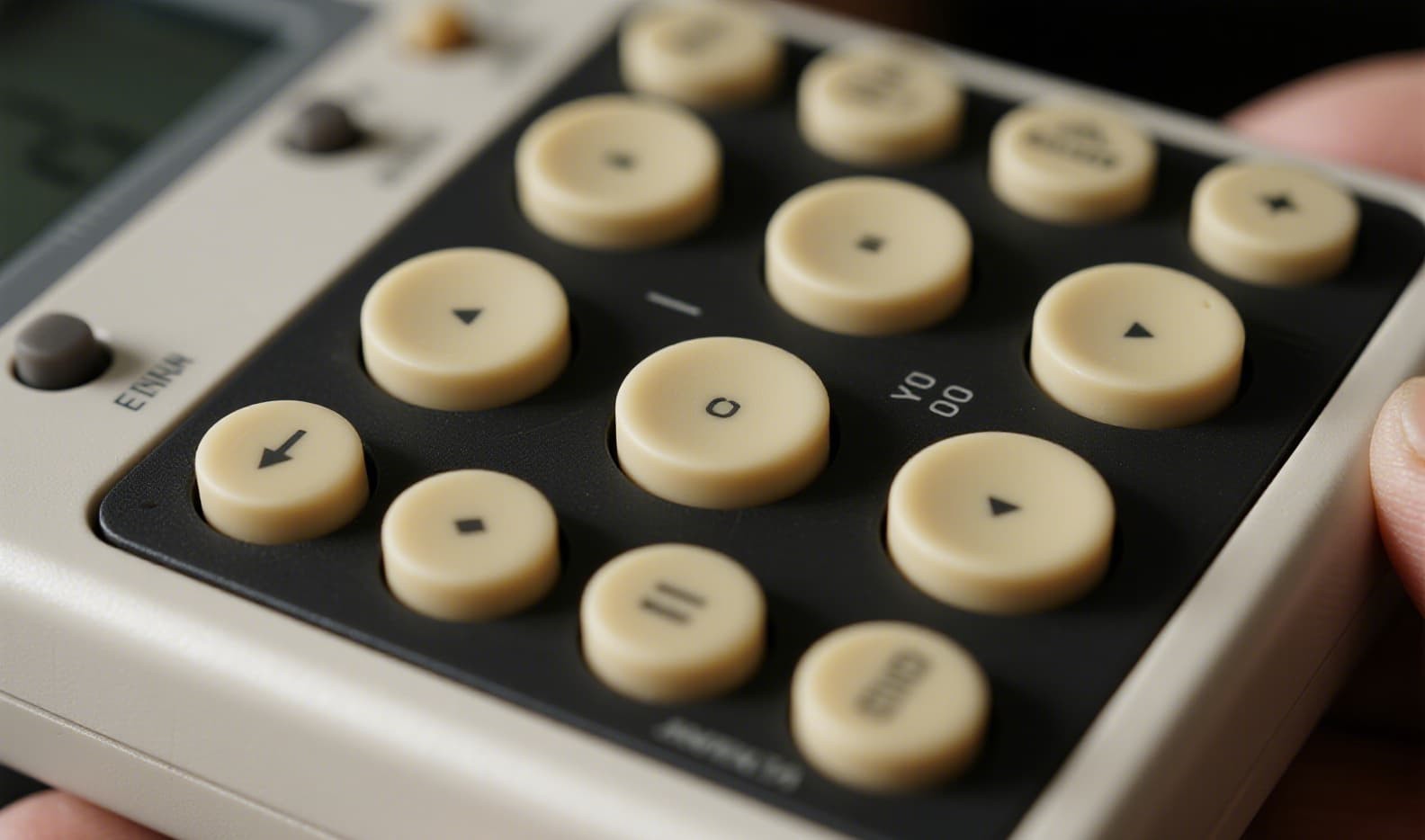
Silicone Keypad Technical Deep Dive
This is the most basic – and yet most commonly overlooked – error in silicone molding. After high‑temperature vulcanization (approx. 180°C), silicone contracts as it cools to room temperature. To compensate, the mold cavity must be machined larger than the final part. That scaling factor is the shrinkage rate.
According to FromRubber’s Silicone Keypad Custom Molding Best Practices, the typical shrinkage rate for silicone is 1.028 (i.e., 28‰, or 2.8%). This means a 100 mm product requires a 102.8 mm mold cavity.
But FromRubber’s production data reveals deeper complexities:
- Material brand variance: Different base polymers (e.g., ShinEtsu vs. Dow Corning) have distinct molecular structures, leading to shrinkage differences of 0.003–0.005 at the same hardness.
- Hardness effect: Softer compounds (e.g., 40 Shore A) contain more oil and typically shrink more than harder grades (70 Shore A).
- Color & masterbatch: Dark colors, especially black, contain higher carbon black content, which slows heat dissipation and increases shrinkage by 0.002–0.005 compared to light shades. Many clients overlook this when changing colors.
- Wall thickness: Thicker walls cool slower and shrink more. Thin‑wall parts (<1 mm) can be as low as 1.015, while thick parts (>3 mm) may reach 1.040.
FromRubber provides a customized Shrinkage Recommendation Sheet before tooling, factoring in your specific geometry, material grade, and color – locking down uncertainties early.
💡 The Hidden Trap: Directional Shrinkage
FromRubber also warns that silicone shrinkage is not isotropic. During injection, polymer chains orient along the flow direction, causing greater shrinkage in the flow direction than perpendicular to it. For long or asymmetric parts, ignoring this anisotropic behavior leads to warpage – even if the overall shrinkage rate is correct.
Real‑World Silicone Keypad Case Studies
Medical device keypad – Two locating posts with a 20 mm center distance, tolerance ±0.05 mm. Shrinkage rate not specified on the drawing. The mold shop used 1.030 by default.
Result: Sample posts measured 20.6 mm – out of tolerance. Unusable for PCB assembly. Forced welding and re‑CNC machining cost thousands and delayed the project by one week.
European automotive switch supplier – Sent the 3D CAD and material requirements to FromRubber’s DFM review team. We recommended 1.028 for ShinEtsu KE‑951 (50 Shore A, 1.8 mm wall) and adjusted to 1.030 due to the dark‑gray color.
Result: First‑shot samples passed all critical dimensions. Zero rework. The client saved over three weeks of trial‑and‑error time.
Actionable Solutions – The FromRubber Protocol
To avoid a “scrap‑the‑mold” disaster, follow this mandatory workflow:
- Get written confirmation – Specify the shrinkage rate clearly on the drawing and in the purchase order. If uncertain, ask your molder which compound they intend to use, and apply that material's recommended rate. FromRubber makes this a mandatory gate – no tooling starts without mutual written agreement.
- Use a trial mold for high‑precision parts – For tight tolerances (≤ ±0.1 mm), order a soft tool or sample mold first, measure the actual shrinkage, and correct the production mold accordingly. FromRubber offers a fast‑sample service – trial samples with full dimensional reports in just 7 days.
- Set realistic tolerances – Silicone is an elastomer; its dimensions are affected by temperature, humidity, and measurement force. Avoid over‑specifying (e.g., ±0.05 mm) – ±0.1 mm to ±0.2 mm is a practical range. For tighter needs, FromRubber can apply a post‑cure + precision grinding process, but expect added cost and lead time – notify us early.
- Re‑validate when changing materials or colors – A different brand or color means a different shrinkage rate. FromRubber’s material database covers real‑world measured rates for all major brands, hardness levels, and pigments – we provide instant cross‑reference.
- Three must‑have callouts on your 2D drawing – (a) Shrinkage rate (e.g., 1.028), (b) Reference material grade (e.g., ShinEtsu KE‑951), and (c) Tolerance range for each critical dimension.
The Bottom Line
The shrinkage rate – that seemingly insignificant “1.028” – is the very first gatekeeper of silicone keypad molding success. It is not a random number to guess; it is a precisely calculated value that depends on material brand, hardness, color, wall thickness, and even flow direction.
With years of deep‑rooted experience in silicone rubber molding and manufacturing, FromRubber maintains a comprehensive shrinkage database and a rigorous DFM review process. When you start your next silicone keypad project, let our engineering team engage at the design stage – we'll calculate the exact shrinkage, set realistic tolerances, and neutralize risks before any steel is cut.