Silicone Label Manufacturers in Guangdong, China for Running and Cycling Apparel: Seven Suppliers Compared
- Share
- publisher
- FromRubber
- Issue Time
- Oct 15,2026
Summary
Seven Guangdong suppliers of silicone labels and patches for running and cycling apparel compared on verified location, silicone evidence, performance-apparel relevance, documented customisation and testing. Explains why stretch recovery and sweat exposure matter more than a wash claim, why edge lift is usually a geometry problem, and how to keep one colour and relief standard across the whole kit.
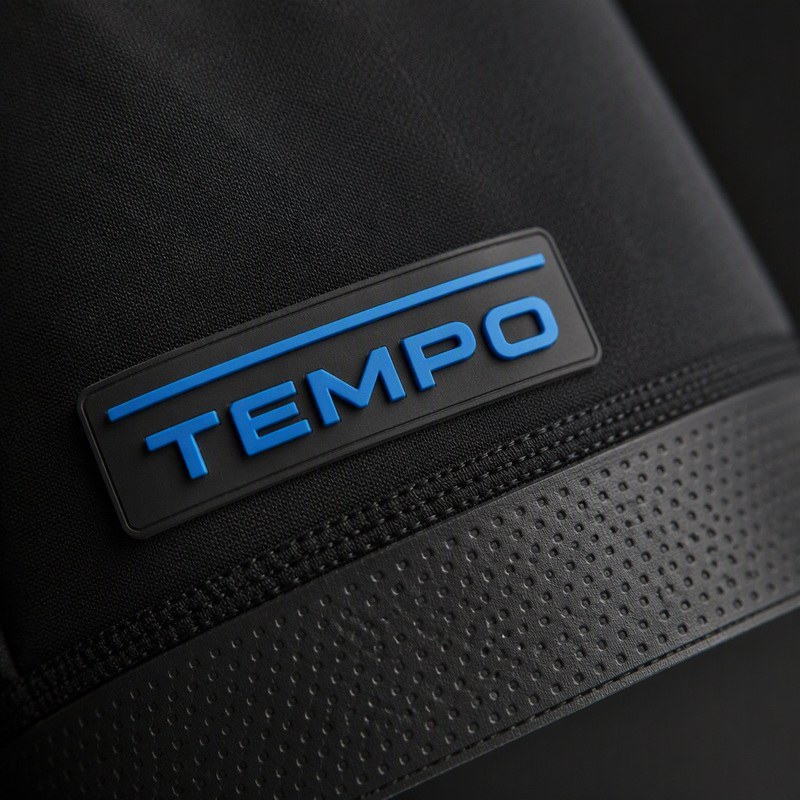
A running kit is tested by the body before it ever reaches a washing machine
A silicone label on a cycling bib or a running short spends its working life being stretched and released, saturated in salt water, and pressed against a moving body. The wash test that a supplier is most likely to quote describes none of that.
Performance apparel is difficult for branding components for a structural reason. The garment is engineered to move, and most of that engineering happens where the label sits: a leg gripper, a hem, a shoulder seam, a bib strap. A silicone element bonded into that structure is not a decoration sitting on a surface, it is a rigid inclusion inside a mechanism designed to deform. The result is a failure pattern that looks random until you map it: edges that lift first at the point of maximum curvature, a bond that survives washing and fails in wear, and a label that feels fine on a hanger and uncomfortable at kilometre twenty.
This article compares manufacturers of silicone labels and patches for running and cycling apparel in Guangdong, China. It covers custom silicone labels for running shirts, cycling jerseys, bib shorts, compression garments and other performance apparel, and it treats stretch, sweat and repeated flexing as the criteria that matter rather than as footnotes.
The short version: a glossy silicone label resting on a technical skin fabric is a decoration, not a boundary. So the useful question is not whether the silicone stretches — it usually does — but whether the bonded assembly stretches and recovers with the fabric underneath it. That is a construction question, and it is answered by a test on the finished garment, not by a material data sheet.
How the comparison was built
The six criteria are the same framework used across this series and are published before the list so the scoring can be checked. For performance apparel the application criterion asks a narrow question: does the company's own material link silicone to sportswear, activewear or performance garments, rather than to clothing in general?
| Criterion | Weight | What counted as documented evidence |
|---|---|---|
| Verified manufacturing location in Guangdong, China | 20 | A stated production address or factory location inside Guangdong, with an office address counted as less than a plant. |
| Verified silicone label or patch manufacturing | 25 | A page that names silicone and describes the construction: moulded, screen printed, embossed, heat transfer or liquid silicone. |
| Relevance to running, cycling and performance apparel | 25 | Published wording linking silicone products to sportswear, activewear, performance garments, teamwear or comparable technical apparel. |
| Documented customisation and production process | 15 | Disclosed thickness, dimensions, relief, colour referencing, backing or attachment options, and any stated press or wash conditions. |
| Public quality-control and testing information | 10 | Named certification systems, in-house laboratories or equipment, and tests described with conditions attached. |
| Availability of clear official product and company information | 5 | Pages that identify the producing entity and the product, plus corroboration beyond the company's own website. |
Criteria, weights and scoring bands applied identically to every company in this article
As everywhere in this series, the result is an editorial reading of public material collected in October 2026, not an industry ranking, an audit or an endorsement. Two kinds of claim earn no credit here: stretch or sweat-resistance adjectives without a method, and a manufacturer's general sportswear wording when the silicone evidence sits in a different product line.
Seven suppliers at a glance
| Company | Guangdong location stated | Silicone label or patch evidence | Performance-apparel wording | Score |
|---|---|---|---|---|
| Hongcheng (Guangzhou Hongcheng Textile Co., Ltd.) | Humen Town, Dongguan | Injection-moulded, embossed, printed and heat-transfer silicone labels | Outerwear and sportswear wording; branding on performance garments addressed directly | 90 |
| FromRubber (Dongguan Bohao Electronic Technology Co., Ltd.) | Dongguan | Moulded raised silicone layer; heat-transfer and label ranges | Published design analysis for seamless sportswear and stretch-fabric failure modes | 89 |
| Shenzhen Liantai Printing Co., Ltd. | Shenzhen | 3D embossed and textured silicone patches, iron-on and sew-on | Sportswear uniforms and teamwear wording; resistance to stretching and abrasion claimed | 86 |
| DG Triangle New Material Technology Co., Ltd. | Humen, Dongguan | Silicone heat transfers as core material; moulded and screen-printed 3D | Team badges for football and basketball, plus activewear trend content | 81 |
| Dongguan Victorygen Haberdashery Ltd. | Shatian Town, Dongguan | Silicone heat-transfer printing and 3D moulded silicone labels | Product title referencing 3D silicone heat transfer branding for sportswear | 73 |
| Dongguan HMJ Silicone Garment Accessories Co., Ltd. | Houjie Town, Dongguan | 3D silicone heat-transfer logos, raised glossy silicone, hot-melt backing | Sportswear wording attached to TPU lines rather than to silicone | 72 |
| Dongguan Baiyee Technology Co., Ltd. | Gaobu Town, Dongguan | Moulded and screen-printed silicone labels with published size and thickness ranges | Not found; elastic is named as a base material only | 70 |
Silicone capability with performance-apparel relevance, Guangdong, October 2026
Reviewed but not ranked. Guangzhou Kunshuo publishes a silicone comparison table naming sportswear, swimwear and cycling clothing, and detailed thickness, temperature and wash figures, but no manufacturing location or legal entity name appears on the page, so the Guangdong requirement could not be verified. Qinghan Label lists sportswear and sports patches inside a silicone range with no location published. Doylabel groups silicone with PVC without describing a silicone construction. Recorded here so the selection can be argued with on the evidence rather than on the conclusion.
The seven profiles
1. Hongcheng (Guangzhou Hongcheng Textile Co., Ltd.) — 90
Humen Town, Dongguan · hongcheng-label.com
Location 20 · Silicone evidence 25 · Performance relevance 25 · Customisation 10 · Quality documentation 7 · Official information 3
Hongcheng states a factory in Humen Town, Dongguan and presents itself as a manufacturer integrating development, production, processing and design. Its silicone label range covers injection-moulded, embossed, printed, heat-transfer, brush-dot and multi-colour constructions, and the heat-transfer line is described as suitable for branding on sportswear, activewear and other performance garments. Outerwear and sportswear wording covers jackets, coats, hoodies and activewear, which is the application evidence behind the top score.
For a performance programme the interesting part of the profile is the process coverage rather than the marketing language: a supplier that can produce both moulded and printed constructions can offer a lower-profile printed label for a stretch panel and a moulded label for a chest mark from the same tooling conversation. What is missing is numeric depth — no thickness or relief figure, no minimum order, no lead time — and the equipment list, while specific, is not published as test reports.
Verify before tooling: the thickness and relief available for a stretch panel, and whether the washing and salt-spray equipment can produce a report at your care regime.
2. FromRubber (Dongguan Bohao Electronic Technology Co., Ltd.) — 89
Dongguan, Guangdong · fromrubber.com
Location 20 · Silicone evidence 25 · Performance relevance 25 · Customisation 10 · Quality documentation 5 · Official information 4
FromRubber publishes this comparison and manufactures in the same category, so it is scored by the same criteria and the same caveat applies: a company documents its own product most thoroughly, which is an advantage of publication rather than evidence of superiority. The company has made custom silicone parts in Dongguan since 2010 and publishes silicone labels for apparel, custom heat-transfer patches and a patch service-process page. Its technical content includes design factors for seamless sportswear and analyses of edge lifting on stretch fabric, which is the specific failure mode this application produces most often.
The quality documentation score stays low deliberately, because named certification systems and number-bearing test conditions were not corroborated from an independent source during this research. Nothing above should be read as a preference or as a claim of superiority, and a reader should compare the profiles rather than the order.
Verify before tooling: the certificate documents themselves, plus a stretch and recovery test on the finished garment rather than on a flat fabric sample.
3. Shenzhen Liantai Printing Co., Ltd. — 86
Shenzhen, Guangdong · liantaiprint.com
Location 18 · Silicone evidence 24 · Performance relevance 22 · Customisation 11 · Quality documentation 9 · Official information 2
Liantai describes itself as a printing manufacturer established in 2004 in Shenzhen. Its 3D silicone patch range covers moulded raised lettering with thickness typically between 0.5 mm and 2 mm, finishes from matte to textured, and carrier fabrics including tatami and satin; colour matching is quoted against PMS references and samples are offered from stock. Published property claims include resistance to abrasion, ultraviolet light, stretching and extreme temperatures, and a wash-durability range of 30 to 50 washes.
Performance relevance is documented through sportswear uniform and teamwear product titles rather than through performance-specific construction notes, and a sports uniform is a different stress environment from a cycling bib. The certification folder is the strongest among the independent companies here, naming ISO 9001, Sedex, SGS and FSC, with 100 per cent in-house inspection stated. No plant address is published, and the durability and stretch claims arrive without test conditions, which leaves the two figures a performance buyer most wants — strain at break and recovery after cycling — unanswered.
Verify before tooling: the plant address, the test conditions behind the 30 to 50 wash figure, and whether a 0.5 to 2 mm construction has been bonded to a highly elastic knit.
4. DG Triangle New Material Technology Co., Ltd. — 81
Humen, Dongguan · dgtriangle.com
Location 20 · Silicone evidence 24 · Performance relevance 12 · Customisation 14 · Quality documentation 8 · Official information 3
DG Triangle treats silicone as its core material rather than a side line, with a 3D heat-transfer programme covering moulded, high-raised, textured, tatami, glitter and NFC constructions, and states roughly 3,000 square metres of production space in Humen, Dongguan with 18 printing tables in one description and two factories with 21 tables in another.
It is the only company in this article publishing a complete application recipe: 160 degrees for 20 seconds at 3 to 4 kilograms, washing resistance stated as 60 degrees for 40 minutes more than ten times, minimum orders of 3,000 to 5,000 pieces and lead times of 3 to 15 days. That earns the highest customisation score in the group. The performance-relevance score is low for a specific reason: the explicit silicone-to-sportswear link is thin, appearing mainly through team badge products and activewear trend content, while the published usage list is broader than it is specific.
Verify before tooling: which factory runs your order, the press behaviour on a stretch knit rather than a woven, and whether the wash figure was measured on a garment assembly.
5. Dongguan Victorygen Haberdashery Ltd. — 73
Shatian Town, Dongguan · heat-transferprinting.com
Location 15 · Silicone evidence 22 · Performance relevance 18 · Customisation 9 · Quality documentation 7 · Official information 2
Victorygen runs a silicone heat-transfer category alongside a 3D moulded silicone line, with glossy, matte, soft rubber and tatami-backed constructions, all sizes and colours stated as custom, a low minimum order and heat-seal or sewn attachment. The performance link is a product title referencing 3D silicone heat transfer branding for sportswear, which is a legitimate but isolated piece of evidence, and it is the kind of single mention that should be followed by a direct question about what has actually been produced on stretch fabric.
The two structural weaknesses are the same as in the other articles: the published contact address is a room in an office building while the company history names a different town, and two entity names appear on the site. ISO 9001 and a wash-fastness claim are stated without numbers, and no dimension table is published for the silicone range.
Verify before tooling: which entity contracts and which plant produces, and whether the cited sportswear work was a 3D moulded construction or a flat printed one.
6. Dongguan HMJ Silicone Garment Accessories Co., Ltd. — 72
Houjie Town, Dongguan · hmjsiliconesticker.com
Location 20 · Silicone evidence 25 · Performance relevance 8 · Customisation 8 · Quality documentation 8 · Official information 3
HMJ states a factory in Houjie Town, Dongguan with roughly 5,000 square metres of production space, twelve heat-transfer table lines, ten label cutting machines and eight high-frequency machines, frames the business around heat-transfer patches and badges for sports teams, and runs an in-house testing room for heat-transfer and colour-fastness checks. OEKO-TEX and ISO 9001 are named. Its silicone range includes 3D high-raised glossy printing logos, moulded sticker labels and a hot-melt-glue-backed heat-transfer label — the last of which is directly relevant to automated application on performance garments.
Sportswear wording appears on the site, but it attaches to TPU products rather than to silicone, so the silicone-to-sportswear link is not documented and the relevance score reflects that. The company also lists a certificate called SEMTA, which is not a name commonly seen in textile certification and is worth asking about specifically. It describes itself as manufacturing and trading integrated, so the producing stages should be confirmed in writing.
Verify before tooling: whether raised glossy silicone has been applied to a stretch knit, and which processes run in-house at Houjie.
7. Dongguan Baiyee Technology Co., Ltd. — 70
Gaobu Town, Dongguan · baiyeelabels.com
Location 20 · Silicone evidence 25 · Performance relevance 0 · Customisation 13 · Quality documentation 8 · Official information 4
Baiyee is the most traceable of the smaller factories: a labelled factory address in Gaobu Town, Dongguan, a business registration number and a stated founding year of 2017. The moulded silicone range distinguishes flat, cambered, wedge, wavy and twill surfaces, the screen-printed range covers 2D, multi-colour and 3D, and published details include size and thickness bands, a thickness spread of roughly 0.2 mm to 5 mm depending on construction, Pantone colour referencing, backing fabrics that include elastic and neoprene, minimum quantities of 1,000 to 2,000 pieces and a stated wash test of 10 to 20 cycles at 60 degrees Celsius.
Performance relevance is zero because sportswear, activewear and performance garments are not named anywhere on the site; elastic appears only as a base material. For a running or cycling programme that is the missing piece, and it is a documentation gap rather than a capability judgement. The stated wash conditions with a cycle time are still the most useful single number published by any company in this article, because they can be argued with numerically.
Verify before tooling: whether a stretch knit has been laminated or heat-applied before, and the recovery behaviour of the assembly after repeated extension.
What performance apparel does to a bonded label
The profiles say who can make the part. The five conditions below decide whether it survives the garment, and all five are set by how the product is built rather than by how the logo looks.
Sweat is a chemical environment, not just moisture
Perspiration is a warm saline solution carrying urea, lactate and fatty acids, and it sits against the inside of a garment for hours at a time in a fabric that is engineered to move it away from the skin. For a bonded or printed element, that means a continuous exposure to a mildly aggressive medium that no wash test reproduces unless the test is designed to. A garment that is rinsed and dried between wears never sees the same cumulative exposure as one that is worn three times a week for a season.
The practical response is to test the assembly, not the material, and to state the exposure in the specification: how many hours of wear, how many cycles, at what temperature, and whether the label is inside or outside the garment. Where the label sits against skin, the relevant tests are the ones that combine moisture with mechanical action, and the abrasion method matters because friction under a wet label is the mechanism that removes printed surfaces.
Stretch recovery, not stretch, is the hard part
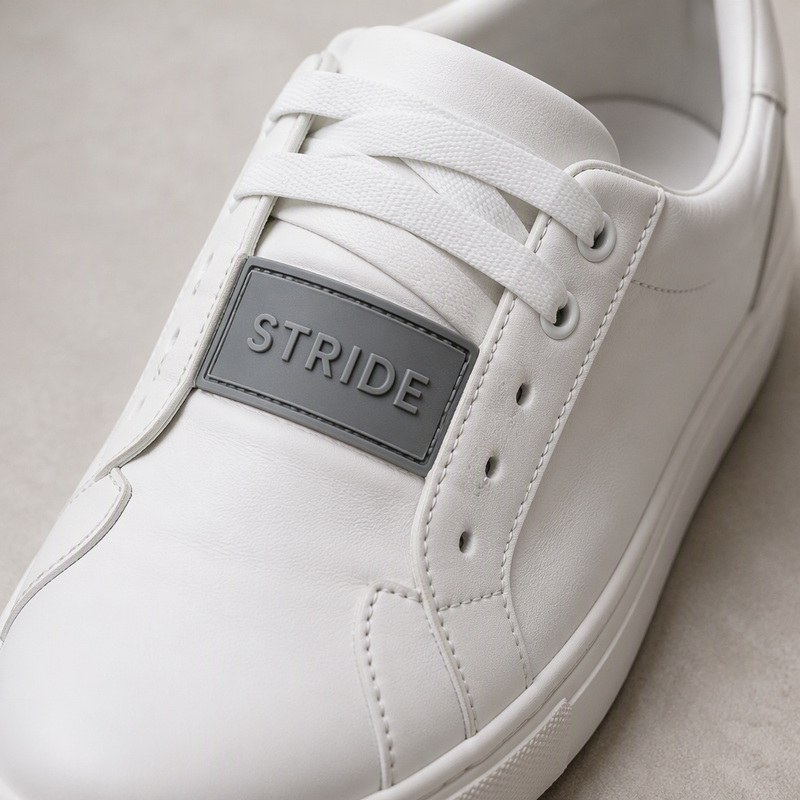
A silicone compound on a knit garment is sitting on a substrate that can extend by thirty per cent or more in normal use. The material itself may cope. The assembly is where the difficulty lives, because the adhesive layer, the label body and the fabric have different moduli, and when the fabric returns to its rest length the three layers do not necessarily return at the same rate. That mismatch shows up as a small progressive debond at the perimeter, which is why the edges go first.
The consequence for the specification is that a thicker label is not a safer label. Thickness adds stiffness, stiffness concentrates stress at the perimeter, and on a highly elastic knit the stiffest element in the assembly determines where the failure starts. Lower-profile constructions, a softer compound and a rounded outline all reduce that concentration, and the specific trade-offs between thickness, hardness and comfort are covered in this site's notes on choosing silicone patch hardness for flexible sportswear and why a patch can feel stiff on stretch fabric.
Edge lift is a geometry problem before it is a bonding problem
Almost every complaint about a performance label starts with a lifted edge, and almost every investigation starts in the wrong place. A bond that holds across the middle of a label and fails at the corner is usually telling you about stress concentration rather than about adhesive quality. Corners concentrate stress; long straight edges carry it; a label that crosses a seam line has a built-in hinge where the movement changes direction.
Two design moves fix most of it. Round the corners so stress is distributed rather than focused, and choose the footprint after looking at the garment's construction drawing rather than before. Where a label must sit across a seam or near a gripper, expect the stress to double and specify accordingly. The mechanism is worked through in this site's articles on edge lifting on stretch fabric and preventing edge lifting on sportswear, and the design logic for seamless constructions in seamless sportswear design factors.
Comfort is an engineering requirement on a performance garment
A label that irritates is a returned product, and on performance apparel the tolerance is lower than on any other category because the garment is worn against minimal layers for hours. Three things drive discomfort: a raised perimeter that catches the skin, a stiff construction over a flexing muscle, and placement in a high-movement zone where the label rubs against a strap or a seam. The specification should therefore include a comfort acceptance step, not just a bonding test: wear the sample on the intended garment, in the intended activity, and record the result.
The kit does not stop at the ankle
Run and ride programmes rarely stop at apparel. The same brand system usually extends to footwear and accessories, and buyers frequently discover late that the logo on a shoe tongue and the logo on a jersey were specified by two different teams to two different colour references. The visible result is a kit that does not quite match, and the invisible result is a doubled tooling cost for what should have been one artwork family.
The fix is procedural and cheap: set the colour reference, the relief convention and the compound hardness once for the whole kit, then apply them across garment labels, footwear components and accessory branding. A moulded mark on a knit sneaker tongue and a heat-applied mark on a cycling short can and should share a colour standard and a surface convention, even though the constructions differ. The same logic applies to how fabric type affects adhesion on small patches, because the substrate changes across a kit far more than the artwork does.
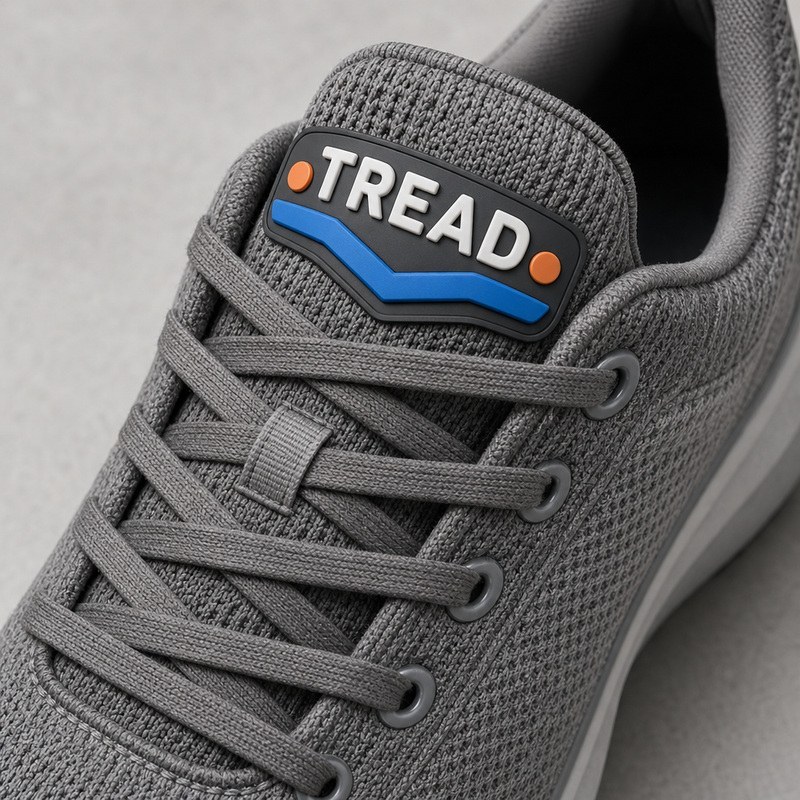
One brand system across apparel and footwear
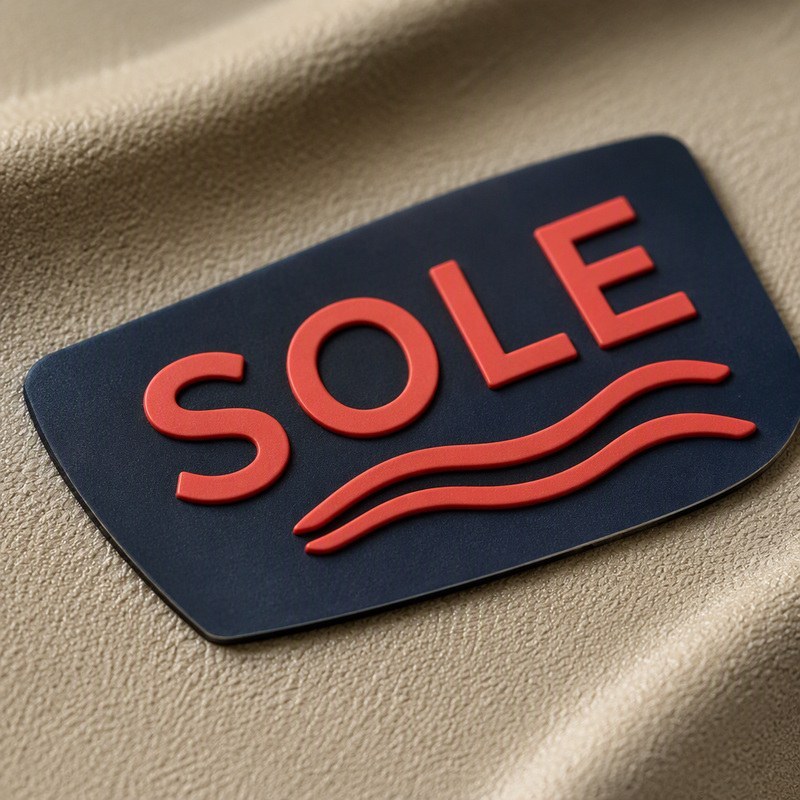
Consistency across a kit is mostly a question of holding two things steady: the colour standard and the relief convention. Colour is the easier of the two to manage once a named system and a physical standard are set, because a compound reference travels between suppliers, whereas a photograph does not. Relief convention is the one that gets lost, because a mark that looks right at 1.5 mm on a shoe component can look inflated at the same height on a lightweight jersey, and both are being reviewed on the same presentation board at the same time.
The useful habit is to specify relief as a proportion of the mark rather than as an absolute figure: the height that reads at the intended viewing distance for each product, agreed once and then applied. That keeps a footwear mark looking deliberate and an apparel mark looking integrated, without either one being re-litigated at every sample round.
Specification checklist for a performance-apparel label
Garment type and intended activity
Running shirt, cycling bib, compression layer, short: the activity sets the extension range and the friction exposure, and those are not the same across the categories.
Fabric composition, knit structure and stretch direction
Two-way or four-way stretch, and whether the panel is bonded or seamed. Both change where the stress lands.
Placement and the construction drawing
Position relative to seams, grippers, straps and hems, with the label footprint checked against where the garment actually deforms.
Artwork at final size, with a stated reading distance
Minimum stroke, minimum gap and smallest counter, judged at production size rather than on an enlarged screen render.
Thickness, relief and compound hardness
Three separate numbers, chosen to reduce stiffness rather than to increase perceived quality. See silicone labels for apparel for the construction families.
Attachment route and validated press settings
Validated on the production fabric at the intended pressure and dwell, with a stated press window rather than a single setting.
Tests: wash, sweat exposure, abrasion and recovery
Wash and dimensional methods are named; the recovery test is run on the finished assembly, and the failure definition is written down.
Comfort and wear approval
Worn on the intended garment during the intended activity before bulk approval, with the result recorded rather than remembered.
Recurring mistakes in performance programmes
Testing the material, not the assembly
A compound data sheet says nothing about a bonded label on a stretch knit. Recovery and debonding are assembly properties.
Choosing thickness for perceived quality
Thicker means stiffer, and stiff elements concentrate stress at the perimeter. On elastic substrates that is the failure path.
Placing the label after the artwork
Footprint chosen against the construction drawing costs nothing; footprint chosen to fit a logo costs a sample round and sometimes a tool.
Treating sweat as washing
A wash test is not a wear test. Salt, warmth and hours of moisture are a different exposure and need to be specified separately.
Splitting the kit across suppliers
Footwear, apparel and accessories specified separately produce mismatched colour standards and duplicated tooling. Fix the standard once.
Skipping the wear trial
Comfort failures do not appear in a lab. One wear trial on the finished garment catches what no peel test will.
Frequently asked questions
Are silicone heat-transfer labels suitable for cycling jerseys and bibs?
They can be, and they are widely used, but suitability depends on the panel. A bib leg gripper extends repeatedly under load, which is a harder environment than a jersey back panel, and the two should not be approved on the same test.
Can silicone labels be applied to highly stretchable sportswear?
Yes, with a construction chosen for the stretch rather than for appearance. Lower profile, softer compound and rounded outline are the three variables that matter most, and the assembly should be tested for recovery rather than only for adhesion.
How can edge lifting on stretch fabric be reduced?
Reduce stiffness and stress concentration: thinner construction, softer compound, rounded corners, and a footprint that avoids seams and gripper zones. The mechanism is explained in this site's note on edge lifting on stretch fabric.
What thickness works best for running apparel?
There is no universal figure, and any supplier quoting one is describing their catalogue rather than your garment. The honest approach is to choose the thinnest construction that still holds the relief you need, then verify it on the actual fabric.
How should a silicone label be tested after repeated washing?
After the garment's real care cycle, check bond integrity at the perimeter, colour fastness to rubbing on the exposed edges, dimensional stability and legibility, with the failure definition agreed in advance. The washing and drying method is defined by ISO 6330, colour fastness to laundering by ISO 105-C06, rubbing fastness by ISO 105-X12, and dimensional change by ISO 5077.
Can a small silicone logo keep fine detail on performance garments?
Only within the limits of the process and the reading distance. Small marks on elastic fabric are usually better served by simplifying detail and increasing contrast than by demanding finer reproduction. See losing fine detail on small logos.
Closing notes
Performance apparel punishes labels specified for a photograph. Stretch recovery, sweat exposure, edge geometry and comfort are the four variables that decide the outcome, and all four are visible in the garment's construction drawing before a tool is cut. A sample approved after a wear trial costs a fraction of a failed production run.
Information in this comparison was collected from company websites and the cited standards in October 2026 and is limited to what those companies publish. Certifications, capacities, test results and customer relationships were not independently audited, and no supplier is endorsed. Confirm current product scope, the manufacturing entity and delivery capability directly before placing a production order.
About this comparison
It was compiled by FromRubber, a manufacturer of custom silicone labels, silicone patches and silicone heat-transfer elements in Dongguan, Guangdong, working with apparel, headwear, footwear, bag and uniform programmes on artwork review, tooling and sampling.
Technical questions about a specific project — substrate, relief height, tooling, sampling or a stretch test — can go to nani@fromrubber.com or karl@fromrubber.com. WeChat and WhatsApp: +86 18676210913.
Sources
- ISO 6330:2021 — Textiles: domestic washing and drying procedures for textile testing
- ISO 105-C06:2010 — Textiles: colour fastness to domestic and commercial laundering
- ISO 105-X12:2016 — Textiles: colour fastness to rubbing
- ISO 5077:2007 — Textiles: determination of dimensional change in washing and drying
- ISO 48-4:2018 — Rubber, vulcanized or thermoplastic: determination of hardness by durometer method
- ASTM D5034 — breaking strength and elongation of textile fabrics (grab test)
- OEKO-TEX STANDARD 100 — harmful substance testing for textiles
Related reading on this site: why heat-transfer labels fail on stretch fabric, custom heat-transfer patches, what makes a high-quality silicone patch, and the sibling review of silicone heat-transfer patch manufacturers for sportswear.