Silicone Membrane Switches vs. PVC: Material Selection, Process Options, and Long-Term Performance for Instrument Panels
- Share
- publisher
- Suey
- Issue Time
- Aug 20,2026
Summary
Silicone membrane switches outperform PVC in thermal cycling and chemical resistance, eliminating curling and fading. Two options: screen-printed with PU coating or overmolded multi-color solid silicone legends. Overmolded offers permanent legends and premium tactile feel, reducing long-term costs despite higher tooling. FromRubber provides custom solutions for industrial and medical OEMs.
Engineering Insight
1. The PVC Curling Problem in Instrumentation
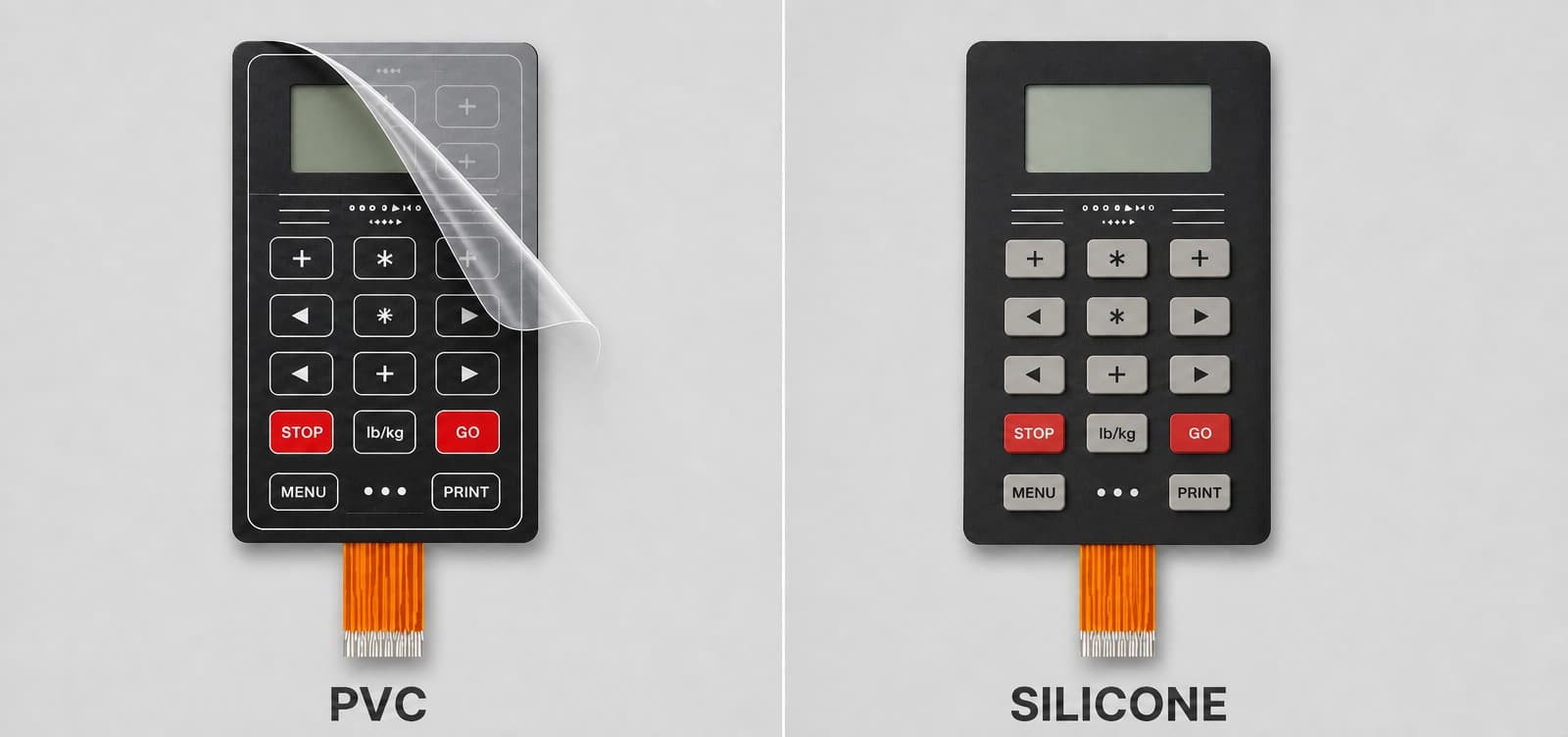
Membrane switches are critical human-machine interfaces for industrial instruments, medical devices, and test equipment. Among the most common failures observed in field‑returned units is the curling and peeling of PVC overlay films. This occurs because PVC is a thermoplastic film laminated onto an adhesive layer and a spacer. Under cyclic temperature changes (e.g., 0 °C to 50 °C in unregulated environments), the differential thermal expansion between the PVC film, the adhesive, and the underlying polyester circuit layer creates shear stresses. Over 500 to 1,000 thermal cycles, the adhesive bond weakens, and the film edge lifts. Once lifted, the ingress protection (typically IP54) is lost, moisture and dust enter the dome contact area, and switch actuation becomes erratic or fails entirely.
This mode of failure is well documented in reliability engineering for HMI components. The root cause is not user abuse but material incompatibility in laminated structures. Replacing PVC with a homogeneous elastomer panel—specifically silicone rubber—eliminates the laminated interface and thus the primary failure mechanism. However, silicone itself offers multiple manufacturing routes, each with distinct trade‑offs in durability, aesthetics, and cost.
Figure 1: Accelerated thermal cycling results – silicone panel shows no edge curling after 1000 cycles.
2. Technical Comparison: Silicone vs. PVC for Membrane Switch Panels
To understand the advantages of silicone, a side‑by‑side comparison of key engineering properties is necessary:
| Property | PVC (Flexible Film) | Silicone Rubber (Molded) |
|---|---|---|
| Continuous service temperature | –15 °C to +60 °C | –30 °C to +180 °C |
| Thermal expansion coefficient (CTE) | 70–100 ppm/°C | 200–300 ppm/°C (matched with single‑material construction) |
| Chemical resistance to oils/solvents | Poor (swells and plasticizer migration) | Excellent (no plasticizers, inert) |
| UV resistance | Moderate (yellowing and embrittlement) | Excellent (no degradation up to 5,000 hours QUV) |
| Abrasion resistance (Taber CS‑10) | 50–100 cycles (film scratches) | 300–500 cycles (uncoated), >1,000 with PU coating |
| Tactile force consistency | Degrades with film stretching | Consistent over 10⁶ actuations |
| Ingress protection (with gasket) | IP54 typical | IP67 achievable |
Silicone’s inherent chemical inertness comes from its siloxane backbone, which resists oxidation and attack by aliphatic hydrocarbons, mild acids, and bases. PVC, in contrast, relies on plasticizers (phthalates) for flexibility; these plasticizers migrate over time, causing the film to stiffen, shrink, and curl. Moreover, silicone can be molded with integral compression ribs that seal against the instrument housing without additional gaskets, a feature impossible with flat PVC laminates.
3. Two Manufacturing Approaches for Silicone Membrane Switches
Within silicone panels, two primary manufacturing methods are used to create legends (characters, symbols, logos). Each method has distinct characteristics in terms of process, longevity, and visual outcome.
3.1 Screen‑Printed Legends with PU Topcoat
Process: The silicone panel is first molded (compression or injection). Then, symbols are screen‑printed onto the surface using silicone‑compatible inks. After printing, a clear polyurethane (PU) coating is spray‑applied and cured at moderate temperature (80 °C for 2 hours). The PU layer is typically 15–25 µm thick.
Performance data: With PU coating, the printed legends survive 500–800 cycles of RCA abrasion (per ASTM F2357). In oil‑immersion tests (e.g., hydraulic oil at 60 °C for 72 hours), the PU film remains intact, but the ink underneath may gradually discolor due to solvent penetration through microscopic pinholes in the coating. Real‑world field data from industrial control panels show that screen‑printed legends typically maintain acceptable readability for 3–5 years under regular cleaning with mild detergents, but fade significantly when exposed to cutting fluids or solvent‑based cleaners.
Advantages: Lower tooling cost, fast turnaround for design changes, and availability from many suppliers.
Limitations: Ink is always a separate layer; even with PU, it is not immune to long‑term chemical attack. The surface feel is smooth and glossy (due to PU), losing the natural silicone texture.
3.2 Overmolded (Two‑Shot) Multi‑Color Silicone Legends
Process: This is a two‑step injection molding process using liquid silicone rubber (LSR). In the first shot, the base panel (color A) is formed. In the second shot, a different color (color B) of LSR is injected into cavities that define the characters, bonding chemically to the base during vulcanization. The result is a single, monolithic part with no interface between the legend and the panel.
Performance data: Because the legends are solid silicone, there is no ink to fade. Abrasion testing shows no legend degradation after 2,000 cycles (the test is stopped because the base rubber wears, but the legend remains legible). Oil immersion for 168 hours at 80 °C causes no color change or swelling. The tactile feel is uniform—the characters have the same soft, slightly tacky silicone touch as the surrounding area, which many users perceive as more premium. Backlighting can be enhanced by using translucent silicone for the second shot, achieving uniform light distribution.
Advantages: Permanent legends, unlimited color combinations (including gradients with multi‑shot), excellent chemical resistance, and a unified tactile experience.
Limitations: Higher tooling cost (complex molds with slide or rotary systems), longer lead time for prototyping, and fewer suppliers with the required expertise.
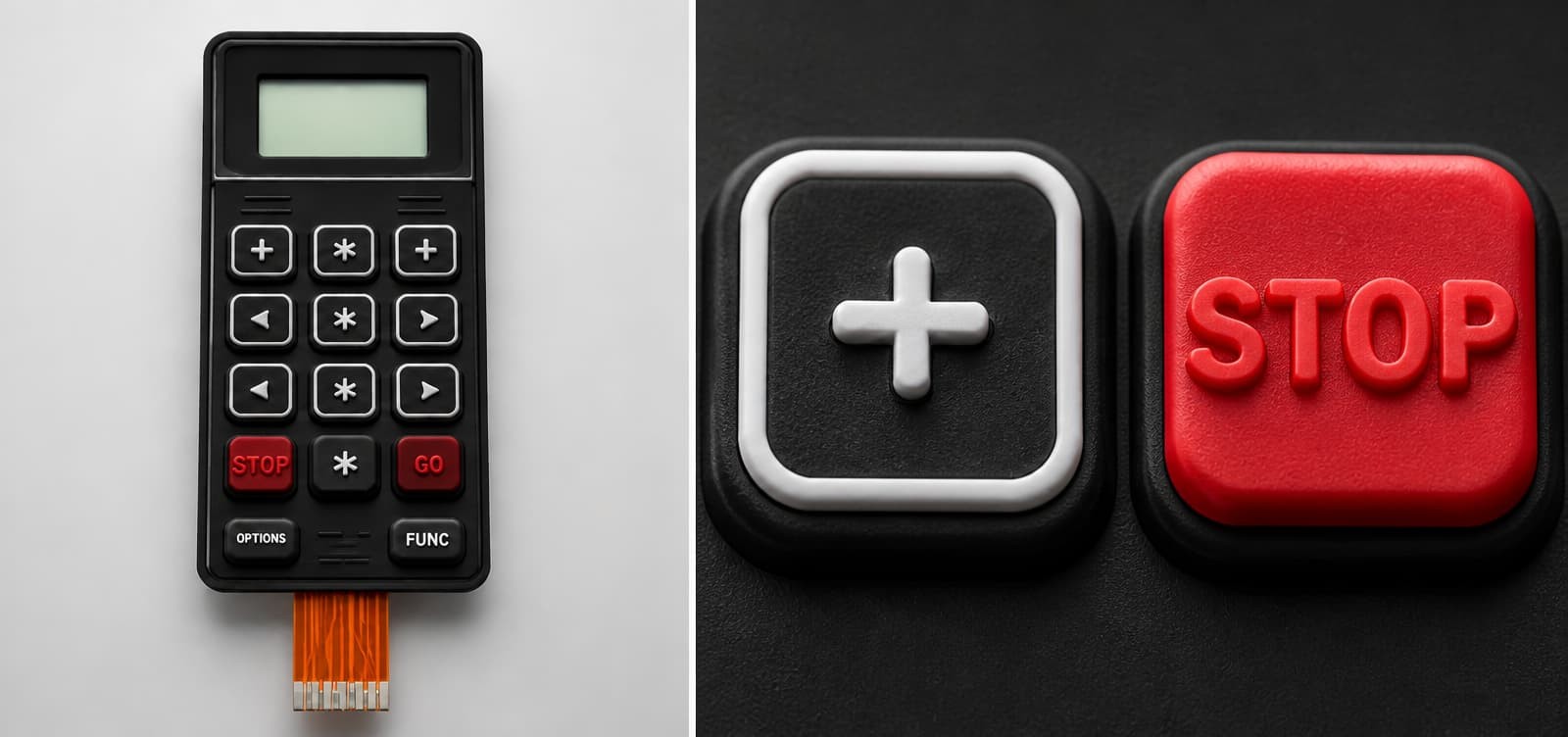 Figure 2: Overmolded silicone legends – solid silicone characters, no ink, uniform texture.
4. Case Study: Transitioning from PVC to Silicone – A Real‑World Example
A mid‑sized manufacturer of portable gas analyzers approached us with a recurring warranty issue. Their existing panel used PVC film with screen‑printed legends and a hard polyester overlay. After 12–18 months of field use in petrochemical plants, three problems emerged:
- The PVC film curled at the edges (reported by 22% of units returned).
- The printed legends faded significantly, making the buttons illegible (15% of returns).
- The ingress of humidity caused dome contact oxidation, leading to intermittent key failures (8% of returns).
The manufacturer initially considered switching to screen‑printed silicone with PU coating, assuming this would solve the curling problem. We provided sample panels for a 3‑month accelerated aging test (cycling 0 °C to 70 °C, 500 cycles, with daily wiping using a 10% isopropanol solution). The silicone panel with PU showed no curling and the coating remained intact, but after 3 months, the red legend started to turn orange, indicating ink degradation. The customer found this unacceptable for their 5‑year product lifecycle.
We then produced overmolded two‑shot samples with dark gray base and white translucent characters (for backlighting). After the same accelerated test, the legends showed zero color shift. The customer also noted that the uniform soft‑touch surface gave the instrument a more professional appearance, differentiating it from competitors' panels. They adopted the overmolded design for their next generation product. Although the tooling cost increased by 40% compared to PVC, the warranty return rate dropped from 12% to less than 1% in the first year of production, and the average repair cost per unit decreased because the panel no longer needed replacement. The total cost of ownership over 5 years was actually lower for the overmolded silicone solution.
This case illustrates that material selection must consider not only initial cost but also field failure rates, brand image, and customer satisfaction.
5. Cost‑Benefit Analysis: Initial Cost vs. Total Cost of Ownership
For instrument manufacturers, a quantitative comparison helps decision‑making. Consider a typical 12‑button panel with 8 characters:
| Item | PVC Film + Screen‑print | Silicone Screen‑print + PU | Silicone Overmolded Multi‑color |
|---|---|---|---|
| Tooling cost (USD) | 1,500 – 2,500 | 2,500 – 4,000 | 8,000 – 15,000 |
| Unit cost (10k pcs) | $2.10 | $3.80 | $6.50 |
| Expected service life (years) | 2 – 3 | 4 – 6 | 8 – 10 |
| Warranty return rate (typical) | 8 – 12% | 2 – 4% | <1% |
| Average return handling cost | $45 | $45 | $45 |
Over a 5‑year horizon with 10,000 units, the total panel cost (tooling + units + returns) for PVC is approximately $21,000 + $45*10,000*10% = $66,000. For overmolded silicone: $15,000 + $65,000 + $45*10,000*0.5% = $82,250. The overmolded option is about 25% more expensive total, but if brand perception and product differentiation are valued (which often translate to a 5–10% price premium in the market), the silicone overmolded solution becomes economically attractive.
6. Conclusion and Recommendations
For instruments that operate in demanding environments (thermal cycling, chemical exposure, or frequent cleaning) and have a design life exceeding 3 years, PVC film panels are a high‑risk choice. Silicone rubber panels eliminate curling and sealing failures. Within silicone, the choice between screen‑printed with PU and overmolded multi‑color depends on the required longevity and aesthetic goals:
- Choose screen‑printed + PU when cost sensitivity is high, design changes are frequent, and the expected life is under 5 years with mild chemical exposure.
- Choose overmolded multi‑color when permanent legend readability, uniform tactile quality, and a distinctive visual identity are priorities, even if upfront tooling investment is higher.
Both options are viable, and the right selection should be guided by field failure data and brand positioning.
We engineer every panel to your keypad layout, color scheme, and environmental specifications. Sample evaluation and feasibility analysis available.