Silicone Pad for Curling Irons: Wave vs. Solid on Dressing Tables (Heat & Scratch Test)
- Share
- publisher
- Suey
- Issue Time
- Jun 30,2025
Summary
Wave versus solid silicone pads for curling irons compared on contact area, heat concentration, grip and cleaning, plus the contact heat and scratch tests that decide whether a pad is fit for a hot tool.
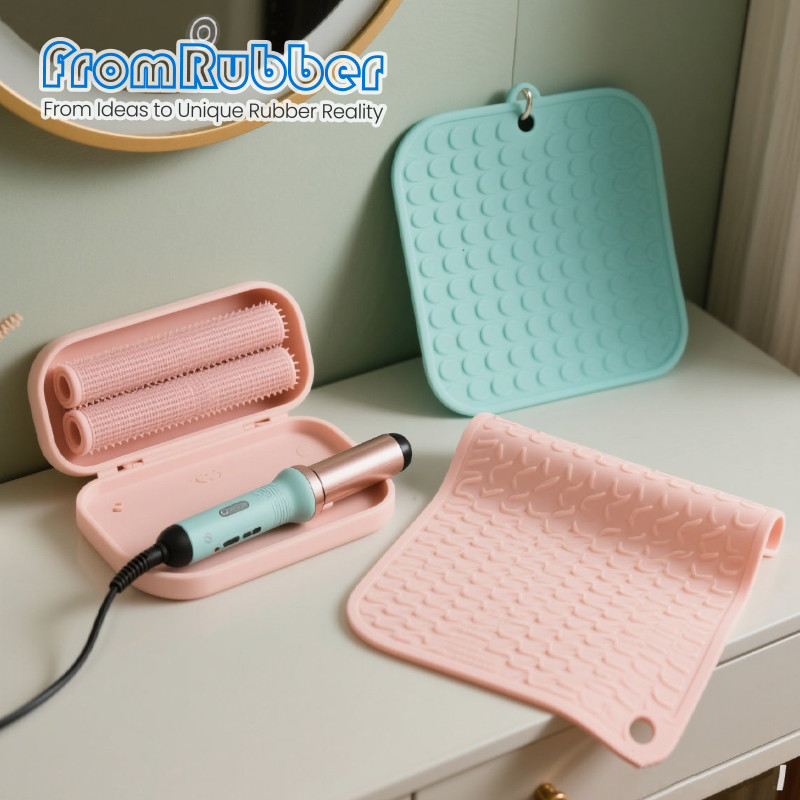
A curling iron resting on a dressing table has a barrel at well over the safe touch temperature and a hot plate that keeps producing heat. The mat under it is doing a real job, not decorating the counter.
This compares the two common constructions of a silicone pad for curling irons and sets out how to test them, because the difference shows up in a scratch test rather than in a photograph.
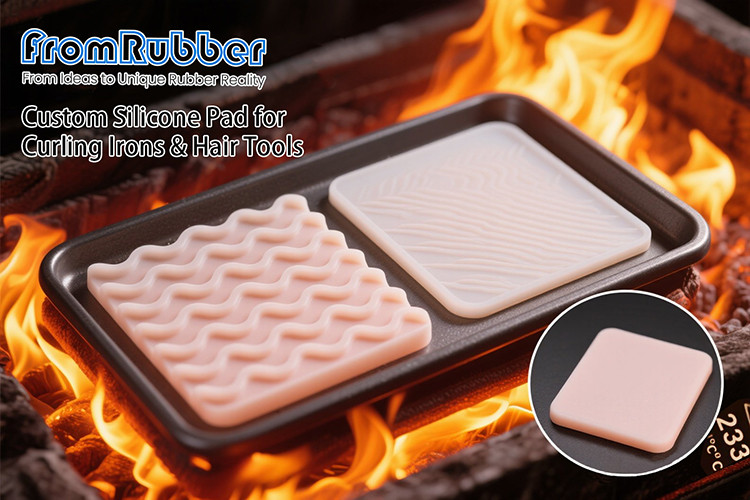
Wave or Solid: Which Silicone Pad for Curling Irons Works Better?
The direct answer: a wave or ribbed surface reduces the contact area between the hot barrel and the pad, which lowers the heat transferred into the silicone and lets the iron cool faster when removed. A solid flat pad gives more grip and a cleaner look, but stores more heat locally.
The trade is real in both directions. Reduced contact helps the mat survive repeated placement, and reduces the chance that the barrel scorches the surface. More contact helps the iron stay in place when the user puts it down in a hurry.
Comparing the Two Constructions
For a product sold on safety, the wave version is easier to justify. For a product sold on looks, the flat version wins and the heat management moves into the material and the thickness.
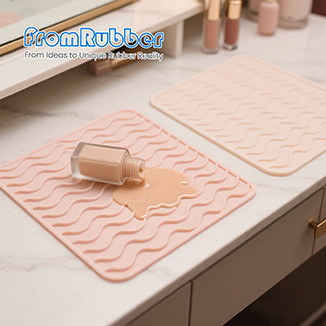
| Criterion | Wave surface | Solid flat |
|---|---|---|
| Contact area with the barrel | Reduced | Full |
| Heat concentration | Spread across the ridges | Concentrated under the barrel |
| Grip on the tool | Lower; the tool can roll | Higher; the tool stays put |
| Cleaning | Grooves trap product residue | Wipes clean |
| Appearance | Technical, reads as a heat product | Minimal, blends with the decor |
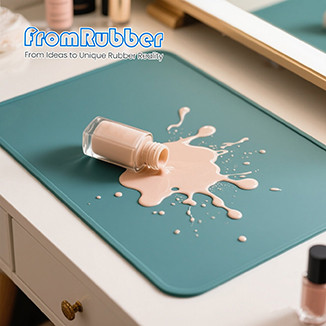
Heat and Scratch: What to Test
Two tests decide whether a pad is fit for the application. A contact heat test at the temperature the iron actually reaches, held for longer than a user would leave it, checked for deformation, tackiness and colour change. And a scratch or abrasion test on the used surface, because a mat that has gone chalky after a few months marks the furniture it is meant to protect.
Both should be run on the finished part, not on a material sample, because thickness and surface geometry change the result. A thin pad heats through faster than a thick one, and a wave profile heats at the ridges first.
What the Pad Must Not Do
It must not soften enough to bond to the barrel, it must not transfer colour to the tool or the table, and it must not develop a permanent depression where the iron usually sits. That last failure is compression set, and it is the one that turns a mat into a worn-looking object within a season.
Specifying for a Private Label Programme
Four inputs define the product: the maximum tool temperature it must tolerate, the pad dimensions against common iron lengths, the surface pattern, and the branding method. Colour and pattern carry the brand; temperature and thickness carry the liability.
Ask what temperature the material is rated for continuously rather than what it survives briefly, and add margin above the tool's stated maximum, because thermostats drift. A pad specified exactly at the tool's limit has no margin for a failing thermostat or a user who leaves the iron on.
Branding is best moulded in relief, which cannot peel and does not add a layer to the heat path. Surface printing on a heat mat is the first thing to fail. Constructions are shown on our custom silicone product page, and the same material reasoning applies to other heat-adjacent household items in the bowl cover guide.
Frequently Asked Questions
Can a silicone mat be used under a straightener as well as a curling iron?
Usually yes, if the rated temperature covers the higher of the two and the pad is long enough. Straighteners present a longer contact line, so the heat load is spread rather than concentrated.
Why does the mat discolour where the iron sits?
Local heat exposure plus residue from styling products. Discolouration is cosmetic until the surface goes chalky, at which point it starts marking furniture.
Is a thicker pad always safer?
Thicker insulates better but heats more slowly and can hold heat longer. Beyond a point the extra thickness adds cost without improving protection, so the right answer is the thinnest pad that passes the contact test.