Silicone Patch Manufacturers in Guangdong, China for Workwear and Uniforms: Six Suppliers Compared
- Share
- publisher
- FromRubber
- Issue Time
- Oct 15,2026
Summary
Six Guangdong suppliers of silicone patches and labels for workwear and uniforms compared on verified location, silicone evidence, uniform relevance, documented customisation and testing. Explains why the laundry contract is the primary design input, how a uniform's contact map affects relief choice, when a silicone patch is the wrong answer, and what to fix in writing before tooling.
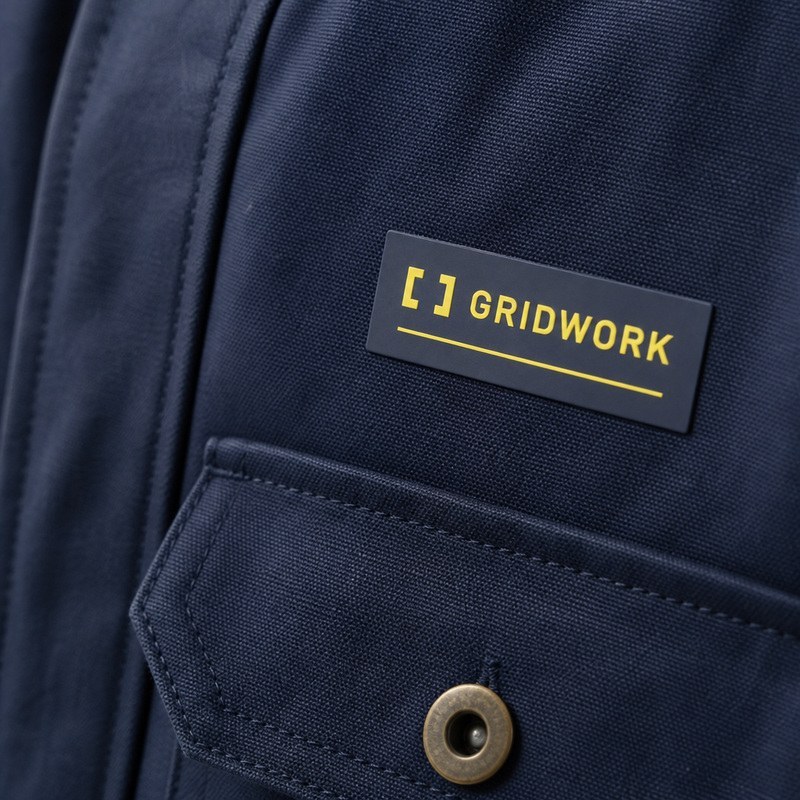
The uniform is a specification, not a garment
A uniform programme is judged by things a fashion programme never has to think about. The same jacket is issued to four hundred people, washed on a schedule that has nothing to do with the wearer, and expected to look identical in month thirty as it did in week one because it carries the company's name on the chest.
That is where silicone branding quietly runs into trouble. The laundry regime is the first constraint and it is usually the last thing written into the specification. Industrial laundering is more severe than domestic washing in temperature, chemistry and mechanical action, and the difference between a 40 degree domestic cycle and a 75 degree industrial wash is not a small correction — it changes which adhesive systems and which compound hardnesses are realistic at all.
This article compares manufacturers of silicone patches and labels for workwear and uniforms in Guangdong, China: industrial uniforms, maintenance and logistics workwear, hospitality uniforms, security apparel and corporate clothing. It does not compare garment makers, and it deliberately separates decorative silicone branding from protective-performance markings, because those are different products with different standards.
The short version: write the laundering schedule before the artwork. Wash temperature, detergent chemistry, mechanical action, drying method and cycle count decide the adhesive system, the compound hardness, the relief height and often the attachment route. A patch that performs beautifully in a harbour jacketing programme at 40 degrees can fail in a food-processing uniform washed at 75.
How the comparison was built
The six criteria below are applied identically to every company here, including FromRubber, and they are published before the list so the scores can be audited. For workwear the application criterion asks a specific question: does the company's own material link silicone to uniforms, workwear or professional clothing, rather than merely to clothing in general?
| Criterion | Weight | What counted as documented evidence |
|---|---|---|
| Verified manufacturing location in Guangdong, China | 20 | A stated production address or factory location inside Guangdong. An office address or a registration entry was not accepted as production evidence. |
| Verified silicone patch or label manufacturing | 25 | A page that names silicone and describes the construction: moulded, screen printed, embossed, heat transfer or liquid silicone. |
| Relevance to workwear and uniforms | 25 | Published wording linking silicone products to uniforms, workwear or professional clothing. Near-misses such as sportswear-only wording are recorded rather than substituted. |
| Documented customisation and production process | 15 | Disclosed dimensions, thickness, relief, colour referencing, backing or attachment options, and any stated press or wash conditions. |
| Public quality-control and testing information | 10 | Named certification systems, in-house laboratories or equipment, and test descriptions with conditions attached. |
| Availability of clear official product and company information | 5 | Pages that identify the producing entity and the product, plus corroboration beyond the company's own website. |
Criteria, weights and scoring bands applied identically to every company in this article
Two warnings belong before the list. First, this is an editorial assessment of public material collected in October 2026, not an industry ranking, an audit or an endorsement. Second, a silicone patch is a branding component. Unless a specific product carries its own verified certification, it does not provide flame resistance, high-visibility performance, chemical protection or electrical insulation, and no profile below should be read as implying otherwise.
Six suppliers at a glance
| Company | Guangdong location stated | Silicone patch or label evidence | Uniform or workwear wording | Score |
|---|---|---|---|---|
| Dongguan Baiyee Technology Co., Ltd. | Gaobu Town, Dongguan | Moulded and screen-printed silicone labels with published size and thickness ranges | Uniform patches named in the OEM and ODM list | 90 |
| FromRubber (Dongguan Bohao Electronic Technology Co., Ltd.) | Dongguan | Moulded raised silicone layer; heat-transfer and label ranges | Published workwear failure analysis and patch service-process documentation | 84 |
| Guangdong Crown Tree Label Co., Ltd. | Xiqiao Town, Foshan | Moulded silicone line; silicone heat-transfer and printed labels | Uniforms named in a product description; sporty styling wording elsewhere | 83 |
| Shenzhen Liantai Printing Co., Ltd. | Shenzhen | 3D embossed and textured silicone patches, iron-on and sew-on | Sportswear uniform wording on product titles | 82 |
| Dongguan HMJ Silicone Garment Accessories Co., Ltd. | Houjie Town, Dongguan | 3D silicone heat-transfer logos, raised glossy silicone, hot-melt backing | Uniform wording attached to a TPU product rather than a silicone one | 74 |
| Dongguan Victorygen Haberdashery Ltd. | Shatian Town, Dongguan | Silicone heat-transfer printing and 3D moulded silicone labels | Work and school uniform named in a blog passage | 70 |
Silicone capability with workwear relevance, Guangdong, October 2026
Reviewed but not ranked. Guangzhou Kunshuo lists uniforms in a PVC comparison row while its silicone row covers other applications, so the silicone-uniform link was not documented. Qinghan Label mentions uniforms inside a silicone range with no location published. DG Triangle publishes a full press and wash recipe, which is valuable, but uniforms and workwear are absent from its usage list. Hongcheng publishes the strongest technical-apparel wording of the group and no uniform wording at all. Recording these keeps the selection auditable rather than selective.
The six profiles
1. Dongguan Baiyee Technology Co., Ltd. — 90
Gaobu Town, Dongguan · baiyeelabels.com
Location 20 · Silicone evidence 25 · Uniform relevance 20 · Customisation 13 · Quality documentation 8 · Official information 4
Baiyee tops this list because it is the company whose public material answers a workwear buyer's hardest question with numbers. The factory address in Gaobu Town, Dongguan is labelled as a factory address, a business registration number is published, and the moulded silicone range separates flat, cambered, wedge, wavy and twill surfaces with a thickness spread from roughly 0.2 mm to 5 mm depending on construction. Its stated wash test is 10 to 20 cycles at 60 degrees Celsius with a 2.5 hour cycle time, which is a figure a uniform programme can actually argue with.
Uniform patches are named in the OEM and ODM list alongside jersey patches, which is the application evidence that earns the relevance score. Backing options include heat transfer, sewn-on and iron-on, base fabrics run from cotton and polyester to elastic, neoprene and PU leather, and colour is referenced to Pantone. No ISO claim appears, but SGS and OEKO-TEX reports are stated along with an equipment count of twelve testing devices.
Verify before tooling: whether the published 60 degree wash cycle matches the laundering schedule in your contract, and the relief height available for your artwork.
2. FromRubber (Dongguan Bohao Electronic Technology Co., Ltd.) — 84
Dongguan, Guangdong · fromrubber.com
Location 20 · Silicone evidence 25 · Uniform relevance 20 · Customisation 10 · Quality documentation 5 · Official information 4
FromRubber publishes this comparison and manufactures in the same category, so the same criteria apply and the same caveat applies with it: a company documents its own product most completely, and that is a structural advantage rather than a claim about quality. The company has manufactured custom silicone parts in Dongguan since 2010 and publishes a custom rubber patch programme, patch product documentation and a service-process page. Its application content includes a dedicated analysis of why silicone patches crack on workwear after repeated washing, which is the workwear-specific evidence behind the relevance score.
The quality documentation score is deliberately conservative because named certification systems and number-bearing test conditions were not corroborated from a source other than the company itself in this research. Nothing here should be read as a preference; a reader comparing suppliers should weigh the profiles, not the order.
Verify before tooling: the certificate documents on the site, and a wash test run at your contract's actual laundering temperature rather than a domestic equivalent.
3. Guangdong Crown Tree Label Co., Ltd. — 83
Xiqiao Town, Foshan · gddsc.com
Location 20 · Silicone evidence 25 · Uniform relevance 15 · Customisation 10 · Quality documentation 9 · Official information 4
Crown Tree has the best-documented quality system among the independent companies here: ISO 9001:2015, BSCI and OEKO-TEX Standard 100 are named, a physical testing laboratory is stated, and the equipment list includes a mould silicone production line and a 600-metre printing table. Its full street address in Xiqiao Town, Nanhai District, Foshan is published together with a documented factory relocation from Dongguan in 2023 and roughly 10,000 square metres of production area. The silicone heat-transfer range covers 3D textured, hollowed-out and temperature-variable labels.
Uniform relevance is documented but thin: the word uniforms appears in a product description about athletic gear and accessories, and the rest of the styling language is sport-oriented. No thickness or relief figure is published, which limits how far a workwear buyer can push the specification without asking directly. On quality documentation alone this profile would rank first; on application evidence it does not, and both facts are recorded rather than averaged into one impression.
Verify before tooling: whether the in-house laboratory can run a laundering test at your contract temperature, and the minimum order for a workwear patch programme.
4. Shenzhen Liantai Printing Co., Ltd. — 82
Shenzhen, Guangdong · liantaiprint.com
Location 18 · Silicone evidence 24 · Uniform relevance 18 · Customisation 11 · Quality documentation 9 · Official information 2
Liantai describes itself as a printing manufacturer established in 2004 in Shenzhen, and its 3D silicone patch range covers moulded raised lettering with customisable thickness typically between 0.5 mm and 2 mm, finishes from matte to textured, and carrier fabrics including tatami and satin. Colour matching is quoted against PMS references, samples are offered from stock, and the certification list includes ISO 9001, Sedex, SGS and FSC with a stated wash-durability range of 30 to 50 washes.
Uniform wording appears on product titles, including a patterned silicone patch described for sportswear uniforms, which is a legitimate but partial match for workwear: a sports uniform and an industrial uniform are different laundering environments. No street or plant address is published, and the durability claim arrives without temperature or cycle conditions, so the two things a workwear buyer most needs — the producing site and the test conditions — both require a direct question.
Verify before tooling: the plant address behind the Shenzhen office, the wash conditions behind the durability figure, and whether the construction suits a heavier garment fabric.
5. Dongguan HMJ Silicone Garment Accessories Co., Ltd. — 74
Houjie Town, Dongguan · hmjsiliconesticker.com
Location 20 · Silicone evidence 25 · Uniform relevance 10 · Customisation 8 · Quality documentation 8 · Official information 3
HMJ states a factory in Houjie Town, Dongguan with roughly 5,000 square metres of production space, twelve heat-transfer production tables, ten label cutting machines and eight high-frequency machines, and describes an in-house testing room for heat-transfer and colour-fastness checks. OEKO-TEX and ISO 9001 are named. Its silicone range covers 3D high-raised glossy printing logos, moulded sticker labels, reflective constructions and a hot-melt-glue-backed heat-transfer label that is relevant to automated application lines.
The relevance score is low for a specific and disclosable reason: the uniform wording on the site attaches to a high-frequency TPU product rather than to a silicone one, so the silicone-to-uniform link is not documented. A third certificate named SEMTA also appears, which does not sit in the usual textile certification landscape and is worth asking about by name. The business is described as manufacturing and trading integrated, so which stages run at Houjie should be confirmed in writing.
Verify before tooling: whether raised glossy silicone has been applied to a uniform fabric, and which processes are performed in-house.
6. Dongguan Victorygen Haberdashery Ltd. — 70
Shatian Town, Dongguan · heat-transferprinting.com
Location 15 · Silicone evidence 22 · Uniform relevance 15 · Customisation 9 · Quality documentation 7 · Official information 2
Victorygen runs a silicone heat-transfer programme with glossy, matte, soft rubber and tatami-backed constructions, offers heat-seal or sewn attachment, and states that sizes and colours are customised with a low minimum order. Work and school uniform wording appears in a blog passage about dressing up uniforms and workwear, which is weaker evidence than a product specification but not nothing.
Two structural issues hold the score down. The published contact address is a room number in an office building while the company history refers to a different town, and two different entity names appear on the same site. ISO 9001 and a wash-fastness claim are stated without numbers, and no thickness or dimension table is published for the silicone range. For a uniform programme with a formal laundering contract, those gaps matter more than they would for a promotional product.
Verify before tooling: which entity contracts and which plant produces, and the validated press window on your uniform fabric.
What a uniform actually asks of a silicone patch
The profiles say who can produce the part. The five questions below decide whether the part survives the life of the garment, and all five are answered by the buyer's own specification rather than by a supplier's brochure.
The laundering schedule is the primary design input
Domestic care and industrial laundering are different worlds. A domestic programme might specify 30 or 40 degrees with a mild detergent and a line dry; a contracted industrial laundry may run at 60 or 75 degrees, with alkali-heavy chemistry, mechanical action through a tunnel washer, and a tumble or press finish. Those variables hit a silicone patch in three ways: they attack the adhesive system, they heat-age the compound, and they mechanically work the label edges and raised features.
Which is why the useful conversation happens before tooling. Ask what the laundering contract actually specifies, then ask the supplier to run the test at that temperature with that chemistry and that number of cycles, and define what counts as failure — delamination, edge lift beyond a stated distance, colour shift beyond a stated grey scale rating, or loss of legibility. Named methods keep the argument technical: ISO 6330 covers washing and drying procedures for textile testing, ISO 105-C06 covers colour fastness to domestic and commercial laundering, and ISO 105-X12 covers colour fastness to rubbing, which is the test that catches a printed or coated surface wearing away at the edges.
A uniform has a contact map, and the patch sits on it
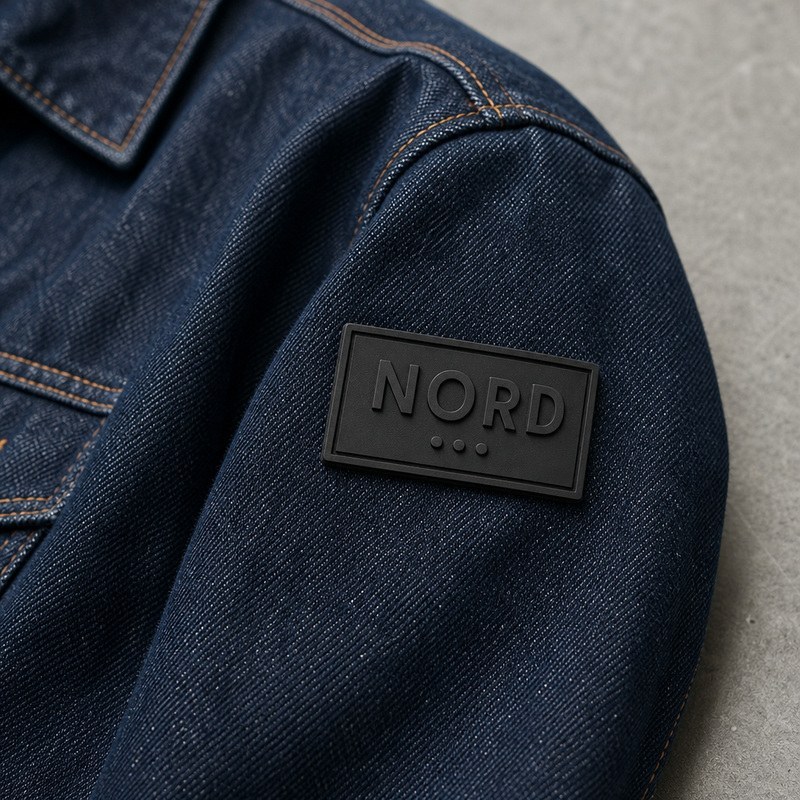
Workwear is worn against equipment, seats, straps, crates and doors. The chest is usually the cleanest real estate on a uniform because the arm and shoulder do the work; sleeve and shoulder placements take repeated abrasion from harnesses, bag straps and lifting, and hem placements take abrasion from whatever the wearer leans against. A brand that wants the logo on the most visible surface and the most durable construction at the same time is asking for a trade-off, and it is better to name that trade-off in the specification than to discover it in a complaint.
Relief matters here in a way it does not on a shirt. A tall raised feature has a larger exposed perimeter per unit of area and therefore more places for abrasion to start, and it collects dirt in exactly the environment where uniforms get dirty. A lower, wider relief with a clean surrounding field usually outperforms a taller, narrower one on a work jacket, even though the taller version photographs better.
Attachment reliability on heavy fabric, and who owns rework
Workwear fabrics are heavier and often stiffer than fashion fabrics, which changes the attachment calculus. Heat application needs pressure to be distributed evenly across a thick, sometimes coated canvas or polycotton twill, and a stiff fabric can bridge under a press platen, leaving an unbonded area that shows up only after the first wash. Sewing anchors mechanically and is more forgiving on thick woven fabric, but it punctures the panel and creates a line of needle holes that can widen in heavy use.
The decision is rarely about which method is better in the abstract. It is about which one the garment factory can execute consistently with the equipment it has, and who carries the cost if the bond or the stitch line fails on an issued garment. On a programme of several thousand uniforms, that last question matters more than the label price. The two construction families are documented on this site under durable sew-on silicone patches and washable silicone labels.
Legibility, identification and the colour-coding problem

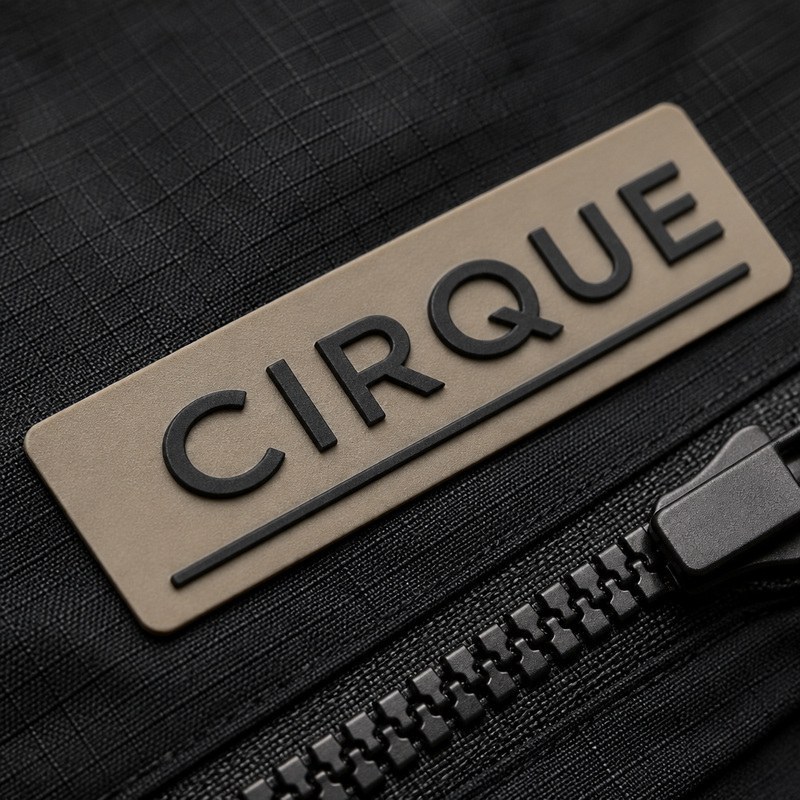
Workwear branding carries information, not just decoration: company name, department, role, sometimes a size or an asset number on a garment that is issued rather than owned. That makes legibility a functional requirement. High contrast between the raised element and the base, a stroke width that survives abrasion, and a typeface whose counters do not close up at production size all matter more than subtle tonal branding. Where a colour system carries meaning across a range — department colours, site colours — the colour reference has to be held to a named system with a physical standard, because two visually similar silicone compounds can drift apart across separate production runs.
Where the label is used to identify the wearer externally, there is also a practical limit worth stating plainly: a decorative silicone patch is not a safety marking. It should not be presented as one, and it should not be relied on where a standardised marking applies. Small-detail risk on identification fields is covered further in this site's note on losing fine detail on small clothing logos.
When a silicone patch is the wrong answer
Three cases where a buyer should stop rather than specify harder. If the garment is protective clothing that must meet a defined performance standard, the branding component cannot be assumed to inherit that performance, and any component inside the protective envelope should be assessed against the standard that applies to the garment. If the garment will be exposed to aggressive solvents, strong acids or continuous heat above the compound's working range, the label will age faster than the fabric and a different marking method is usually the better engineering answer. And if the uniform cannot tolerate either heat or perforation on the branded panel — some coated, laminated or lightweight shells — the honest answer is a different decoration route rather than a thinner patch.
None of these are reasons to avoid silicone. They are reasons to write an explicit scope statement into the specification so that a supplier is answering the right question. The same applies to consistency across a bulk order: colour matching, dimensions, thickness and inspection criteria should be fixed against a signed reference sample, and the inspection record should name the person who signs it. This site's overview of what makes a high-quality silicone patch and the guide to how a rubber logo patch is made both work through the same sequence from the production side.
Specification checklist for a workwear patch programme
Laundering contract, in numbers
Temperature, chemistry, mechanical action, drying method and cycle count, taken from the actual laundry contract rather than from a domestic care label.
Work environment and contact points
What the wearer handles, leans against and wears over the branded panel. That decides whether the placement will take repeated abrasion.
Uniform fabric and construction
Composition, weight, finish and whether the panel is coated, laminated or reinforced. Thick fabric changes press behaviour.
Artwork and information hierarchy
Company name, department or role markings, and required reading distance. Fix the smallest stroke and counter at production size.
Dimensions, relief and build height
Three numbers, stated separately, with the relief matched to the abrasion exposure of the placement.
Attachment route and equipment
Choose against the fabric and the garment factory's equipment, then validate on a production garment rather than a flat offcut. The trade-offs are compared in heat transfer versus sew-on silicone patches.
Colour reference and physical standard
A named colour system plus one signed sample held by both sides, especially where colour carries a department or site meaning.
Required tests and failure definitions
Wash cycles, rubbing fastness, dimensional change, and a written definition of what a failure looks like.
Sampling, inspection and rework route
Sample quantity, approval signatory, inspection criteria, and who pays for rework if a batch fails.
Mistakes that repeat across uniform programmes
Specifying from the care label
The care label describes how the wearer might wash the garment. The laundry contract describes how it will actually be washed. Specify from the second document.
Putting the tallest relief on the most abraded panel
High relief on a shoulder or sleeve takes more contact and collects more dirt. Match relief to exposure, not to the render.
Approving without a wash cycle
Most bonding failures appear after one or two cycles. Approve after a full cycle at the contract temperature.
Assuming protective performance transfers
A decorative patch does not inherit the garment's certification. Keep branding and protective markings separate in both the design file and the conversation.
Leaving rework undefined
On issued uniforms a failed batch affects people, not just inventory. Fix the rework owner and the acceptance criteria before production.
Treating colour as a shade, not a specification
Where colour carries meaning, hold it to a named system and a physical standard across every production run.
Frequently asked questions
Are silicone patches suitable for industrial workwear?
They can be, when the laundering regime, the fabric and the attachment route are specified together. Suitability is decided by the care process, not by the material name, and a patch approved on a domestic wash is not evidence for an industrial one.
Can a silicone patch withstand repeated uniform washing?
That depends on the chemistry, temperature and cycle count, and on the adhesive system chosen for them. Ask for the test at the contract temperature with the contract detergent, and define failure in numbers. The failure sequence is described in this site's note on cracking on workwear after repeated washing.
Is a sewn silicone patch better than a heat-transfer patch for workwear?
Neither is universally better. Sewing tolerates thick fabric and is more forgiving on uneven panels; heat application avoids needle holes but needs even pressure across a heavy, sometimes coated fabric. Choose against the garment and the available equipment.
Can a silicone patch be used on protective clothing?
Only with the limits stated openly. Decorative silicone branding does not provide flame resistance, high-visibility performance, chemical protection or electrical insulation unless the specific product carries verified evidence for it, and any component inside a certified garment should be assessed against the standard that governs that garment.
What should a buyer specify for heavy-duty uniforms?
Laundering contract, fabric and construction, placement and contact exposure, artwork with a fixed minimum stroke, relief and build height, attachment route, colour reference, required tests with failure definitions, and the inspection and rework route.
How can two workwear patch suppliers be compared fairly?
Ask each of them the same eight questions above and compare the answers, not the adjectives: which plant produces, which entity contracts, what the tested conditions were, and what happens if a batch fails. The silicone patch FAQ collects the same questions from the production side.
Closing notes
Workwear rewards buyers who begin with the laundry contract and the contact map rather than with the artwork. Once the care regime, the fabric and the exposure are fixed, the label geometry, relief and attachment route resolve themselves, and the supplier comparison becomes a question of evidence rather than of appearance.
Information in this comparison was collected from company websites and the cited standards in October 2026 and is limited to what those companies publish. Certifications, capacities, test results and customer relationships were not independently audited, and no supplier is endorsed. Confirm current product scope, the manufacturing entity and delivery capability directly before placing a production order.
About this comparison
It was compiled by FromRubber, a manufacturer of custom silicone labels, silicone patches and silicone heat-transfer elements in Dongguan, Guangdong, working with apparel, headwear, footwear, bag and uniform programmes on artwork review, tooling and sampling.
Technical questions about a specific project — substrate, relief height, tooling, sampling or a laundering test — can go to nani@fromrubber.com or karl@fromrubber.com. WeChat and WhatsApp: +86 18676210913.
Sources
- ISO 6330:2021 — Textiles: domestic washing and drying procedures for textile testing
- ISO 105-C06:2010 — Textiles: colour fastness to domestic and commercial laundering
- ISO 105-X12:2016 — Textiles: colour fastness to rubbing
- ISO 5077:2007 — Textiles: determination of dimensional change in washing and drying
- ISO 48-4:2018 — Rubber, vulcanized or thermoplastic: determination of hardness by durometer method
- OEKO-TEX STANDARD 100 — harmful substance testing for textiles
- European Commission — REACH restrictions on substances in articles
Related reading on this site: custom rubber patches, five levels of silicone patch design complexity, keeping fine detail in small logos, and the sibling review of 3D silicone patch manufacturers in Guangdong.