Stop Costing Fluid Leaks: High-Recovery Thread Silicone Port Plugs Designed for Reusable Hydraulic Systems
- Share
- publisher
- Suey
- Issue Time
- Mar 25,2026
Summary
Thread silicone port plugs are masking and sealing parts, and their life is set by recovery rather than by hardness. This note explains thread engagement, compression set after repeated use, temperature and hydraulic-fluid compatibility, and why a plug that seals on the first fit can leak on the twentieth.

Sealing note
A thread silicone port plug is a reusable seal, so its specification is a recovery specification. The plug compresses into the thread, seals against the flank, and must return close to its original form when removed. A compound that seals beautifully on the first fit and takes a permanent set will leak on the tenth, and the leak will be blamed on the operator.
- Recovery is measured as compression set after a defined time at temperature; ask for the number, not the word “resilient”.
- Thread engagement decides whether the plug seals on the flank or bottoms out — 3 to 5 turns is a design target, not a suggestion.
- Hydraulic oil, phosphate esters and brake fluid attack different elastomers; silicone is not universal.
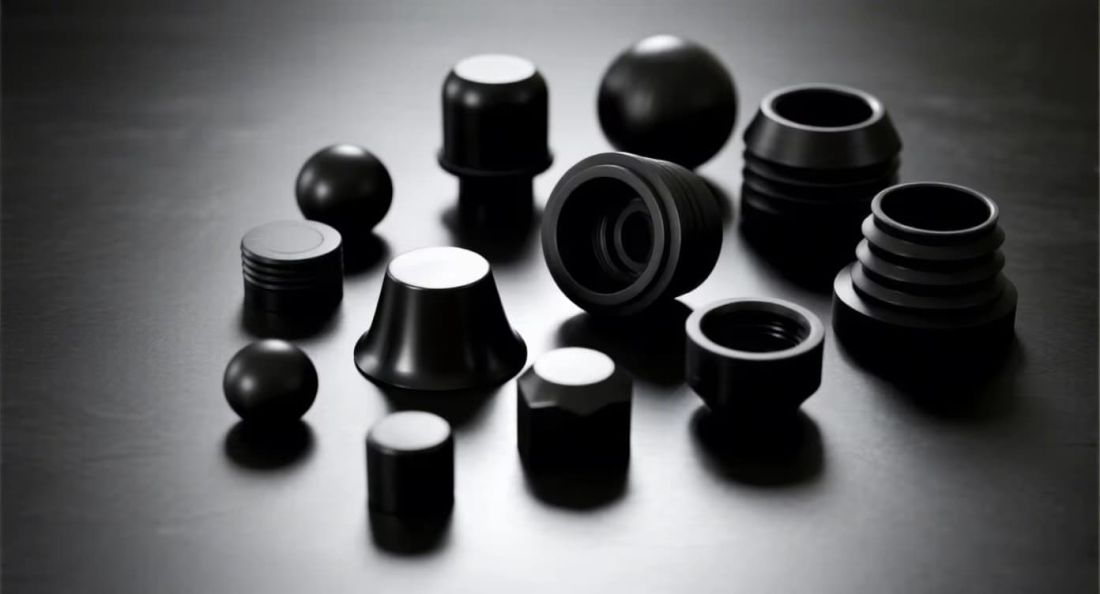
Thread engagement and the seal that thread silicone port plugs make
A moulded silicone thread does not cut into metal like a steel plug; it deforms into the existing thread. That means the seal forms on the flank and crest of the metal thread, and it depends on the plug being slightly oversized in the right places. Undersized, the plug spins in and leaks; oversized, it will not seat and the operator forces it, which tears the first thread.
Engagement length is the practical control. Three to five full turns gives enough flank contact to seal and enough grip to remove by hand or with a soft tool. Beyond that the plug bottoms out and the torque goes into the thread rather than the seal, which is where deformed plugs and damaged ports come from.
Compression set is the number behind a reusable plug
Compression set measures how much a compressed elastomer fails to return after the load is removed. A plug with high set stays flattened, and the next insertion has less interference to work with. Test it the way the part is used: compress to the installed squeeze, hold at the service temperature, release, and measure after a defined recovery period.
Silicone performs well here compared with nitrile at high temperature, but it is not immune. A plug left installed for months at 100 °C will take a set regardless of compound, so the maintenance instruction matters as much as the material. If the plug is a long-term blanking device rather than a handling mask, design for a thicker section and a lower squeeze.
- Squeeze — 15 to 25% of section is a workable range for a moulded thread plug.
- Temperature — set accelerates sharply above 100 °C; state the dwell time in the test.
- Recovery window — measure after 30 minutes and after 24 hours; both numbers are informative.
Fluid and temperature limits to check before specifying silicone
| Medium | Silicone behaviour | Design note |
|---|---|---|
| Mineral hydraulic oil | Moderate swell, acceptable for short contact | Not a long-term immersion seal |
| Phosphate ester fluid | Poor resistance | Specify a different elastomer or a barrier |
| Brake fluid | Poor resistance | Keep silicone plugs away from brake circuits |
| Water and coolant | Good | Watch for steam exposure above 100 °C |
| Compressed air | Good, but gas permeates | Not a barrier against pressure loss over days |
Design details that make a port plug last
A pull tab or a knurl is not cosmetic. Operators remove these plugs hundreds of times, and a part that needs a pick to extract gets damaged on removal. A moulded tab with a generous fillet at the root spreads the peel load and stops the tab tearing off at the third use.
Venting is the other detail. A blind plug pushed into a clean port compresses the air inside and can pop out; a small vent groove, or a plug designed with a controlled leak path, avoids that. For masking during painting or blasting, the same groove is a liability, so specify the variant by application rather than by part number alone.

What a custom thread form needs from the tool
A moulded thread is a tool feature before it is a part feature. The cavity carries the thread form, the core pulls out of it, and the shrink rate of the compound decides whether the finished plug engages at the designed interference. Change from a 50 to a 70 Shore A compound and the same cavity produces a plug that no longer fits, because the moulded thread moves by a few hundredths of a millimetre.
That is why a thread plug programme starts with the compound and the thread together. Send the thread standard, the pitch, the class of fit and the number of turns you want engaged, and expect the tool to include a shrinkage allowance based on the compound chosen. Asking for a quote on a thread form without naming the compound produces a number that will not survive the first sample.
Colour coding, kitting and packaging
A bin of identical black plugs is a wrong-size insertion waiting to happen. Colour coding by thread size costs one masterbatch per colour and removes the most common cause of a torn thread, which is a technician forcing the next size up. Moulding the size marking into the plug head is the second layer of protection, and it survives even when colours are hard to tell apart under sodium lighting.
Kitting is the third lever. Supplying a plug, a cap and a label in one bag per port removes a line-side sorting step and a source of mix-ups, and it is usually cheaper for the customer than buying three items separately. Specify the kit by port, not by part number, and the packing list becomes a work instruction.
Deliverables at each stage of a port plug programme
| Stage | Deliverable | What it protects against |
|---|---|---|
| Drawing review | Thread form check, engagement and pull tab proposal | A tool cut to the wrong standard |
| Sampling | 10 to 20 parts, colour coded | Wrong interference discovered at volume |
| Fit trial | Insertion and removal torque data | Operators needing tools to remove the plug |
| Validation | Compression set after the service dwell | Leaks on the tenth reuse |
| Production | Lot traceability and packing statement | Mixed sizes in one carton |
Customisation requests that are straightforward — and one that is not
Most variations are a cavity insert away; one is a different product.
A pull tab
Easy: a cavity feature, no extra cost per part.
Size colour coding
Easy: one masterbatch per colour, planned at tool design.
A vent groove
Easy, but decide the application first — venting helps removal and hurts masking.
A different thread standard
Straightforward: same frame, new cavity insert.
High-pressure sealing
Not straightforward: a moulded silicone plug is the wrong component above low pressure.
Symptoms, causes and the fix that is not a new compound
Most port plug complaints are geometry or handling issues wearing a material costume.
“It will not stay in”
Too little interference or a thread that bottoms out. Fix the engagement length before changing the compound.
“It will not come out”
Over-compression, or a thread form moulded to the wrong class. A pull tab helps, but the interference is the cause.
“It tears at the first thread”
A sharp lead-in or a hard compound. A chamfer on the plug and a 50 Shore A compound usually resolve it.
“It leaves marks on the thread”
Contamination from mould release or from the packing bag. Specify internal release and a clean bag, not a softer plug.
Questions from hydraulic and production engineers
How many times can a silicone port plug be reused?
Define a limit from a compression set test rather than a guess. If set after the service dwell stays below about 20%, reuse is usually safe; beyond that the plug should be replaced, because the next insertion has too little interference.
Is silicone suitable for a high-pressure test plug?
For low pressure and handling protection, yes. For sustained high pressure, a moulded silicone plug is the wrong component; use a mechanical plug with a metal thread and a proper seal.
Why do plugs come out during shipping?
Trapped air and vibration. A vent groove, a slight taper or a retention bead solves it, and the fix belongs in the tool rather than in a work instruction.
Can the plugs be colour-coded by port size?
Yes, and it is worth doing. Colour coding reduces wrong-size insertion, which is the most common cause of a torn thread and a damaged port.
Send the port thread and the masking process
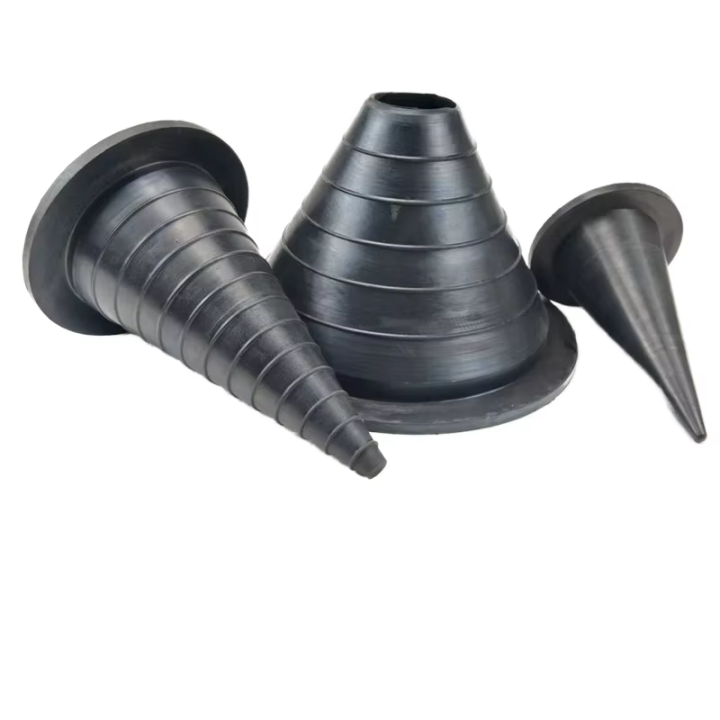
FromRubber moulds thread port plugs, conical caps and masking plugs in Dongguan, with size colour coding and pull tabs designed for repeated removal. Send the thread specification, the temperature and the fluid the plug will meet; we will propose a compound and an engagement length that still seals on the twentieth insertion.
Request a port plug design reviewRelated reading: silicone protective plugs for machined parts and custom rubber hole plugs and port seals.