Struggling to Clean Shower Doors? The Secret to Spotless, Soap-Scum-Free Glass - Silicone Wiper
- Share
- publisher
- Suey
- Issue Time
- Mar 18,2026
Summary
Ditch harsh chemicals. FromRubber silicone wiper keep shower doors spotless, prevent soap scum & mildew. Custom OEM manufacturing in any color.

Surface note
Soap scum is not dirt; it is calcium and magnesium soap that precipitates onto glass and hardens as it dries. A wiper removes water before that happens, and it works only if the blade conforms to the glass across its full width. Hardness and lip radius, not colour or handle design, decide whether the glass dries clear.
- Removing water in the first minutes is cheaper than dissolving scum later.
- A blade around 60 to 70 Shore A conforms to glass without chattering.
- Rubber hardens and glazes with soap and minerals; silicone keeps its flexibility.
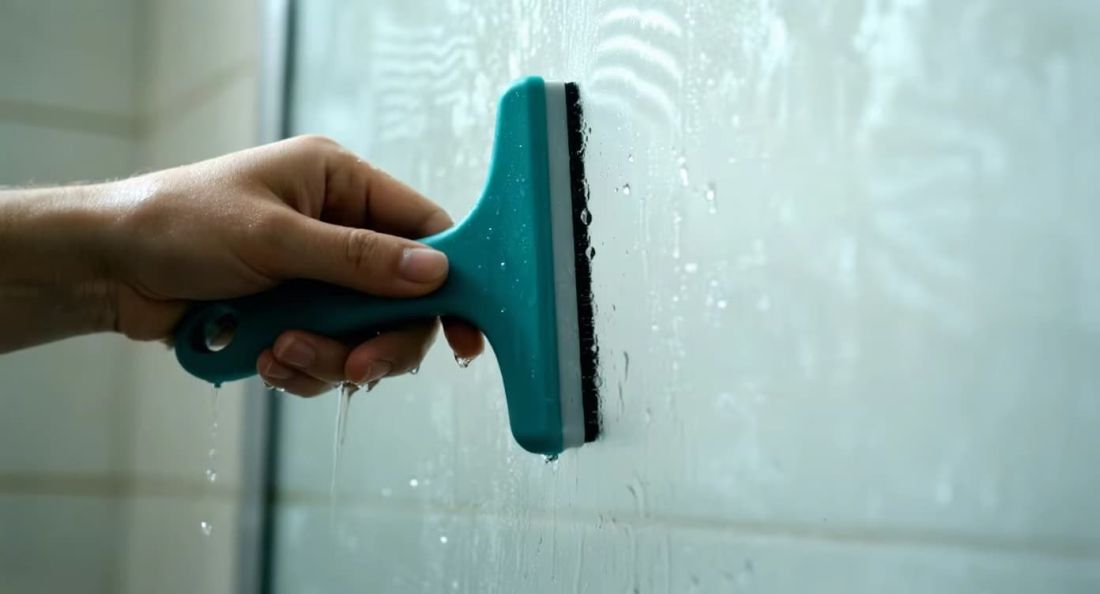
Why a silicone shower door wiper beats a rubber blade
Rubber squeegee blades are formulated for water, not for soap. Detergent and hard water leave a film that plasticises the surface, and the blade glazes and hardens within a season; a hard blade then chatters and leaves streaks that look like the glass is etched. Silicone resists that film and keeps its elasticity over a much wider temperature range.
The second difference is chemical. Silicone is not attacked by the alkaline detergents used on bathroom surfaces, and it does not absorb the oils in shampoo and body wash. That means the edge keeps its shape, and the water film breaks where the blade meets glass instead of being dragged along the surface.
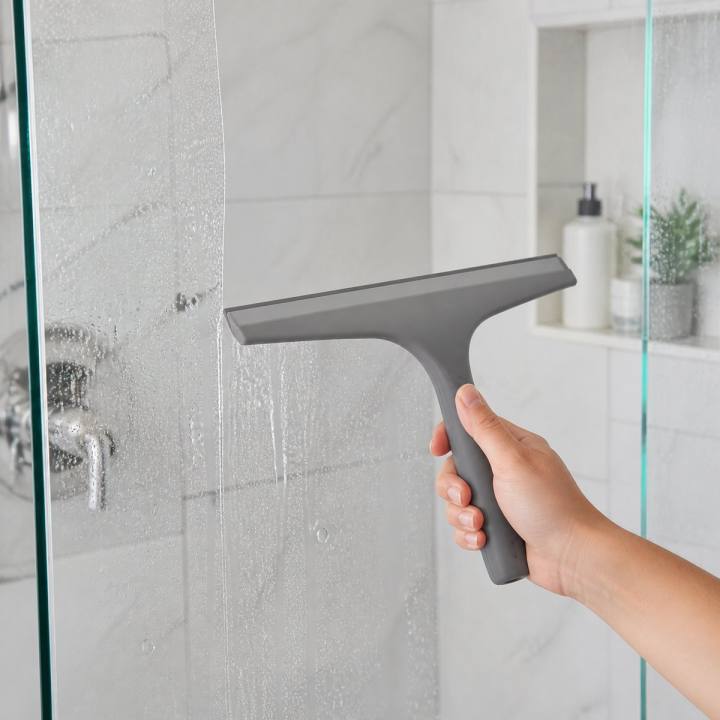
Blade geometry: hardness, lip radius and pressure
Hardness sets conformity. At 60 to 70 Shore A the lip bends to follow a slightly dished glass panel and still transmits hand pressure; below that the blade folds and skips, above it the blade rides on high points and leaves lines. The lip itself should be thin, with a small radius, so the contact line is narrow and the pressure per millimetre is high.
Handle stiffness matters as much as the blade. A flexible handle absorbs the pressure the user applies, so the blade touches lightly in the middle of the pass and heavily at the ends. A rigid spine behind the blade keeps the load even, which is why the best wipers are a stiff body with a soft lip rather than soft throughout.
- Blade hardness — 60 to 70 Shore A for conformity without chatter.
- Lip — thin with a small radius, so contact pressure is concentrated.
- Spine — rigid enough to keep the blade flat against the glass.
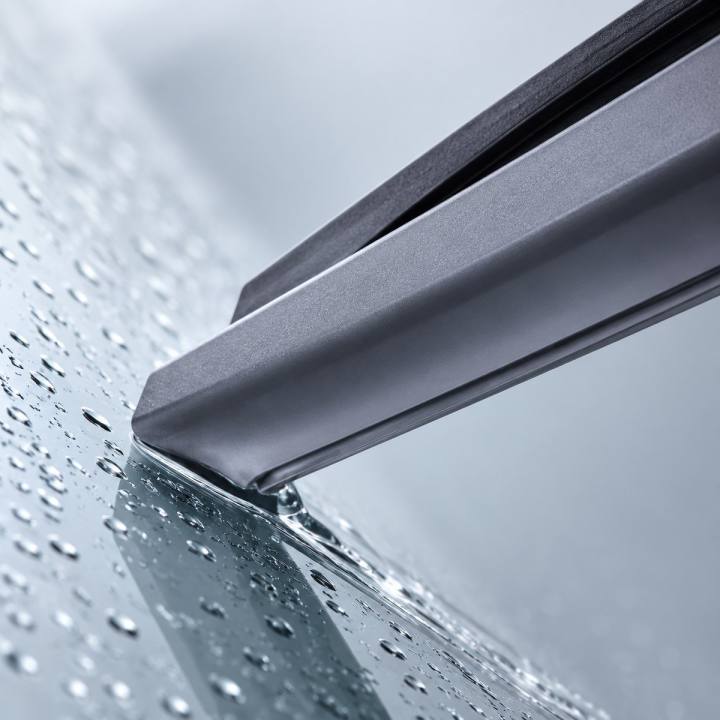
Wiper specification and the effect of each choice
| Parameter | Typical target | Effect if wrong |
|---|---|---|
| Blade hardness | 60 to 70 Shore A | Softer folds and skips; harder chatters |
| Lip radius | Small, thin section | Wide contact leaves a water film |
| Blade length | Matched to panel width | Short blade needs two passes, leaves a seam |
| Handle stiffness | Rigid spine | Pressure varies across the pass |
| Chemical resistance | Alkaline detergent, shampoo | Blade swells or glazes |
| Temperature range | -20 to 80 °C | Blade stiffens in a cold bathroom |
Maintenance and what not to do
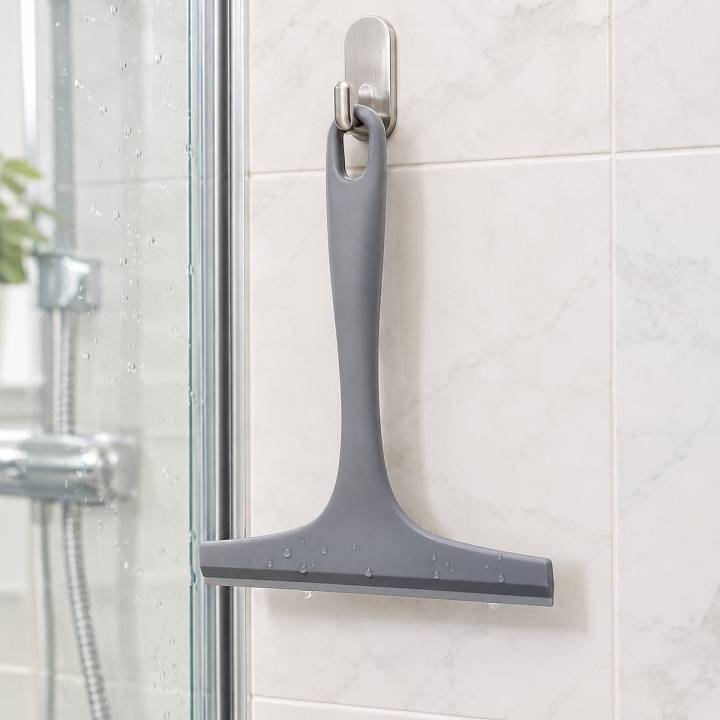
A wiper needs almost no maintenance, but it does need to be stored dry. Left standing in water, the lip picks up mineral deposits that score the glass on the next pass. Rinse the blade, shake it, and hang it so the lip does not rest on a surface; a simple hook or a moulded hanging hole solves it.
Do not use an abrasive cleaner on the blade, and do not run it over a glass panel treated with a hydrophobic coating until that coating has cured. Fresh coatings can be soft, and a dry pass will drag and leave marks. Once cured, a silicone blade glides on a coated surface better than rubber because it does not grab.
Water left on glass for an hour starts to deposit the minerals that later form scum; water removed in the first minute takes almost nothing with it. That is why a wiper is judged on the first pass, not on how it performs after a descaling treatment.
A blade that clears in one pass also uses less pressure, and less pressure means the lip lasts longer and the glass is less likely to pick up grit scratches. If a wiper needs three passes, the problem is usually the lip profile or a hardened blade, not the technique.
How a custom wiper programme is quoted and run
Wipers are simple parts with a short tool lead time, so customisation is realistic at modest volumes.
Inputs
Panel width and curvature, handle preference, colour, branding and the retail packaging.
Design
Blade hardness and lip radius, spine stiffness and the blade-to-handle joint.
Sampling
A working sample tested on the actual glass with the user's cleaning routine.
Volume and packing
Cavity count, colour options, hanging hole or hook, and retail carton format.
Questions about bathroom wipers
Does a wiper replace cleaning?
It reduces the frequency. Removing water before it dries stops most scum forming, but mineral deposits that have already hardened still need a descaling cleaner.
Why does my wiper leave streaks?
Usually a hardened or glazed blade, a chipped lip, or too little pressure. Check the lip for nicks first, then the handle stiffness.
Can it be used on frosted glass?
It can, but a textured surface holds water in the pattern and the result is never fully dry. A wiper suits smooth glass.
How long does a silicone blade last?
Longer than rubber in the same bathroom, but the lip still wears. Replace when the edge is nicked or the blade no longer clears in one pass.
Send the panel width and the handle you want
FromRubber moulds silicone wiper blades, bathroom tools and cleaning accessories in Dongguan, with blade hardness and lip geometry matched to the glass and the handle. Send the panel width, the handle style and the colour; we will propose a blade profile and mould samples for a working trial.
Request a wiper reviewRelated reading: how moulded parts are quality controlled and custom silicone seals.