The Role of DFM in Reducing Costs of Custom Plastic Mouse Enclosures
- Share
- publisher
- Suey
- Issue Time
- May 11,2026
Summary
DFM review of custom plastic mouse enclosures before steel is cut: how wall thickness, draft, gate layout and tolerance stack drive tooling cost, cycle time and scrap. Includes a 2.8 mm scroll wheel housing case that cut mould cost 37% and a before/after cost table.
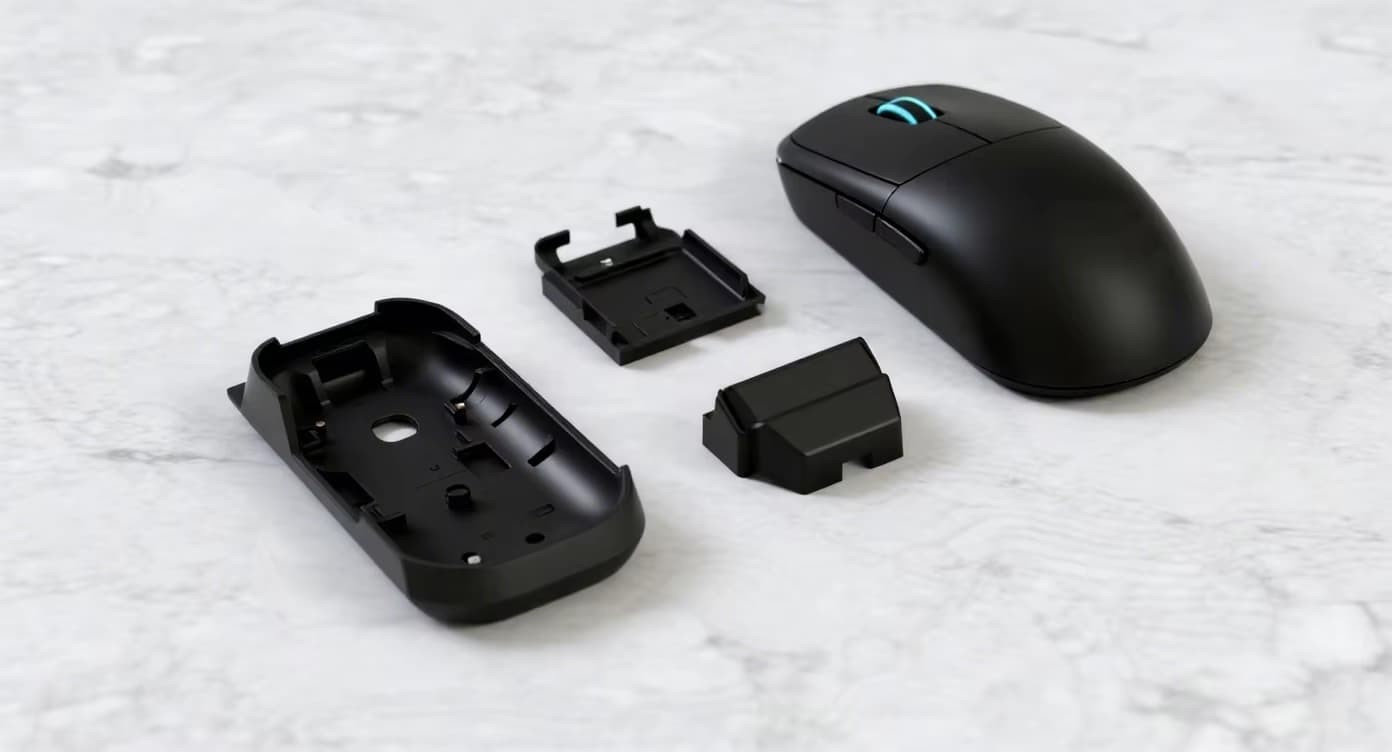
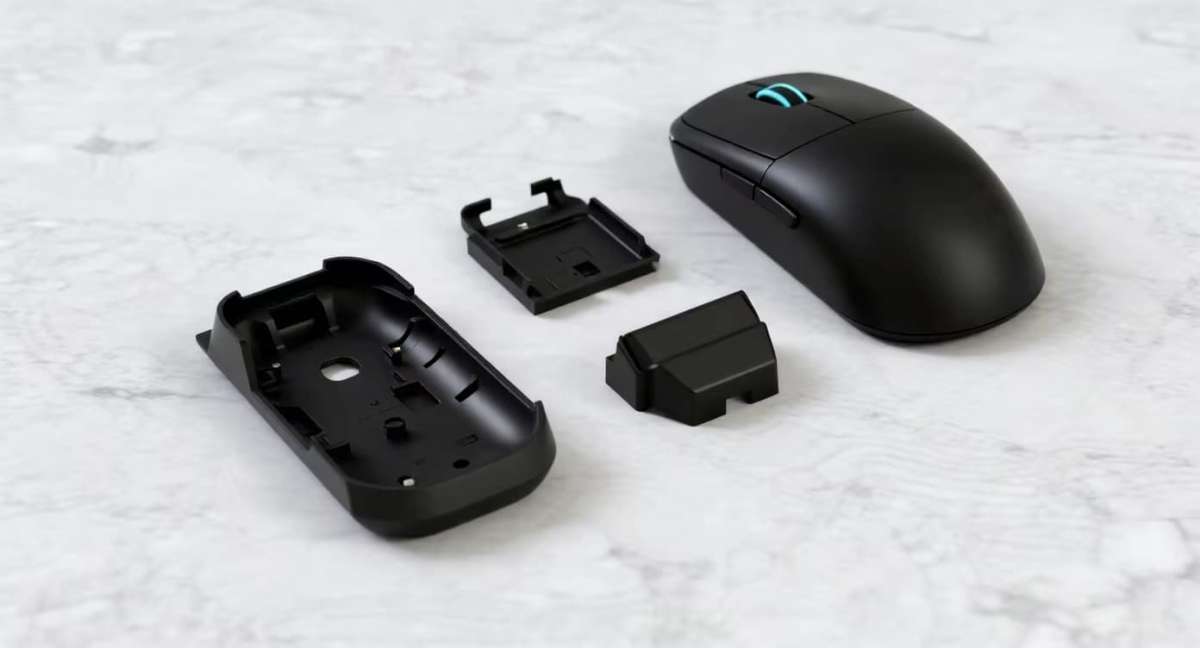
Most of the cost of a custom plastic mouse enclosure is fixed before a mould maker cuts steel. In the programmes we review, roughly 80% of avoidable cost sits in four geometry decisions — wall thickness, draft, gate position and tolerance stack — and each is cheaper to change in CAD than in hardened steel.
The working answer: run design for manufacturability (DFM) on the 3D model before quotation, hold shell walls in a 1.2–1.5 mm band, put at least 1.5° of draft on every sidewall, and consolidate gates. On a recent ergonomic gaming mouse that sequence took mould cost from $38,000 to $24,000 and cycle time from 38 s to 22 s.
Where cost is locked in a mouse enclosure
A mouse shell is a two-part ABS or PC/ABS housing with thin cosmetic skins, a scroll wheel pocket, side-button undercuts and a PCB cavity. Each feature pushes the design in a different direction, and that conflict makes tooling expensive when nobody reviews it.
- Thick sections — a 2.8 mm wheel housing against a 1.2–1.5 mm skin adds 20–40% to cycle time.
- Zero draft — undrafted sidewalls grip the cavity and push tool maintenance up about 35%.
- Scattered gates — four cold drops instead of one runner layout add regrind and $0.12–0.28 per part.
- Blanket tolerances — a ±0.02 mm callout on cosmetic surfaces nobody can measure can double machining cost.
These are drawing problems, not mould-maker problems, so they can be priced out before a purchase order exists.
A DFM pass on the 3D model flags thick sections, zero-draft walls and gate placement while they are still drawing changes.
The five levers that move mouse enclosure cost
What differs is how much each lever is worth on a part, which is why a review should quantify rather than list.
| Design lever | Working rule | What it changes |
|---|---|---|
| Wall thickness | 1.2–1.5 mm nominal, uniform | Cooling time; a thick section trimmed from 2.8 mm to 1.7 mm cut cooling from 25 s to 14 s |
| Draft angle | 1.5° minimum, 1.8° on deep walls | Ejection reliability; about 35% less tool maintenance |
| Gate and runner | Consolidate drops into one layout | Regrind volume and material cost, $0.12–0.28 per part |
| Tolerance | ±0.02 mm only on snap fits and button guides | Machining hours and inspection load on cosmetic surfaces |
| Cavity layout | Top and bottom shells in one family mould | Tooling, up to 40% below two separate moulds |
One supplier prices the drawing as received; the other prices it after these levers are set.
What a review returned on a 2.8 mm scroll wheel housing
A startup brought an ergonomic gaming mouse with three defects that surface only in the first mould trial: a 2.8 mm wheel housing beside a 1.4 mm skin, zero sidewall draft, and four separate gates feeding one cavity.
Three changes were made on paper: the boss came down to 1.7 mm, still stiff enough for the encoder and wheel axle; sidewalls received 1.8° of draft; the four cold drops became a two-cavity hot runner, removing the weld-line cluster on the visible top surface.
Result on the purchase order
Mould cost fell 37%, from $38,000 to $24,000, and cycle time from 38 s to 22 s. At 500,000 units a year the combined effect is $52,000 annually, before scrap gains.
A DFM report without cost numbers is not a DFM report. Each finding should state the change, its effect on tooling or cycle time, and whether it touches the visible surface.
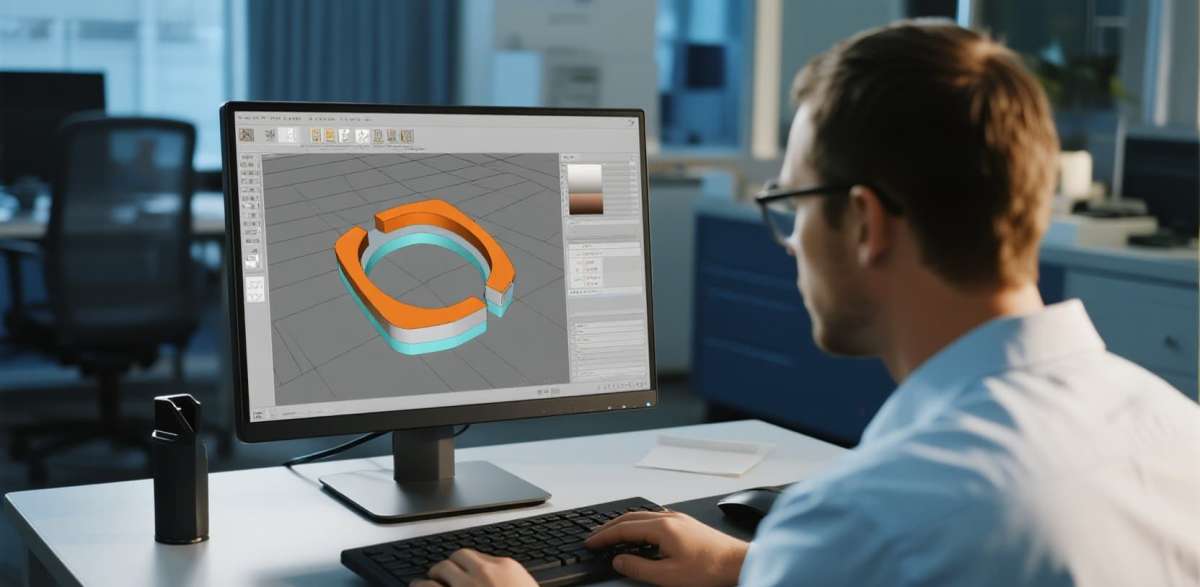
All three corrections were made in CAD: reduced boss thickness, added draft, and one hot runner replacing four cold drops.
Where the savings land in the first 50,000 parts
Tooling price is visible, but a programme spends more on sampling, cycle and scrap than on steel modification.
| Cost factor | Drawing as received | After DFM review | Change |
|---|---|---|---|
| Mould steel modification | $3,200–6,500 | $0–800 | about 82% lower |
| Sampling rounds | 6–9 | 2–3 | about 60% fewer |
| Cycle time per part | 28–35 s | 16–22 s | about 35% faster |
| Scrap, first 50,000 parts | 4.2–7.5% | 0.8–1.5% | about 75% lower |
Fewer sampling rounds also shorten the calendar, usually the real launch constraint.
What DFM should not touch in custom plastic mouse enclosures
Designers resist DFM because they expect it to flatten the product into a box. That is a process failure, not a DFM outcome.
Inside the part
Boss thickness, rib spacing, draft, gate position and snap-fit undercuts are fair game. Adjusting them often improves strength, because sharp internal corners that concentrate stress are replaced with uniform radii.
Outside the part
The ergonomic curve, the split line on the visible seam, texture and gloss belong to the industrial designer. A supplier who proposes changing top-surface curvature to cure a sink mark has picked the wrong lever.
Where reviews go wrong
The first failure is timing: a review run after mould design is frozen becomes a liability waiver, not a cost tool. The second is scope — checking walls but not the battery-door tolerance stack.

Tooling and sampling under one roof shortens the loop between a DFM finding and a verified correction in the first trial.
Questions buyers ask about mouse enclosure DFM
When should the review be requested?
Once a preliminary 3D model exists and before quotation is finalised. Also when an earlier mould produced warpage or sink marks, when volume heads past 100,000 units, or for dual-material and over-moulded mice.
Does a review change the industrial design?
It should not. Exterior surfaces, ergonomic curves and side-button undercuts stay as drawn; changes go to hidden ribs, bosses, draft and gates.
What is the deliverable?
A 15–20 page document with a red-yellow-green risk rating per finding, the geometry change proposed, and its effect on mould cost or cycle time. Tooling is then quoted on optimised geometry, typically 25–45% below first estimate.
Can we keep a 2.8 mm feature for feel?
Sometimes, with a cored-out back or local sink allowance. The cycle penalty stays: thick sections cool from the inside out and hold the part in the tool.
Send a mouse enclosure model for a DFM review
We check wall thickness, draft, gate layout and tolerance stack on your STEP file, return findings with cost impact, and quote tooling on corrected geometry.
Review the custom plastic enclosure range for construction options, or read how OEM injection moulding is quoted for enclosure projects.