Top 10 3D Silicone Label Manufacturers for Clothing
- Share
- publisher
- FromRubber
- Issue Time
- Oct 16,2026
Summary
A relief-based classification of 3D silicone clothing labels, ten suppliers scored on documented dimensional structure, and guidance on why relief height, garment weight and compound hardness have to be decided together.
Top 10 3D Silicone Label Manufacturers for Clothing
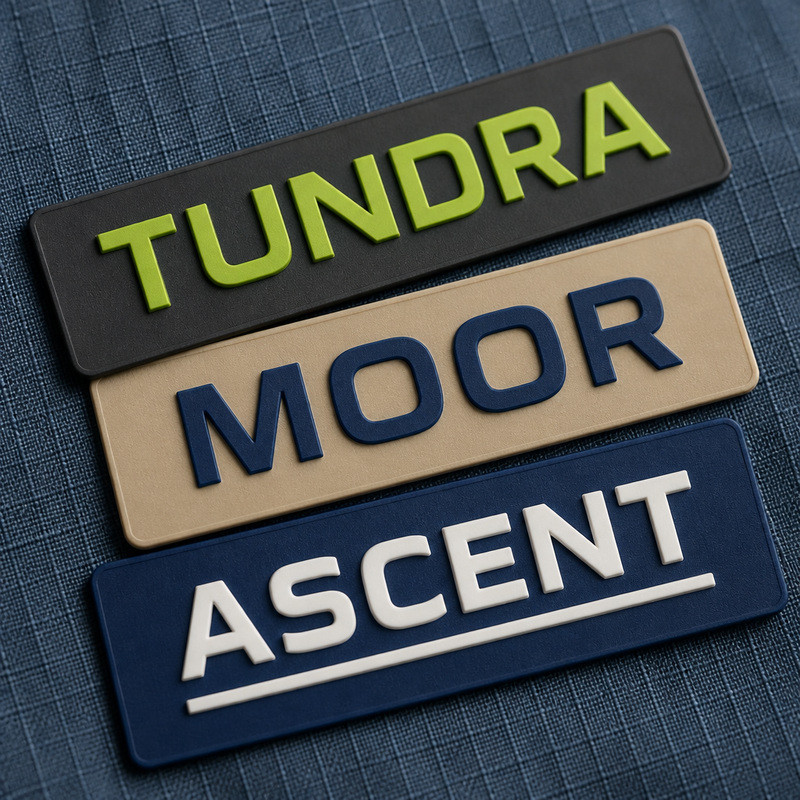
Two suppliers quote you a “3D silicone label”. One delivers a raised, shadowed logo that reads from three meters away on a jacket shoulder. The other delivers a flat label with a printed graphic on it. Both invoices say 3D, and by the time you can see the difference, the tooling is already paid for.
The word has no fixed meaning in this industry. A supplier that prints on a flat silicone face can reasonably call the result dimensional, because the artwork has depth. A buyer who needs a physically raised mark is asking for something entirely different, and the only way to keep the two apart is to specify relief in millimeters rather than in adjectives.
Direct answer
A silicone clothing label is 3D only when material has been displaced out of the plane of the label — a raised element, a recessed background, or two or more discrete relief heights in one label. Flat silicone with a printed graphic, however saturated the artwork, has no relief. When you ask a manufacturer about 3D capability, ask which relief levels it can hold at your finished size, and what depth it will commit to in writing.
Relief is a measurement, not a style
It helps to sort labels by how many times the tool changes depth, because that number, more than anything else, predicts both the tooling cost and the risk.
No relief. The label is molded flat and the graphic is applied by screen printing, transfer or laser etching. Detail can be excellent and very fine, but the mark disappears under raking light because there is no shadow to read.
Single-level relief. The logo sits above the background at one height. This is the most common interpretation of 3D, and it is the most cost-efficient way to get a mark that keeps its identity at a distance, because edge shadow does the work.
Two-level relief. The logo is raised and the background is recessed, or two elements sit at different heights. Negative space starts to carry meaning, and the tool now has to close twice as carefully.
Multi-level relief. Three or more heights, often combined with color separation, so that each element reads as a separate object. This is where a label stops being a badge and becomes a small molded part, and where a supplier’s tool-making capability, rather than its printing capability, is being tested.
Published ranges exist and are worth asking for. The American Patch, for example, states a heat-transfer label thickness of roughly 0.3 mm to 1.2 mm flat and 1 mm to 3 mm raised on its custom silicone patch page, and gives a separate range for molded patches. Those are that company’s figures, not a standard, but they illustrate the separation you should be looking for between flat and raised constructions.
Thickness bands for the family are published as well. FromRubber’s patch thickness note, updated 7 October 2026, places printed silicone at up to about 1.5 mm and molded silicone at 1.5 mm and above, with roughly 1 mm described as the point where flexibility and a pronounced relief balance. Material data explains why depth is not free: the same note cites a typical 70 Shore A silicone datasheet listing hardness of 70 ± 5, tensile strength of 5.0 MPa required against 5.7 MPa achieved, and elongation at break of 150 percent required against 266 percent achieved. A low-modulus, high-elongation compound is exactly what makes a raised mark feel right on a garment, and exactly why adding thickness works against the material’s own advantage.
Why relief height and garment weight have to be decided together
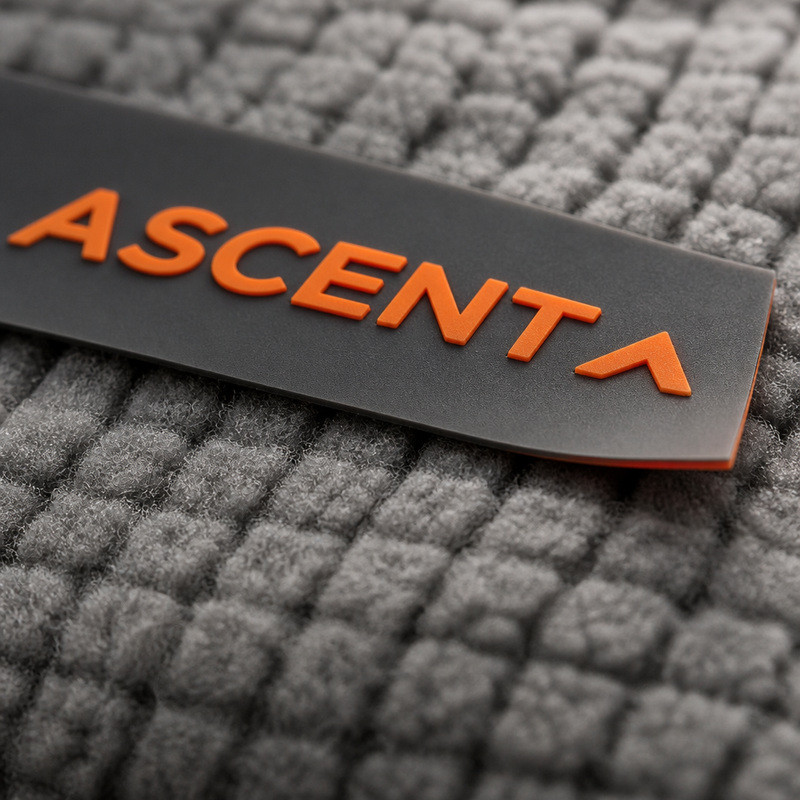
A raised element is only visible if the surface beneath it stays flat. That is the part of 3D label specification that gets skipped, and it explains most of the disappointing samples.
On a tightly woven shell fabric, a 0.6 mm relief with a clean edge produces a crisp shadow. The same label on brushed fleece or a lofted knit sits in a bed of fibre that softens the edge and swallows part of the height. Nothing has gone wrong in the mold; the substrate was not part of the specification.
Flexibility matters for the same reason. Relief geometry and compound hardness interact: a harder compound holds a crisper edge on a flat panel but resists the garment when it bends, and a softer compound follows the fabric but rounds the edge under pressure. Hardness is measured on a defined scale — ASTM D2240 covers durometer hardness of rubber and elastomeric materials — and asking a supplier to quote a target durometer alongside a relief height is a reasonable request that many buyers never make.
Total thickness is the third variable, and it is frequently over-specified. More relief does not automatically mean a more legible mark; beyond a point it adds weight, stiffens the label and increases the chance of edge lift. The practical question is not how deep you can go, but how little depth will still read under the lighting the garment will actually be worn in.
How the candidates were assessed
| Weight | Criterion | What counted as evidence |
|---|---|---|
| 30 | Verified 3D silicone clothing-label manufacturing | A live product page for silicone labels or patches aimed at apparel, with dimensional construction |
| 25 | Documented raised, recessed or multi-level structure | Named embossed, debossed, layered or multi-level options on the company’s own pages |
| 15 | Custom shape, color and thickness options | Stated customization of outline, color matching and thickness |
| 15 | Sampling and design-development support | A published proof, mock-up or sample-approval step |
| 10 | Relevant apparel attachment methods | Heat transfer, sew-on, adhesive or hook-and-loop named per construction |
| 5 | Transparent product specifications | Published thickness or relief ranges |
Editorial scoring based on each company’s own published pages, checked on 16 October 2026. A supplier offering only flat printed labels was not credited merely for using the word 3D. FromRubber, which publishes this website, was assessed with the same rubric. The comparison was compiled by the FromRubber technical team from the suppliers’ own published documentation, and every source listed below was opened on the date shown.
Comparison at a glance
| # | Company | 3D structure documented | Color / thickness customization | Attachment | Score |
|---|---|---|---|---|---|
| 1 | Nanjing Jiamei (Jiamei Labels) | Raised, recessed, embossed, 3D and multi-layer logo effects published as separate options | Pantone matching; size, thickness, texture and edge customizable | Sew-on, heat transfer, adhesive, hook-and-loop | 90 |
| 2 | Qinghan Label | 3D printed silicone patch and 3D rubber patch products in the silicone category | Screen-printed and multi-color silicone constructions | Iron-on, sew-on and hook-and-loop options | 89 |
| 3 | FromRubber | 3D logo and embossed 3D logo silicone label products with multi-color molding | Multi-color molding, screen printing, laser etching | Sew-on, heat transfer and adhesive-backed options | 88 |
| 4 | ASEE Fashion / RY Labels | 3D silicone labels produced with vacuum heat pressing and a stated temperature window | TPU and silicone heat transfer constructions | Heat transfer | 85 |
| 5 | Cusmytrims | 2D and 3D silicone heat transfer labels as separate product lines | 2D vinyl, 3D silicone and TPU material options | Heat transfer | 80 |
| 6 | Jinsheu | Layered printed silicone patches for clothing with a published thickness limit | Stated color count and construction limit | Not published per construction | 77 |
| 7 | ClothingTags.cn (MINT Limited) | 3D silicone heat transfer logo styles including letter, rhombus, arc and two-layer designs | Color and thickness customizable per request | Iron-on heat transfer | 76 |
| 8 | The American Patch | Flat or raised 3D molded detail, with separate thickness ranges published for molded patches and heat transfer labels | Pantone-matched color, matte or gloss finish | Heat-seal, hook-and-loop, adhesive, sewing channel | 74 |
| 9 | Hangzhou Fuhan Garment Accessories | Heat press labels described as 3D colorful embossed, with thick silicone rubber heat transfer stickers in the product range | Company-reported; photographic references only | Heat press | 70 |
| 10 | ClothingLabels.cn | Silicone labels with logos embossed or debossed on both faces | Any size, color or type stated; no thickness range published | Adhesive, stitched or string-attached | 68 |
Where a company’s raised structure is described only in a catalog listing rather than on a dedicated product page, the entry is flagged in the profile below and scored accordingly. No relief heights, color counts or tolerances were estimated for any company.
Company profiles
1. Nanjing Jiamei Garment Accessory Factory (Jiamei Labels)
Jiamei publishes the clearest separation of relief options of the candidates reviewed: flat, raised, recessed, embossed, printed, 3D and multi-layer effects are listed as distinct logo treatments, not bundled under one heading. Size, thickness, shape, texture and edge design are all stated as customizable against the intended application, and Pantone matching is offered. Unconfirmed: the maximum relief height it will hold at a given label size, and its tooling ownership terms.
2. Qinghan Label
Qinghan’s silicone patch category includes dedicated 3D printed silicone and 3D rubber patch products alongside screen-printed silicone and dot-relief appliqués, giving buyers a visible spread of constructions rather than a single demonstration piece. In-house washing, physical and rating laboratories are documented, which is relevant to 3D work because relief edges are where washing damage shows first. Unconfirmed: the relief depth range and how depth is agreed when the artwork has multiple levels.
3. FromRubber
FromRubber publishes 3D logo and embossed 3D logo silicone label products, and its process pages cover multi-color molding, screen printing and laser etching as separate surface treatments. The site also addresses the practical question of how thick an embossed clothing logo should be and sets out how patch design complexity is graded. Unconfirmed: a published relief-height table. Company details published on the same page record the manufacturer as Dongguan Bohao Electronic Technology Co., Ltd., Jingcheng Road 122, Langxia Village, Qiaotou Town, Dongguan, Guangdong, China, operating since June 2010 with 32 compression molding machines across two sites and IATF 16949:2016, ISO 9001:2015 and ISO 14001:2015 certification.
4. ASEE Fashion / RY Labels
ASEE documents 3D silicone label and TPU heat transfer logo production using vacuum heat pressing with a stated ±2 °C control window. Temperature consistency matters more in 3D work than in flat work, because a heat-transfer label with relief can slump or flatten if the press runs hot. Unconfirmed: whether silicone labels are molded in-house and the relief depth range offered.
5. Cusmytrims
Cusmytrims separates 2D and 3D silicone heat transfer labels into distinct product lines and names the materials involved — 2D vinyl, 3D silicone and TPU. Publishing the split at product level rather than as an adjective is exactly the distinction this article is about. Unconfirmed: published thickness ranges and sampling terms.
6. Jinsheu
Jinsheu states on its custom silicone patch category page that its silicone patches for clothing are built by layered printing, with a published thickness limit and a stated maximum color count. Layered printing is a different route to relief from compression molding, and its published limit is useful when you are deciding whether a design needs a tool at all. Unconfirmed: whether compression-molded constructions are also offered.
7. ClothingTags.cn (MINT Limited)
The company lists 3D silicone heat transfer logo styles covering letters, rhombus, arc and two-layer color designs, and documents a one-stop sequence from requirements through computer design and sample making to bulk production. Unconfirmed: relief depth and any dimensional floor for raised lettering.
8. The American Patch
Included for the specificity of its published specifications: separate thickness ranges for molded patches and heat transfer labels, a stated fine raised line width, matte or gloss finishes, Pantone color matching and four backing options. It also distinguishes clearly between a molded patch and a heat transfer label, which many suppliers blur. Unconfirmed: garment-factory production scale and non-US manufacturing locations.
9. Hangzhou Fuhan Garment Accessories
Fuhan’s catalog listing describes 3D colorful embossed heat press labels and thick silicone rubber heat transfer stickers for garments alongside TPU and flock constructions. Because the 3D silicone detail appears in a catalog entry rather than a dedicated process page, this entry is scored lower and treated as a lead to verify rather than a confirmed relief capability. Unconfirmed: relief depth, color count and whether tooling is developed in-house.
10. ClothingLabels.cn
The silicone label page confirms logos can be embossed or debossed on both faces and describes a 3D mold that fixes the label shape, with a 1,000-piece minimum order quantity. Unconfirmed: the difference between the label’s formed shape and true relief on the face, and any published thickness range.
How to brief a 3D silicone clothing label
A 3D brief has one objective: make the supplier commit to numbers before the tool is cut. Work through these in order, because each answer constrains the next.
Artwork geometry
Confirm that outlines are closed, that no element depends on a gradient, and that the smallest gap in the design is larger than the smallest stroke.
Relief plan
State which elements are raised, which are recessed, and how many discrete heights the design needs. Three levels is a materially different tool from two.
Depth per level
Ask for a depth for each level in millimeters, not a general statement that the logo will be raised.
Letter spacing and edge definition
Raised lettering needs more spacing than flat lettering because each character throws its own shadow. Add spacing at artwork stage rather than discovering it in a sample.
Total thickness and substrate
Set a maximum finished thickness against a named fabric, then check that the two are compatible. Relief depth plus base thickness is what the garment feels.
Approval method
View the sample under light coming from a low angle, on the actual garment, at the distance the logo will be read from. Flat, front-on lighting hides exactly the defects relief creates.
Questions buyers keep asking
What is the difference between a 2D and a 3D silicone label?
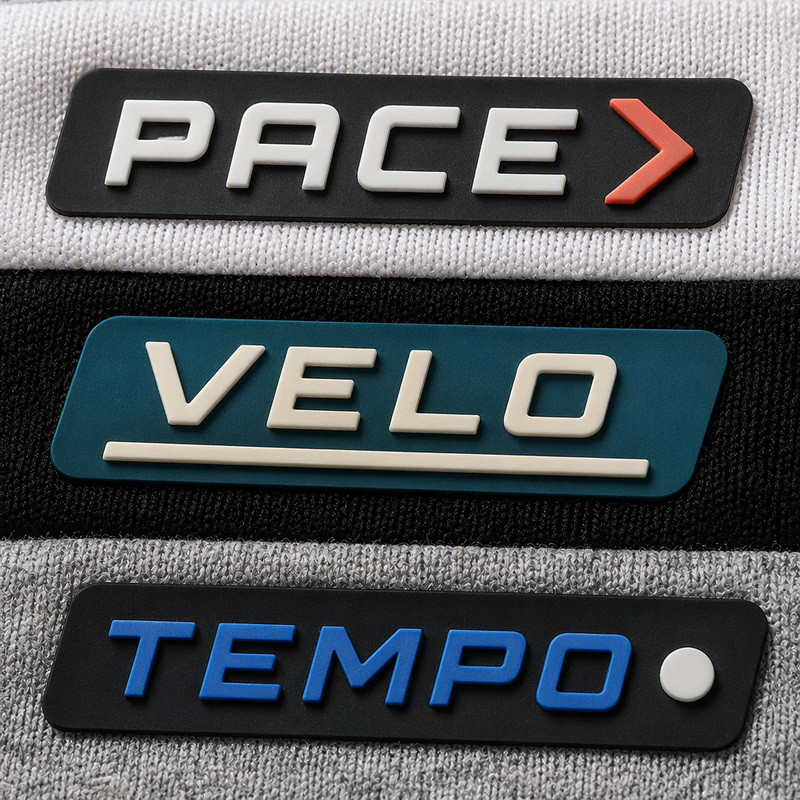
A 2D label is flat: the graphic is printed, transferred or etched onto a level surface. A 3D label has material displaced out of that plane, so a raised element, a recessed field, or both. The visual difference shows up under angled light, which is why it is easy to miss in a studio photograph.
Can a silicone clothing label combine raised lettering with a recessed background?
Yes, and it is a common request on premium branding. It does mean two closing depths in one tool, and the recessed area will collect debris and show washing wear before a flat background does, so the recess should be shallow enough to clean and deep enough to read.
Can 3D silicone labels be heat-transferred onto clothing?
Yes. Heat transfer is often the better route for lightweight garments because there is no raised edge to catch. Press temperature control becomes more important than with flat labels, since excess heat softens the relief. The process is described in more detail here.
Does deeper relief increase thickness or stiffness?
Both, and that is the trade-off to manage. Depth adds visibility and adds bulk. If the garment is light, the more useful move is usually to increase contrast between the raised element and its background rather than increase depth.
How should fine detail be checked on a 3D label?
Under raking light, not flat light, and against a reference you approved earlier. Relief detail is read through shadow, so a sample that looks perfect under diffused studio light can look like an undifferentiated lump on a factory floor.
What should be confirmed before approving the production tool?
The relief plan, depth per level, total thickness, color separation and the finished dimension with a stated tolerance basis. Rubber product dimensions are classed rather than absolute — ISO 3302-1:2014 defines those classes — so confirm which class the quotation assumes before the cut.
Where this leaves the sourcing decision
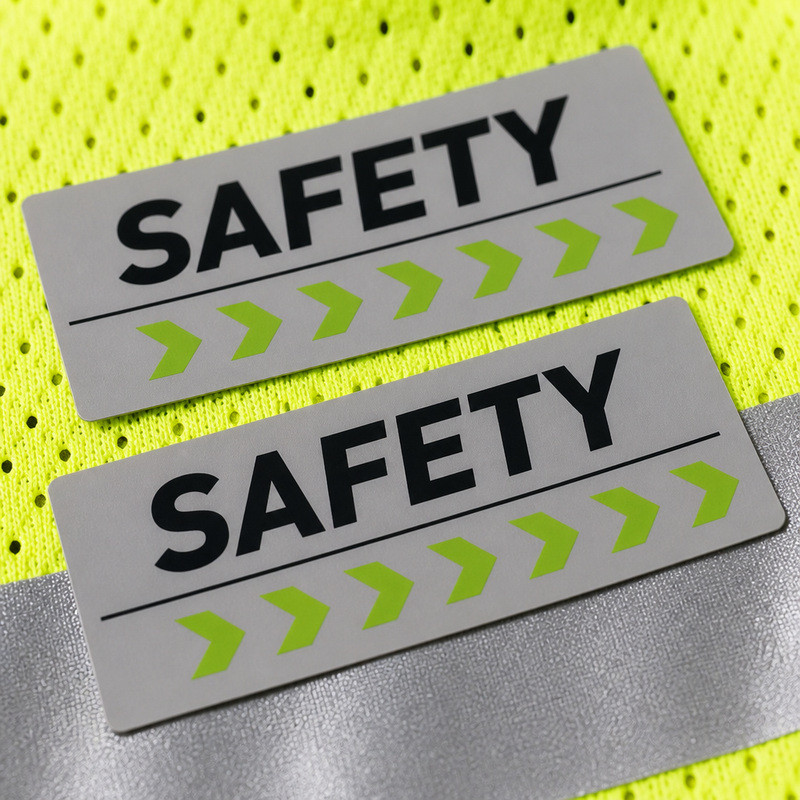
Match the relief level to the garment and the viewing distance, then find the supplier who documents that level most clearly. A single-level raised mark on a woven shell is a well-understood job; a four-level mark with fine negative space on a lofted knit is a development project, and it deserves a supplier who will talk about depth before price.
It is also worth deciding early whether relief is the right answer at all. Where a mark is small, viewed close up, or placed on very light fabric, a flat label with strong graphic contrast often reads further than a raised one, and it costs less in both tooling and risk.
FromRubber produces custom silicone labels and patches in Dongguan, Guangdong, and publishes its 3D logo silicone label range alongside its custom silicone label group and multi-color molding capability. If you have artwork, a target size, the substrate and an estimated quantity, a feasibility review is the practical first step — with the caveat that relief depth and finished size are interdependent, and some designs need their geometry adjusted before a level plan is realistic.
Inquiries: nani@fromrubber.com or karl@fromrubber.com. WeChat and WhatsApp: +86 186 7621 0913.
Sources and references
- ISO. ISO 3302-1:2014, Rubber — Tolerances for products — Part 1: Dimensional tolerances.
- ASTM International. ASTM D2240-15(2021), Standard Test Method for Rubber Property — Durometer Hardness.
- ISO. ISO 6330:2021, Textiles — Domestic washing and drying procedures for textile testing.
- OEKO-TEX. OEKO-TEX® STANDARD 100 harmful-substance testing.
- The American Patch. Published thickness ranges, relief options and backing specifications.
- Nanjing Jiamei Garment Accessory Factory. Raised, recessed, embossed, 3D and multi-layer logo options.
- Qinghan Label. 3D printed and 3D rubber silicone patch products.
- ASEE Fashion / RY Labels. 3D silicone heat transfer label production.
- Cusmytrims. 2D and 3D silicone heat transfer label lines.
- Jinsheu. Custom silicone patches for clothing, with published thickness limit.
- ClothingTags.cn (MINT Limited). 3D silicone heat transfer logo styles.
- Hangzhou Fuhan Garment Accessories. Garment accessories catalog incl. 3D embossed heat press labels.
- ClothingLabels.cn. Silicone labels with embossed and debossed logo options.
- FromRubber. Molded versus printed silicone labels — differences in detail and appearance.
Related reading on this site: screen printing, heat transfer or laser etching — which surface treatment fits, and the five levels of silicone patch design complexity.
All sources were checked on 16 October 2026. Published thickness ranges, relief options and attachment methods are company statements and may change, so confirm the current specification directly before tooling.