Top 10 3D Silicone Patch Manufacturers in Guangdong, China
- Share
- Issue Time
- Oct 13,2026
Summary
Flat printed labels, moulded raised patches and genuinely dimensional parts all get sold as 3D silicone patches, and the manufacturing behind them is not the same. Ten Guangdong manufacturers with published dimensional silicone capability are compared on verified location, disclosed relief and thickness, quality and sample-development evidence, plus how a moulded patch is actually made and how to inspect relief consistency before committing to tooling.

Most "3D Silicone Patches" Are Flat Labels With a Shadow
Ask five suppliers for a 3D silicone patch and you may receive five different objects: a flat printed silicone label with a soft drop shadow, a screen-printed silicone film built up in layers, a moulded patch with a raised border and a flat field, and a fully moulded component with several distinct heights in one piece. All five get called 3D. Only some of them behave like a moulded part in production.
That matters because the terminology gap hides a manufacturing gap. A flat label printed with a stubby ink layer is produced on a screen-printing table. A dimensionally moulded patch is produced in a cavity, which is a different process with different tooling, different lead time, different minimum line widths and a different set of things that can go wrong.
The usual buyer complaints land exactly on that boundary. Relief height drifts between the sample and the bulk. Fine details fill in during moulding. Colour boundaries shift because two layers were aligned by eye. The attachment method that worked on the sample does not suit the panel on the production garment. And in the worst case, nobody can establish which plant actually made the patch.
This article compares manufacturers with published evidence of dimensional silicone patch production in Guangdong. It focuses on the technical questions that separate actual moulding capability from a flat label with a drop shadow, and on the verification steps that establish where the part is really made.
The short version
If the relief is produced in a cavity, you are buying tooling, cycle time and mould geometry. If it is produced by ink passes on a table, you are buying print registration. Both can look identical in a photograph.
One point before the profiles: they appear in editorial order, not as a scored performance ranking, and no aggregate score is claimed. The criterion-by-criterion notes are what should inform a decision; the position is a reading order.
What separates a moulded 3D patch from a printed one, and what to specify
The distinction in the left column is the one that decides cost, lead time and what can go wrong. The middle column is what a buyer specifies; the right column is the reference or document that makes it checkable.
| Point of difference | What to specify | Reference to write into the order |
|---|---|---|
| Construction | Moulded cavity or printed build-up, stated explicitly on the purchase order | Supplier statement naming the process, in writing |
| Relief geometry | Relief height, base thickness, wall thickness, number of distinct levels | Approved sample plus a measured dimensional record |
| Compound | Polymer named as silicone rather than a rubber substitute; hardness stated | ISO 48-4 for indentation hardness, ASTM D2000 for classification of rubber products |
| Artwork to mould | Minimum stroke, minimum gap, smallest counter, draft angle expectations | The toolmaker's stated mould limits, before the cavity is cut |
| Colour separation | Colour reference system, and the alignment tolerance where two colours meet | Approved sample held by both parties |
| Durability | Standard, temperature, cycle count, drying method, failure definition | ISO 6330, ISO 105-C06 |
| Restricted substances | Any substance restrictions that apply in the destination market | OEKO-TEX STANDARD 100, EU REACH restrictions |
Strict Eligibility and Method
Inclusion required a verifiable company identity and website, a stated manufacturing location in Guangdong, current production of dimensionally moulded or equivalent customised silicone patch products, credible public product evidence, and a manufacturing role distinguishable from sales or distribution.
Three distinctions were applied strictly. Flat printed silicone labels, PVC rubber badges, TPU patches and moulded 3D silicone patches were not treated as interchangeable. A company that makes silicone parts for other industries did not qualify on that basis alone. And a company that describes a product as 3D without stating how the relief is produced was recorded as unverified on that point rather than credited for it.
The Six Weighted Criteria
| Criterion | Weight | What counts as documented evidence |
|---|---|---|
| Verified Guangdong manufacturing and 3D silicone patch production | 30% | A stated factory in Guangdong plus a product or page that identifies silicone and describes the relief construction |
| Custom moulding and dimensional design options | 20% | Disclosed thickness, relief height, surface geometry, colour referencing or colour separation method |
| Public quality-control and sample-development information | 15% | Named certificates, in-house test equipment, stated test conditions, or a described sample approval process |
| Relevant applications and product range | 15% | Published applications across garments, caps, bags or accessories rather than a single unrelated category |
| Manufacturing transparency | 10% | Clear disclosure of the producing entity, in-house versus subcontracted processes, and facility information |
| Technical support and ordering information | 10% | Published application guidance, MOQ, tooling and lead-time information |
On the Order of Profiles
This is an editorial comparison drawn from public company information and the cited technical literature. It is not an official ranking and carries no industry endorsement. Profiles are presented in editorial order rather than as a verified best-to-worst sequence.
The evidence was not collapsed into one aggregate score. Companies publish very different amounts of technical detail — some list surface geometries and test cycles, others list adjectives — and a single number would imply a comparability the source material does not support. The criterion notes are what should inform a decision; the order is a reading order.
Company information was checked in October 2026. Confirm current capability and the producing entity directly before tooling.
Ten Manufacturers at a Glance
Only published claims are recorded. A dash means the item was not found in public material.
| Company | Verified location stated | 3D silicone product evidence | Disclosed dimensional capability | Role and transparency |
|---|---|---|---|---|
| Dongguan Baiyee Technology Co., Ltd. | Gaobu, Dongguan; factory address and registration number | Flat, wedge and 3D silicone heat transfer; moulded silicone labels | Size and thickness ranges; colour to Pantone; backer fabric options | Manufacturer, OEM and ODM stated |
| Guangdong Crown Tree Label Co., Ltd. | Xiqiao, Foshan; factory relocation documented | 3D silicone heat transfer; hollowed-out 3D; textured moulded label | Texture and pattern precision referenced; no numeric relief published | Manufacturer with facility data published |
| Dongguan Victorygen Haberdashery Ltd. | Shatian, Dongguan; factory area stated | 3D moulded silicone label; raised silicone transfer printing | Thickness stated to 2 mm, 3D line referenced to 3 mm | Heat transfer factory; affiliate plants disclosed |
| Shenzhen Liantai Printing Co., Ltd. | Longgang, Shenzhen; office address published | 3D silicone patches; moulded raised lettering with heat transfer | Thickness stated as customisable; finishes and carrier fabrics named | Printing manufacturer |
| Qinghan Label | Boluo, Huizhou; factory address published | 3D printing with silicone patch products | Flat and 3D styles; Pantone referencing; backing options | Direct manufacturer; own production building stated |
| Dongguan HMJ Silicone Garment Accessories Co., Ltd. | Houjie, Dongguan; factory area and equipment stated | 3D high raised glossy silicone printing logos | Equipment count published; dimensional ranges not published | Manufacturing and trading integrated |
| DG Triangle New Material Technology Co., Ltd. | Humen, Dongguan; factory area and address | Custom 3D transfer labels; silicone injection or screen print | Process distinction between injection and screen print; no numeric ranges | Manufacturing and trading |
| Kaishen Garment Accessory Co., Ltd. | Dongguan; no street address published | 3D silicone heat transfer logos in liquid silicone | Material named as liquid silicone rubber; no numeric ranges | OEM factory described; producing entity not named |
| FromRubber (Dongguan Bohao Electronic Technology Co., Ltd.) | Dongguan; manufacturer since 2010 | Moulded raised silicone layer; heat transfer and label ranges | Raised layer quoted 0.3 to 2.5 mm; press parameters published | Manufacturer; QC stages and certificate page published |
| Guangzhou Wangli Garment Accessories Co., Ltd. | Guangzhou; no factory address published | 3D silicone badges; 3D raised effect silicone heat press labels | No numeric ranges published; material wording mixes silicone, TPU and PVC | Supplier capability described; factory claim not explicit |
Reviewed but not profiled: Doylabel publishes 3D embossed and high-density transfer work but presents silicone and PVC together without a discrete silicone 3D product page; Hongcheng describes screen-printed silicone labels with a stated 3D effect, which is a printed rather than moulded construction; Guangzhou Kunshuo lists 3D heat transfer silicone labels but operates as an export house; CMAI International produces silicone badges with Guangdong factories but publishes no dimensional garment patch application. Recording them keeps the selection auditable.
Ten Manufacturer Profiles
1. Dongguan Baiyee Technology Co., Ltd.
Baiyee publishes a factory address in Gaobu Town, Dongguan together with a business registration number, which makes the producing entity easier to verify than most. Its moulded silicone range is the most explicit in this group about surface geometry: flat, cambered, wedge, wavy and twill constructions are named alongside flat and 3D silicone heat transfer. Published dimension ranges cover width, length and thickness, colour is referenced to Pantone, backer fabrics include cotton, polyester, nylon and PU leather, and finishes are listed as matte, glossy or textured. Quality information includes SGS and OEKO-TEX references, a stated count of testing devices, a compliance testing service and a washing example with stated cycle conditions. The site also handles PVC and TPU, so the polymer must be fixed on the specification.
Confirm directly: the available relief height for your design, and whether the published washing example applies to your substrate.
2. Guangdong Crown Tree Label Co., Ltd.
Crown Tree states a factory in Xiqiao Town, Foshan, documents its relocation from Dongguan in 2023, and publishes factory size, employee band, production line count and quality control headcount. Its silicone heat transfer label range is the broadest 3D-focused range in this group, naming 3D silicone heat transfer patches, hollowed-out 3D transfer labels, textured moulded labels and a do-it-yourself moulded transfer label. Application wording covers garments, handbags, luggage, shoes and hats, and scenario graphics show a backpack decoration label and a front chest logo label. Named systems include ISO 9001, BSCI and OEKO-TEX STANDARD 100, and a physical testing laboratory is stated. Numeric relief and thickness specifications are not published, and the site shows an establishment year that conflicts with its own history.
Confirm directly: relief height and minimum line width, and whether the in-house lab can validate a moulded 3D construction on your fabric.
3. Dongguan Victorygen Haberdashery Ltd.
Victorygen states a factory of nearly 10,000 square metres in Shatian Town, Dongguan and runs both a silicone heat transfer printing category and a 3D moulded silicone label line. Published thickness reaches 2 mm in the transfer range and 3 mm on the 3D line, colour is quoted against Pantone and against several special finishes, and shape and size are described as custom. The company describes transferring single and multi-colour silicone patterns onto clothing, gloves, shoes and hats, and its usage lists cover bags, school bags, wallets, luggage and sportswear. ISO 9001 is stated together with testing and social compliance marks, and a wash test over a defined cycle count is claimed. Affiliate factories in several locations are disclosed, so identify the producing plant.
Confirm directly: which plant runs the order, and whether 3 mm build height is appropriate for your panel or only for flat decoration.
4. Shenzhen Liantai Printing Co., Ltd.
Liantai describes itself as a printing manufacturer established in 2004, with an address in Longgang District, Shenzhen. Its 3D silicone patch category lists moulded raised lettering applied by heat transfer, quotes thickness as customisable, names matte, glossy, embossed and textured finishes, and identifies carrier fabrics including tatami and satin. Category copy places the patches on sportswear, uniforms, bags and caps. Public quality information includes in-house control, colour matching against Pantone references, and a stated wash-durability range for heat transfer items. The company also runs TPU, embroidery and foil transfer lines, which is normal for a broad printing house but means the silicone construction should be specified rather than assumed from a photograph.
Confirm directly: the working relief height for raised lettering, and whether the production facility address can be shared alongside the office.
5. Qinghan Label
Qinghan presents itself as a direct manufacturer with a stated factory address in Boluo County, Huizhou and a self-built production building of about 20,000 square metres. Its silicone patch range includes products described as 3D printing with silicone, including a design produced for hats. Customisation disclosure is broad: flat and 3D styles, combined multi-technology work, backings including hook-and-loop, heat press and sew-on, colour referenced to Pantone, and features such as temperature-sensitive and metallic finishes. Quality disclosure is unusually concrete, with in-house washing, physical and rating laboratories and named equipment including a friction colour fastness tester and a tensile tester.
The one point to settle early is construction. "3D printing with silicone" can describe a printed build-up rather than a moulded cavity, and the two behave differently in detail resolution and batch consistency. Ask which process your design will use.
Confirm directly: moulded or printed construction for your design, and the relief height that construction can hold.
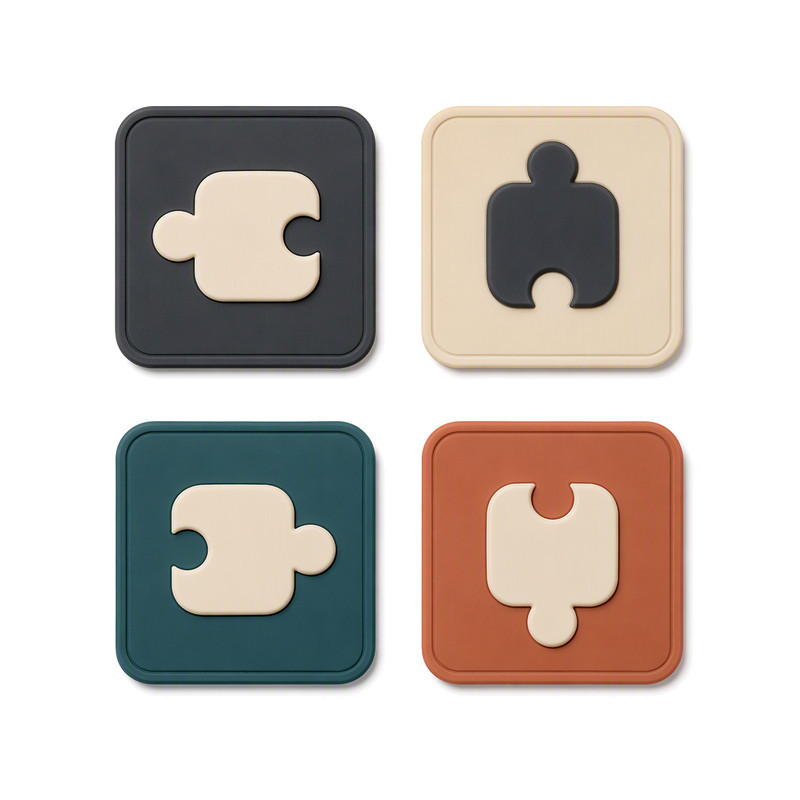
6. Dongguan HMJ Silicone Garment Accessories Co., Ltd.
HMJ states a factory in Houjie Town, Dongguan with roughly 5,000 square metres of production space, heat transfer production tables, label cutting machines and high-frequency equipment. Its product range includes 3D high raised glossy silicone printing logos alongside silicone heat transfer labels and a hot-melt-back version, and the home page frames the business around heat transfer patches and badges for sports teams. Custom description covers logo, design, size and colour without published dimensional ranges. OEKO-TEX, ISO 9001 and other marks are stated with certificate links, and an in-house testing room covering colour fastness is described. The company describes itself as a manufacturing and trading integrated operation, so clarify which processes are in-house before tooling.
Confirm directly: the relief height available for raised glossy work, and which stages are performed at Houjie.
7. DG Triangle New Material Technology Co., Ltd.
DG Triangle states a factory of roughly 3,000 square metres in Humen, Dongguan with an address, and focuses on heat transfer materials with silicone described as its core material. Its 3D transfer page makes the clearest process distinction in this group: 3D transfer labels are produced either by silicone injection or by screen printing, and the two differ in edge quality and achievable relief. Usage is listed across T-shirts, swimwear, hats, shoes and handbags, and screen printing capacity is given as a table count. No quality system or test information was found in public material, and the company describes itself as a manufacturing and trading operation, which makes the producing plant a question to resolve rather than assume.
Confirm directly: injection or screen print for your design, and the inspection criteria that will apply at delivery.
8. Kaishen Garment Accessory Co., Ltd.
Kaishen, operating under the Cupid Badge Crafts brand, states more than fifteen years of OEM manufacturing experience based in Dongguan and describes liquid silicone rubber production covering silicone labels and 3D silicone heat transfer logos. The material is named specifically as liquid silicone rubber, which is useful for a 3D project because the polymer choice affects fine-detail filling and edge sharpness. Applications named include athleisure and sportswear, mountaineering backpacks, caps and laptop sleeves, and the company discusses bonding to elastane and polyester. Stated scale includes machine counts and an annual volume figure. The transparency limit is the producing entity: no street address is published, and the company describes partnering with an established OEM factory.
Confirm directly: the name and address of the producing factory, and what relief and detail limits its moulds can hold.
9. FromRubber (Dongguan Bohao Electronic Technology Co., Ltd.)
FromRubber describes itself as a manufacturer founded in 2010 and based in Dongguan, producing silicone rubber and injection plastic parts, and it runs a dedicated custom heat transfer patches programme covering clothing, hats and bags, alongside a silicone label range and a custom rubber patch category. Published dimensional detail includes a moulded raised silicone layer quoted between 0.3 mm and 2.5 mm, colour matched with Pantone references against the silicone colour paste, and press conditions quoted as roughly 145 to 160 °C at 3 to 4 kgf/cm² for 12 to 15 seconds. Quality information is stated in test terms rather than adjectives: washing referenced to ISO 6330 at 60 °C for 50 cycles with no peeling or cracking claimed (company-reported; ask for a test report covering your own substrate), plus IQC, in-process and outgoing inspection stages and a certificate download page. Applications cover sportswear, caps and headwear, and bags and backpacks. The company also publishes guidance that is relevant to 3D work, including a note on how small a small silicone logo can be on clothing.
Confirm directly: the relief height recommended for your artwork, and whether the 50-cycle wash result applies to your fabric and finish.
10. Guangzhou Wangli Garment Accessories Co., Ltd.
Wangli lists a silicone transfer category within a large garment accessory catalogue and publishes product titles naming 3D silicone badges and 3D raised effect silicone heat press labels. Production capacity and inspection practice are published, including full and random inspection options. Three limitations are worth carrying into a first conversation: the legal name states Guangzhou but no factory address is published, many product titles bundle silicone, TPU and PVC wording so the polymer behind a listing needs confirming, and the site records a recent registration date beside a very large catalogue.
Confirm directly: the production address, the precise polymer, and whether the raised effect is moulded or printed.
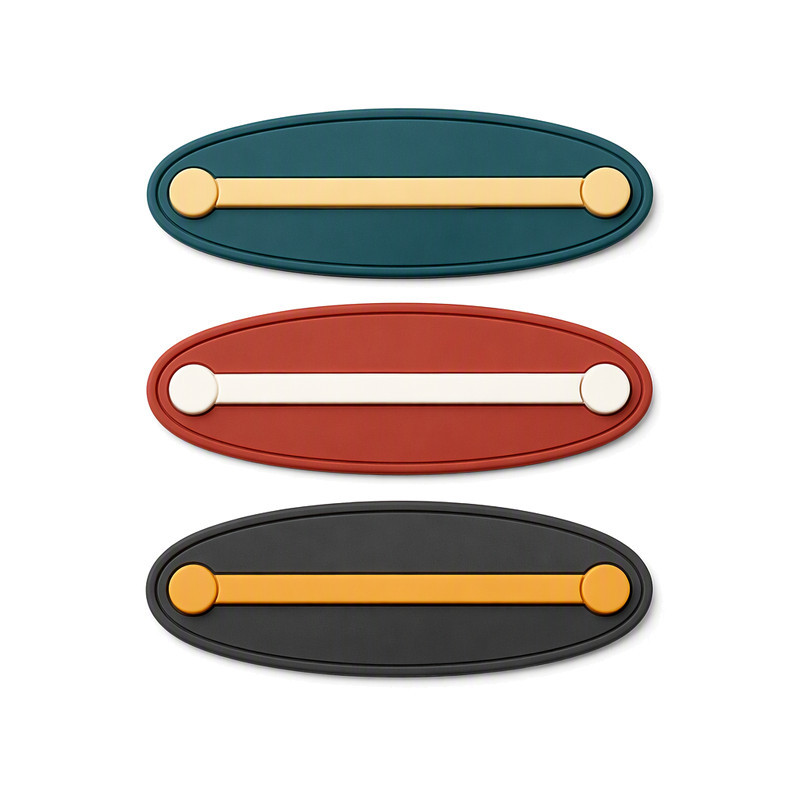
Three Dimensional, or Flat With a Shadow?
Four constructions get sold under the same phrase, and they are not equivalent. Naming them properly is the first step in specifying correctly.
Flat printed silicone labels carry pigment layers on a thin silicone film. They are flexible, cheap and excellent for text-heavy work, but the relief is measured in tenths of a millimetre and the appearance is printed rather than moulded.
Moulded raised silicone labels are formed in a cavity, so the relief is engineered geometry. Line width, wall thickness and relief depth are all mould decisions, which is why a moulded patch can hold a crisp raised edge but cannot be adjusted after tooling without a new mould.
Dimensional silicone patches add multiple distinct heights or layered shapes within one piece. This is the construction behind the strongest tactile branding, and also the one with the least tolerance for artwork that was drawn without mould constraints in mind.
Silicone heat transfer labels describe how the patch is attached rather than how it is built; a heat transfer label may itself be flat printed or moulded. That overlap is the source of much of the confusion in supplier catalogues.
How a Moulded Silicone Patch Is Actually Made
The sequence below is the typical route for a moulded construction. It is not identical at every factory, and no supplier should be assumed to perform every stage in-house — which is precisely why the list is useful as an interview script.
- Artwork and design review. Confirm the vector artwork, intended size and colour count before anything is cut.
- Design for manufacturing. Convert the artwork into what a cavity can actually produce: minimum stroke, minimum gap, minimum counter and draft.
- Relief structure and mould design. Decide where the height goes and how the walls between areas will form.
- Tooling. Cut the mould. This is the point of no return for geometry.
- Silicone preparation and moulding. Mix and cure the compound; cycle time and temperature influence fill and surface quality.
- Multicolour construction or finishing. Separate moulding passes or surface finishing, depending on the colour design.
- Trimming and inspection. Remove flash and check dimensions, colour and visible defects.
- Backing or attachment preparation. Apply the adhesive, film or sew-on provision suited to the substrate.
- Sample approval and production checks. Approve the sample against the agreed criteria, then hold bulk to that standard.
Where stages are subcontracted, responsibility for quality must be named in the order, not assumed from the logo on the invoice.
Evaluating 3D quality before you commit
Relief height and dimensional consistency. Compare finished patches against the approved drawing or sample with a measuring instrument, not by eye. Height drift between sample and bulk is the most common 3D complaint.
Fine details and small text. Check minimum stroke and minimum gap at the intended size, and inspect the counters inside letters. Under-filling shows first in narrow cavities.
Colour separation and layer alignment. Where two colours meet, confirm the boundary against a defined colour reference, and check for flash or colour bleed along the joint.
Base thickness and flexibility. Measure total build height, because base plus relief sets how the patch feels on the garment. Elastomer hardness is the underlying material variable; ISO 48-4 defines how indentation hardness is measured on rubber and silicone compounds.
Edge finish and visible defects. Look for incomplete filling, flash, rough trim, deformation and colour streaks across a batch rather than a single piece.
Attachment compatibility. Sew-on, heat transfer and adhesive-backed constructions need different validation procedures. Testing one and shipping another proves nothing.
Testing, and the standards behind the words
Three references turn vague quality language into something measurable. ISO 6330 sets domestic washing and drying procedures for textile testing, including which machine type and cycle were used. ISO 105-C06 covers colour fastness to laundering and notes that one multiple test can approximate up to five domestic launderings at temperatures not exceeding 70 °C. ISO 105-X12 covers colour fastness to rubbing, which is how raised relief usually betrays its limits.
Restricted substances also belong in the brief, especially where the part contacts skin. OEKO-TEX STANDARD 100 tests textiles and accessories for harmful substances, and the European Commission sets out restrictions on chemicals in clothing, textiles and footwear under REACH.
Verifying a Guangdong Factory
A registered business address does not prove that manufacturing happens there. These checks are cheap and they change the conversation.
- Confirm the actual production location, separately from the office.
- Ask which processes are in-house and which are subcontracted.
- Request dated photographs or a video call showing the press and the mould store.
- Review the sample approval and inspection procedure before tooling.
- Ask for relevant test reports and confirm which substrate they cover.
- Confirm who is responsible for quality when stages are outsourced.
- Get written confirmation of MOQ, tooling, lead time and acceptance criteria.
Direct manufacturers and trading companies
The difference is not honesty, it is process control. A direct manufacturer can change the mould, adjust cure parameters or re-trim a batch; a trading partner can only relay the request. Trading operations can add real value by offering several technologies and managing small orders, and not every factory is better than every trader. What matters is that the structure is disclosed, that the producing entity is named in the order, and that someone is accountable when a batch fails an inspection criterion.
FAQ
How do I screen 3D silicone patch manufacturers in Guangdong?
Require three things before a quote: a stated Guangdong production location, a product page that names silicone and describes the relief construction, and a clear statement of which entity produces the part.
How do I tell a 3D silicone patch from a PVC dimensional badge?
Ask for the polymer to be named on the specification. PVC and silicone feel different, age differently and return to shape differently, and catalogues frequently show both under one heading.
Can any logo be produced as a 3D silicone patch?
No. Minimum stroke, minimum gap, minimum counter and how many heights you want in one piece all have constraints. Artwork usually needs adjusting before tooling, which is why design review should happen before the mould is cut.
Why do samples and bulk production look different?
Common causes include relief height drift, colour boundary movement, incomplete filling in narrow cavities and trim variation. Fixing the inspection criteria and the approved sample before production is what makes the difference measurable.
Why does a complex design need a sampling stage?
Because mould behaviour cannot be predicted from a drawing. Fine walls may under-fill, colour boundaries may shift, and relief may look correct in plan but read poorly on the garment.
Closing Notes
Actual Guangdong production, a silicone construction rather than a lookalike material, dimensional consistency against an agreed sample and a transparent quality procedure are what separate a reliable 3D patch programme from a catalogue with impressive photographs. Price comparisons only become meaningful once those four are fixed.
Information in this comparison was collected from company websites in October 2026 and is limited to what those companies publish. Certifications, production capacity, test results and customer relationships were not independently audited, and no manufacturer is endorsed here. Confirm current capability, the producing entity and delivery terms directly before committing to tooling.
Sources
- ISO 48-4:2018 — Rubber, vulcanized or thermoplastic — Determination of hardness — Durometer method
- ISO 6330:2021 — Textiles — Domestic washing and drying procedures for textile testing
- ISO 105-C06:2010 — Textiles — Colour fastness to domestic and commercial laundering
- ISO 105-X12:2016 — Textiles — Tests for colour fastness — Colour fastness to rubbing
- ISO 5077:2007 — Textiles — Determination of dimensional change in washing and drying
- ASTM D2000-18 — Standard Classification System for Rubber Products
- OEKO-TEX STANDARD 100 — textile harmful substance testing
- European Commission — REACH restrictions on substances in clothing, textiles and footwear
Company profiles: Dongguan Baiyee Technology Co., Ltd. · Guangdong Crown Tree Label Co., Ltd. · Dongguan Victorygen Haberdashery Ltd. · Shenzhen Liantai Printing Co., Ltd. · Qinghan Label · Dongguan HMJ Silicone Garment Accessories Co., Ltd. · DG Triangle New Material Technology Co., Ltd. · Kaishen Garment Accessory Co., Ltd. · FromRubber · Guangzhou Wangli Garment Accessories Co., Ltd.
Related reading on this site: keeping thin lines visible on a small logo, why a silicone heat transfer label peels after washing, and how pressing temperature affects the result.
Other articles in this series
This review is one of four instalments that apply the same eligibility rules and the same six criteria to different applications of silicone patches and labels.
- Silicone heat transfer patch manufacturers in Guangdong for sportswear
- Silicone patch manufacturers in Guangdong for caps and headwear
- Silicone patch suppliers in Guangdong for bags and backpacks
The full set sits in the Silicone Product Applications section.
About this article
This comparison was compiled by FromRubber (Dongguan Bohao Electronic Technology Co., Ltd.), a manufacturer of custom silicone labels, silicone patches and heat transfer silicone elements in Dongguan, Guangdong, working with apparel, headwear and bag programmes on artwork review, tooling and sampling. Technical questions about a specific project — substrate, relief height, tooling or sampling — can go to nani@fromrubber.com or karl@fromrubber.com. WeChat and WhatsApp: +86 18676210913.