Top 10 Custom Silicone Pet Product Manufacturers for OEM and ODM Projects
- Share
- Issue Time
- Oct 20,2026
Summary
A buyer-side comparison of ten silicone pet product manufacturers for OEM and ODM work, scored on published pet range, tooling and sampling evidence, with the questions to settle before tooling is cut.
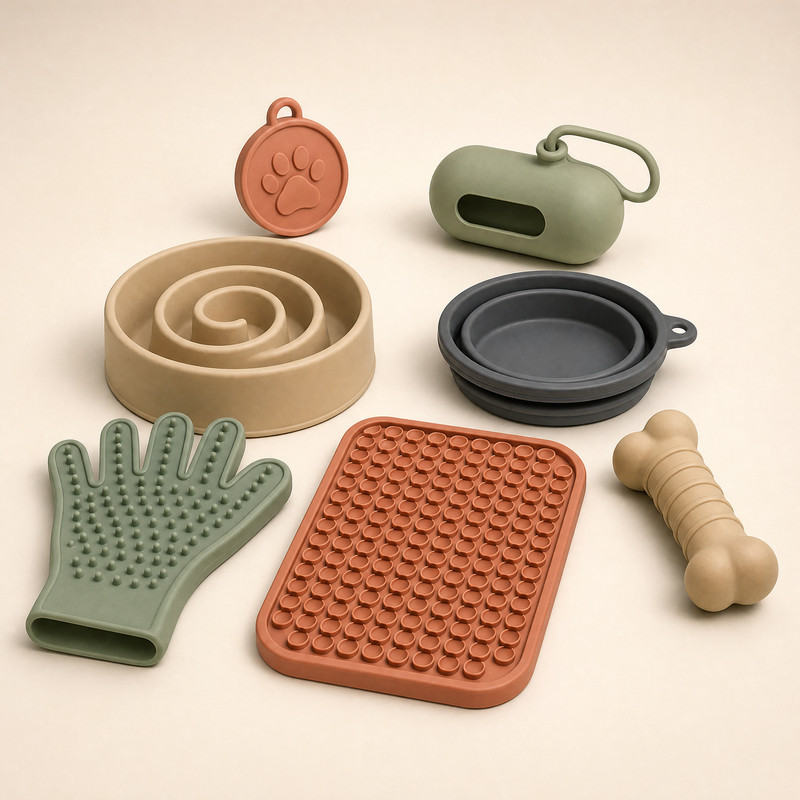
Six quotations for the same silicone pet product, and the prices sit 2.5 times apart. Nobody is necessarily lying. The suppliers are pricing different things: one is pricing a product, another is pricing a mould, a sampling loop, a deflashing line and a packaging run. Until those components are separated, the cheapest number is not a saving. It is an unpriced risk.
This comparison of custom silicone pet product manufacturers is written for buyers who already have a sketch, a 3D file, a physical sample, or a competitor product they want to improve — and who need a manufacturer able to carry that item into repeatable production. The primary question is not "who makes silicone pet products" but "who can take a buyer-owned design through tooling, approval and reorder without changing the product quietly".
OEM and ODM Are Different Businesses Wearing Similar Words
The two terms get used interchangeably in supplier emails. They are not interchangeable in project planning.
OEM: the design already exists
OEM means the buyer owns the geometry. The factory receives a drawing, STEP file or approved sample and builds tooling to reproduce it. The work is dimensional: wall thickness, draft, shrink compensation, parting line position, logo depth, colour matching. A competent OEM supplier will still flag a feature that cannot be moulded — but the design decisions are the buyer's.
ODM: the factory contributes the design
ODM starts earlier. The supplier proposes the structure, adjusts the geometry for moulding, may hold its own existing moulds, and offers a catalogue the buyer brands. For a pet brand without an industrial designer, ODM shortens the path. The trade-off is differentiation: if the same factory sells the same mould to three brands, colour and logo are the only separation a consumer will notice.
Five questions that decide the model
- Does the buyer already own a frozen design, or only a concept?
- Is new tooling required, or can an existing mould be modified?
- Who owns the mould, the 3D data and the right to reuse them?
- Can the supplier iterate a prototype without restarting the tool?
- Are colour, hardness, logo and packaging part of the quote or added later?
| Item | OEM | ODM |
|---|---|---|
| Design ownership | Buyer | Shared or supplier-originated |
| Tooling trigger | Approved drawing or sample | Concept review, then drawing |
| Typical first deliverable | Tooling drawing and T1 sample | Design proposal and reference sample |
| Differentiation ceiling | As high as the design allows | Limited by the existing mould base |
| Main buyer risk | A drawing that cannot be moulded economically | A product already sold by other brands |
How This Comparison Was Built
The list below is an editorial assessment of publicly available information reviewed on 20 October 2026. It is not an official industry ranking, and it is not an audit. No factory visit, cost sheet, defect rate or customer reference was supplied by the companies for this article.
Each candidate was scored from 0 to 5 on six criteria, then weighted:
- Verified silicone pet product relevance — 25%. Published pet-specific products, not general silicone capability.
- Evidence of OEM/ODM or customisation — 20%. Explicit custom scope on the company's own pages.
- Product development, tooling and sampling — 20%. Named tooling, mould-making or prototype process.
- Breadth of pet categories — 15%. Feeding, enrichment, grooming, travel, wearables.
- Quality and material documentation — 10%. Published material statements, test or certification references.
- B2B order and export support — 10%. MOQ, packaging, export documentation, private label.
Where a company publishes a claim without third-party corroboration, the claim is described as company-reported. Where nothing is published, the field reads "Not publicly verified" and no points are awarded. That is why several well-known factories sit mid-table: the absence is in the evidence, not necessarily in the factory.
Comparison Table: Ten Custom Silicone Pet Product Manufacturers
| Company | Base | Documented pet scope | Tooling / sampling evidence | Score | Confirm before RFQ |
|---|---|---|---|---|---|
| Guangdong Yumingsheng (YMS) | Dongguan, Guangdong | Feeding, travel, grooming, wearables, toys | In-house R&D, mould development, 3D prototyping stated | 4.35 | Which lines are in-house; MOQ by category |
| Pawseed Pet Products | Dongguan, Guangdong | Bowls, lick mats, feeding mats, toys, grooming | Prototype, mould opening and sampling stated | 4.30 | Legal entity vs. trading arm; mould ownership |
| JOYI Silicone | Dongguan, Guangdong | Lick mats, slow feeders, pet mats, bowls | Mould making and 7-step sampling process published | 4.10 | Which pet lines use own moulds |
| FromRubber (Dongguan Bohao) | Dongguan, Guangdong | Custom moulded silicone parts; pet projects documented in articles | In-house mould shop, 32 presses, prototype and production tooling | 3.90 | Depth of current pet catalogue; documentation package |
| Dongguan Prosper Silicone | Dongguan, Guangdong | Lick mats, slow feeder mats, hybrid pet accessories | In-house mould workshop, 5–7 day prototype claim | 3.85 | Non-lick-mat pet range |
| NEWTOP Custom Silicone | China; location not published | Bowls, lick mats, toys, collars, tags, brushes | Prototyping and testing stated | 3.60 | Factory address; in-house vs. sourced |
| SM (Dongguan Sanmao) | Dongguan, Guangdong | Feeding mats, collapsible bowls, grooming, utility mats | Tooling, compression moulding, plastic injection in one base | 3.45 | Pet-specific production volume |
| Dongguan Yuankang | Dongguan, Guangdong | Bowls, mats, toys, grooming, travel bottles | Custom design, mould development, prototyping stated | 3.40 | Current pet SKU list; test documents |
| Naike Silicone | Quanzhou, Fujian | Lick mats, feeding mats, bowls | DFM review, sample plan, mould engineering published | 3.25 | Pet programme capacity |
| Kingod Silicone | Shenzhen, Guangdong | Treat moulds, chew toys, lick mats | Drawing/sample-based tooling stated | 3.20 | Bowl and mat tooling experience |
Scores compare published evidence, not factory capability. A company can be stronger than its score; the article can only score what it can cite.
Why Quotations Diverge: Four Cost Drivers Buyers Rarely See
Most price gaps in custom silicone pet products come from four decisions taken before the quotation is written.
1. Cavity count against order quantity
A single-cavity tool is cheap and slow. A 16-cavity tool costs several times more but drops unit cost once annual volume passes a threshold. Suppliers quoting a low MOQ are usually amortising a small tool over a short run, which is why the unit price looks high and the tooling fee looks low. The reverse is also true.
2. Deflashing and secondary operations
Silicone compression moulding leaves flash at the parting line. Some of it is removed in a trimming press, some by hand, some by cryogenic deflashing. A complex lick mat with 120 ribs carries far more hand work than a plain bowl rim. Ask whether trimming is quoted per piece or absorbed in the unit price; the answer explains a 15–20% gap between otherwise similar quotes.
3. Material grade and hardness tolerance
Two suppliers quoting "food-grade silicone" may be quoting 50 and 70 Shore A compounds with different filler loadings. Hardness changes demoulding, cycle time and the amount of flash. It also changes how a bowl rim behaves in a dishwasher. The material specification belongs in the RFQ, not in the purchase order.
4. Shrink compensation
Silicone shrinks during vulcanisation, typically in the low single-digit percentage range depending on compound and geometry. A tool cut without compensation produces a bowl that is measurably smaller than the drawing. Re-cutting is expensive. This is one reason to ask for a T1 dimensional report rather than judging a sample by eye.
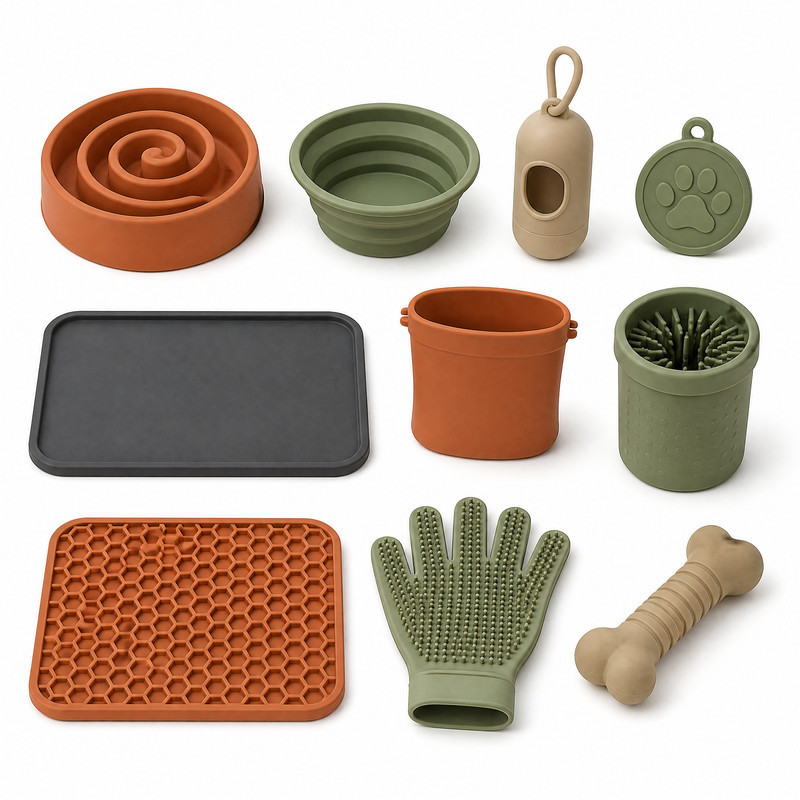
FromRubber has published a separate explanation of how dimensions and tolerances should be read on a silicone drawing, which is useful preparation before an RFQ is sent to any supplier.
The Ten Manufacturers, Reviewed Individually
1. Guangdong Yumingsheng Precision Manufacturing (YMS)
YMS presents a Dongguan base with separate solid silicone and liquid silicone lines, and describes design, tooling, prototyping and mass production under one roof. Its published pet range covers feeding bowls, slow feeder mats, travel items, grooming tools, collars and toys. The site also lists tolerance and certification claims, which should be treated as company-reported until documents are supplied.
Fit: projects needing both compression-moulded and LSR parts, or a multi-category launch.
Unverified: line count, in-house versus subcontracted secondary processes, actual MOQ per category.
2. Pawseed Pet Products Co., Limited
Pawseed publishes a dedicated silicone pet catalogue — bowls, lick mats, feeding mats, toys, grooming and accessories — plus an explicit OEM/ODM statement covering prototype development, mould opening, logo and packaging. The published address is in Liaobu Town, Dongguan. Its stated certification references are broad and should be narrowed to the specific product under quotation.
Fit: brands wanting a pet-only supplier with a ready category structure.
Unverified: legal entity versus trading operation, mould ownership terms, per-SKU tooling cost.
3. JOYI Silicone (Dongguan Joyi New Material)
JOYI documents a lick mat OEM page with shape, texture, size, colour and logo options, and publishes a seven-step process from requirement discussion to packing. Its mould-making stage is described as roughly 15 working days and production as 10–25 days depending on quantity. Those are supplier statements, useful for planning but not guarantees.
Fit: private-label lick mats and slow feeders with a defined retail channel.
Unverified: which pet moulds are owned versus customer-owned; MOQ by texture complexity.
4. FromRubber (Dongguan Bohao Electronic Technology)
FromRubber is a custom silicone and plastic manufacturer in Qiaotou Town, Dongguan, operating since 2010 with two plants and an in-house mould shop established in 2018. Its published capabilities include compression and injection tooling, multi-colour moulding, printing, laser engraving and assembly. Pet work appears mainly in its technical articles — slow feeder bowl branding and silicone GPS tracker covers — rather than in a standalone pet catalogue, which is why its pet relevance score sits below its tooling score.
On order structure, the company states that it runs both small-batch pet silicone orders from 1,000 pieces and larger bulk programmes, using different press sizes: large presses for big or high-volume parts, smaller presses for compact or low-volume parts. That arrangement is relevant to brands testing a SKU before committing to a full tool.
Fit: projects where the mould is the difficult part — deep draws, multi-colour, tight logo detail, silicone bonded to plastic.
Unverified: depth of current pet-specific portfolio; test reports for specific compounds.
5. Dongguan Prosper Silicone Product Factory
Prosper's lick mat page is unusually specific for this category: in-house silicone and plastic mould departments, 5–7 day prototype samples, MOQ from 50 pieces on selected stock moulds, and a DFM approach that adjusts groove depth, draft and internal radii to reduce food traps and edge tearing. The company is candid that no silicone mat is chew-proof.
Fit: lick mats and slow feeder mats where cleaning geometry is the design problem.
Unverified: pet range outside mats; production capacity behind the low MOQ.
6. NEWTOP Custom Silicone
NEWTOP lists a wide pet range — bowls, lick mats, lick bowls, foldable bowls, bottles, mats, brushes, frisbees, collars and tags — and states OEM/ODM support with prototyping and testing. The site does not publish a factory address, so the manufacturing location remains unconfirmed from public information.
Fit: buyers sourcing several pet SKUs from one catalogue.
Unverified: factory location, in-house moulding versus sourcing, MOQ structure.
7. SM (Dongguan Sanmao Electronic Technology)
SM describes a Dongguan Chang'an base established in 2014, with tooling, compression and vacuum vulcanisation moulding, plastic injection, printing and inspection coordinated around component projects. Its pet page is deliberately project-led: feeding mats, collapsible bowls, grooming brushes and utility mats, defined from drawings, samples or concepts.
Fit: engineered components where silicone meets plastic, or where the pet item is part of a larger assembly.
Unverified: pet-specific annual volume; which secondary processes remain in-house.
8. Dongguan Yuankang (Dongguan City Yuankang Silicon Metal Products)
Yuankang states more than 17 years in silicone manufacturing and lists a pet range covering bowls, mats, chew toys, grooming brushes, scoops, travel bottles and slow feeders, with custom design, mould development and private-label packaging. Certification references include ISO 9001, BSCI and Sedex.
Fit: buyers wanting a broad pet accessory programme with packaging handled at source.
Unverified: which certifications cover the pet line specifically; current SKU availability.
9. Naike Silicone
Naike's lick mat page is one of the more technically explicit in the category, separating texture architecture, dimensional validation, floor retention and private-label approval into distinct control points. The company is based in Quanzhou, Fujian, so it is a national rather than a Guangdong option. It states that drawings are helpful but not mandatory.
Fit: brands that want a documented approval chain before tooling release.
Unverified: scale of pet production; MOQ and lead time are quoted per project.
10. Kingod Silicone
Kingod publishes OEM pet work focused on treat moulds, chew toys and lick mats, with an explicit "from drawing or physical sample" workflow, durometer adjustment and Pantone matching. Its wider catalogue is medical and kitchenware, which broadens tooling experience but dilutes pet-specific evidence.
Fit: treat moulds and chew toys where food-contact silicone and shape complexity overlap.
Unverified: bowl and mat tooling record; private-label packaging depth.
Matching the Supplier Type to the Project
A completely new product
Choose on DFM feedback quality, not on price. A supplier that returns your STEP file with three marked problem areas and a revised draft angle is worth more than one that quotes in 24 hours without comment. Confirm who pays for T2 if the first sample fails, and whether the prototype tool can be modified into the production tool.
Customising an existing product
Colour, hardness, logo and packaging changes usually keep the same tool. The risks are colour drift between batches and logo depth that fills during moulding. Ask for a colour reference under agreed lighting and a logo depth on the drawing.
A private-label range
Consistency across SKUs matters more than any single item. One supplier with a coherent mould family usually produces a more coherent shelf set than three specialists. Confirm barcode placement, carton Mark, and whether packaging artwork is version-controlled with the product revision.
Multi-category sourcing
One supplier reduces coordination cost but concentrates risk. If a single mould failure stops three SKUs, the saving disappears. A practical compromise is one supplier for moulded silicone and a second for textile or plastic components that are not core to the brand.
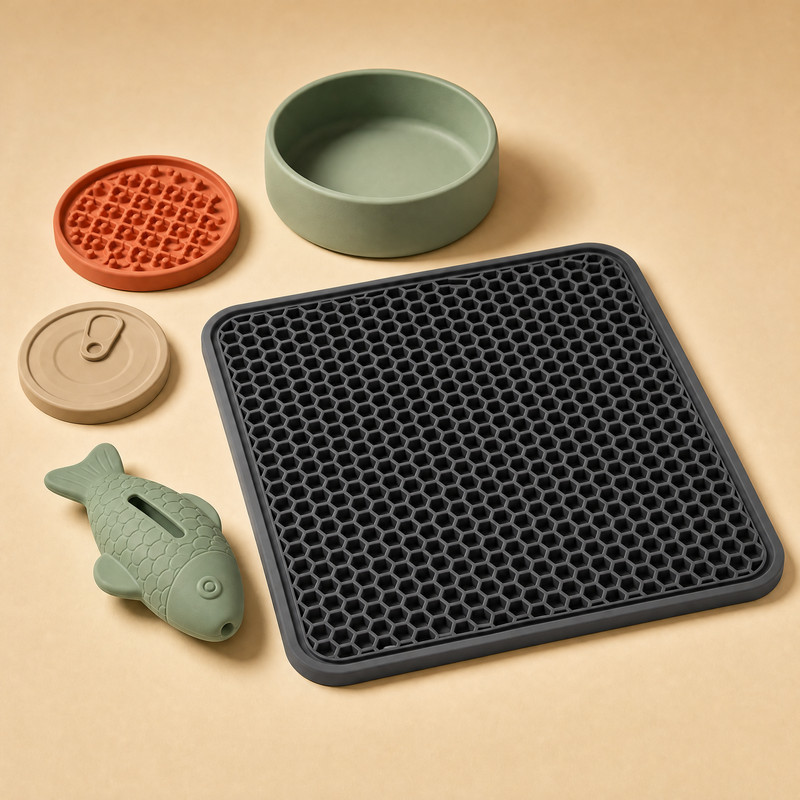
Problems That Surface After the Tool Is Cut
Most sourcing failures in this category are predictable, and most are cheaper to prevent than to correct.
- A prototype that cannot run at volume. Hand-poured samples hide cycle-time and demoulding problems. Require a sample from the production tool, not from a prototype tool.
- Tooling cost that moves after a design change. Agree in writing which revisions are included and which reopen the quotation.
- Unclear mould ownership. State who holds the tool, who may use it, and what happens if the relationship ends.
- Approved sample versus mass production. Keep a signed golden sample with the supplier and one retained internally.
- Colour drift between batches. Pigment lot, cure temperature and hardness all shift colour. Set a Delta E limit and a measurement method.
- Thin material documentation. A "food grade" statement is not a test report. Ask for the specific compound and the migration or extraction test that applies to the destination market.
- Cleaning geometry that fails in use. Ribs that are too deep, corners that are too tight, or suction cups that only work on glass.
- An MOQ that kills the business case. Calculate landed cost at the MOQ, not at the unit price.
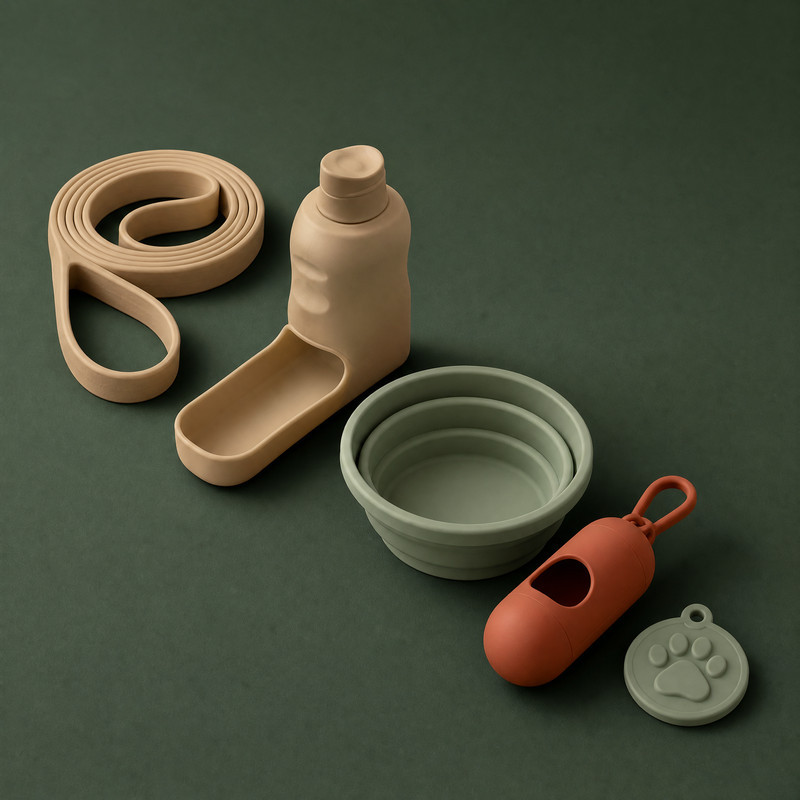
For buyers working through a first mould, FromRubber's overview of the silicone rubber manufacturing process and its notes on mould maintenance are useful background for the questions above.
What to Ask Before You Request a Quote
- Can you manufacture from a 3D file, a 2D drawing and a physical sample — and which format do you prefer?
- Do you cut tooling in-house? If not, which tool shop, and who controls the tool?
- Who owns the mould and the design data after the project ends?
- What does a T1 sample include — dimensions, hardness, colour, logo depth, photos?
- Which material specification and test documents can you supply for my destination market?
- What are the MOQ, tooling cost, sample lead time and production lead time, quoted separately?
- How do you control batch-to-batch colour and hardness?
- What changes if my annual volume doubles or halves?
Frequently Asked Questions
What is the difference between OEM and ODM for silicone pet products?
OEM means the buyer supplies the design and the factory manufactures to it. ODM means the factory contributes product design or an existing mould, and the buyer brands the result. The distinction affects who owns the tooling and how much differentiation is possible.
How do I find a custom silicone pet product manufacturer?
Start with the product category, not the supplier list. A factory that publishes the exact category — lick mats, bowls, collars — is easier to qualify than one that claims every pet item. Then check tooling evidence, material documentation and MOQ before requesting samples.
Can manufacturers develop a product from drawings or samples?
Most can. The practical difference is what happens next: whether they return DFM comments, whether the prototype tool can be modified, and whether the production sample is measured against the drawing.
What affects the MOQ for custom silicone pet products?
Tool size, cavity count, colour changes, packaging and whether the mould already exists. Small presses running small moulds can support lower volumes; large presses are economic only at higher quantities.
Who owns the mould for a custom silicone pet product?
It depends on the contract. Buyer-paid tooling is often buyer-owned, but possession may stay with the factory. Put ownership, access, maintenance and transfer terms in writing before the tool is cut.
What material documents should buyers request?
At minimum, the compound data sheet, hardness, and the test relevant to the destination market — for example an extraction test under 21 CFR 177.2600 for the United States, or migration documentation under the EU framework in Regulation (EC) No 1935/2004. German LFGB requirements are set out in the Lebensmittel- und Futtermittelgesetzbuch.
How can buyers compare manufacturers when pricing is not public?
Compare the inputs: tooling ownership, cavity count, material grade, secondary operations, MOQ and documentation. Ask every supplier to quote the same specification, then compare the total project cost rather than the unit price.
Choosing on Fit, Not on a League Table
The right supplier is the one whose published capability matches the part you actually need to make. A factory that is strong on flat mats may struggle with a deep collapsible bowl; a factory with a huge catalogue may have no mould shop. Use the table above as a shortlist, then test each candidate with one question: what would you change in my design, and why?
FromRubber works on custom silicone and plastic projects from its two plants in Dongguan, including mould development and small-to-large batch production. Buyers with a drawing, sample or concept can send it for a feasibility review at nani@fromrubber.com or karl@fromrubber.com. WeChat and WhatsApp: +86 18676210913.
Sources and Research Notes
- Company product and service pages cited inline for each manufacturer, reviewed 20 October 2026.
- 21 CFR 177.2600 — Rubber articles intended for repeated use, U.S. Electronic Code of Federal Regulations.
- Regulation (EC) No 1935/2004 on materials and articles intended to come into contact with food, EUR-Lex.
- Lebensmittel- und Futtermittelgesetzbuch (LFGB), German federal law portal.
- FromRubber manufacturing references: drawing and tolerance guide, manufacturing process, mould maintenance.
Scores are editorial and based on public pages only. They do not represent audited capability, pricing or delivery performance. Buyers should verify every claim directly with the manufacturer before ordering.