Top 10 Silicone Dog Bowl Manufacturers in China for Bulk Orders
- Share
- Issue Time
- Oct 20,2026
Summary
A bulk-buying comparison of silicone dog bowl manufacturers in China, weighted toward specification control, inspection records and repeat-order consistency rather than catalogue size.
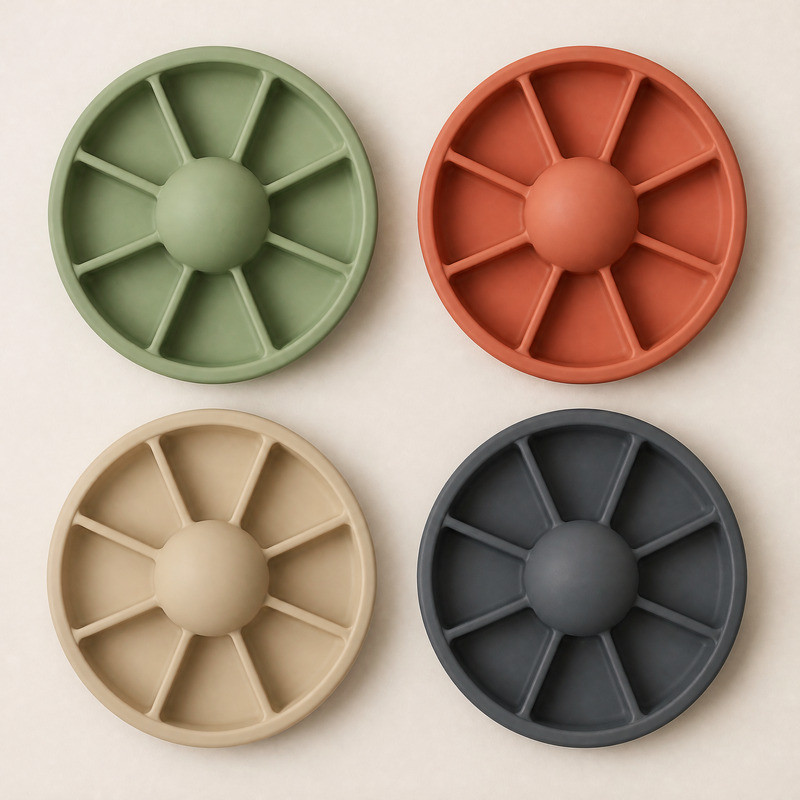
The first bulk order usually arrives on time and looks right. The problem appears on the third reorder, when the bowl is two millimetres wider, the lid no longer stacks, and the colour has drifted half a shade. Nobody changed the drawing. The factory changed the press, the operator, the pigment lot or the trimming method — and no one wrote down what "correct" meant.
Bulk buying of silicone dog bowls is a specification-control problem more than a price problem. The silicone dog bowl manufacturers below publish bowl or pet feeding production with custom capability. The ranking weights evidence of repeatable supply, not catalogue size, because a large catalogue says nothing about whether the fiftieth thousand bowl matches the first.
What a Bulk Buyer Is Really Buying
At sample stage, a buyer evaluates appearance. At bulk stage, the buyer is buying four things that never appear on a quotation.
Yield
The percentage of parts that pass inspection on the first run. A cheap unit price with a 12% reject rate is more expensive than a higher price at 3%. Ask how rejects are handled: replaced, credited, or shipped anyway.
Specification freeze
The drawing revision, the golden sample, the colour reference, the material lot and the packaging artwork all need version numbers. Without them, "same as last time" is a memory, not a specification.
Change discipline
A supplier that substitutes a compound because the original was out of stock, without telling you, has changed the product. Ask what triggers a notification.
Logistics fit
Carton dimensions, pallet pattern and container utilisation decide landed cost. A bowl that nests well can cut freight by a meaningful margin; a bowl that does not can erase the unit-price saving.
Five Signals of Real Bulk Capability
Press mix, not press count
Thirty presses of the same size cannot make both a 60 mm treat mould and a 300 mm feeding mat economically. A mixed fleet — small presses for small cavities, large presses for large platens — is a better indicator of order flexibility than a headline number.
Cavity strategy
Multi-cavity tools reduce unit cost but raise tooling cost and the consequence of one cavity being out of tolerance. Ask how many cavities your tool will have and how a single bad cavity is isolated during production.
In-process inspection, not only final inspection
Final inspection catches defects; in-process inspection prevents batches. Ask for the inspection points, the sample size and the record format. A supplier that can show a filled inspection sheet from last month is more convincing than one that describes a procedure.
Colour control
Pigment lot, mixing time and cure temperature all shift shade. A workable control is a defined reference, a spectrophotometer reading or a visual check under a stated light source, and a Delta E limit agreed in advance.
Reorder protocol
Who holds the golden sample, how long the tool is reserved, and what happens if the compound is discontinued. These are contract terms, not service promises.
Scoring Method
- Verified silicone dog bowl manufacturing — 30%. Published bowl or feeding bowl production.
- Bulk-order and B2B evidence — 25%. MOQ, capacity, export or volume statements.
- Quality and specification documentation — 20%. Inspection, material or tolerance references.
- Repeat-order and planning evidence — 15%. Tool ownership, reorder or production-planning language.
- Customisation, packaging and export — 10%. Logo, colour, packaging, shipment support.
Each company was scored 0–5 on public information reviewed on 20 October 2026. Published MOQs are treated as company-reported. No supplier provided order data, defect rates or delivery records for this article.
Comparison Table: Silicone Dog Bowl Manufacturers for Bulk Supply
| Company | Bowl evidence | Published order terms | Quality documentation | Repeat-order signals | Score |
|---|---|---|---|---|---|
| Guangdong Yumingsheng (YMS) | Feeding bowls, travel bowls | MOQ adapted to project; capacity claims company-reported | ISO 9001 process stated; pre-shipment inspection | Full-owned base, multi-cavity tooling | 4.30 |
| Xiamen Guzhan | Custom pet bowl, 200–1200 ml | 1,000 pcs for printing; 100,000+ pcs/year stated | FDA, LFGB, RoHS references | Sample and lead times published | 4.05 |
| JOYI Silicone | Slow feeder and lick bowls | Low MOQ for new brands stated | LFGB, BSCI, ISO 9001 certificates shown | Documented 7-step process | 3.95 |
| Pawseed Pet Products | Suction, lick-and-feed, slow feeder bowls | Mixed batches supported; MOQ not published | REACH and FDA references | Prototype to shipment workflow | 3.90 |
| Dongguan Yuankang | Collapsible and slow feeder bowls | Not published | ISO 9001, BSCI, Sedex references | 17 years stated; private label support | 3.70 |
| FromRubber | Pet bowl work described; no public bowl catalogue | From 1,000 pcs for pet silicone; bulk supported | ISO 9001, ISO 14001, IATF 16949 company-reported | 32 presses, in-house mould shop | 3.65 |
| SM (Dongguan Sanmao) | Collapsible bowls | Not published | Inspection defined per component | Tooling and moulding in one base | 3.55 |
| Landpion | Feeding mats, slow feeder inserts | Not published | SKU-level dimensions published | Catalogue depth; manufacturing role unconfirmed | 3.40 |
| NEWTOP Custom Silicone | Lick bowl, foldable bowl | Not published | FDA, LFGB references | Location unconfirmed | 3.35 |
| ZXRubberPlastic | Slow feeder and travel bowls | Not published | QC claims only | Manufacturing site unconfirmed | 3.20 |
"Not published" means the information was not available on the company's public pages on the review date. It is not evidence that the company cannot supply at volume.
The Economics Buyers Get Wrong
Unit price is a function of the tool you agreed to
A 4-cavity tool and a 16-cavity tool produce the same bowl at different unit costs and different tooling fees. At low annual volume the 4-cavity tool wins; at high volume the 16-cavity tool pays back. The break-even point can be calculated before the quotation arrives, using cycle time and cavity count.
Nesting changes freight more than negotiation does
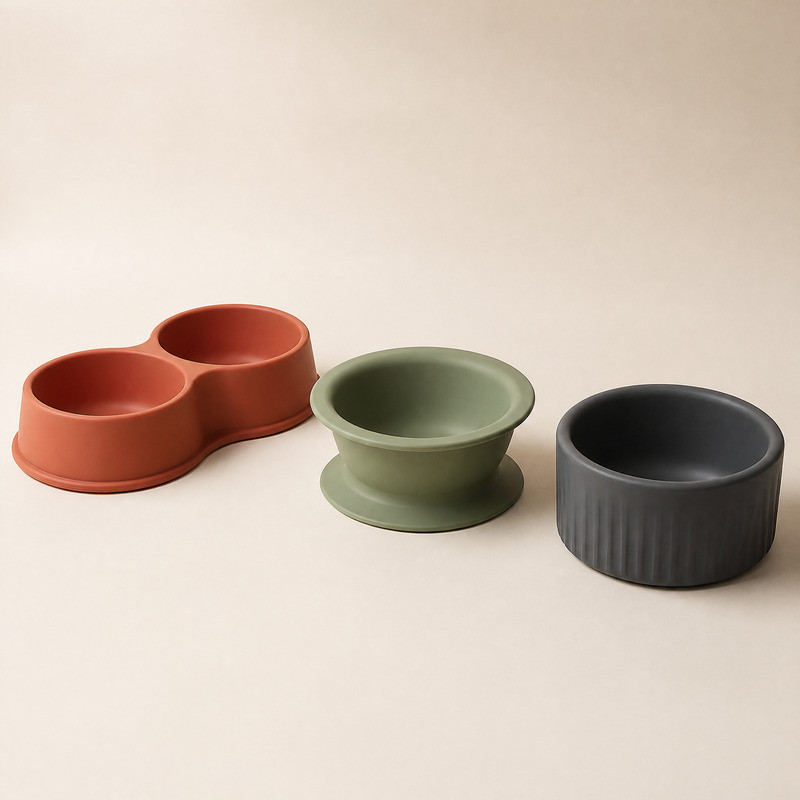
Two bowls that nest 12 mm deeper save container space across thousands of units. If the design allows it, ask for a nesting check before the tool is cut — after tooling, the option disappears.
Trimming labour scales with texture
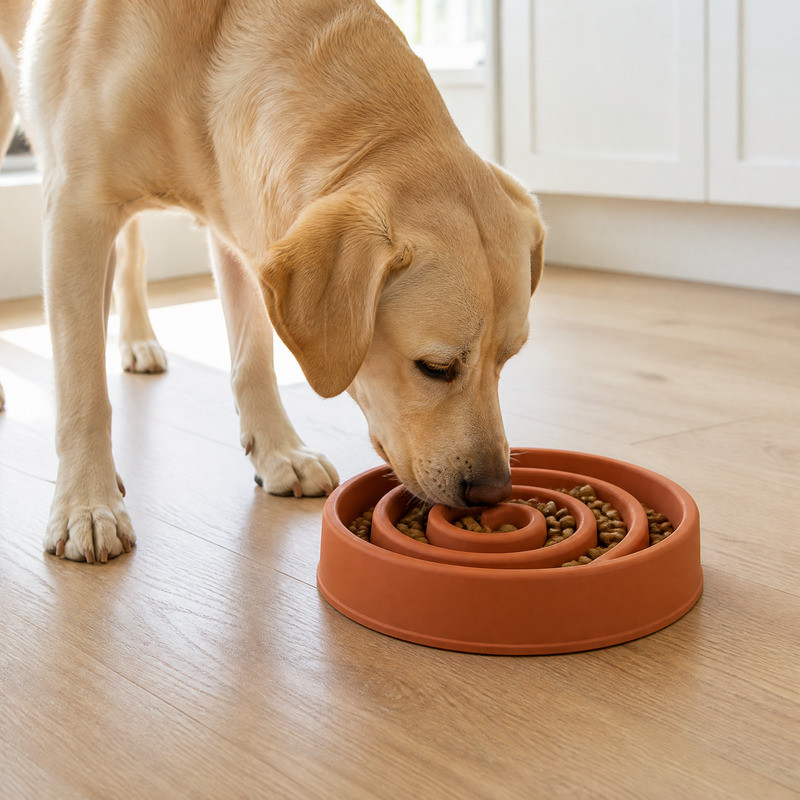
A plain bowl rim trims quickly. A slow feeder with 40 dividers takes longer per part. That labour is real and appears in the unit price, which is why two quotes for "the same bowl" can differ by 20%.
Rejects are a hidden price line
If 8% of a batch is rejected and replaced, the effective unit cost rises. Ask for the inspection criteria and the replacement policy in writing.
The Ten Manufacturers, Reviewed
1. Guangdong Yumingsheng Precision Manufacturing (YMS)
Presents the most complete bulk narrative among those reviewed: a Dongguan base with separate solid and liquid silicone lines, in-house design and tooling, pre-shipment inspection and a stated ability to adapt MOQ to the buyer's stage. Feeding bowls and travel bowls are part of the published pet range. Line counts and capacity figures are company-reported.
Bulk fit: multi-SKU feeding programmes where capacity and tooling sit in one organisation.
Confirm: actual MOQ per bowl model, inspection record format, and which processes leave the site.
2. Xiamen Guzhan Industry & Trade
The only company in this list that publishes both ends of the volume curve: 1,000-piece MOQ for printed bowls and support for 100,000+ pieces per year, with 7–10 day samples and 20–25 day production. Bowl capacity is listed from 200 to 1200 ml with Pantone colour and three logo methods. The company is an industry and trade operation, so the manufacturing site requires confirmation.
Bulk fit: buyers who want a published volume range before making contact.
Confirm: which factory moulds the bowls, mould ownership, and whether the published annual figure refers to bowls or all products.
3. JOYI Silicone (Dongguan Joyi New Material)
Runs a lick mat and slow feeder bowl OEM programme with a documented seven-step process, mould making at roughly 15 working days and production at 10–25 days depending on quantity. The site states low MOQ for new brands and shows LFGB, BSCI and ISO 9001 certificates. Production lead time is company-reported.
Bulk fit: first bulk run after a private-label launch, especially feeder bowls.
Confirm: capacity at peak season and how the production window is protected for repeat orders.
4. Pawseed Pet Products Co., Limited
Publishes a pet-only range with several bowl formats and states that mixed batches across products are supported, which is useful for distributors assembling a container. OEM/ODM covers prototype, mould opening, logo and packaging. MOQ is not published, and certification statements should be matched to the specific bowl compound.
Bulk fit: distributors consolidating bowls, mats and toys in one shipment.
Confirm: per-model MOQ, mixed-batch rules and carton configuration.
5. Dongguan Yuankang (Dongguan City Yuankang Silicon Metal Products)
States more than 17 years in silicone manufacturing with a pet range that includes collapsible and slow feeder bowls, plus custom mould development, Pantone matching and private-label packaging. ISO 9001, BSCI and Sedex are referenced. Order terms are not published, so volume fit has to be established directly.
Bulk fit: a bowl-plus-accessory programme with packaging handled at source.
Confirm: MOQ, capacity per month, and certification scope for the bowl line.
6. FromRubber (Dongguan Bohao Electronic Technology)
A custom silicone and plastic manufacturer in Dongguan with two plants, an in-house mould shop and 32 presses, working to ISO 9001, ISO 14001 and IATF 16949 as company-reported certifications. Its public bowl evidence is limited to pet articles rather than a bowl catalogue, which is why it sits mid-table despite stronger tooling depth. A pet supplies market page exists, but it lists no bowl models.
Its order structure is relevant to bulk planning: the company states it accepts pet silicone orders from 1,000 pieces and also runs larger bulk programmes, matching press size to part size and order volume — small presses for compact or low-volume work, large presses for large or high-volume parts. For a buyer planning a first run and a reorder on the same tool, that flexibility reduces the risk of an uneconomic trial batch. Its published notes on quality checks and cavity count versus cost describe the same control logic applied here.
Bulk fit: new bowl designs where tooling risk dominates, or bowls requiring multi-colour or insert moulding.
Confirm: current bowl tooling record and the inspection protocol for the first production run.
7. SM (Dongguan Sanmao Electronic Technology)
A Dongguan component manufacturer established in 2014, combining tooling, compression moulding, plastic injection and inspection around defined component requirements. Collapsible bowls are part of its pet directions, and its pages are explicit that inspection criteria are agreed per component rather than applied as a universal standard.
Bulk fit: bowls with plastic interfaces or multi-part assembly.
Confirm: monthly capacity for pet items and the reorder specification format.
8. Landpion
Publishes a large, dimensioned SKU library including feeding mats and slow feeder inserts, which makes it useful for range planning and pallet estimation. Bowl-specific production evidence is limited on the pages reviewed, and the manufacturing role is not stated as clearly as the product data.
Bulk fit: buyers building a broad feeding range with published dimensions.
Confirm: whether bowls and mats are produced in-house, MOQ and carton data.
9. NEWTOP Custom Silicone
Lists a foldable bowl and a lick bowl within a wide pet catalogue and states prototyping, testing and both small and large volume support. The factory address is not published, so location and plant capacity cannot be checked from public information.
Bulk fit: mixed pet orders at moderate volume.
Confirm: manufacturing site, monthly output and inspection records.
10. ZXRubberPlastic
Lists slow feeder and travel bowls with custom logo, size and packaging, and states OEM/ODM support from drawings or samples. The site describes a long manufacturing history but does not publish a plant address or bowl-specific production data, which limits what can be verified for bulk planning.
Bulk fit: preliminary comparison and sample sourcing.
Confirm: factory location, capacity and reorder terms.
How to Compare Bulk Quotations Properly
Force the same specification
Send every supplier the same drawing, the same material requirement, the same colour reference, the same packaging and the same three quantities — for example trial, first bulk and annual. A quote for a different specification is not a comparison.
Separate one-time and recurring costs
Tooling, sample revisions, print plates, packaging artwork and testing are one-time. Material, moulding, trimming, printing and packing are recurring. Mixing them hides the real unit economics.
Ask for the yield assumption
A supplier quoting a unit price is implicitly assuming a yield. Ask what happens if the actual yield is lower. The answer distinguishes a quotation from a commitment.
Confirm the production window
Lead time should be split into tooling, sample approval, material procurement, production, inspection and shipment. A single "30 days" figure hides where the delay will occur.
Freeze the reorder specification
Record the approved sample, drawing revision, colour reference, material grade, packaging artwork and acceptance criteria in one document signed by both parties.
Bulk-Order Problems and the Fix That Prevents Them
- Production sample differs from the approved sample. Approve a golden sample and keep one at each end.
- Dimensions drift between batches. Define critical dimensions and tolerances, and require a first-article report each run.
- Colour inconsistency. Fix the pigment lot where possible, set a Delta E limit and state the light source.
- Material substitution. Name the compound in the purchase order and require written notice of any change.
- MOQ changes at reorder. Put the reorder MOQ in the contract, not in an email.
- Packaging approval delays. Approve artwork before production starts, not during packing.
- Missing inspection records. Make the record a deliverable, not a favour.
- Mould ownership disputes. State ownership, custody, maintenance and transfer in writing.
The FromRubber supply chain page and its guide to mould maintenance describe how tool condition affects long-run consistency.
Bulk Order Checklist
- Approved drawing with critical dimensions and tolerances.
- Golden sample signed by both parties.
- Material specification, hardness and test requirement.
- Colour reference and acceptance tolerance.
- Logo artwork, position and process.
- Packaging artwork, carton dimensions and pallet pattern.
- Order quantity by SKU and expected annual forecast.
- Tooling and sample charges listed separately.
- Production and inspection schedule with named checkpoints.
- Reorder terms, mould custody and change-notification clause.
Frequently Asked Questions
How do I find a silicone dog bowl manufacturer in China?
Start from the product, not the directory. Look for companies that publish dog or pet bowls, then check tooling evidence, MOQ, inspection practice and whether the factory address is verifiable. Compare at least three suppliers on the same specification.
What affects the MOQ for silicone dog bowls?
Tool size, cavity count, colour changes, packaging and whether a mould already exists. A small press with a single-cavity tool supports lower volumes than a large multi-cavity tool.
How can I compare bulk silicone dog bowl quotations?
Use identical specifications and quantities, separate one-time from recurring costs, and ask each supplier for their yield assumption and inspection plan. Compare landed cost, not unit price.
Can Chinese manufacturers provide custom logos and packaging?
Yes. Embossed, debossed and printed logos are common, and packaging can be customised. Approve the logo depth and packaging artwork before production, and confirm barcode placement.
What quality documents should buyers request?
Material data sheet, hardness, first-article inspection report, dimensional records, colour reference and the test relevant to the market. For the United States, 21 CFR 177.2600 applies to rubber articles for repeated use; in the EU, Regulation (EC) No 1935/2004; in Germany, the LFGB.
How can buyers reduce batch-to-batch colour differences?
Fix the pigment source where possible, define a Delta E limit, approve colour under a stated light source, and check the first article of every run rather than every tenth carton.
How should a buyer prepare for repeat orders?
Keep a signed golden sample, a frozen drawing revision, the material grade, the colour reference and the packaging files. Confirm that the tool is reserved for your account and that any compound change requires written notice.
What is the difference between a pet bowl supplier and a direct manufacturer?
A direct manufacturer operates the moulding process and can explain tooling, material and inspection. A supplier may coordinate several factories. The difference shows up in change control, tool ownership and who answers for defects.
Buy for the Third Order, Not the First
The first shipment tests the supplier's sales process. The third tests the factory. Choose the company whose specification control, tooling custody and inspection records can survive a reorder, a pigment change and a busy season. Everything else is negotiable; that is not.
FromRubber produces custom silicone and plastic parts in Dongguan, with in-house mould development and production from 1,000-piece pet silicone runs to larger bulk programmes. Buyers can send a bowl drawing, target volume and packaging requirement to nani@fromrubber.com or karl@fromrubber.com for a production review. WeChat and WhatsApp: +86 18676210913.
Sources and Research Notes
- Manufacturer product, process and order pages cited inline, reviewed 20 October 2026. Published MOQs and lead times are company-reported.
- 21 CFR 177.2600 — Rubber articles intended for repeated use.
- Regulation (EC) No 1935/2004 on food contact materials.
- Lebensmittel- und Futtermittelgesetzbuch (LFGB).
- FromRubber references: quality checks, cavity count and cost, supply chain.
Scores are editorial, based on public pages, and do not represent audited capacity or delivery performance.