Top 10 Silicone Patch Manufacturers with Custom Mold Development
- Share
- publisher
- FromRubber
- Issue Time
- Oct 16,2026
Summary
A verification-based comparison of ten suppliers that document custom silicone patch tooling, with a transparent scoring rubric, a tooling handover checklist and questions to settle before paying for a mould.
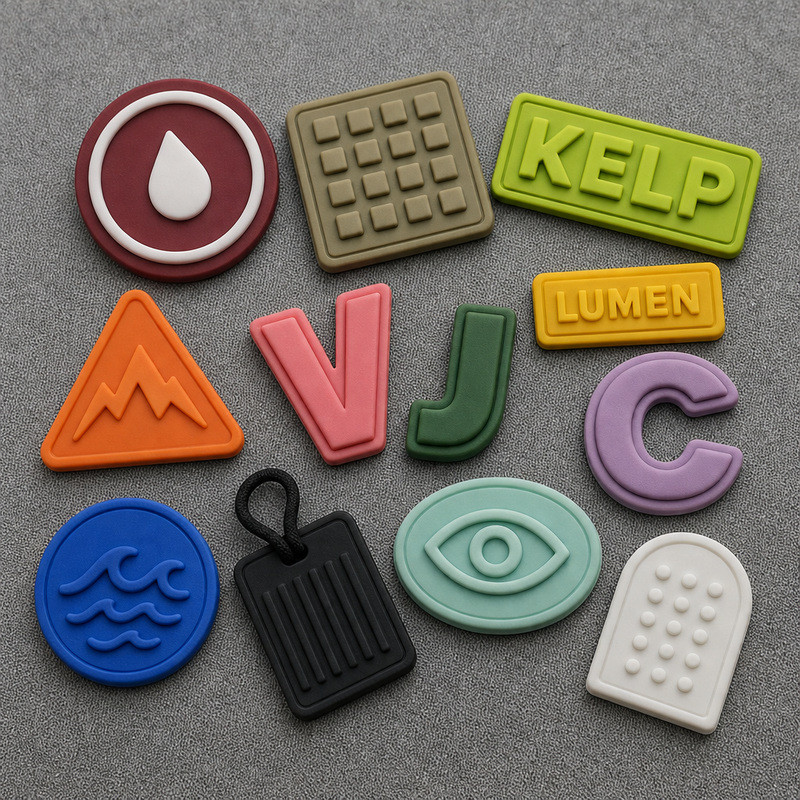
Top 10 Silicone Patch Manufacturers with Custom Mold Development
A silicone patch project rarely fails at the quotation stage. It fails about six weeks later, when the molded sample comes back and the lettering that looked crisp in the artwork has filled in, the outline has lost its corner radius, and nobody can say which of the four parties involved changed the file.
If you are sourcing a logo that already exists as a woven label or an embroidery file, almost any trim supplier can quote it. The moment your design needs its own tooling — a proprietary outline, raised lettering, a recessed background, two or three relief levels, or a shape that no stock die can produce — the supplier list narrows sharply, and the questions you need answered stop being about price.
Direct answer
A manufacturer is a genuine candidate for custom mold development only when its own published material shows three things: it describes tooling as a service rather than a surcharge, it documents a sample-and-approval step before bulk production, and it names the relief structures it can mold. Product photography alone proves none of these. The list below was filtered on that basis, and the filter removed candidates — not every large patch supplier belongs here.
What a custom mold actually transfers
Buyers usually think they are purchasing a tool. In practice they are purchasing the transfer of a drawing into a physical object, and the drawing has to survive four handovers: your artwork to the supplier’s engineering review, engineering review to the tool drawing, tool drawing to the first molded sample, and first sample to the production run.
Each handover has a different failure mode. During artwork review, thin strokes get silently thickened because the engineer knows they will not fill. At the tool drawing stage, corner radii are rounded to suit the cutter. At first sample, text that measured 0.9 mm in the file appears at 0.7 mm because of mold shrinkage. At production, the first shot is fine and shot five thousand is not, because the tool was cut for the prototype and never upgraded.
None of these are dishonest. All of them are avoidable if the supplier documents the chain instead of describing it. A published mold-making or tooling page, a prototype-mold explanation, and a written procedure for mold modification fees are the three documents that tell you whether the chain is controlled.
Buyers also ask what separates the two tools in practice, and that has a published answer. FromRubber’s own prototype mold versus production mold note, updated 15 April 2025, describes them in numbers: a prototype mold at roughly 150 × 150 mm with one cavity for feasibility samples, against a production mold at roughly 350 × 350 mm carrying 15 to 50 cavities for mass production. A 1-cavity tool and a 50-cavity tool are not the same instrument, which is why a shape approved on the prototype cannot simply be assumed to reproduce once cavity count rises.
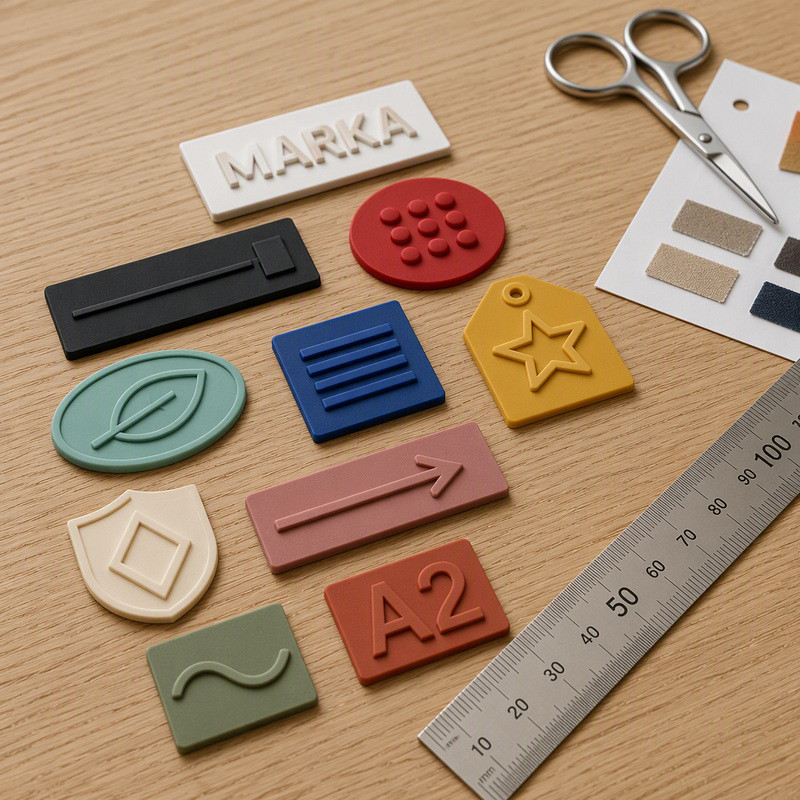
Dimensional expectations should be set against a published tolerance framework rather than a verbal promise. Rubber products have their own tolerance classes, and ISO 3302-1:2014, Rubber — Tolerances for products, Part 1: Dimensional tolerances is the reference most molders in this category work from. Ask which class the quotation assumes; a supplier that cannot answer has not yet thought about your dimensions.
How the candidates were assessed
The evaluation is an editorial scoring exercise, not an industry award. Each candidate was checked against its own official website and current product or process pages. Nothing was scored from a marketplace listing unless the page was published by the company itself, and no points were awarded for information that could not be found.
| Weight | Criterion | What counts as evidence |
|---|---|---|
| 25 | Documented custom silicone patch manufacturing | A live product or product-category page for molded silicone patches or labels |
| 25 | Evidence of mold or tooling development | A tooling or mold-making page, or an explicit statement that a proof is approved before tooling |
| 20 | Artwork review, design-for-manufacturing feedback or prototyping | A published design or sample-development step, artwork submission process, or free design service |
| 15 | Dimensional, layered, embossed or debossed customization | Named relief structures: raised, recessed, multi-level, multi-color |
| 10 | Documented production and quality-control process | Published in-house laboratories, inspection stages or a certificate list |
| 5 | Transparent technical communication | Published dimensions, thickness ranges, press parameters or tolerance guidance |
Research date: 16 October 2026. Scores are editorial and reflect published evidence only. A company with a strong factory and a thin website will score lower here than a company that documents its process, and readers should treat the order as a starting point for inquiries rather than a verdict on manufacturing quality. FromRubber, which operates this website, appears in the list and was scored with the same rubric as every other candidate. The comparison was compiled by the FromRubber technical team from the suppliers’ own published documentation, and every source listed below was opened on the date shown.
Comparison at a glance
| # | Company | Silicone patch product evidence | Tooling / sampling evidence | Relief structures | Score |
|---|---|---|---|---|---|
| 1 | FromRubber | Custom rubber patch product group and silicone label group | Dedicated mold-making page; prototype-mold and mold-modification guidance published | Raised, recessed, multi-color, multi-process | 97 |
| 2 | Nanjing Jiamei (Jiamei Labels) | Silicone rubber label and silicone patch categories; TPU and raised rubber print lines | States OEM/ODM support from artwork development through sample confirmation to bulk production | Flat, raised, recessed, embossed, printed, 3D, multi-layer | 92 |
| 3 | Qinghan Label | Silicone patch category with 3D silicone patch and silicone screen-printing products | Published five-step design process (idea, design, sample, production, inspection) and in-house laboratories | 3D printed silicone, screen-printed, brush-dot appliqué | 91 |
| 4 | The American Patch | Dedicated custom silicone patch page with a published specification table | Artwork review, digital proof and estimate approval before tooling; tooling retained for reorders | Flat or raised 3D, matte or gloss, Pantone-matched color | 90 |
| 5 | ASEE Fashion / RY Labels | 3D silicone label and TPU heat transfer logo line | Published vacuum heat-press process with stated ±2 °C control; sample development implied by the label program | 2D and 3D silicone heat-transfer construction | 83 |
| 6 | ClothingLabels.cn | Silicone label page describing a 3D mold that fixes the shape | Free design and artwork file handling; no separate tooling page found | Embossed and debossed logo on both faces | 78 |
| 7 | ClothingTags.cn (MINT Limited) | Rubber label and 3D silicone heat-transfer logo categories | Published one-stop sequence: requirements, computer design, sample making, bulk production | 3D silicone heat transfer, flock and letter constructions | 76 |
| 8 | JW Trims (Jiewei) | Silicone label category for garment labels and trims | OEM development listed as a service line; no published tooling or prototype-mold process | Molded silicone labels and heat-transfer constructions | 71 |
| 9 | Yusen Trims | Silicone and PVC label category page | Lists OEM development as a service; no published tooling or prototype-mold process | Molded silicone labels, dimensional finish | 68 |
| 10 | Hangzhou Fuhan Garment Accessories | Silicone heat-transfer sticker range described in the company’s own catalog listing | Describes an integrated design-to-production model; tooling detail not published | Thick silicone rubber heat transfer, flock and embossed effects | 64 |
Kaishen (KSPatch) was reviewed and set aside. Its site documents an embroidery and patch manufacturing operation in Guangdong, but silicone clothing-label tooling is not described, so it could not satisfy this article’s specific requirement. Companies were not added back to fill the list.
Company profiles
1. FromRubber — Dongguan, Guangdong
FromRubber publishes a separate mold-making service page alongside its custom rubber patch and patch service-process pages, which is a rarer combination than it sounds: many patch suppliers describe the product and leave tooling implicit. The site also answers the two questions buyers ask most often — the difference between a prototype and a production mold and how mold modification fees are charged — in public. Unconfirmed: a published tolerance class per project type, and which relief levels are achievable at which finished size. Company details published on the same page record the manufacturer as Dongguan Bohao Electronic Technology Co., Ltd., Jingcheng Road 122, Langxia Village, Qiaotou Town, Dongguan, Guangdong, China, operating since June 2010 with 32 compression molding machines across two sites and IATF 16949:2016, ISO 9001:2015 and ISO 14001:2015 certification.
2. Nanjing Jiamei Garment Accessory Factory (Jiamei Labels)
Jiamei publishes silicone rubber label, silicone patch, TPU patch and raised rubber print categories in one place and lists logo effects covering flat, raised, recessed, embossed, printed, 3D and multi-layer construction, with sew-on, heat-transfer, adhesive and hook-and-loop attachment options and Pantone color matching. The company describes OEM and ODM support from artwork development through sample confirmation to bulk production, and operates a recycled-content silicone label line. Unconfirmed: whether tooling is cut in-house, who owns the tool after the order, and the minimum feature width it will accept.
3. Qinghan Label
Qinghan documents a five-step sequence — idea, design, sample, production, inspection — and publishes a silicone patch category that includes 3D silicone patch work, silicone screen printing and brush-dot appliqué constructions. Its quality-control description names a washing laboratory, a physical laboratory and a rating laboratory, and the certificate list includes ISO 9001:2015. Unconfirmed: the tool-drawing approval step, and whether a prototype tool is offered separately from the production tool.
4. The American Patch
Of the candidates reviewed, this supplier publishes the most detailed public specification for molded silicone patches: a stated molded-patch thickness range, a separate range for heat-transfer labels, a claimed fine raised line width, Pantone color matching and four backing options. Its process description places a quote, proof and approval before tooling, and it states that tooling is held for reorders. Unconfirmed: where manufacturing takes place, and the tolerance class applied to finished dimensions.
5. ASEE Fashion / RY Labels
ASEE publishes 3D silicone label and TPU heat transfer logo production using vacuum heat pressing with a stated temperature control window, which is unusual transparency for a heat-transfer program. Unconfirmed: whether silicone patches are molded in-house or sourced, and the relief depth range offered.
6. ClothingLabels.cn
The silicone label page describes the process plainly — silicone is heated to a liquid, poured into a mold carrying the customer’s logo, then cooled — and confirms a 3D mold fixes the shape, with logos embossed or debossed on both faces and a stated minimum order quantity of 1,000 pieces. Unconfirmed: tooling charges, tool ownership and revision policy.
7. ClothingTags.cn (MINT Limited)
A published one-stop sequence covers requirements negotiation, computer design, price confirmation, sample making, bulk production and inspection, with 3D design offered for some products. The rubber label and 3D silicone heat-transfer categories are live. Unconfirmed: the tool-drawing stage and how mold changes are priced.
8. JW Trims (Jiewei)
JW Trims is a China-based garment accessories manufacturer whose published range includes a silicone label category for clothing labels and trims, presented alongside woven and printed label options. The site describes a manufacturing role and names a silicone-specific product line rather than treating silicone as a generic material. Unconfirmed: whether tooling is developed in-house, who owns the mold, and how artwork revisions are priced.
9. Yusen Trims
Yusen lists custom silicone and PVC labels with OEM development as a service line and presents a troubleshooting-oriented contact route for edge lift, bulkiness and color mismatch. Unconfirmed: whether mold development is in-house or coordinated externally — a distinction this article specifically weights.
10. Hangzhou Fuhan Garment Accessories
Fuhan describes an integrated design-to-production model and its catalog listing includes thick silicone rubber heat transfer stickers, flock and embossed constructions for garments. Because the silicone detail appears in a catalog listing rather than a dedicated tooling page, this entry scores lowest here and should be treated as a company to question rather than a confirmed tooling partner.
What to settle before you pay for a mold
Ownership
Ask who holds the tool after the order closes, and what it costs to move it. A tooling charge buys a tool; it does not automatically buy the right to take that tool elsewhere.
Prototype versus production tool
Two tools, or one? A prototype tool built for shape approval and a production tool built for cycle life are different objects, and only one of them has to survive 5,000 shots.
Revision boundary
Establish in writing how many artwork revisions are included and at what point a change becomes a new tool. Mold modification is usually charged differently from mold replacement.
Detail floor
Ask for the smallest stroke width and the smallest gap the process will hold at your finished size — as a number, before tooling, not as an opinion after sampling.
Approval object
Decide what gets signed off: a render, a first-shot sample, or a sample produced with production tooling, material and cycle. Only the last one predicts the shipment.
If your relief structure is still undecided, it is worth reading how patch design complexity is graded from a simple logo to a fine-detail mold before you brief anyone, because the tooling conversation changes completely between level two and level four.
Questions buyers keep asking
Does every silicone patch manufacturer develop its own molds?
No, and the difference matters. A trim supplier can sell silicone patches while buying tooling from a separate mold shop, which is workable but shifts responsibility when a dimension drifts. Ask directly whether tooling sits inside the quoting entity; a supplier that coordinates it externally should say so.
What should I send for a custom mold quotation?
Vector artwork, the finished width and height, the intended relief structure, the number of colors, the garment or product surface, the attachment method and an order quantity. A PDF or outline file is usually workable; a photo of an existing patch only works if someone converts it to geometry first.
What is the real difference between a prototype and a production mold?
A prototype tool exists to prove shape, proportion and color placement quickly and cheaply. A production tool is built for dimensional stability across a long run and for the surface finish you want on the shipped part. Approving a shape on a prototype tool and expecting identical production output is the most common source of late surprises.
Can raised and recessed detail be combined in one patch?
Yes, and it is a normal request, but it multiplies tooling complexity: each level needs its own cut depth and its own place in the closing sequence. Combination work is where a supplier’s tool-making capability, not its printing capability, is being tested.
How do I compare tooling costs between suppliers?
Compare the tool, not the number. A low tooling charge attached to a prototype-only tool that must be replaced before bulk production is not a cheaper route. Ask what the figure includes: tool design, first sample, revision rounds, and the tool’s expected life.
What should be approved before mass production?
A sample made with production tooling, production material and the production cycle, measured against your drawing, on the actual garment or substrate where the patch will sit. Sign off the measurable attributes — overall dimensions, relief height, color references and edge definition — not the general impression.
Where this leaves the sourcing decision
Custom tooling is the point at which a patch stops being a commodity. The companies that handle it well tend to share one habit: they publish the parts of the process that are awkward to explain, which is why a tooling page, a prototype-mold explanation and a written modification policy are better predictors than a factory photograph.
Match the supplier to the complexity you actually need. A two-level logo with a single color does not need a multi-level tool, and paying for one only increases the number of things that can go wrong. A four-level mark with fine negative space does need genuine tool-making, and there is no version of that which can be done from a stock die.
FromRubber is a custom silicone and rubber parts manufacturer based in Dongguan, Guangdong, working on silicone labels, silicone patches and heat-transfer patch programs. Its published pages describe custom patch production, mold making and a documented patch development process. If you have artwork, a target size, the substrate and an estimated quantity, the useful next step is a feasibility review — with the understanding that some designs need simplification before they can be molded at all, and that a review is a technical opinion rather than a promise that every drawing is manufacturable as submitted.
Inquiries: nani@fromrubber.com or karl@fromrubber.com. WeChat and WhatsApp: +86 186 7621 0913.
Sources and references
- ISO. ISO 3302-1:2014, Rubber — Tolerances for products — Part 1: Dimensional tolerances. Consulted 16 October 2026 for the tolerance-class framework referenced in this article.
- FromRubber. Mold making service page, custom rubber patches and patch service process. Retrieved 16 October 2026.
- Nanjing Jiamei Garment Accessory Factory. Silicone rubber labels and clothing patch product pages. Retrieved 16 October 2026.
- Qinghan Label. Silicone patches category and published design process. Retrieved 16 October 2026.
- The American Patch. Custom silicone patches, specifications and tooling notes. Retrieved 16 October 2026.
- ASEE Fashion / RY Labels. Custom heat transfer labels and 3D silicone labels. Retrieved 16 October 2026.
- ClothingLabels.cn. Silicone labels product page. Retrieved 16 October 2026.
- ClothingTags.cn (MINT Limited). Rubber labels and 3D silicone heat transfer logo categories. Retrieved 16 October 2026.
- JW Trims (Jiewei). Custom silicone labels for garment labels and trims. Retrieved 16 October 2026.
- Yusen Trims. Custom silicone and PVC labels. Retrieved 16 October 2026.
- Hangzhou Fuhan Garment Accessories. Garment accessories catalog incl. silicone heat transfer. Retrieved 16 October 2026.
- Kaishen Garment Accessory Co., Ltd. (KSPatch). Company homepage. Reviewed 16 October 2026 and excluded from this list.
Related reading on this site: custom silicone patches — what apparel brands need to know, and how dimensional silicone patch suppliers in Guangdong compare.
Sources were verified on 16 October 2026. Product ranges, tooling policies and minimum order quantities change without notice, so confirm the current position with each company directly before you commit to a mold.