Top 10 Silicone Pet Product OEM Manufacturers for E-Commerce Brands
- Share
- publisher
- FromRubber
- Issue Time
- Oct 21,2026
Summary
Ten silicone pet product OEM manufacturers assessed for online sellers, weighted towards private label, packaging, batch consistency and reorder planning. The article treats returns as a moulding and documentation problem, and lists the OEM mistakes that damage a listing.
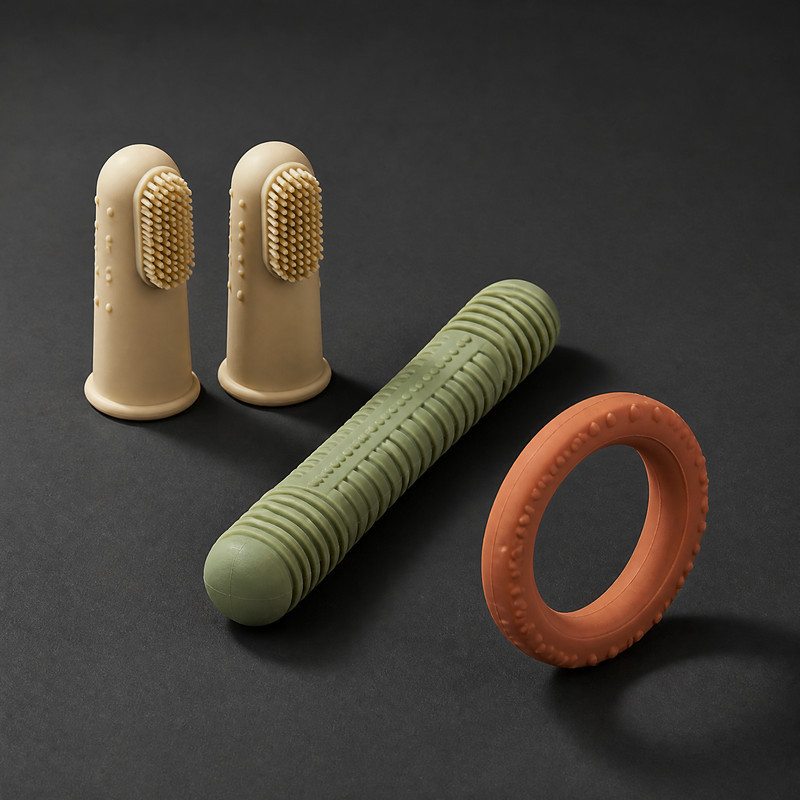
The return reason on a silicone pet product is rarely “broken”. It is “smaller than expected”, “different colour”, “smells of rubber”, or “the suction does not stick”. Four complaints, one source: the part that shipped was not the part that was approved.
Online sellers feel that gap differently from wholesale buyers. A distributor argues about a batch. A marketplace seller absorbs a rating, a removal fee and a listing that stops ranking. By the time the second container arrives with the same deviation, the listing is already damaged.
The ten manufacturers below publish silicone pet OEM work with enough process detail to be assessed. The order follows an OEM weighting rather than a product-range weighting, because for an online brand the ability to repeat a batch matters more than the number of items on a page.
What E-Commerce Brands Need From a Silicone Pet Product OEM
An OEM relationship is a specification relationship. The seller owns the design and the brand; the factory owns the process and the consistency. When that split is unclear, the seller ends up owning the factory's variation as well.
Differentiation that survives a photograph
Marketplace listings are compared in thumbnails. A stock bowl in a new colour reads as the same bowl. What separates a listing is geometry the camera can see: a different rim profile, a paw-shaped footprint, a divider layout that changes the feeding pattern, or a moulded mark with real relief instead of a printed one.
The test is whether the change requires a tool. If it does not, a competitor can copy it with a print file.
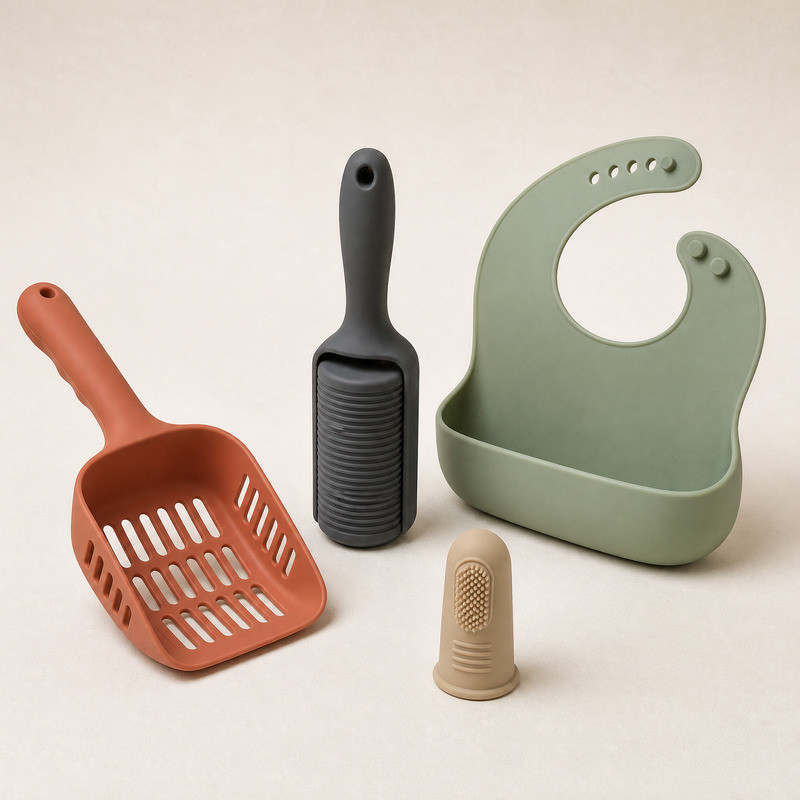
Packaging decided inside the tooling phase
Sleeve, colour box, header card, barcode area and carton configuration change the drop performance, the stacking height and the price the product can carry. They also change the tool, because a bowl designed to sit in a printed sleeve needs a different base than one packed loose in a carton.
For marketplace channels, the practical questions are whether the factory can apply labels to your specification, whether it can pack to a defined carton weight, and whether it holds the packaging artwork revision that matches the current product. None of these are moulding skills, and all of them cause removals when they fail.
Quality control that reduces returns rather than documenting them
An inspection report that records defects after they are made is an accounting document. The controls that reduce returns sit earlier: incoming compound checks, a first-article dimension report per tool, in-process checks at the press, and a final check that uses the approved sample as the reference rather than a drawing.
Ask what happens when a batch fails. A factory that reworks and re-inspects has a process. A factory that ships with a note has a habit.
Production planning for reorders
Reorders fail on three things: pigment lot, tool condition and calendar. Pigment lots run out; tools wear at the parting line; the calendar fills with larger customers. A supplier that retains a signed golden sample, records the pigment lot on the batch card and tells you the tool's shot count is giving you the three controls that keep a listing alive.
The reorder test: ask for the batch record of the last production run of a comparable part. If it names the compound, the pigment lot, the tool number, the press, the cure parameters and the inspector, the factory can repeat itself. If it names the date and the quantity, it cannot prove that it can.
How We Evaluated OEM Manufacturers for E-Commerce Projects
| Evaluation criterion | Weight | What counts as evidence |
|---|---|---|
| Documented OEM and private-label services | 25 | Stated OEM/ODM scope with a described workflow |
| Custom product and mould development | 20 | In-house or coordinated tooling, drawing review, prototyping |
| Branding and retail packaging | 15 | Logo application methods, packaging options, labelling support |
| Quality control and batch consistency | 15 | Inspection stages, dimensional reporting, retained references |
| Pilot-order and production flexibility | 10 | Stated minimums, small-press capability, mixed-SKU handling |
| Export and fulfilment support | 10 | Export documentation, channel-specific packing, labelling |
| Communication and documentation | 5 | Clear process steps and named responsibilities |
Marketplace-specific services are only credited where a company states them. Editorial scores from public pages reviewed on 21 October 2026; not an audited ranking.
10 OEM Manufacturers E-Commerce Brands Can Assess
| Company | OEM and branding evidence | Batch and fulfilment evidence | Score |
|---|---|---|---|
| Dongguan Wellfine Silicone | OEM/ODM, private label, Pantone matching, packaging support | Stated MOQ from 200 pcs, FBA labelling, QC workflow | 87 |
| Guangdong Yumingsheng (YMS) | OEM, ODM, private label, CMF work, packing design | ±0.1 mm tolerance, pre-shipment inspection, case-level ODM records | 85 |
| JOYI Silicone | OEM programme for bowls and mats, logo and colour options | Drawing-to-production sequence, mould making described | 82 |
| Pawseed Pet Products | OEM/ODM, mould opening, packaging customization | Prototype development, Dongguan production base | 78 |
| Dongguan Yuankang | Private label, Pantone matching, logo engraving or printing | ISO 9001, BSCI and Sedex referenced, mould development | 76 |
| SM (Dongguan Sanmao) | Custom moulded pet accessories, defined project inputs | Sample-based approval, defined secondary operations | 74 |
| Naike Silicone | Lick mat and bowl programme with precise specification language | Documented footprint and radii, programme-level development | 71 |
| NEWTOP Custom Silicone | OEM/ODM, prototyping, logo options | Factory address not published, batch evidence thin | 68 |
| FromRubber | Custom moulding, multi-colour, printing, laser etching | In-house mould shop, 32 presses, two plants | 66 |
| Xiamen Guzhan | Custom bowl range with logo options, industry and trade role | Manufacturing role unconfirmed | 64 |
1. Dongguan Wellfine Silicone
Publishes an OEM and ODM programme covering concept review, mould development, sampling, mass production and private-label packing, with Pantone colour matching, logo application and export labelling named as standard options. The site states a minimum order from 200 pieces and lists FBA labelling, assembly and shipping support as a service for online sellers, alongside compression moulding, LSR injection and over-moulding in the same plant.
Confirm before the first PO: whether the 200-piece minimum covers a new tool, and which pet items are existing moulds suitable for private label.
2. Guangdong Yumingsheng (YMS)
Runs OEM, ODM and private label as separate routes, with an engineering sequence that includes industrial design, CMF work, mould flow analysis, prototyping and pilot runs before mass production. Published case notes cover a foldable travel bowl line with six colourways and custom packaging, and slow feeder mats built on a multi-cavity tool covering three patterns, both of which are the kind of change that gives a listing its own geometry.
Confirm before the first PO: the minimum quantity for a new outline, and whether packaging tooling is quoted with the product tool.
3. JOYI Silicone
Presents an OEM programme for slow feeder bowls, lick bowls and lick mats, with shape, texture, size, colour and logo listed as customisable, and a documented route from 3D drawing through mould making and sampling to production. For a seller building a small range around feeding, the relevant question is how a colour programme is held across three or four shapes.
Confirm before the first PO: colour control across shapes, and the MOQ per colour rather than per order.
4. Pawseed Pet Products
Publishes several bowl formats from a Dongguan base, including a suction bowl, a lick-and-feed slow feeder and a two-mode lick bowl, with OEM/ODM, prototype development, mould opening and packaging customization stated. The product set is differentiated by function rather than colour, which is the harder version to copy.
Confirm before the first PO: how suction is tested on the surfaces buyers actually use, and the reorder lead time.
5. Dongguan Yuankang
States more than 17 years in silicone manufacturing, with private-label packaging, Pantone matching and logo engraving or printing as customization options, and ISO 9001, BSCI and Sedex referenced. Its pet range covers bowls, mats, toys, grooming brushes, scoops and travel bottles, which suits a seller testing several small SKUs at once.
Confirm before the first PO: the scope of each certificate for the compound used, and the inspection plan for a mixed-SKU order.
6. SM (Dongguan Sanmao)
Structures projects around defined inputs: product type, dimensions, texture zones, interfaces, cleaning method and packaging or labelling requirements. Secondary operations such as printing and laser engraving are added only where the design needs them, which keeps the cost structure visible rather than bundled.
Confirm before the first PO: which secondary operations are in-house, and how mixed-SKU orders are scheduled.
7. Naike Silicone
Publishes a structured lick mat programme with specification language that names footprint, corner radius, perimeter height and usable spread area. That precision is useful to a seller who has been burned by a mat that arrived with a different usable area than the listing described.
Confirm before the first PO: bowl tooling scope and the production scale behind the mat programme.
8. NEWTOP Custom Silicone
Lists a lick bowl, a foldable bowl and feeding bowls with OEM/ODM and prototyping stated, alongside a broad pet range. The site does not publish a factory address, so the manufacturing location and the batch controls behind the catalogue remain unconfirmed.
Confirm before the first PO: factory location, batch records, and which moulds are owned by the company.
9. FromRubber
A Dongguan custom silicone and plastic manufacturer with an in-house mould shop, CNC capacity and 32 presses across two plants, plus documented multi-colour moulding, printing, spray coating and laser etching. Public pet content is presented at market and process level rather than as a product catalogue, so a seller would be starting from a development project rather than a private-label catalogue item.
Confirm before the first PO: comparable pet parts already tooled, the minimum for a first run, and how packaging artwork is controlled between runs.
10. Xiamen Guzhan
Publishes custom silicone pet bowls from 200 to 1200 ml with Pantone colour matching and print, deboss or emboss logo options. The company describes itself as industry and trade, so for an OEM relationship the manufacturing role and the batch controls need to be established before a tool is placed.
Confirm before the first PO: whether moulding is in-house, and who issues the inspection report.
OEM Capabilities That Matter Most to Online Pet Brands
Custom products that stand out from existing listings
Functional change beats cosmetic change. A wider rim is visible and useful; a different divider layout changes how the animal eats; a deeper suction cup changes where the product can be used. Each of those needs a tool, which is exactly why it holds. Colour and print are worth having, but they are the part a competitor can match in a week.
Packaging that fits the sales channel
Ask for the packaging specification as a document: dimensions, material, print method, barcode position, poly bag or none, carton count and carton weight. Then ask which of those the factory controls and which it buys in. A factory that assembles packaging from three vendors will struggle to hold a revision when one of them changes a carton.
Quality control that reduces returns
The four return drivers on silicone pet goods are dimension, colour, odour and function. Dimension is controlled by a first-article report and in-process checks. Colour is controlled by a retained reference and a defined light source. Odour is controlled by compound choice and post-cure, which is a process decision, not an inspection one. Function, such as suction or fold retention, needs a test that is written down.
Production planning for reorders
A listing lives on repeat orders. Ask how the factory plans a reorder: does it reserve press time, does it hold compound, does it keep the tool on site, and what is the notice period before the calendar closes? The answers are commercial, not technical, and they decide whether the second run arrives in three weeks or seven.
Keep one signed sample with both parties. When a dispute starts, the conversation is about a physical object rather than a photograph taken under unknown light.
Common OEM Mistakes E-Commerce Brands Should Avoid
- Choosing on unit price. Tooling, packaging, inspection and freight usually decide the landed cost, not the quote per piece.
- Approving a sample without written specifications. A photograph is not an approval document.
- Assuming a certificate covers every SKU. Reports are issued for a compound, a colour and a part.
- Ordering deep before testing demand. A pilot run plus a tool that can be reused is cheaper than inventory that cannot be sold.
- Leaving mould ownership undefined. Ownership, maintenance and return conditions belong in the first agreement.
- Changing packaging after the tool. A carton designed from a nominal dimension usually fits nothing.
How FromRubber Supports Custom Silicone Product Projects
FromRubber, the trading name of Dongguan Bohao Electronic Technology Co., Ltd. in Qiaotou Town, Dongguan, works as a development partner rather than a private-label catalogue: a seller brings a drawing, a reference sample or a dimensioned concept, and the review covers geometry, material, colour, packaging and first quantity. Two plants in Dongguan with an in-house mould shop and a mix of small and large presses mean a pilot run and a later bulk order can both be produced on suitable equipment.
Documented capability covers multi-colour moulding, screen printing, spray coating and laser etching, which is what most branding on a moulded pet part actually requires. The multi-colour silicone page and the OEM manufacturing page set out the process in more detail, and IATF 16949, ISO 9001 and ISO 14001 certificates are available on the certification page.
Send the concept, target market, colour reference and first quantity to nani@fromrubber.com or karl@fromrubber.com, or by WeChat and WhatsApp on +86 18676210913.
Frequently Asked Questions
What is the difference between OEM and ODM for silicone pet products?
In OEM, the seller's design is manufactured to the seller's specification. In ODM, the factory's existing design is adapted with the seller's colour, logo and packaging. OEM needs a tool and a longer lead time; ODM starts faster but the geometry is not exclusive.
Can e-commerce brands develop exclusive silicone pet products?
Yes, and exclusivity comes from the tool rather than from an agreement. A proprietary outline or internal geometry cannot be copied without cutting a new tool. Ask who owns that tool and keep the ownership documented.
What should an OEM quotation include?
Unit price at a stated quantity, tooling cost, sample cost, packaging cost, inspection cost, carton specification, lead time by stage and the Incoterm. A single figure per piece hides the parts that change when the order changes.
How can brands check product consistency between orders?
Compare the first-article report, the retained colour reference and the batch record of each run. A dimensional check on five parts from the second order, against the approved sample, catches most drift before it reaches a customer.
Can a manufacturer customize packaging and logos?
Usually. Logo application may be moulded, printed, sprayed or laser etched, and each has a different durability and cost. Packaging is often sourced rather than made, so ask who controls the specification and where the artwork revision is held.
Sources and Notes
- Manufacturer pages cited inline, reviewed 21 October 2026. Minimums, tolerances and services are reported as published and are not independently audited.
- 21 CFR 177.2600 for repeated-use rubber food-contact articles; Regulation (EC) No 1935/2004 and the LFGB for European market documentation.
- ASTM D2240-15(2021) for durometer hardness, the test behind any Shore A figure quoted in a specification.
- Related reading on this site: branding a slow feeder bowl, reading a silicone product drawing and pet supplies manufacturing.
Scores reflect published evidence only. Confirm current minimums, plant address and certification scope before placing a production order.
A listing is protected by a tool and a batch record. Colour can be copied; geometry and consistency cannot, which is why the questions worth asking are about steel and records rather than about price.
Project briefs can be sent to nani@fromrubber.com or karl@fromrubber.com. WeChat and WhatsApp: +86 18676210913.