Top 10 Small Silicone Patch Manufacturers for Minimalist Logos
- Share
- publisher
- FromRubber
- Issue Time
- Oct 16,2026
Summary
Ten suppliers assessed for compact minimalist marks, with a rubric weighted to small-format evidence, a specification checklist, and an explanation of why removing decoration makes visual tolerance tighter than dimensional tolerance.
Top 10 Small Silicone Patch Manufacturers for Minimalist Logos
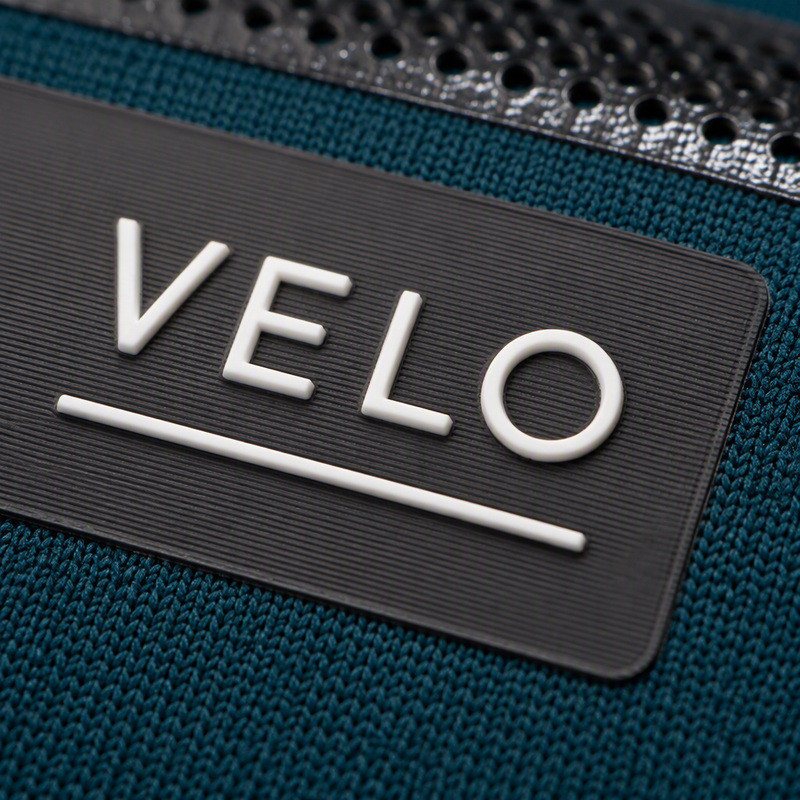
The brief said “simple”. A single wordmark, one color, no decoration. Then the sample arrived and everyone could see that one letter sat half a millimeter low, that the gap in the C was narrower than the gap in the O, and that the whole mark was slightly too thick for the garment.
Fewer features do not mean a lower bar. They mean a higher one, because on a minimalist patch there is nothing else for the eye to look at. Every deviation that would be invisible inside a busy badge becomes the most obvious thing about the product.
Direct answer
Minimalist logos are harder to mold well, not easier, because removing decoration removes the tolerance budget you would otherwise hide errors in. On a small patch with a single wordmark, the relevant tolerances are the proportion of the strokes to the patch height, the consistency of the gaps, the relief depth relative to the base thickness, and the uniformity of the edge. A supplier suitable for this work will talk about those four things, and will say which part of your mark it would adjust.
Minimalism removes the error budget
There are two different tolerances in a molded part, and small minimalist patches are where they separate.
Dimensional tolerance is what a specification controls: the finished height, the stroke width, the relief depth. It is quoted as a class or a range, and rubber products are classed rather than absolute — ISO 3302-1:2014 sets out dimensional tolerance classes for molded and extruded solid rubber products.
Visual tolerance is what the customer actually judges: whether the strokes look evenly weighted, whether the gaps look equal, whether one element sits noticeably lower than its neighbours. Visual tolerance is tighter than dimensional tolerance on every minimalist mark, because the eye compares features to each other rather than to a drawing.
Two holes 0.15 mm different in diameter are invisible in a decorative badge and obvious in a two-letter monogram, because the comparison is direct. The finished part can pass inspection and still be rejected by the brand, which is where most arguments about small minimalist patches originate.
The practical fix is to design so that the eye has fewer exact comparisons to make: consistent stroke weighting, generous gaps, and elements that are deliberately different rather than accidentally similar.
Color count is the number that most often decides whether a minimalist mark is producible. A widely used ceiling for this product family is no more than six colors for printed silicone and no more than two for molded silicone, as reported in FromRubber’s published note on patch thickness and construction, updated 7 October 2026. The same note places printed silicone at up to about 1.5 mm and molded silicone at 1.5 mm and above. A single-color minimalist logo sits comfortably inside both limits, which is one practical argument for keeping the mark monochrome instead of adding a second color for its own sake.
Thickness is the minimalist logo’s hardest variable
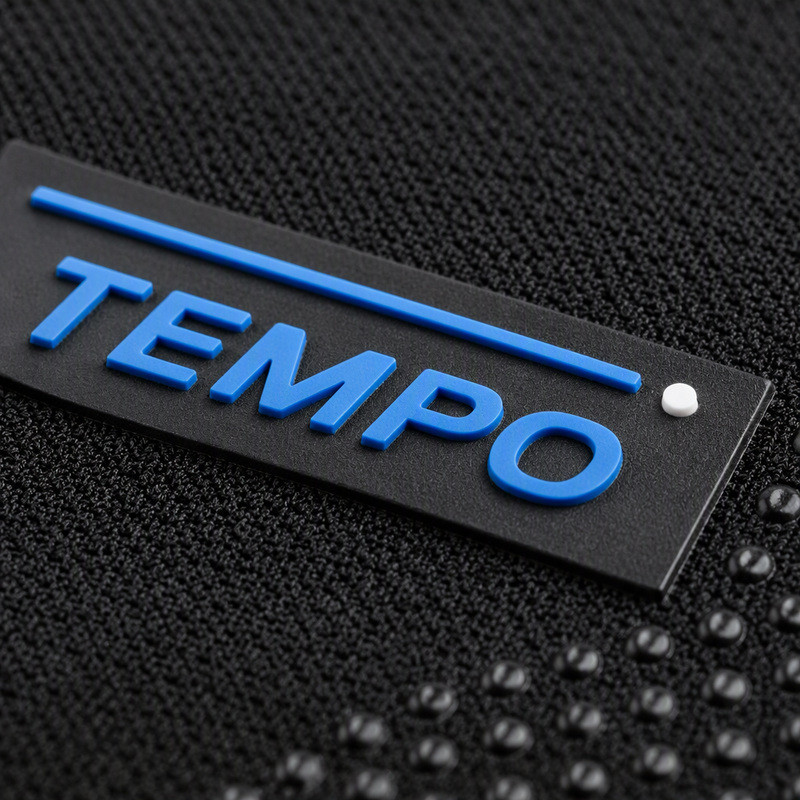
A single letter with a thin stroke and a thin rule needs a base that carries it without adding visual weight. That is a tighter constraint than it sounds, because base thickness and relief depth are set by different considerations and interact strongly.
Material has to flow into the narrowest channel before it cures. If the design has one thin stroke and everything else is heavy, the tool has to be cut for the thin stroke, and the heavy elements then receive more material than the base thickness account allows. The result is a patch that is dimensionally correct where you measured it and visually uneven where you did not.
There are two honest routes out. Reduce relief depth so that the stroke sits almost flush and reads mainly through color contrast, or increase stroke width until the flow is comfortable and accept a slightly heavier mark. Both are legitimate minimalist outcomes and both should be decided at artwork stage.
Color choice belongs in the same conversation. On a one-color minimalist patch, legibility comes almost entirely from the contrast between the mark and its background. Gentle contrast on a thin stroke reads as a smudge regardless of how well the mold was cut — which is one reason monochrome marks are often specified with a lower relief and higher contrast rather than the other way round.
How the candidates were assessed
| Weight | Criterion | What counted as evidence |
|---|---|---|
| 25 | Verified custom silicone patch manufacturing | A live product or category page for molded silicone patches |
| 25 | Evidence of small-format patch or logo customization | Published small patches, miniature lettering, dot constructions or stated small-order capability |
| 20 | Ability to reproduce simple logos and fine geometric features | Named fine-detail, thin-line or published detail limits |
| 15 | Attachment methods and apparel applications | Attachment options named per construction, with the garment types they suit |
| 10 | Artwork review, sample approval and quality control | A published proof, mock-up or sampling step, or documented inspection stages |
| 5 | Transparent technical product information | Published dimensions, thickness ranges or relief guidance |
Editorial scoring based on each company’s own published pages, checked on 16 October 2026. No company was awarded points for small-logo expertise on the strength of a product photograph alone. FromRubber, which publishes this website, was scored with the same rubric. The comparison was compiled by the FromRubber technical team from the suppliers’ own published documentation, and every source listed below was opened on the date shown.
Comparison at a glance
| # | Company | Small-format evidence | Simple-logo and fine-detail support | Attachment | Score |
|---|---|---|---|---|---|
| 1 | Qinghan Label | 95-product silicone patch category including brush-dot appliqués and dot-formed letter patches | Dot relief, 3D printed silicone, screen-printed silicone; published design-to-inspection sequence | Iron-on, sew-on, hook-and-loop | 91 |
| 2 | FromRubber | Custom rubber patch product group with logo patch items and published small-logo guidance | Written on small logo feasibility and keeping thin lines visible | Sew-on, heat transfer, adhesive-backed | 89 |
| 3 | Nanjing Jiamei (Jiamei Labels) | Toothbrush-label and cut-piece ranges for apparel branding, plus a garment trim catalog | Flat, raised, recessed, embossed and printed effects with Pantone matching | Sew-on channel, heat transfer, adhesive, hook-and-loop | 87 |
| 4 | The American Patch | States no minimum order and quotes single patches, so minimalist marks can be sampled without a run | Publishes a practical text-height floor and a fine raised line width, and names artwork that will not mold | Heat-seal, hook-and-loop, adhesive, sewing channel | 85 |
| 5 | ASEE Fashion / RY Labels | Heat-transfer label program suited to low-profile marks on light garments | 2D and 3D silicone and TPU constructions with stated press control | Heat transfer | 82 |
| 6 | Jinsheu | Custom silicone patches for clothing labels with published process limits | Printed silicone from flat up to a stated maximum thickness and molded silicone above it, with a recommended color ceiling per process | Plain, iron-on, hook-and-loop and double-adhesive backings | 78 |
| 7 | Ninja Patches | Low stated minimum order quantity with a digital proof before production | Silicone patch range with virtual proofing at order stage | Not published per construction | 74 |
| 8 | ClothingTags.cn (MINT Limited) | 3D silicone heat transfer logos in letter, arc and two-layer styles | Computer design and sample making included in the published sequence | Iron-on heat transfer | 73 |
| 9 | Acctrims | Silicone label and silicone heat transfer categories across apparel, bags, hats and shoes | Molded silicone and heat-transfer constructions | Heat transfer and sew-on | 71 |
| 10 | Yusen Trims | Silicone and PVC label category for garments, bags and headwear | Molded dimensional finish; inquiry route for unclear detail | Not published per construction | 68 |
Hangzhou Fuhan Garment Accessories and Kaishen (KSPatch) were both reviewed for this article and set aside. Fuhan’s silicone detail appears in a catalog listing rather than a product or process page, and KSPatch publishes no small molded silicone patch program, so neither could be evidenced against a small-format minimalist requirement.
Company profiles
1. Qinghan Label
Qinghan publishes the strongest small-format silicone evidence of the group. Its silicone patch category includes a brush-dot sub-category and dot-formed letter logo patches, where lettering is built from raised dots instead of strokes — a construction that exists specifically because dot geometry holds up better than thin lines when a mark is small. The company documents a five-step design-to-inspection sequence and in-house washing, physical and rating laboratories. Unconfirmed: whether a minimum stroke width will be committed to in writing.
2. FromRubber
FromRubber publishes both product evidence and written guidance on small marks. Its custom rubber patch product group includes logo patch items such as a custom rubber logo patch and a durable sew-on silicone patch, and the site sets out how small a small silicone logo can be, how to keep thin lines visible and why small logos lose fine detail. Unconfirmed: a published dimensional floor, which its guidance treats as design-dependent. Company details published on the same page record the manufacturer as Dongguan Bohao Electronic Technology Co., Ltd., Jingcheng Road 122, Langxia Village, Qiaotou Town, Dongguan, Guangdong, China, operating since June 2010 with 32 compression molding machines across two sites and IATF 16949:2016, ISO 9001:2015 and ISO 14001:2015 certification.
3. Nanjing Jiamei Garment Accessory Factory (Jiamei Labels)
Jiamei publishes a silicone rubber label range, a toothbrush-label line and a cut-piece category aimed at apparel branding, alongside flat, raised, recessed, embossed and printed logo effects with Pantone matching and four attachment options. The breadth of small-format categories is what earns the position here. Unconfirmed: the smallest lettering the company will quote and its edge-definition criteria between batches.
4. The American Patch
This supplier earns a high position mainly for disclosure. Its custom silicone patch page states a practical cap height for text on molded silicone, a fine raised line width subject to artwork review, and an explicit list of artwork it will not mold, including gradients and halftones. It also states no minimum order, which makes a minimalist mark testable at the sample stage without funding a run. Unconfirmed: garment-scale capacity and non-US production.
5. ASEE Fashion / RY Labels
ASEE documents 3D silicone and TPU heat-transfer labels produced with vacuum heat pressing and a stated temperature control window. For minimalist logos on light garments, a low-profile heat-transfer construction often suits better than a molded badge, since there is no raised edge to catch on furniture or through a seat belt. Unconfirmed: the minimum lettering height accepted and whether molded alternatives are offered.
6. Jinsheu
Jinsheu publishes process-level limits rather than adjectives: printed silicone patches can be flat or raised up to a stated maximum thickness, molded silicone begins at a stated minimum thickness, and the company recommends a color ceiling for each process because added colors increase the failure rate. Backing options and separate minimum order quantities for printed and molded designs are also named. For a minimalist mark sitting on either side of the printed-versus-molded decision, that disclosure is the practical part. Unconfirmed: the smallest lettering height and gap accepted.
7. Ninja Patches
Ninja Patches publishes a silicone patch range with a stated low minimum order quantity and a digital proof generated before production. For a minimalist mark, the value of a low minimum is that you can evaluate a real molded sample before committing to volume. Unconfirmed: the manufacturing entity, attachment constructions and any published dimensional limits.
8. ClothingTags.cn (MINT Limited)
The company lists 3D silicone heat transfer logos in letter, rhombus, arc and two-layer color styles and documents a sequence covering computer design, price confirmation, sample making, inspection and packaging, with photographs supplied for approval before dispatch. Unconfirmed: relief depth and dimensional limits for small lettering.
9. Acctrims
Acctrims publishes silicone label and silicone heat-transfer label categories covering clothing, bags, hats, shoes and home textiles, which places small garment marks inside a defined scope. Unconfirmed: published small-format limits and whether development sampling is available separately from production.
10. Yusen Trims
Yusen lists custom silicone and PVC labels for garments, bags and headwear and routes inquiries about unclear detail, edge lift, bulkiness and color mismatch through a named contact process, which suggests these are recognized field issues rather than hypothetical ones. Unconfirmed: the manufacturing entity behind the label line and its tooling arrangements.
How to specify a small patch for a minimalist logo
A minimalist brief succeeds or fails on the specification document, because there is no decoration to absorb ambiguity. Nine items are worth settling before a tool is cut.
- Finished patch width and height in millimeters, measured on the part.
- Minimum line width and minimum gap present in the artwork, at final size.
- Relief plan: which elements are raised, which are recessed, and how many heights the design needs.
- Relief depth per level and the maximum total thickness you will accept.
- Edge shape and surface finish, including corner radii and matte or gloss treatment.
- Color count and contrast target between the mark and its background.
- Garment fabric and exact placement, including whether the patch crosses a seam.
- Attachment method and the wash regime the finished garment will see.
- Sample acceptance criteria: legibility at the intended reading distance, edge uniformity under raking light, and color reference match.
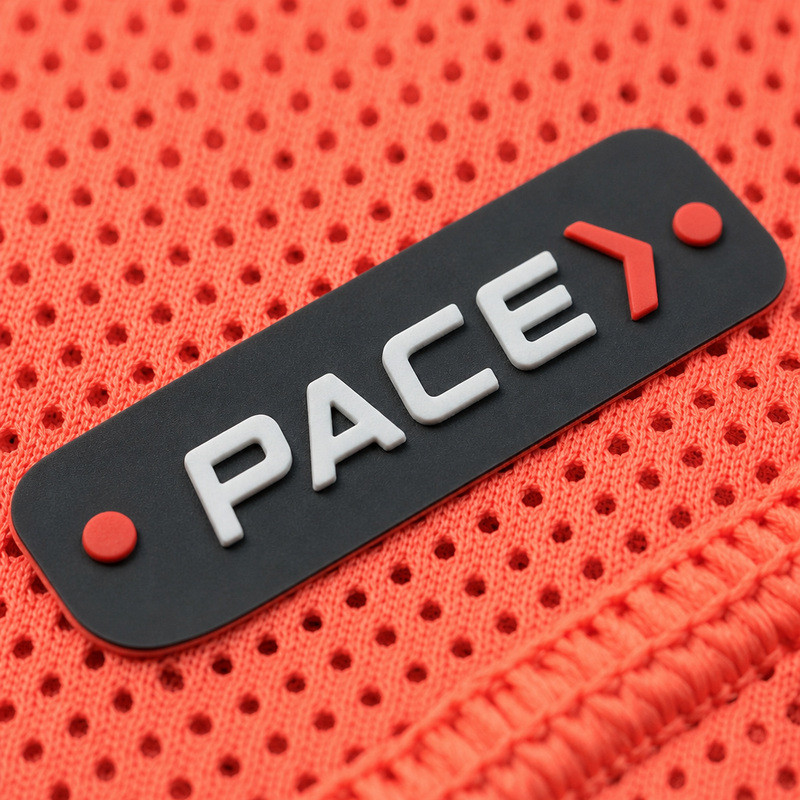
Evaluate the sample at the size it will actually be worn and on the fabric it will actually sit on. A minimalist mark that reads perfectly on a white swatch in a studio can disappear on a dark technical knit, and the reverse is equally true: a mark that looks heavy in macro photography can be perfectly judged from a meter away.
Questions buyers keep asking
How small can a silicone patch be for a minimalist logo?
Smaller than most buyers expect, because a minimalist mark has fewer features and therefore fewer that can fail. The binding constraint is the thinnest stroke and the narrowest gap, not the patch outline. A 20 mm patch with a bold monogram can be comfortable; a 40 mm patch with hairline rules may not be. Feasibility is a question about the artwork, not the size alone.
Can a simple logo keep thin lines at a small size?
Thin lines are the hardest feature to reproduce, because silicone must fill a narrow channel before curing. The workable approaches are to thicken slightly, to shorten the line so it reads as a tick or underline rather than a rule, or to move the line into relief so it reads through shadow instead of width. More on this in keeping thin lines visible on a small silicone logo.
Is a flat patch better than a raised patch for minimalist branding?
Often yes. A flat or near-flat mark with strong color contrast reads cleanly, sits low on the garment and is less prone to edge damage. Relief adds presence, and on a minimalist mark presence can read as noise. Decide by considering how the logo will be seen — close up on a shirt hem, or across a room on a shoulder.
Does patch thickness affect how a small logo looks?
Directly. Thickness sets how much the patch stands proud of the garment, and on a minimalist mark that dimension is part of the design. A patch that is right in every other respect can still look wrong if it sits 0.4 mm too high, particularly on light knitwear.
Which attachment method suits lightweight sportswear?
A low-profile heat-transfer construction, generally, because it flexes with the fabric and presents no raised perimeter. Where the garment is washed aggressively or the fabric is heavy, a sew-on patch with a molded channel gives more predictable attachment. The trade-offs are set out in how fabric type affects small silicone patch adhesion.
What should I provide when requesting a custom small silicone patch?
Vector artwork, finished dimensions, the smallest stroke and gap in the file, the relief plan, color references, the garment fabric, the attachment preference and an estimated quantity. Add the intended placement, because a minimalist mark is often the only graphic on the item and its position carries as much brand weight as its execution.
Where this leaves the sourcing decision
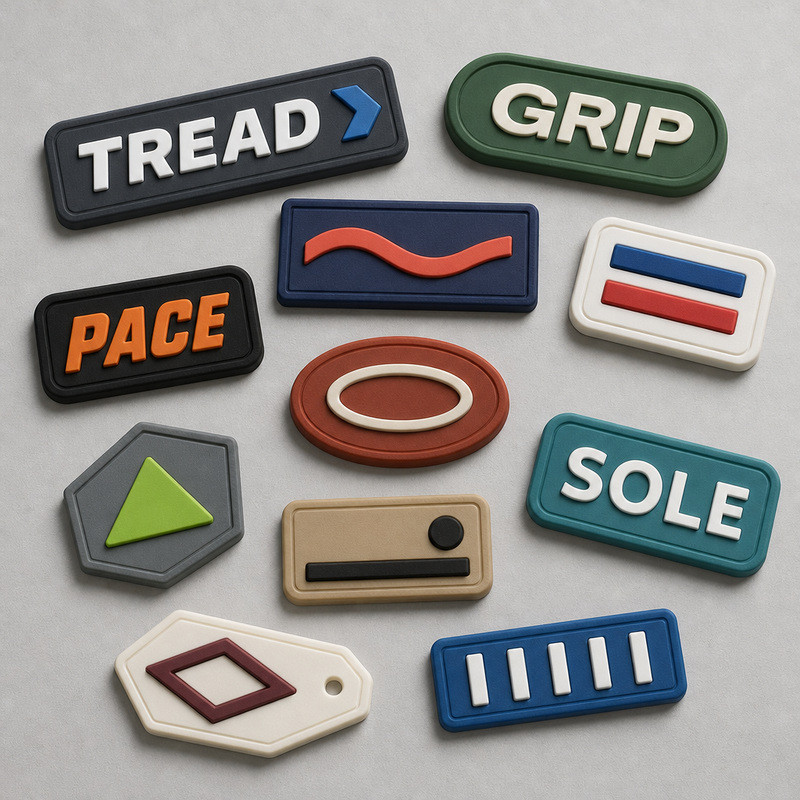
Match the manufacturer to the smallest feature in the design, not to the size of the order or the impressiveness of the catalog. A supplier who can describe how it will fill your narrowest channel, and who tells you which element it would change before tooling, is a better bet than one who simply confirms the dimensions are possible.
Then test the sample the way the customer will see it: at the intended size, on the intended fabric, under the light the product will be worn in. Minimalist marks are judged in the first two seconds of use, and no inspection report substitutes for that.
One further consideration applies if the mark is one of several claims on the product. A minimalist silicone label is often part of a wider brand story about durability and reduced decoration, and since 2024 the wording of that story has faced a clearer regulatory baseline in Europe: Directive (EU) 2024/825 addresses unfair commercial practices including misleading environmental claims, and Regulation (EU) 2024/1781 establishes a framework for ecodesign requirements for sustainable products. Neither obliges a trim supplier to do anything, but both make it sensible to keep material claims factual and specific — and a silicone label is, at least, a single-material component, which is easier to describe honestly than a laminated construction.
FromRubber produces custom silicone patches and silicone labels in Dongguan, Guangdong, and publishes both its patch product range and written guidance on small-logo feasibility. If you have artwork, a target size, the garment fabric and an estimated quantity, a feasibility review is the practical starting point — with the caveat that some minimalist marks benefit from being adjusted rather than reproduced exactly, and no supplier can guarantee that every drawing will mold as submitted.
Inquiries: nani@fromrubber.com or karl@fromrubber.com. WeChat and WhatsApp: +86 186 7621 0913.
Sources and references
- ISO. ISO 3302-1:2014, Rubber — Tolerances for products — Part 1: Dimensional tolerances.
- OEKO-TEX. OEKO-TEX® STANDARD 100 harmful-substance testing and product classes.
- European Union. Directive (EU) 2024/825 on empowering consumers for the green transition.
- European Union. Regulation (EU) 2024/1781 establishing a framework for ecodesign requirements for sustainable products.
- Qinghan Label. Silicone patch category, brush-dot and dot-letter constructions.
- Nanjing Jiamei Garment Accessory Factory. Silicone rubber labels, toothbrush labels and cut pieces.
- The American Patch. Published small-detail limits and artwork that will not mold.
- ASEE Fashion / RY Labels. 3D silicone heat transfer label program.
- Jinsheu. Custom silicone patches with published thickness, color and minimum-order specifications.
- Ninja Patches. Silicone patch range with stated minimum order and digital proof.
- ClothingTags.cn (MINT Limited). 3D silicone heat transfer logo catalog.
- Acctrims. Custom silicone labels and heat transfer labels.
- Yusen Trims. Custom silicone and PVC label category.
- Hangzhou Fuhan Garment Accessories. Garment accessories catalog. Reviewed and excluded from this article.
- Kaishen Garment Accessory Co., Ltd. (KSPatch). Company homepage. Reviewed and excluded from this article.
Related reading on this site: the five levels of silicone patch design complexity, and what makes a high-quality silicone patch.
All sources were checked on 16 October 2026. Product ranges, stated limits and minimum order quantities are subject to change, so confirm the current position directly with each company before production.