Unlock the Magic: Your Ultimate Guide to the Custom Silicone Product Process
- Share
- publisher
- karl
- Issue Time
- Feb 6,2025
Summary
The custom silicone product process as five gates: concept review, DFM, prototype, first article and production. What each gate must deliver, who signs it off, and where projects usually lose weeks.

The custom silicone product process is usually described as a list of steps: design, tooling, sample, production. That description hides the only thing that matters commercially, which is what has to be true before each step is allowed to start.
This article describes the process as five gates. Each gate produces a document, and each document is the thing that stops an expensive mistake from travelling downstream.
What the Custom Silicone Product Process Has to Deliver
A silicone part carries three kinds of risk: geometry that cannot be moulded, a material that does not meet the environment, and a tolerance stack that does not assemble. The process exists to retire those risks in that order, because they get more expensive in that order.
Every gate is therefore a question, not a date. Can this be moulded? Will this material survive the application? Does this part fit the assembly at the extremes of tolerance? If the answer is not documented, the next stage inherits the risk.
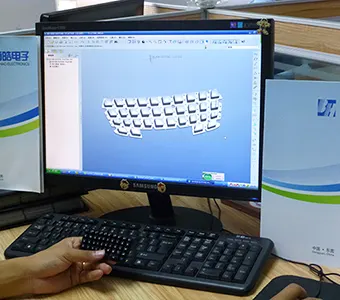
The Custom Silicone Product Process in Five Gates
| Gate | Deliverable | Signed off by |
|---|---|---|
| 1. Concept review | Application brief, environment, volume, target cost | Customer |
| 2. DFM review | Marked-up drawing, tooling concept, material recommendation | Customer engineering |
| 3. Prototype | T0 samples and a measurement report against the drawing | Customer engineering |
| 4. First article | Production-tool parts with a first-article inspection report | Customer quality |
| 5. Production | Frozen process, control plan, packing and traceability | Both |
Gate reviews in the custom silicone product process
The reviews are short if the documents exist. A DFM review that produces a marked-up drawing with five comments takes an hour and usually saves a tool revision. A prototype review that produces a measurement table turns a subjective discussion about feel into a decision about whether the force curve sits inside the agreed band. The point is not ceremony; it is that each gate leaves a record that the next gate can be judged against.
Materials and Processes Inside the Custom Silicone Product Process
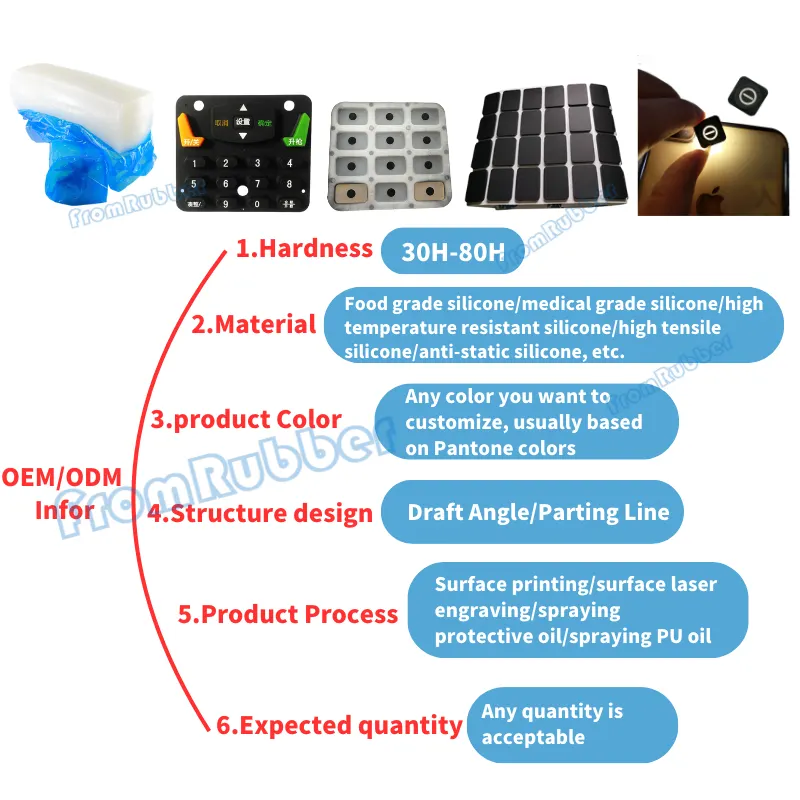
Material selection belongs at gate two, once the environment is known. A general-purpose compound covers most industrial parts, but food contact, medical contact, high temperature, oil exposure and electrical conductivity each narrow the choice, and each carries a different price.
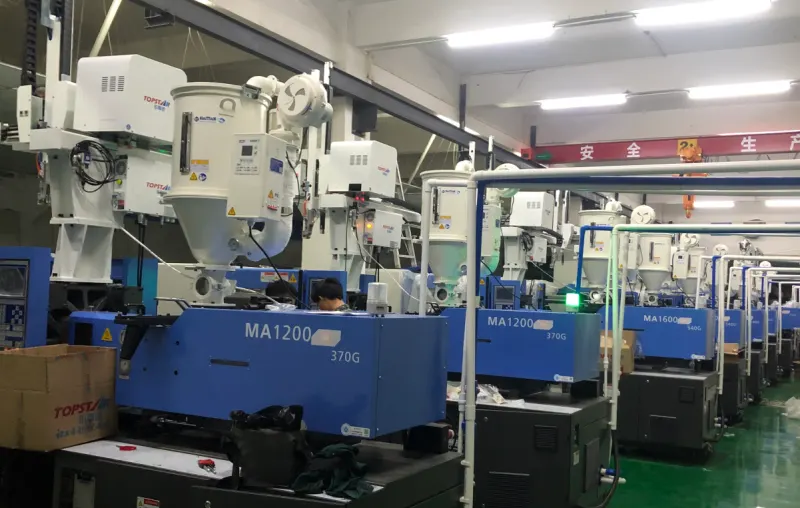
Process selection belongs at the same gate. Compression moulding suits larger parts at moderate volume; injection and liquid silicone suit smaller, more precise parts at higher volume. Choosing the process after the tool is designed is how projects end up with a tool that cannot hit the tolerance in the drawing.
Colour and surface treatment belong here too, because both interact with the process. A two-colour part may need two shots or separate keys; a sprayed coating adds a handling step that affects packing and lead time.
Where the Custom Silicone Product Process Usually Slips
Three delays account for most late launches. The first is an incomplete brief: a model without tolerances, or a drawing without the environment. The second is sample approval by opinion rather than by measurement, which produces a second sample round with no clear target. The third is a late change to a cosmetic detail, such as a legend position, that forces artwork or tool work after first article.
All three are gate failures rather than manufacturing failures. They are also the reason a supplier who asks many questions early is usually faster overall than one who quotes immediately.
If the project needs to compress the timeline, compress the review, not the sampling. Our notes on what to prepare for a custom silicone project list the data that keeps gate two short.
Documents that keep the custom silicone product process on schedule
- Application brief: what the part does, where it sits, what it must survive.
- 3D model plus a 2D drawing with critical dimensions and tolerances marked.
- Material and hardness, or the environment from which they can be chosen.
- Volume by quarter and the target unit price band.
- Cosmetic standard: which surfaces are visible and what is acceptable.
How many sample rounds does a custom silicone product normally need?
Two is typical for a new geometry: one to prove the concept and one to confirm the corrections. Projects that need four or five usually lack a measured approval criterion at gate three.
Can the process start without a 3D model?
It can start with a sketch and a reference sample, and the first gate will include modelling. It cannot reach tooling without a model, because the tool is cut from the geometry the model defines.
Run the custom silicone product process as five gates with five documents: brief, DFM note, T0 report, first-article report and control plan. Approve each one against numbers rather than impressions, and the project will finish on the date the tooling plan promised.