Upgrade Your Typing Experience with These Flexible Rubber Keyboards!
- Share
- publisher
- karl
- Issue Time
- Jul 10,2024
Summary
How a flexible rubber keyboard is built, where it is specified in OEM equipment, and the limits that decide whether it suits a product: sealing, rollability, force feel, legend durability and tooling.

A flexible rubber keyboard is a moulded silicone interface that can bend, roll and be wiped down without losing its keys. It is specified less for the typing experience than for the fact that it can be sealed and cleaned as one surface.
That changes what matters in the design. Feel still counts, but the questions that decide whether the part works are about wall thickness, legend process and how the keyboard is clamped to the housing.
What Makes a Flexible Rubber Keyboard Different
A conventional keyboard is an assembly: keycaps, switches or domes, a plate, a PCB and a housing. A flexible rubber keyboard collapses that into a single moulded sheet with raised key bodies on a thin web, legends on the surface and either carbon pills or actuation cavities underneath.
The consequence is that the keyboard has no internal gaps. There is nowhere for liquid to pool, no keycap to prise off and no switch to replace. For equipment that is cleaned between users, that is the whole argument.
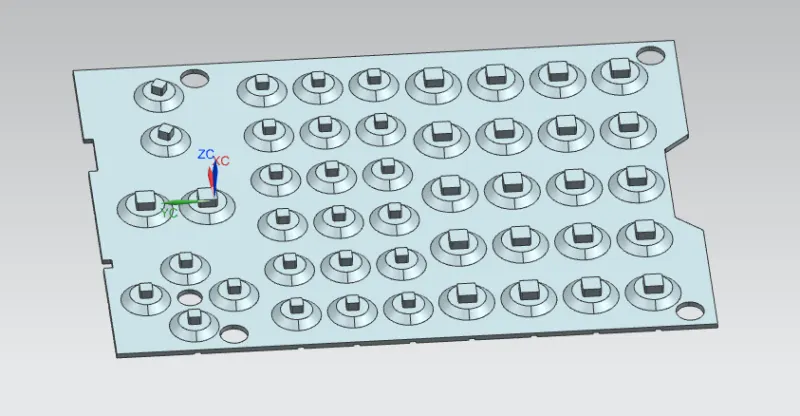
How a Flexible Rubber Keyboard Is Constructed
Substrate is solid silicone, typically 50 to 70 Shore A. Key bodies are raised, the web between them is thin, and the perimeter is either a flat flange for clamping or a moulded lip that compresses against the housing. Contacts are carbon pills printed or moulded under each key, or cavities that press on a membrane switch beneath.
Rollability comes from the web, not from softness. A soft compound with a thick web still resists rolling; a 60 Shore A sheet with a well-designed web rolls easily and still returns. That is why specifying a soft compound to make a keyboard flexible usually produces a keyboard that feels mushy and still does not roll well.
| Construction choice | Effect on the keyboard | Constraint |
|---|---|---|
| 50 Shore A substrate | Softer press, slower return | Legend wears faster on high-use keys |
| 60 Shore A substrate | Balanced press and return | Common default for equipment |
| 70 Shore A substrate | Firm, fast return | Higher press effort for long shifts |
| Thin web, wide span | Easy roll, long travel | Lower return force, harder to seal at the edge |
| Moulded perimeter lip | Sealed interface | Needs a defined compression range in the housing |
| Carbon pills on PCB | No separate switch layer | PCB finish and flatness become critical |
Where a flexible rubber keyboard is the right interface
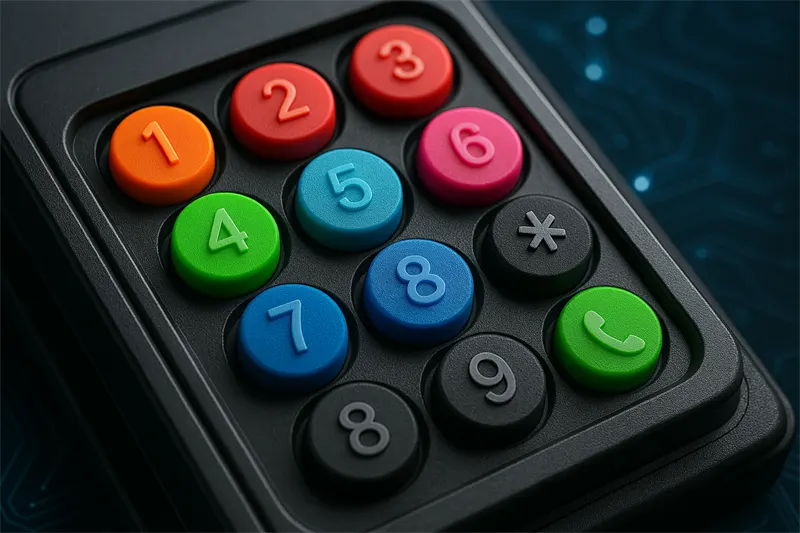
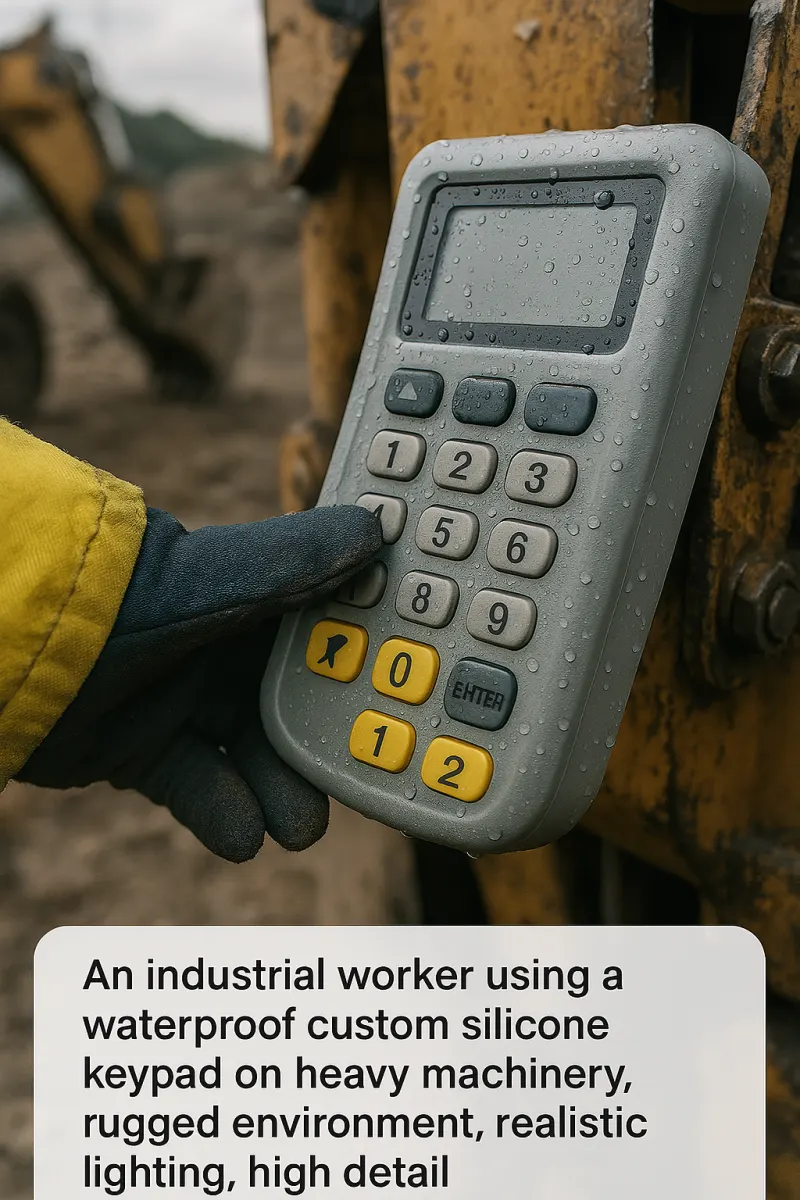
It suits portable terminals, medical carts, laboratory balances, food-processing panels, kiosks and field instruments: products that are cleaned, moved or used by many hands. It is also common where the interface must fold or roll for storage, because the same moulding does both jobs. In those applications the keyboard is usually part of a sealed front panel rather than a separate accessory.
Limits of a Flexible Rubber Keyboard
Key feel is fixed by the tool. A user who wants a sharper click, a longer travel or a different force needs a new web design. That is a real limitation for products with demanding data-entry users, and it is why high-volume typing products still use mechanical switches.
Legends sit on or in the surface, so the cleaning chemistry matters. Solvent wipes attack some inks; laser etching through a coating survives more but needs a two-layer construction. If the panel is disinfected several times a day, specify the chemistry and expect the legend process to be chosen around it.
Precision is another limit. A silicone sheet moves as it is clamped, so key positions are typically held to a wider tolerance than a machined panel. Where keys must align exactly with a display or a bezel cut-out, the housing should provide the datum.
Specifying a Flexible Rubber Keyboard for an OEM Build
What a flexible rubber keyboard drawing should define
- Layout with key pitch, key height and the bezel opening, datum-referenced to the housing.
- Force and travel per key, plus the press rate the key must sustain.
- Substrate hardness and the cleaning agents the keyboard will meet.
- Legend process, colour reference and whether keys must be backlit.
- Perimeter interface: flange, lip or adhesive, with the compression range.
- Coating requirement if the surface must resist alcohol or chlorine wipes.
Send those six items with a STEP model and the application, and the construction follows without a meeting. Our notes on why silicone keyboards are specified across industries cover the sector-by-sector reasoning, and the hardness guide covers the substrate decision.
Can a flexible rubber keyboard be used as a standard computer keyboard?
It can, and it is often sold that way, but the design intent differs. Equipment keyboards optimise sealing and legend durability; a desktop typing keyboard optimises key feel and repeat rate. The same moulding rarely does both well.
How many presses does a flexible rubber keyboard last?
It depends on force, travel and environment more than on the material. Ask for the cycle count with the test conditions: force applied, temperature, and whether the legend was assessed at the end as well as the switch.
A flexible rubber keyboard is one moulded sheet doing the work of five parts. Design the web for the force curve, the perimeter for the seal, and the legend for the cleaning chemistry. Everything else follows, and it follows from the tool, so settle it before the tool is cut.