What are the differences between silicone powder puff and traditional powder puff?
- Share
- publisher
- Suey
- Issue Time
- Mar 9,2026
Summary
A silicone powder puff changes how powder is picked up, released and cleaned, and that changes the finish. This comparison sets out the surface and pore physics behind a silicone powder puff versus a fibre puff, the application each one suits, and the design parameters a beauty brand should specify.
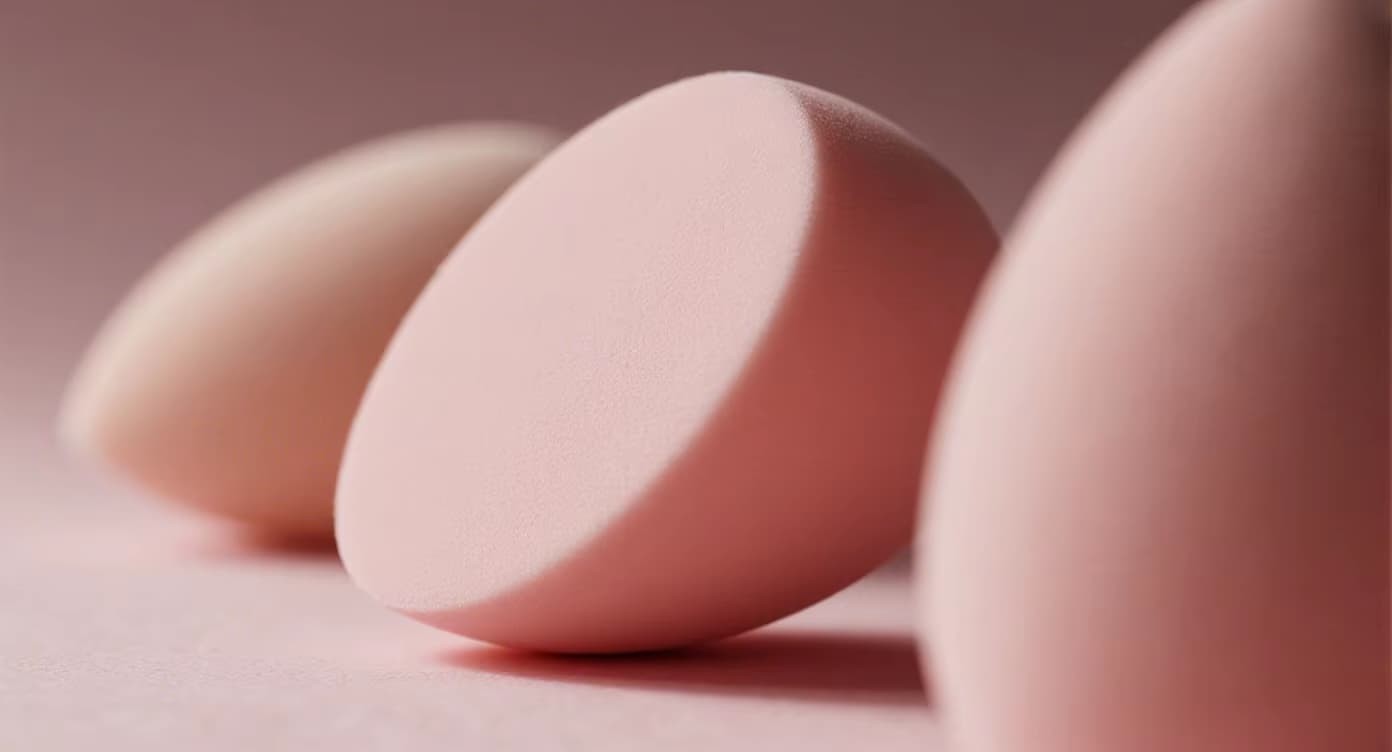
Applicator note
A fibre puff works by trapping powder in a porous structure and releasing it gradually; a silicone puff works by holding a thin film on a smooth, non-porous surface. That single difference explains the finish, the waste and the cleaning routine, and it is why a silicone powder puff is complementary to a fibre puff rather than a straight replacement.
- Fibre puffs give a soft, diffused build-up; silicone gives a controlled, thin film with sharply defined edges.
- Non-porous silicone releases almost all of the product it picks up, which shows up as lower waste per use.
- Silicone does not absorb, so it must be wiped between shades; a fibre puff can be used across a gradient.
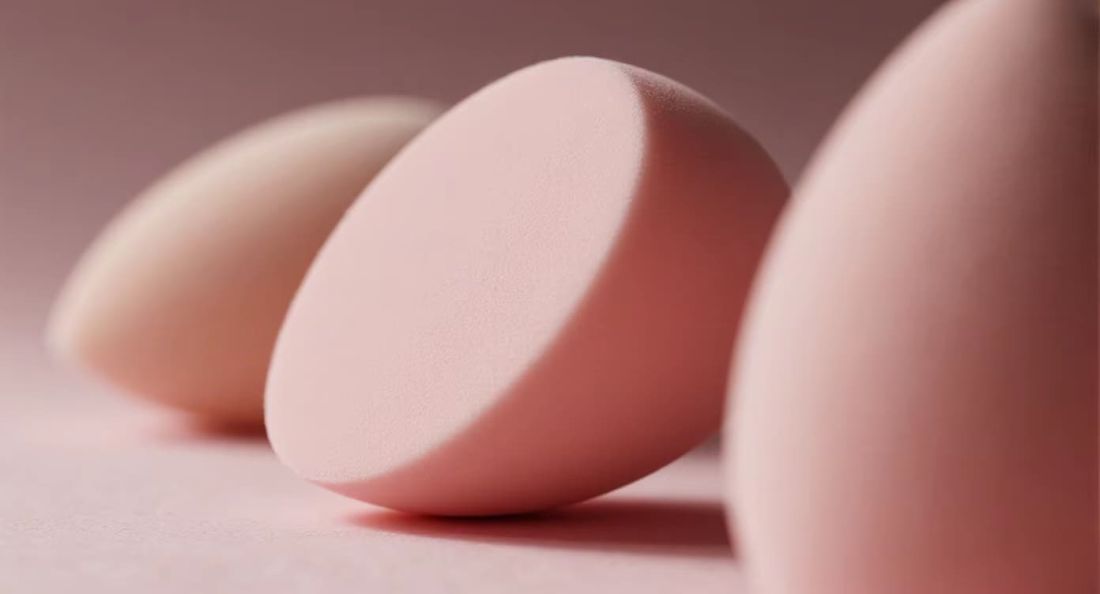
What a silicone powder puff does differently
Powder adhesion is a surface-energy problem. A fibre puff presents millions of small pores that mechanically trap particles and then release them as the puff flexes. Silicone presents a low-energy, non-porous surface, so particles sit on top and transfer almost completely on contact. The result is a thinner, more even film and less powder left in the applicator.
That behaviour is an advantage for buildable coverage and for cream-to-powder formulas, and a disadvantage for the soft, blended look that a loose powder and a large fluffy puff produce. Brands that position a silicone puff as a replacement for a fibre puff usually get returns; positioned as a precision tool, it sells on control.
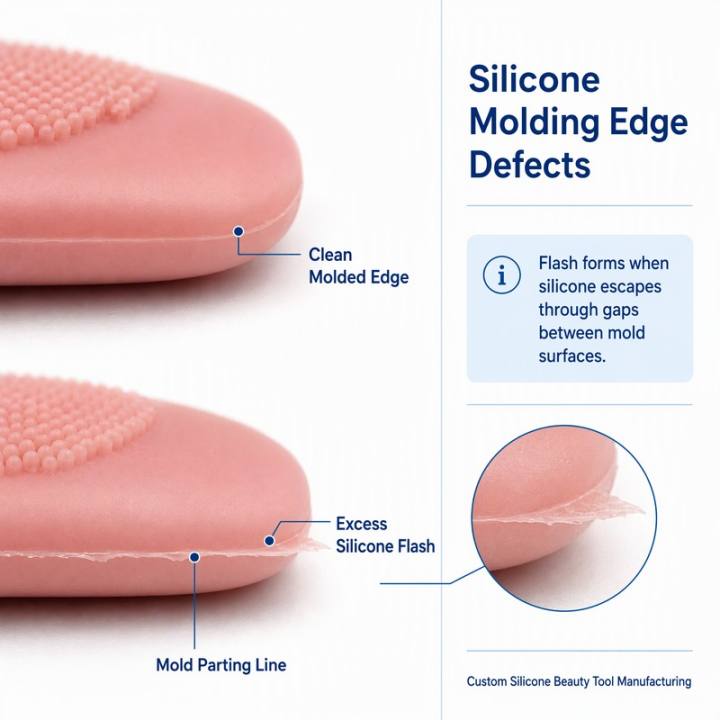
Design values that decide how it performs
Hardness sets the compliance. Around 30 to 45 Shore A gives a pad that follows the cheekbone without dragging; harder pads are easier to clean but press powder into the skin and emphasise texture. Thickness then decides how much the pad can conform over a nose or under an eye, where a thick pad simply bridges the contour and applies nothing.
Surface texture is the third variable. A polished surface glides and gives a sheer film; a fine matte texture picks up slightly more powder and gives more build. Texture depth is measurable and should be on the drawing, because two suppliers can both deliver “matte” finishes that behave differently in a consumer test.
- Hardness — 30 to 45 Shore A for face application; harder only for pressed compacts.
- Thickness — thin enough to follow a contour, thick enough not to fold.
- Texture — polished for sheer, fine matte for build; specified numerically, not by adjective.
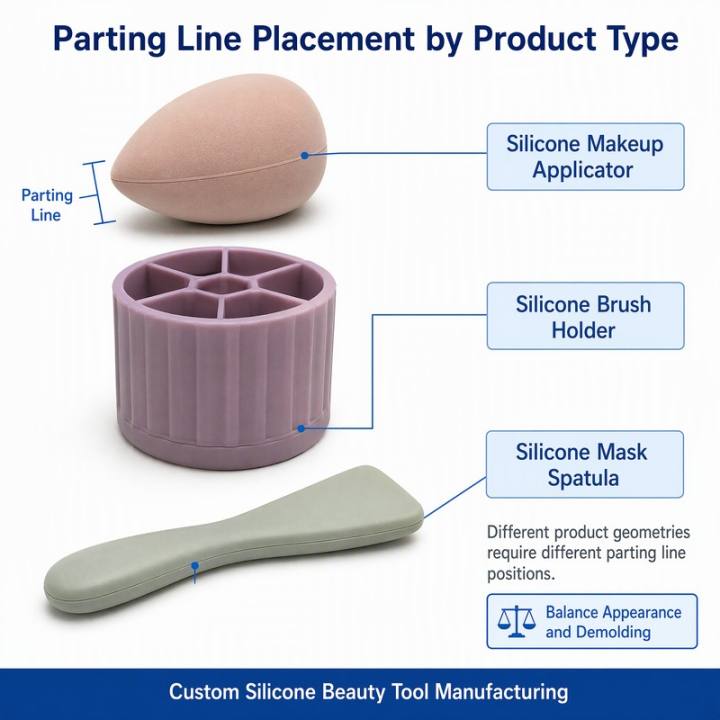
Silicone powder puff versus fibre puff
| Criterion | Silicone puff | Fibre puff |
|---|---|---|
| Powder pick-up | Thin film on the surface | Trapped in pores, gradual release |
| Finish | Controlled, buildable, defined edges | Soft, diffused, blended |
| Product waste | Low: most of the film transfers | Higher: product stays in the fibres |
| Cleaning | Wipe or wash; no absorption | Needs deeper wash, dries slowly |
| Shade changes | Requires cleaning between shades | Can be used across a gradient |
| Service life | Long, until the surface glosses or tears | Shortens with washing and fibre collapse |
Hygiene, cleaning and the claims you can support
Because silicone does not absorb, bacteria have nowhere to grow inside the pad — but the surface film of oil and powder still supports microbial growth if it is not removed. A cleaning instruction that says “wipe after each use, wash weekly with a mild soap, air dry” is both realistic and defensible; a claim of “antibacterial” is not, unless the compound contains an approved additive and the claim is substantiated.
The same logic applies to durability claims. A silicone puff will outlast a fibre puff in washing cycles, but it can be cut by a fingernail or degraded by a solvent-based cleaner. Specify the cleaning chemistry in the test protocol, and the service-life claim becomes a tested number rather than a marketing sentence.
How a custom applicator programme is quoted and run
Applicator projects move fast, so the sequence is compressed but never skipped.
Inputs
Formula type, coverage target, skin-contact requirement, packaging format and the brand colour.
Design
Hardness, thickness, texture and edge radius, plus any logo or grip feature.
Sampling
Pads for a consumer panel, with hardness and texture measured on the samples sent.
Volume and packing
Cavity count, colour options and retail packaging that keeps the pad flat.
The rim does more work than the face
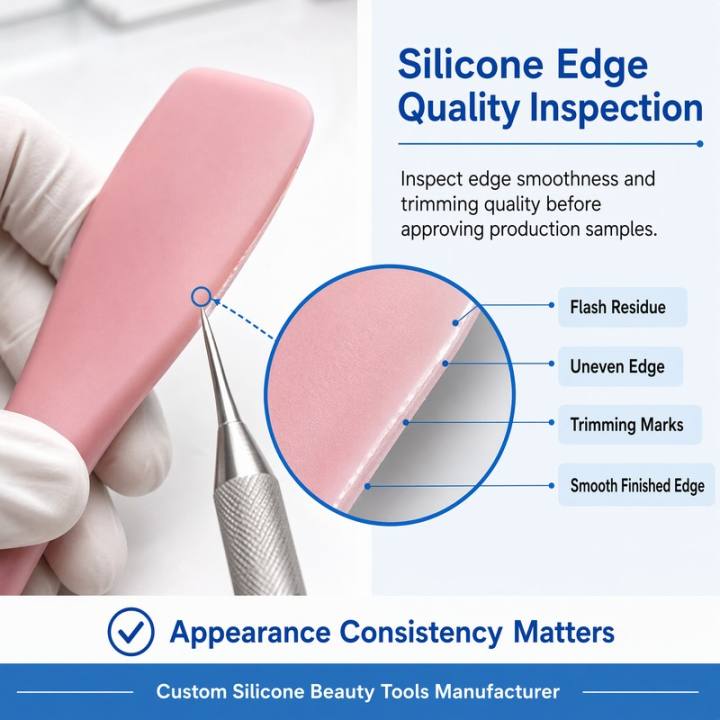
Users apply powder with the edge of a puff far more than the centre, especially under the eye and around the nose. A rim that is too sharp leaves a line; a rim that is too thick cannot reach into a contour. A radius of roughly 1.5 to 2.5 millimetres, with a slight taper toward the edge, lets the pad roll onto the skin instead of pressing an edge into it.
The rim is also where a moulded pad fails first. A thin, sharp rim tears at the parting line after repeated washing, so the edge radius serves two purposes at once: application control and durability. If a brand wants a crisp edge for photography, the honest solution is a slightly thicker rim with a polished face, not a knife edge.
Questions from beauty brands
Is a silicone puff better than a fibre puff?
Neither is better in general. Silicone gives control and low waste; fibre gives diffusion and speed. The right choice follows the formula and the finish the product promises.
Does it work with loose powder?
It works, but the pick-up is thin. For loose powder many brands pair a silicone puff with a light tapping motion rather than a sweeping one.
How is it cleaned?
Wipe after each use and wash weekly with mild soap, then air dry. Solvent cleaners can degrade the surface and should be avoided.
Can the surface texture be customised?
Yes, and it should be specified numerically. Texture depth and gloss level are the two parameters that most affect pick-up and release.
Send the formula and the finish you promise
FromRubber moulds silicone applicators, puffs and beauty tools in Dongguan, with hardness, thickness and surface texture specified on the drawing. Send the formula type, the coverage target and the packaging format; we will propose a pad construction and mould samples for a consumer panel.
Request an applicator reviewRelated reading: how a silicone brush pad protects brush tips and custom silicone beauty tools.