What are the disadvantages of silicone gaskets compared to nitrile (NBR) for oil pan applications?
- Share
- publisher
- Suey
- Issue Time
- Feb 27,2026
Summary
The disadvantages of silicone gaskets compared to NBR gaskets for oil pan applications.oil swell resistance, tear strength, compression set in hot oil, gas permeability, cost, and adhesion limitations
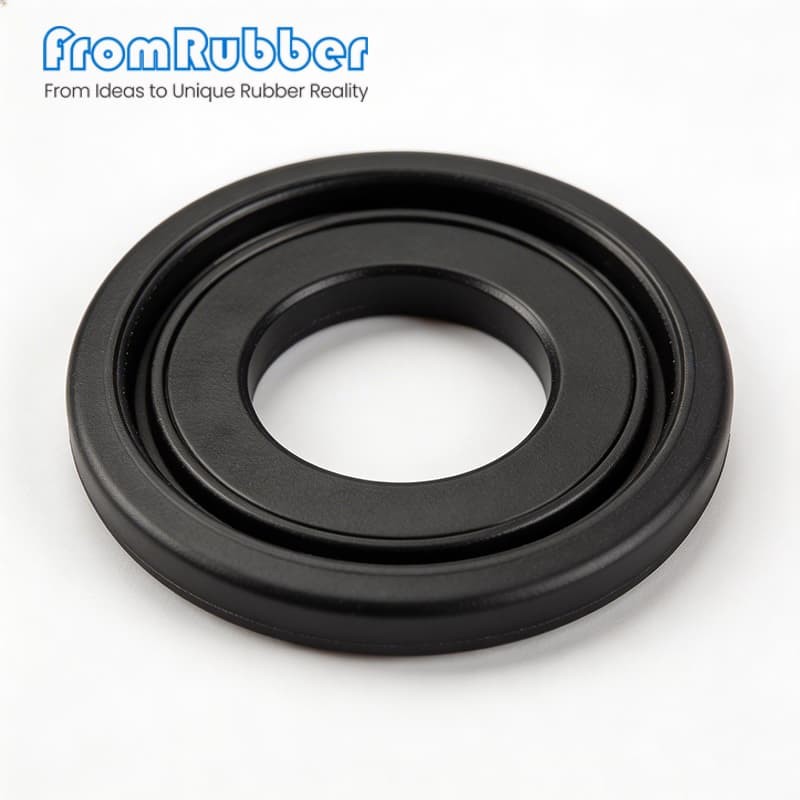
Oil pan gaskets require excellent oil resistance, dimensional stability under torque, and long-term sealing at elevated temperatures. While silicone offers high heat resistance, it presents several drawbacks compared to NBR (nitrile rubber) in this specific application. This analysis details the technical disadvantages across six performance categories.
Figure: oil volume swell (ASTM IRM 903, 100°C)
1. inferior oil swell resistance
Silicone exhibits significantly higher volume swell when exposed to hydrocarbon oils compared to NBR. In ASTM IRM 903 oil at 100°C, silicone can swell 20-30% by volume, while NBR typically swells 5-15% depending on acrylonitrile content. This swelling reduces dimensional stability and can lead to extrusion or leakage in confined oil pan grooves.
NBR's nitrile groups provide polarity that resists non-polar oil molecules, making it the preferred choice for continuous oil contact.
2. lower tear strength and puncture resistance
Silicone typically has tear strength in the range of 15-30 kN/m, while NBR can achieve 40-60 kN/m with appropriate reinforcement. During oil pan installation, gaskets are subjected to compression, shear, and potential misalignment. NBR's higher mechanical robustness reduces risk of tearing during assembly and under vibration.
3. higher compression set at elevated temperatures
While silicone excels in dry heat, in oil environments at 125-150°C, silicone exhibits higher compression set than NBR. After 70h at 150°C in oil, NBR may show 20-30% set, while silicone often exceeds 50-60%. This leads to loss of sealing force and eventual leakage in bolted oil pan joints.
4. higher gas permeability
Silicone has significantly higher permeability to gases and hydrocarbons compared to NBR. In oil pan applications, this can result in oil vapor transmission and potential "weeping" through the gasket over time. NBR's denser structure provides better barrier properties, critical for long-term fluid containment.
5. higher material cost
Silicone compounds are typically 2-3 times more expensive than NBR on a per-kg basis. For high-volume oil pan gasket production, NBR offers a more economical solution with equal or better performance in oil environments. The cost disadvantage of silicone is rarely justified unless extreme temperature requirements exist.
6. poorer adhesion for formed-in-place gaskets
While RTV silicone is used for formed-in-place gaskets, its adhesion to oily surfaces is inferior to NBR-based liquid gaskets. NBR compounds can be formulated with better oil-resistant adhesives. Additionally, silicone RTV requires clean, oil-free surfaces for proper cure — difficult to guarantee in service environments.