What is the difference between a silicone keypad and a membrane switch?
- Share
- publisher
- Suey
- Issue Time
- Nov 3,2025
Summary
The practical difference between a silicone keypad and a membrane switch: key travel versus flat layers, sealing, depth, life at high actuation counts and tooling cost, plus the hybrid panels most industrial machines end up using.

Both close a circuit when pressed and both sit behind a printed legend. The similarity ends at the construction: one is a moulded rubber part that doubles as a seal, the other is a laminated stack that can carry a flexible tail into a connector.
This is the practical difference between a silicone keypad and a membrane switch, and the conditions that make one clearly the wrong choice.
Silicone Keypad and a Membrane Switch: Where the Difference Actually Shows
The direct answer: a silicone keypad is a moulded three-dimensional part with individual keys that travel, while a membrane switch is a flat laminate of printed layers with no key travel at all. The first gives tactile feedback and a seal; the second gives a thin profile and a low cost per panel.
The consequence for the design is immediate. A keypad needs room behind the panel for each key to move, and a rigid reference for each key to press against. A membrane switch needs a flat surface and almost no depth, but it cannot offer the same confirmation of a press.

Comparing the Two Constructions
The tooling row is why membrane switches dominate low-volume and prototype work, and the life row is why keypads dominate equipment that is pressed thousands of times a shift.
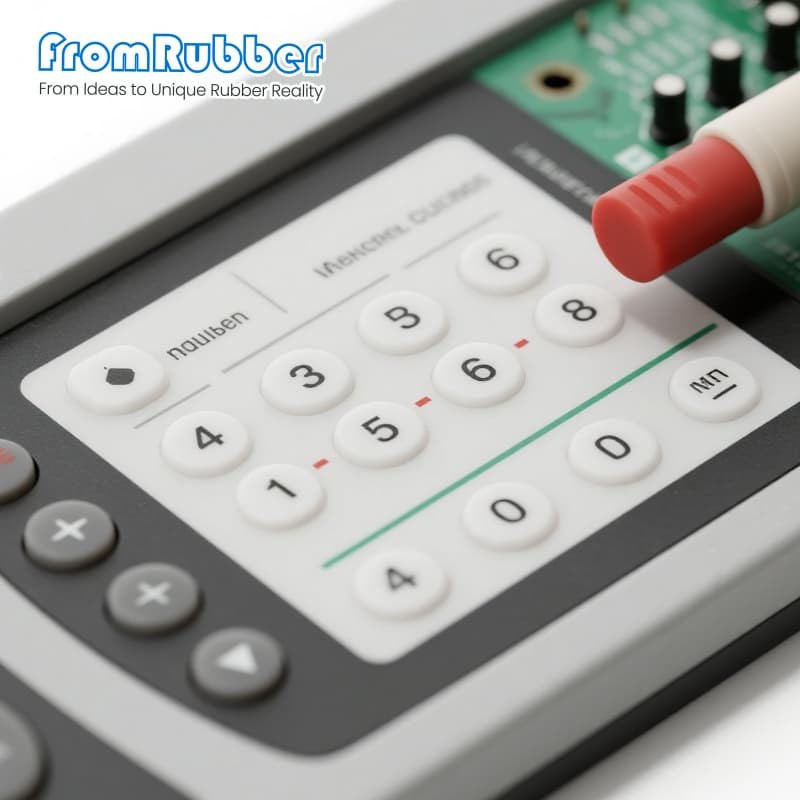
| Criterion | Silicone keypad | Membrane switch |
|---|---|---|
| Key travel | Yes, with a tactile curve | Essentially none, unless a dome is added |
| Sealing | Can be the gasket itself | Sealed by the overlay and its adhesive |
| Depth | Millimetres of travel plus support | Fractions of a millimetre |
| Legends | Moulded, printed, etched or double-shot | Printed on the overlay |
| Life at high actuation counts | Long, with a carbon pill or dome | Shorter at the flex point of the spacer |
| Tooling | Mould required | Artwork and screens, generally lower |
| Cleanliness | Wipeable, no edges to trap dirt | Flat but with a sealed perimeter |
The Hybrid That Solves Both Problems
Many industrial panels combine the two: a membrane switch or a display for the functions that change, and a small moulded keypad for the functions that must work with gloves or in the wet. The keypad handles start, stop and the few critical inputs, and the membrane layer handles configuration.
That arrangement is more expensive than either alone, and it is often the only design that satisfies both the usability requirement and the depth budget. The split should follow function, not aesthetics: anything safety-related belongs on a physical key.
If the panel is a membrane construction, the customization options for backlighting and layer build are covered in our guide to silicone membrane switches, and the keypad side is described on the custom silicone keypad page.
1. Understanding Silicone Keypads
Silicone keypads are crafted from high-quality silicone rubber, which is a highly durable and flexible material. The soft, rubbery texture of silicone makes these keypads ideal for frequent user interaction. Silicone keypads are typically used in devices where durability, resistance to harsh conditions, and tactile feedback are essential. The design of silicone keypads can include raised buttons that provide a satisfying tactile response when pressed, making them highly ergonomic and responsive.
How Silicone Keypads Work
The keypads work by compressing the silicone rubber when a user presses a key. This action makes contact with the conductive layer beneath, sending an electrical signal to the device. The tactile feedback from the compression process is what makes silicone keypads so popular in consumer products such as remotes and mobile devices.
Advantages of Silicone Keypads
- Durability: Silicone keypads are highly resistant to wear, heat, and UV radiation, making them ideal for demanding environments.
- Water and Dust Resistance: Their sealed design ensures protection against moisture, dirt, and dust, which is essential for outdoor and industrial applications.
- Comfortable Tactile Feedback: Silicone keypads provide a satisfying, tactile feel, making them highly responsive and comfortable to use.
- Customization: Silicone keypads can be easily customized in terms of shape, size, and color to suit specific device requirements.
2. Understanding Membrane Switches
Membrane switches, unlike silicone keypads, are made from multiple layers of flexible materials. These layers include a graphic overlay, a spacer layer, and a conductive layer. The construction of membrane switches is designed for use in compact spaces where a thin profile is essential. Despite being lightweight, membrane switches are durable and reliable, often used in applications where cost-efficiency and space limitations are the primary concerns.
How Membrane Switches Work
When pressure is applied to a membrane switch, the graphic overlay is compressed, and it makes contact with the conductive layer beneath. This establishes an electrical connection and sends a signal to the device. Membrane switches can be designed with various graphic overlays and can be sealed to prevent dust and moisture from entering the switch layers.
Advantages of Membrane Switches
- Cost-Effective: Membrane switches are relatively inexpensive to produce, making them an attractive option for mass-market devices.
- Compact and Lightweight: The thin profile of membrane switches makes them perfect for use in space-constrained environments.
- Sealed for Protection: Membrane switches can be sealed to protect against water, dust, and dirt, making them suitable for rugged environments.
- Easy Customization: The graphic overlay can be easily customized with logos, icons, and text, allowing for improved user interfaces and branding.
3. Key Differences Between Silicone Keypads and Membrane Switches
While both silicone keypads and membrane switches perform the same basic function—registering a user's input—there are some important differences in their construction, durability, and ideal uses. Here’s a detailed comparison:
Material Composition
Silicone keypads are made from durable silicone rubber, while membrane switches are typically composed of several layers, including a graphic overlay, conductive ink, and a spacer layer. The rubber construction of silicone keypads offers better resilience, while the thin layers of membrane switches provide a compact, cost-effective solution.
Tactile Feedback
Silicone keypads offer more pronounced tactile feedback,making them ideal for devices that require clear, responsive feedback from the user. Membrane switches, by comparison, tend to provide a softer, less noticeable feel, which can be preferable in certain applications where smooth operation is prioritized.
Customization
Silicone keypads are highly customizable, with options for different shapes, sizes, and colors. This flexibility makes them ideal for unique designs. Membrane switches also offer some degree of customization, particularly in terms of the graphic overlay, but are generally less flexible in shape and form compared to silicone keypads.
Durability
Silicone keypads are generally more durable, particularly when exposed to harsh conditions like temperature extremes, UV radiation, and heavy physical use. Membrane switches, while durable, may not withstand harsh conditions as well as silicone keypads, making them more suitable for indoor or controlled environments.
4. Applications
Applications of Silicone Keypads
- Medical devices (e.g., infusion pumps, diagnostic machines)
- Consumer electronics (e.g., remote controls, home appliances)
- Industrial machinery and equipment
- Automotive controls
- Wearable devices (e.g., fitness trackers)
When the Answer Is Clearly a Silicone Keypad
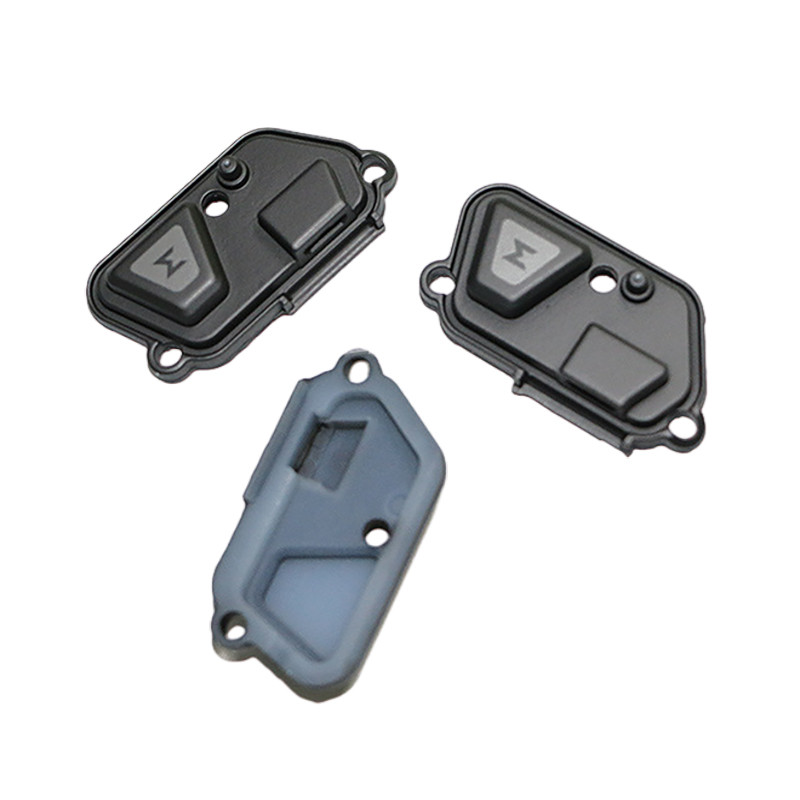
Three conditions point strongly at a moulded keypad. The operator cannot look at the panel, so position must be found by touch. The panel is exposed to liquid, dust or washdown, and the seal is the product. Or the key count is small and the presses are frequent, so a flat switch would wear at the same few points.
A fourth, less obvious condition is a curved or uneven housing, where a flat laminate cannot sit down and a flexible moulded panel can conform.
When the Answer Is Clearly a Membrane Switch
Thin products, tight depth budgets, high key counts with complex graphics, and low volumes where a mould cannot be justified. A membrane switch also carries its own tail to a connector, which removes a wiring step in products where the panel and the board are not directly stacked.
Applications of Membrane Switches
- Medical equipment (e.g., monitoring systems)
- Industrial equipment control panels
- Consumer electronics (e.g., kitchen appliances)
- Point-of-sale systems
- Automotive dashboards
Frequently Asked Questions
Can a membrane switch have tactile feedback?
Yes, by adding a metal dome under each key position. It gives a click and a defined force, but the feel is a dome collapsing rather than a moulded key travelling.
Which is more waterproof?
A moulded keypad can be the seal itself, which usually makes it the more robust answer for washdown. A membrane switch can be sealed well, but its perimeter adhesive and tail exit are the weak points.
Which lasts longer?
For high actuation counts on a few keys, a moulded keypad with a carbon pill or dome generally lasts longer. For low-force, low-count panels, a membrane switch is adequate and much cheaper to tool.